Cempoala: Totonac Political and Religious Center in Mexico
Site at a Glance
- Rating
- 4.7
- Popularity
- Medium
- Country
- Mexico
- Primary era
- Medieval
- Eras represented
- Medieval, Early Modern
- Civilizations
- Totonac
- Site type
- City
On this page16 sections
History
Cempoala is a Totonac archaeological site in Francisco del Paso y Troncoso, Zempoala, Veracruz, Mexico. The city was a major Totonac settlement and the capital of Totonacapan during the Mesoamerican Postclassic period, the later pre-Hispanic era conventionally dated from about AD 900 until the Spanish conquest. Its surviving urban complex belongs broadly to the eleventh through sixteenth centuries, while the settlement itself may have been founded at least 1,500 years before the arrival of the Spanish.
Early settlement and Totonacapan
Cempoala’s earliest history is poorly understood, although archaeological evidence indicates Olmec influence. The settlement was built on mounds, a practical response to the danger of flooding on the coastal plain. During the height of the Toltec Empire, around AD 1000 to 1150, the Totonacs moved onto the coastal plain. Archaeologists believe the Toltecs had displaced them from settlements on the eastern slopes of the Sierra Madre Oriental.
Totonacapan included northern Veracruz and the Zacatlán district of Puebla. In the early sixteenth century, this territory contained about 50 towns and had an estimated population of approximately 250,000 people. Cempoala itself was occupied mainly by Totonacs, although Chinantecs and Zapotecs also lived there. Estimates place its population at between 25,000 and 30,000 at its height, while another estimate gives approximately 20,000 inhabitants around the time of the Spanish arrival. Marine resources and lowland agriculture supported the city’s economy.
Mexica rule and Spanish alliance
In the mid-fifteenth century, the Mexica, often called the Aztecs, ruled a large central Mexican empire. The army of Moctezuma I defeated Cempoala and other coastal communities in Veracruz. The conquered communities faced heavy taxation and were required to provide goods, people for sacrifice, and servile labor. These pressures later encouraged the Totonacs to ally with Hernán Cortés, the Spanish commander who reached the region during the conquest of the Mexica Empire.
In 1519, Spanish forces arrived at Cempoala after hearing about the town from their malaria-stricken camp at San Juan de Ulúa. Twenty Cempoalan dignitaries met the newcomers. Xicomecoatl, the Totonac ruler whom the Spanish called the “Fat Chief,” supplied food, lodging, and gifts that included gold jewelry. He also complained about Mexica domination. Cortés and the Totonacs subsequently formed their alliance at Quiahuiztlan.
In August 1519, Cortés, 40 Totonac captains, approximately 8,000 Totonac soldiers by a lower estimate, and 400 porters set out toward Tenochtitlan. Their campaign ended with the fall of the Mexica capital and the capture of Moctezuma II, the ruler encountered by Cortés during the conquest. On 27 May 1520, Cempoala was also the scene of a battle between Cortés’s forces and those of Pánfilo de Narváez, another Spanish commander. Cortés had support from a small number of Indigenous soldiers, and the confrontation helped consolidate his leadership in the Spanish conquest.
Colonial disruption and abandonment
When the Spanish arrived, Cempoala was prosperous and regarded as an important ceremonial and commercial center. They first called it Villa Viciosa, meaning “fertile town,” in reference to its festivals, orchards, gardens, and the festive character attributed to its inhabitants. It was later called New Seville because the Spanish perceived a resemblance to the Iberian city.
After the conquest, the inhabitants were relocated and Christianized. They were prohibited from practicing their traditional cults and compelled to work in Spanish sugar-cane fields. A smallpox epidemic devastated the population between 1575 and 1577. Cempoala was then abandoned, and survivors were moved to Xalapa. Vegetation gradually covered the deserted city, which faded from historical memory until its rediscovery by the archaeologist Francisco del Paso y Troncoso.
A Spanish sugar mill belonging to the official Rodrigo de Albornoz was later established on the outskirts of the former Totonac city. The surrounding settlement was reoccupied in 1838 through cattle-raising activity and became known as El Agostadero. The name Cempoala derives from Nahuatl elements interpreted as “twenty waters” or “abundant water.” Another explanation connects it with commercial activities said to have taken place every 20 days during the pre-Hispanic period.
Archaeological investigation led to the creation of a site museum in the 1970s. The museum occupies the former camp used by archaeologists working in the area and reflects the study and interpretation of Cempoala’s remains.
Remains
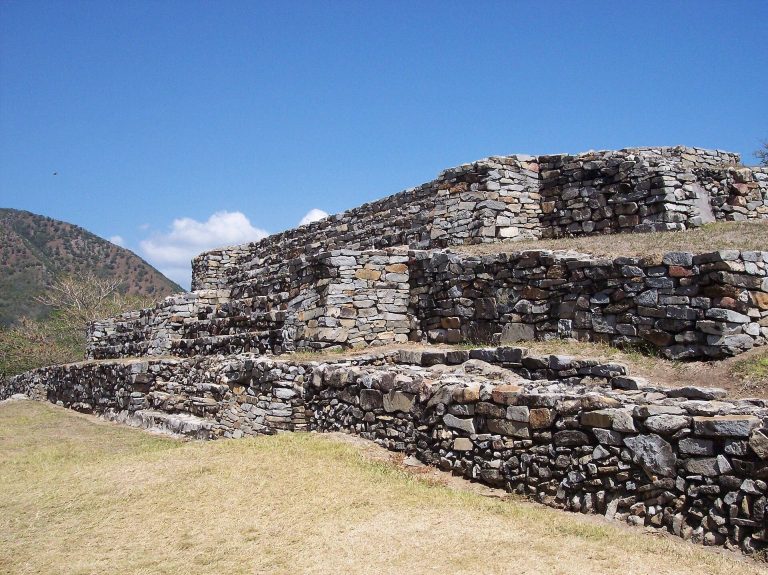
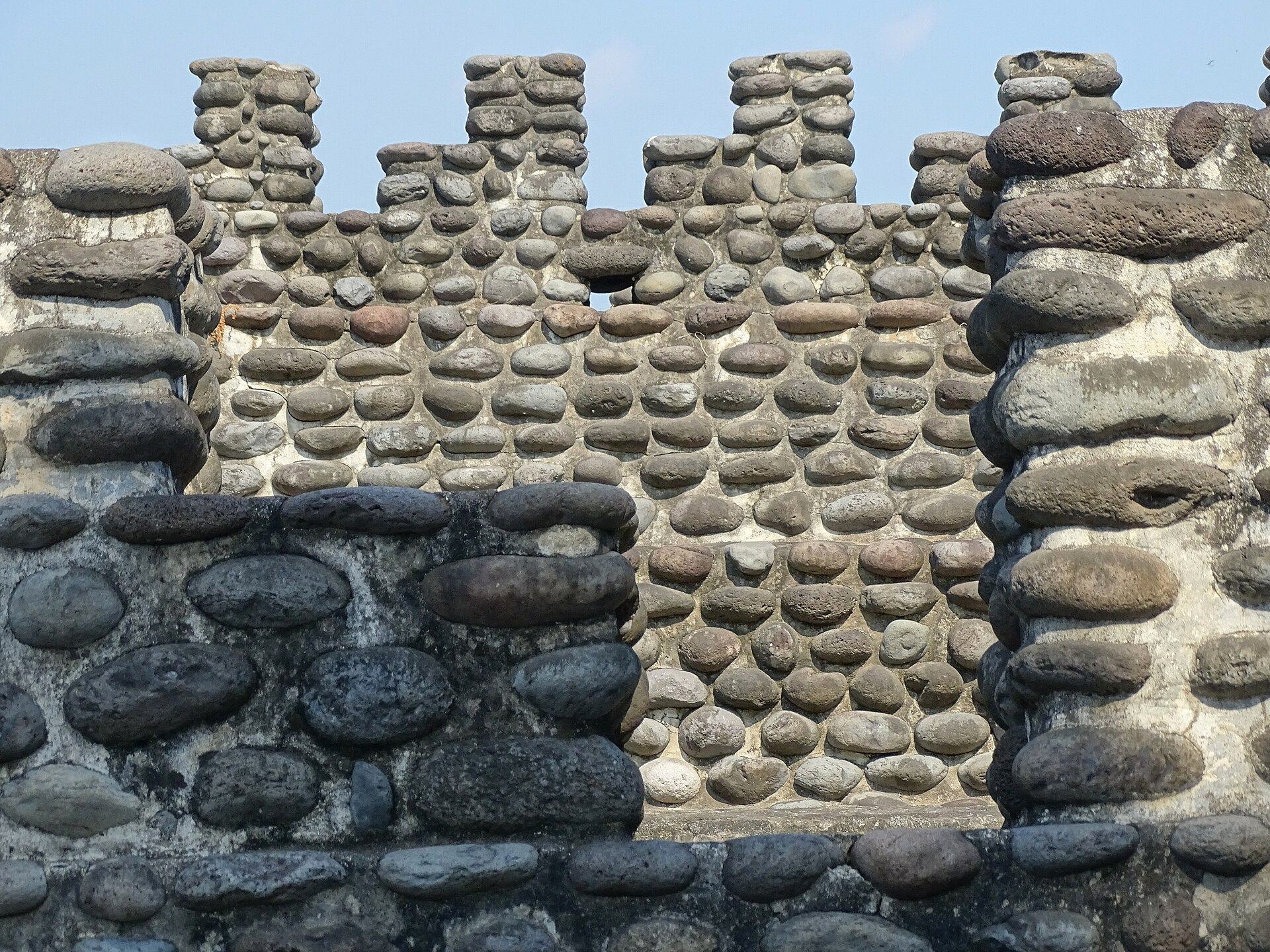
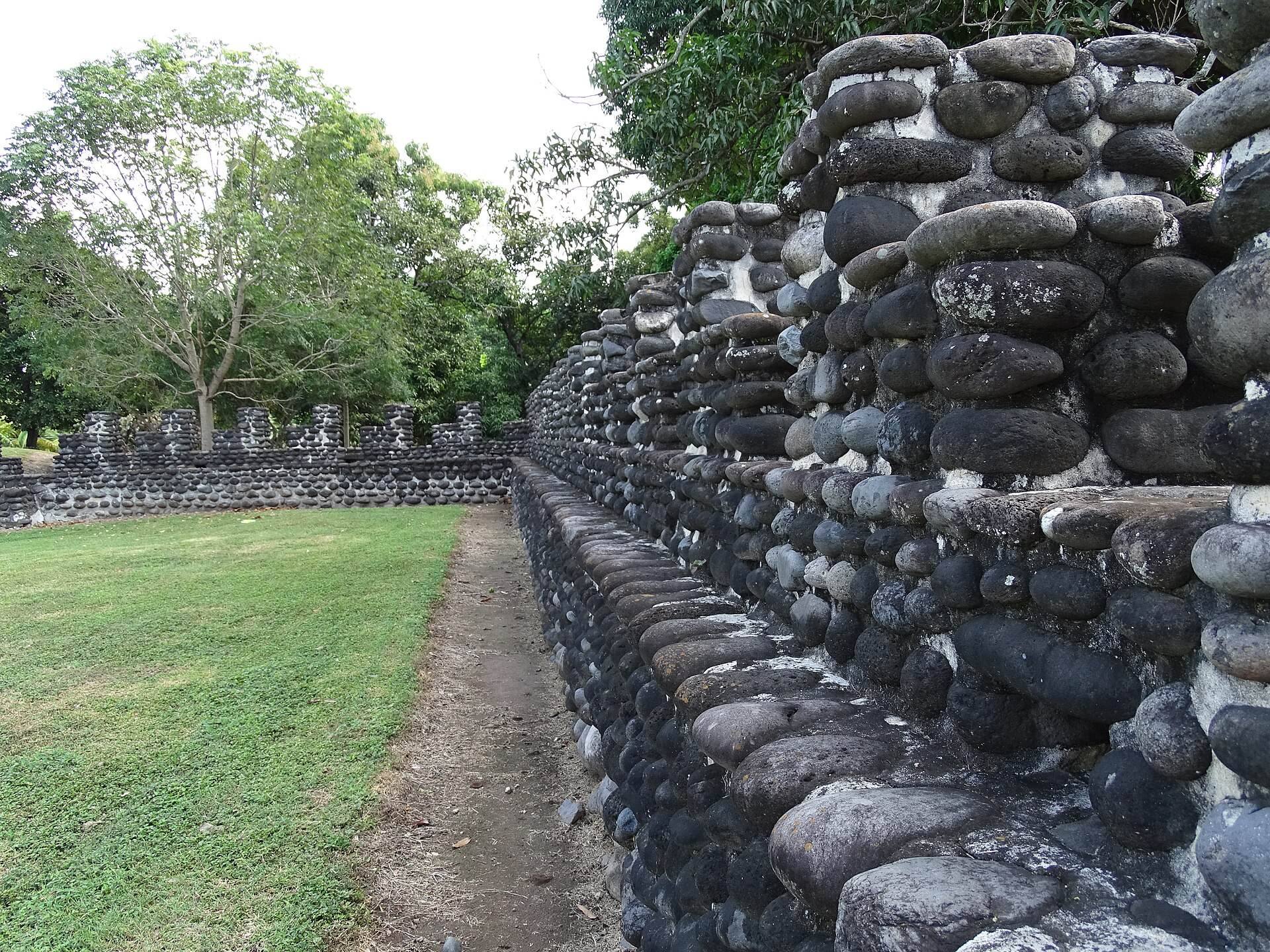
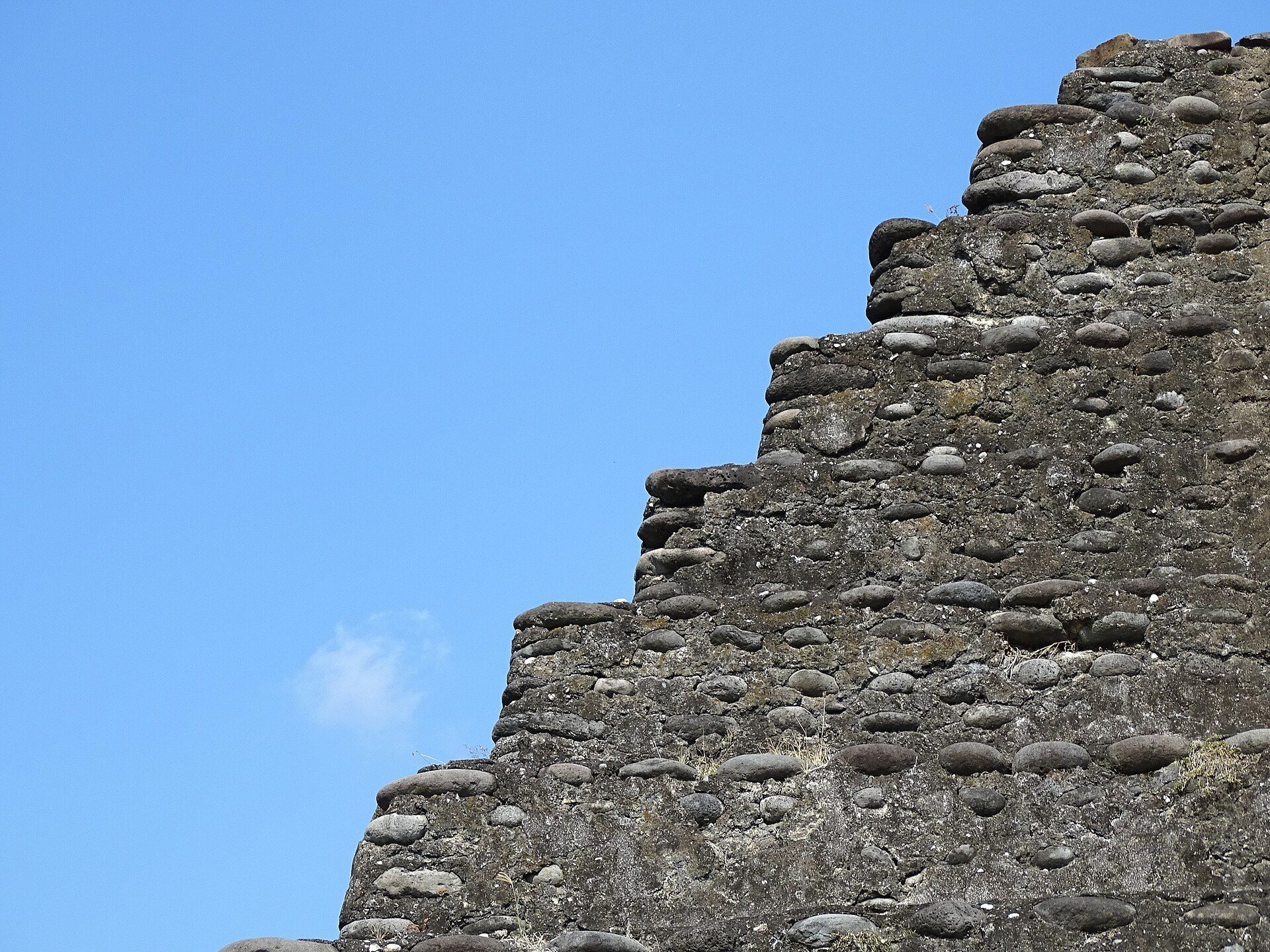
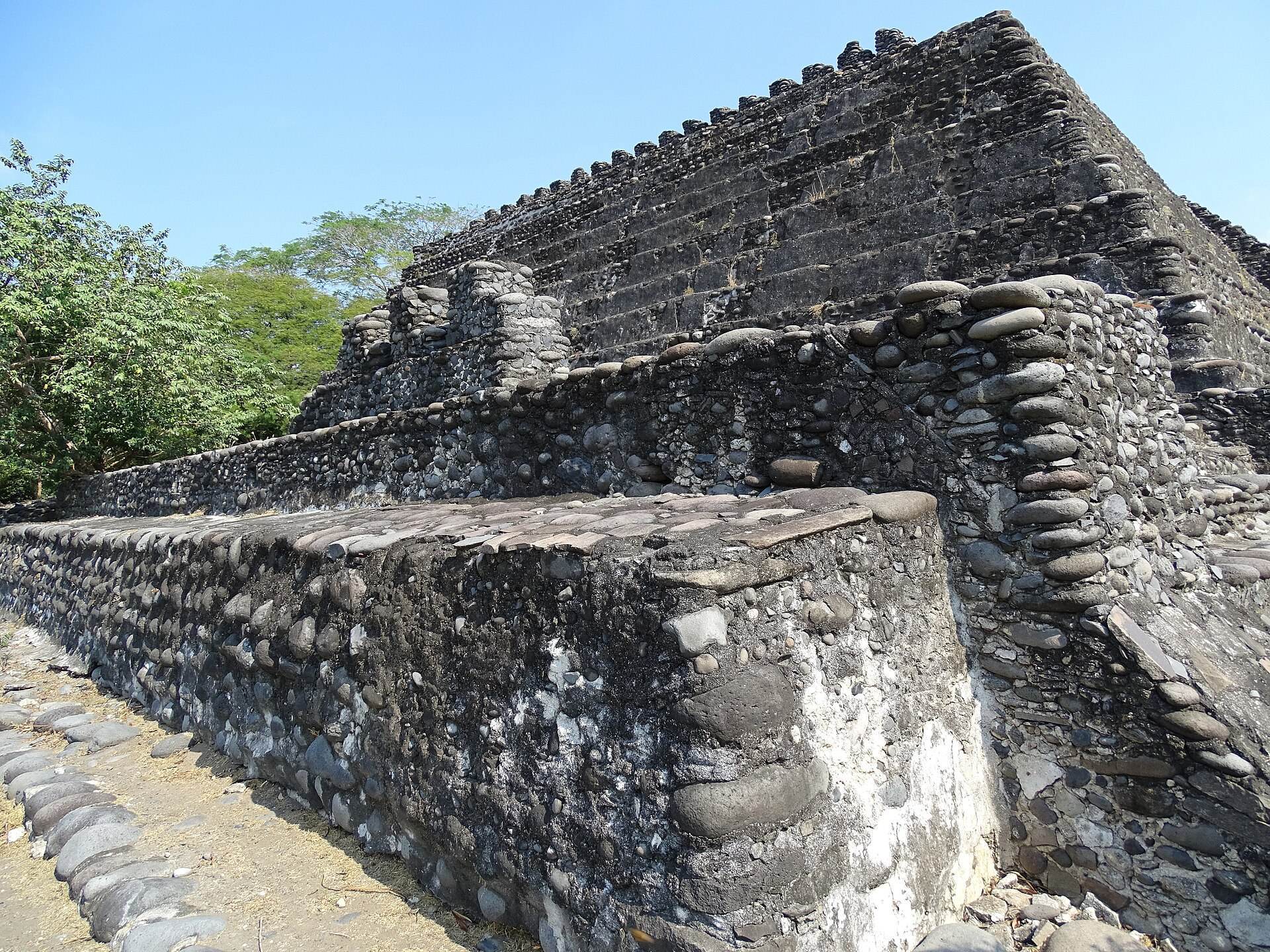
Cempoala occupies a flat coastal plain about one kilometre from the Actopan River and six kilometres from the Gulf coast. Walled perimeters organized the city’s temples and palaces, while public spaces, plazas, fortification-like structures, and other mounds formed the archaeological complex. Vegetation surrounds many of the surviving structures. Buildings were made from stone obtained from the nearby river, joined with mortar, and covered with lime produced by burning shells and snails. From a distance, these finished surfaces reportedly had a silver-like appearance.
Temples and ceremonial platforms
Temple of the Sun and Temple Mayor
The Temple of the Sun, also called the Great Pyramid, stands on the same platform as the Temple Mayor, with a broad plaza separating the two structures. It is regarded as one of the most imposing buildings at Cempoala and resembles the Sun Temple at Tenochtitlan. The summit of the Temple Mayor is enclosed by battlements, as is the upper part of the wider complex.
Temples of Quetzalcoatl and Ehecatl
The Temple of Quetzalcoatl has a square platform. Quetzalcoatl was the Mesoamerican Feathered Serpent deity. The Temple of Ehecatl is circular, and its associated deity was connected with wind. Together with the Temple of the Sun and Temple Mayor, these structures form the principal ceremonial group described at the site.
Temple of the Chimneys
The Temple of the Chimneys contains a series of semicircular pillars about 1.5 metres high. Their distinctive shape gave the building its modern name and sets it apart from the other temple structures in the complex.
El Pimiento and the Temple of the Cross
El Pimiento is a three-part structure whose exterior decoration is based on representations of skulls. The Temple of the Cross retains sections of fresco murals, meaning paintings made on wet plaster. Their surviving designs include celestial motifs.
Palaces, walls, and central features
Palace of Moctezuma
The Palace of Moctezuma is identified as one of Cempoala’s principal structures. Its inclusion among the major buildings reflects the political and ceremonial character of the walled city.
Walled System IV
The area now known as Walled System IV is associated with the confrontation between Cortés and Narváez’s forces in 1520. The walled layouts helped define the city’s public, religious, and political spaces.
Three stone rings
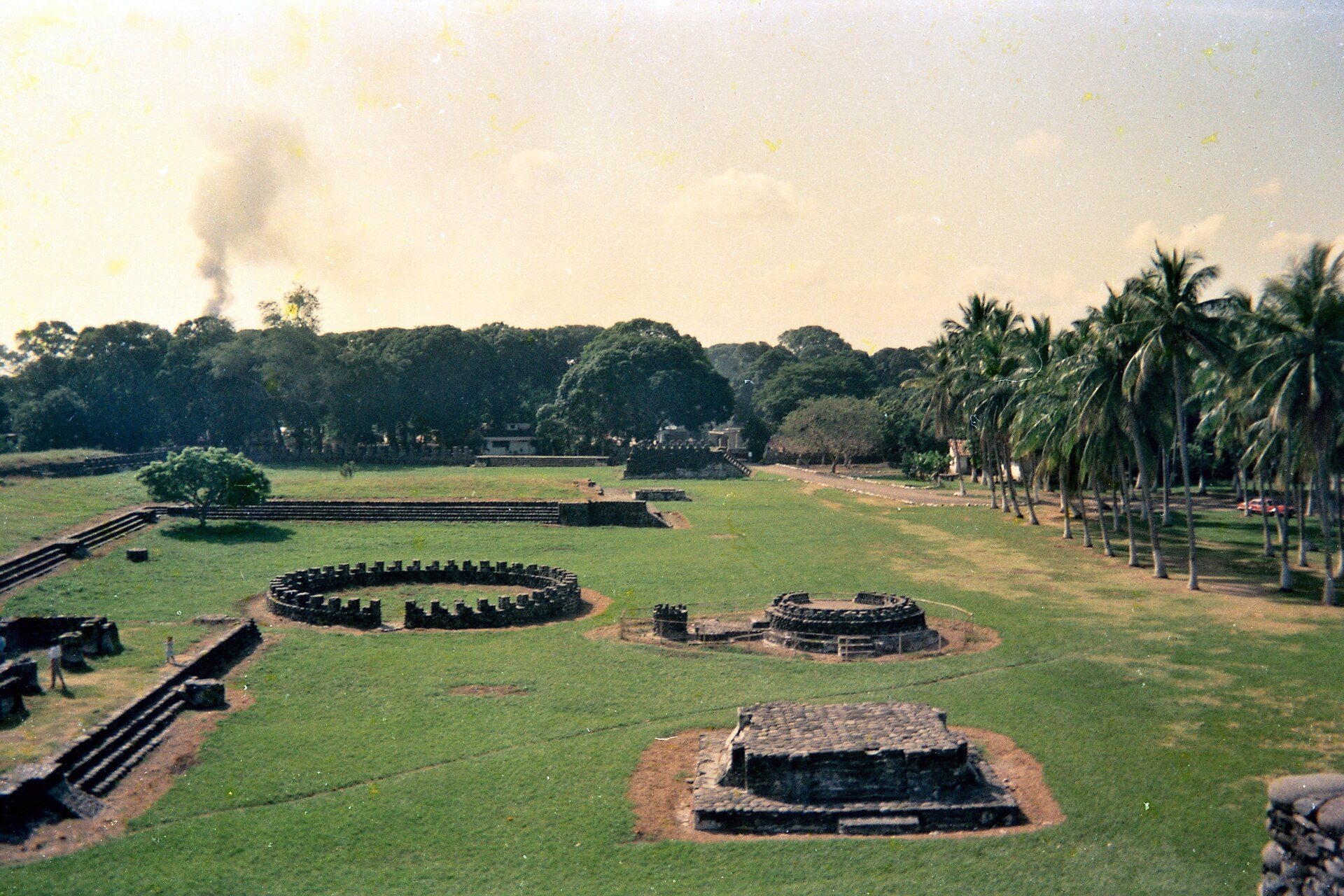
Three circular stone rings lie beneath a large pyramid in the central plaza, in the northeastern part of the complex. Each ring consists of rounded beach cobbles joined into small stepped pillars. The rings contain 40, 28, and 13 pillars respectively. They may have been used to track or calibrate astronomical cycles, perhaps by moving a marker or idol from one pillar to the next each day. Other possible interpretations connect them with counting eclipse cycles or observing lunar movements, but their precise function remains uncertain.
Las Caritas
Las Caritas, or the Temple of the Faces, stands approximately 200 metres east of the main complex. This two-tier structure has fragments of stucco reliefs, with stucco being a plaster-like material used for architectural surfaces and raised decoration. The building received its name from the hundreds of stucco skulls that once decorated the façade of a small structure at the base of its staircase. Archaeologists have suggested that the complex was dedicated to a god of death.
Las Caritas consists of two superimposed basal platforms, an open upper room, and two decorative bands. The lower band contains murals showing the Sun, Moon, and Venus as the morning star. The upper band contains numerous clay “little faces,” or small skulls. Stucco faces decorate the walls, while painted hieroglyphs appear in the lower sections.
Residential areas and museum
Other unexcavated mounds lie among the present houses of Cempoala. Some of the more modest structures were probably built in a manner comparable to the residences of pre-Hispanic commoners, using perishable materials such as thatch and wood together with adobe and walls.
The site museum occupies a building at the entrance to the walled city and is surrounded by gardens. Its four exhibition rooms contain archaeological material from different periods, including anthropomorphic and zoomorphic figures, mortuary yokes, axes, ordinary and ritual vessels, battlements, and mural paintings.