Qal’at Sukkara: A 12th-Century Garrison Fortress in Syria
Site at a Glance
- Popularity
- Low
- Country
- Syria
- Primary era
- Medieval
- Eras represented
- Medieval, Modern
- Civilizations
- Ayyubid
- Site type
- Military
- Remains
- Fort
On this page4 sections
History
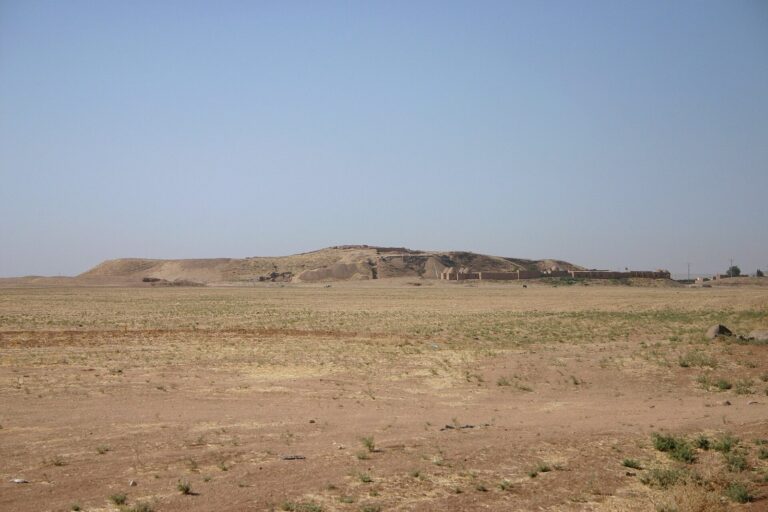
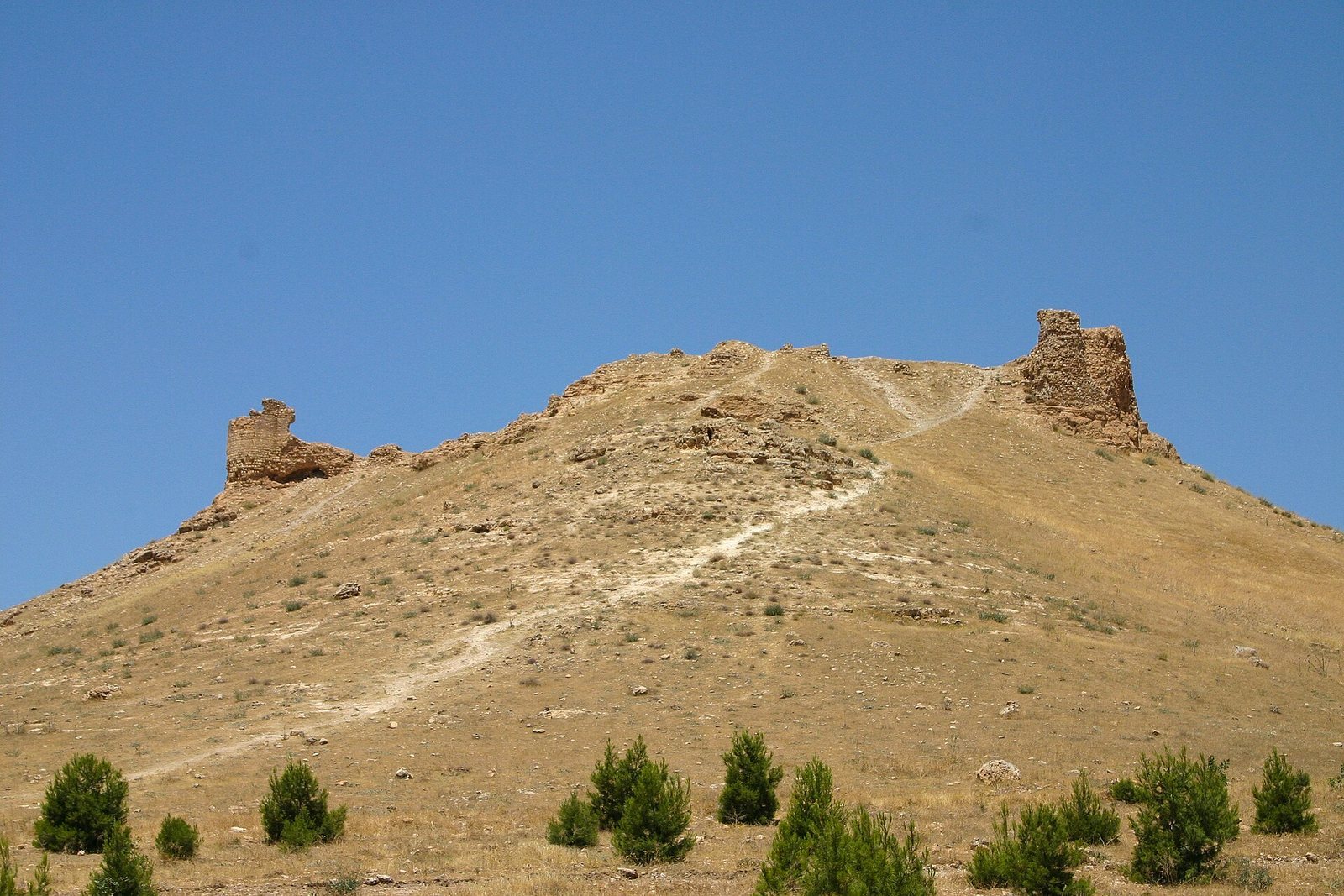
Qal’at Sukkara is a 12th-century military fortress about 35 km southwest of Hasakah in Syria. It is associated with the Ayyubid and Mamluk periods, successive medieval Muslim dynasties that ruled parts of Syria. Its dating and associations draw on its architectural style and pottery fragments found across the site.
The fortress was intended as a small garrison, a troop post used to defend or control a place. It watched the northern plain of Mount Abdulaziz and controlled a mountain pass that apparently connected the mountain’s northern and southern plains. Its wider purpose was probably to protect and supply Islamic armies.
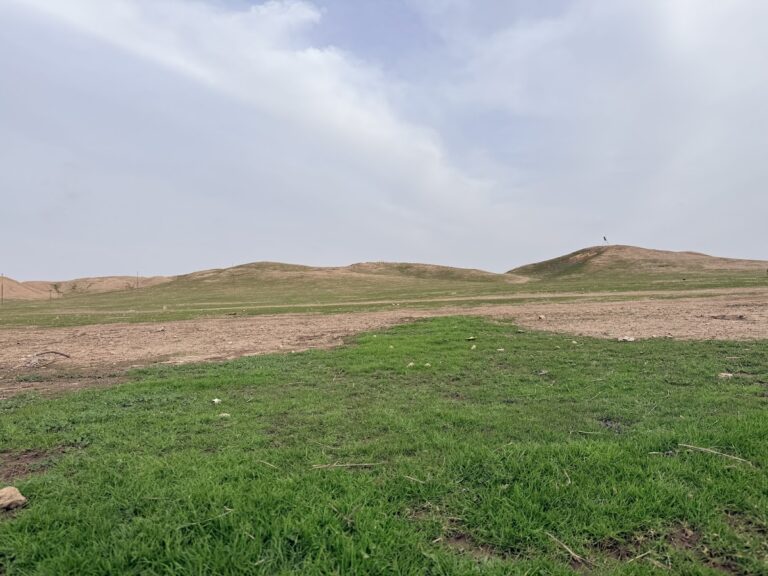
In June 2009, the Hasakah Antiquities Department undertook the first two phases of restoration. Work strengthened the foundations of towers two, three, and four, placed iron grilles over the courtyard wells, planted trees around the mound, and built steps from its base to the fortress.
Remains
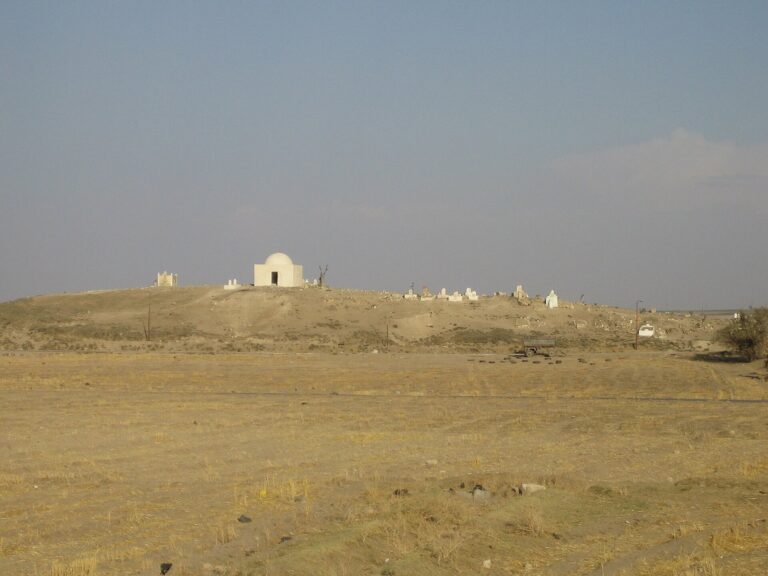
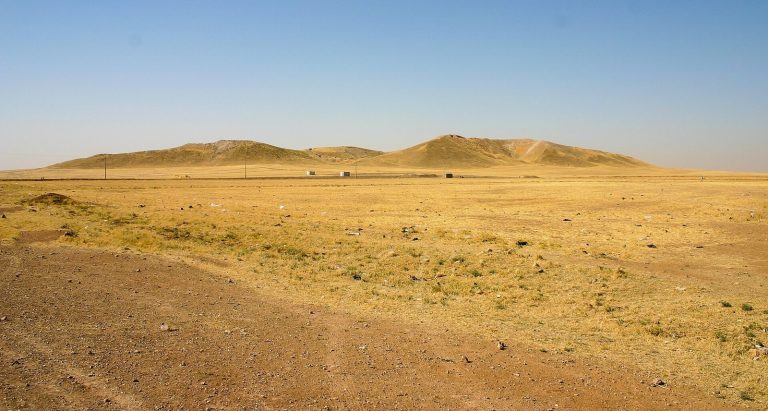
The fortress stood on a high ridge about 300 m above the surrounding plains. Steep slopes surround the ridge, reaching angles of about 70 degrees in places. Its layout centered on a rocky courtyard enclosed by a defensive perimeter.
Walls and towers
Limestone walls and defensive towers formed the perimeter. The walls were built in irregular horizontal layers of stone, each about 20–40 cm high, but they have collapsed, leaving traces of their foundations. Four towers remain visible, while three others have collapsed and survive as indistinct foundation traces. A decorated dome with Islamic geometric patterns in plaster is inside the ground floor of the second tower.
Courtyard and entrance
Five circular wells are cut into the rocky courtyard at its southeastern corner. They are 3–8 m deep, with base diameters of 3–7 m. The entrance is thought to have been between the third and fourth towers.