Elvira Gate (Puerta de Elvira): Granada’s Medieval City Gate
Site at a Glance
- Rating
- 4.5
- Popularity
- Very High
- Country
- Spain
- Primary era
- Medieval
- Eras represented
- Medieval, Early Modern
- Civilizations
- Habsburg, Habsburg Spain, Nasrid, Spanish, Taifa Kingdoms
- Site type
- Military
- Remains
- Gate
On this page8 sections
History
Origins and medieval role
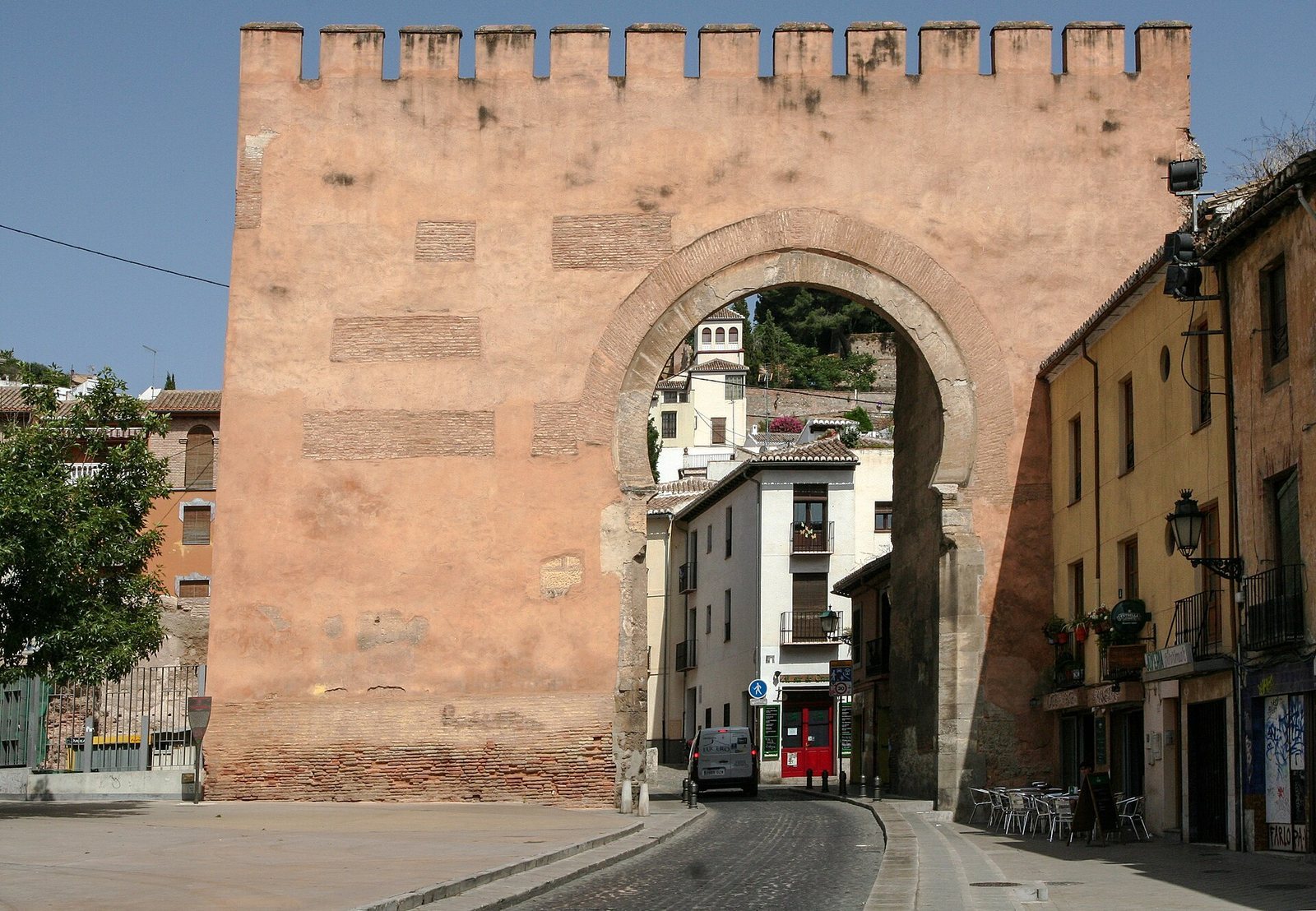
Elvira Gate, also known as the Arch of Elvira, is an eleventh-century entrance in Granada, Spain, built by the Zirids as part of the city walls. It served as Granada’s principal entrance during Islamic rule.
References to the gate date to the ninth century, while the Zirids built it into the walls in the eleventh. Its name comes from Medina Elvira, an earlier city that was the district capital before Medina Garnata, or Granada, assumed that role in the early eleventh century. The route through the gate led from the road to Medina Elvira toward the Alhacaba slope and Elvira Street.
In the fourteenth century, the gate was substantially rebuilt and strengthened under Yusuf I, a Nasrid sultan of Granada. The work formed part of an expansion of the city’s walls.
Later alterations and conservation
In 1612, workers levelled the forecourt and built twelve houses against the wall. During the French occupation, several iron-plated gates and sections of the city walls were demolished. A separate gate, Puerta del Hierro, also called Puerta de la Cuesta, had been added in the fourteenth century to connect the medina, Granada’s historic urban core, with the Albaicín. It was demolished in 1879.
Conservation and consolidation work took place in 1902, 1957, and 1990. A further project covering the gate and adjacent walls began in 2001. The gate received Spain’s National Historic-Artistic Monument designation in 1896 and is recognized as a Bien de Interés Cultural, a formal designation for protected cultural heritage.
The Spanish poet and dramatist Federico García Lorca refers to the Arch of Elvira in “Gazelle of the Morning Market,” a poem in Diván del Tamarit.
Remains
Gate and adjoining grounds
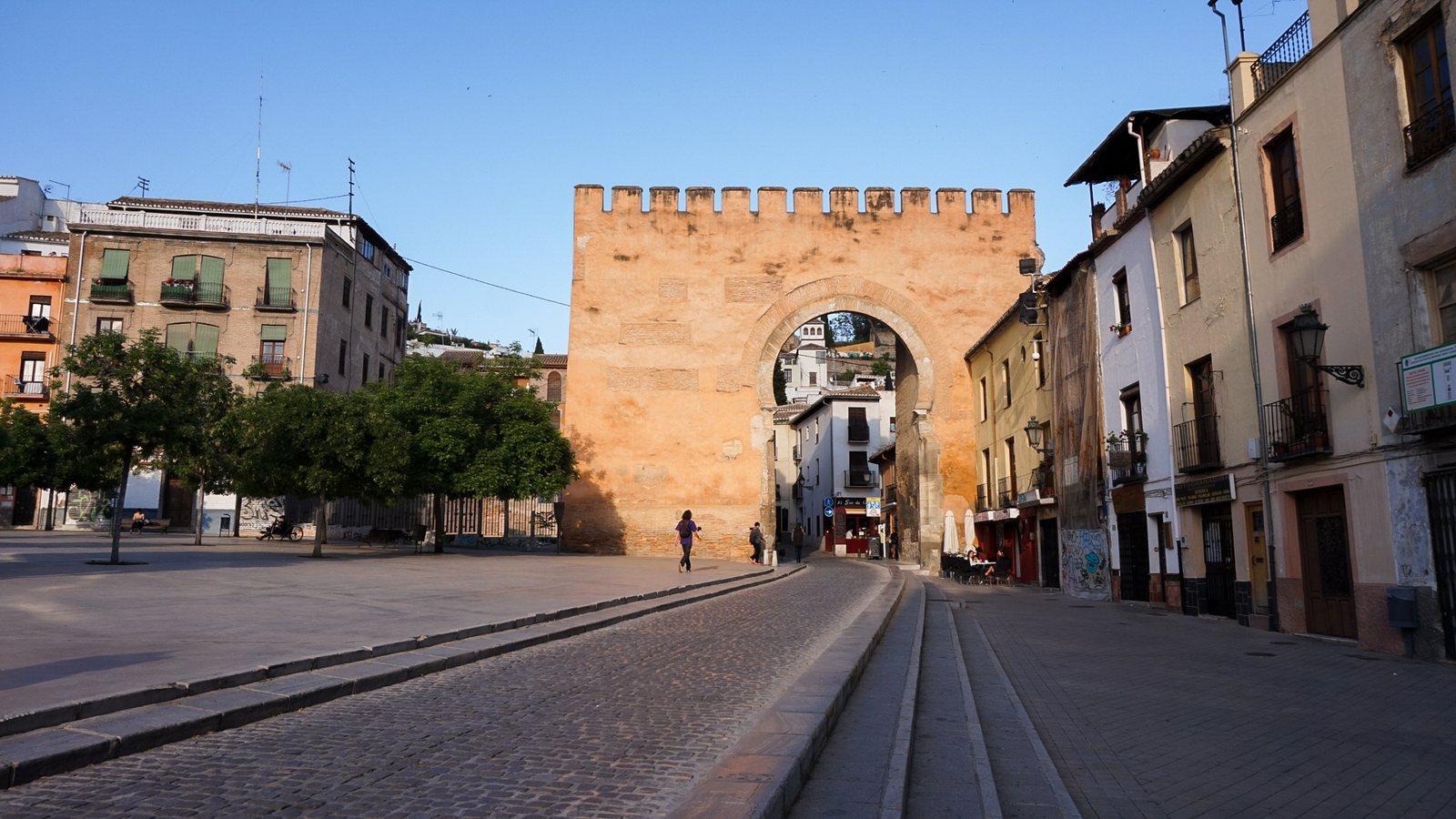
The gate stands at the start of Elvira Street, at the edge of the Albaicín, Granada’s historic quarter. It formed part of the wall around the medina. That wall connected the gate eastward with Puerta Monaita and southwestward with Puerta del Sulfuro de Antimonio, also known as Bab al-Kubl or the Arch of Tinajillas. The fortified entrance comprised four towers, three barbicans, or outer defenses protecting a gateway, and two inner gates in addition to the exterior entrance. The gates linked with the Alhacaba slope and Elvira Street.
Outer entrance
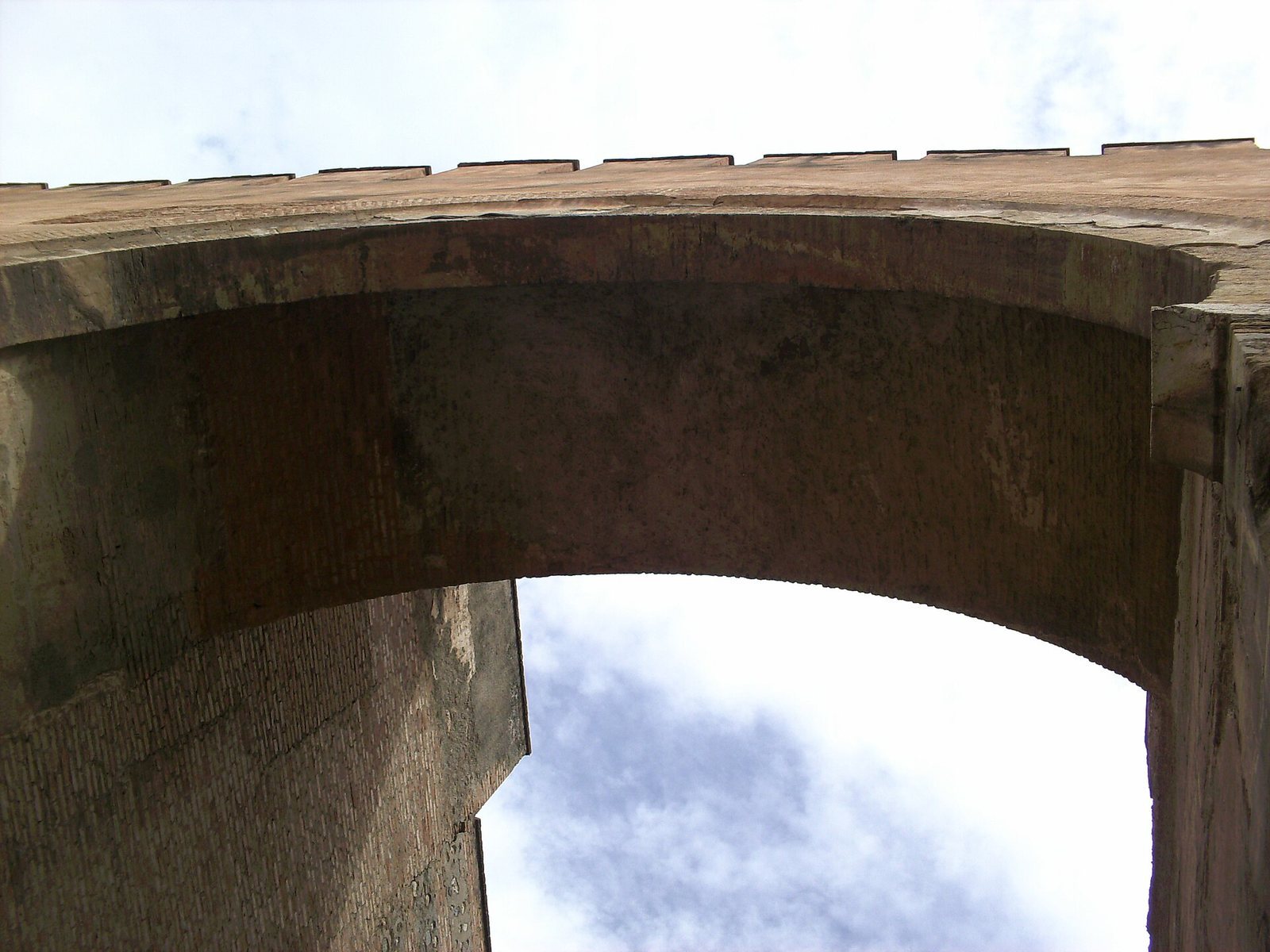
The principal surviving feature is the outer arch from the Nasrid period, flanked by two towers built of rammed earth. The structure has crenellations, a row of raised blocks and gaps along its top. Its horseshoe-shaped opening is formed from wedge-shaped sandstone blocks, and a stone band frames the arch. The doorway’s stone sides have beveled edges. On the north side, three tall brick arches support the wall-walk, a passage along the top of a defensive wall.
Wall and adjoining houses
The twelve houses built against the wall in 1612 remain almost unchanged. Their position preserves the later relationship between the homes and the city’s defensive structure.
Ibn Malik burial ground
A large Muslim cemetery, known as Ibn Malik, formerly lay outside the gate. The Royal Hospital occupies part of the cemetery’s former grounds.