Prag Mahal: A Nineteenth-Century Palace in Bhuj
Site at a Glance
- Rating
- 4.2
- Popularity
- Medium
- Country
- India
- Primary era
- Modern
- External website
- Open
- Eras represented
- Modern
- Civilizations
- Unclassified
- Site type
- Domestic
- Remains
- Palace
On this page8 sections
History
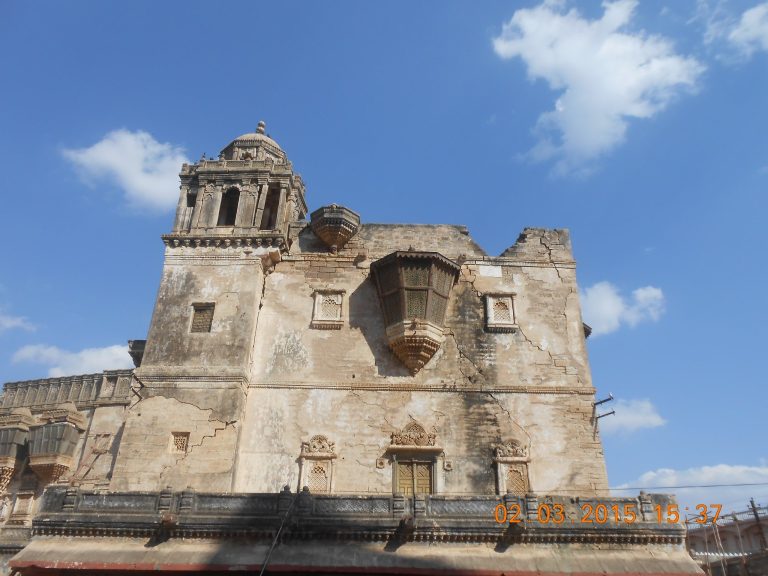
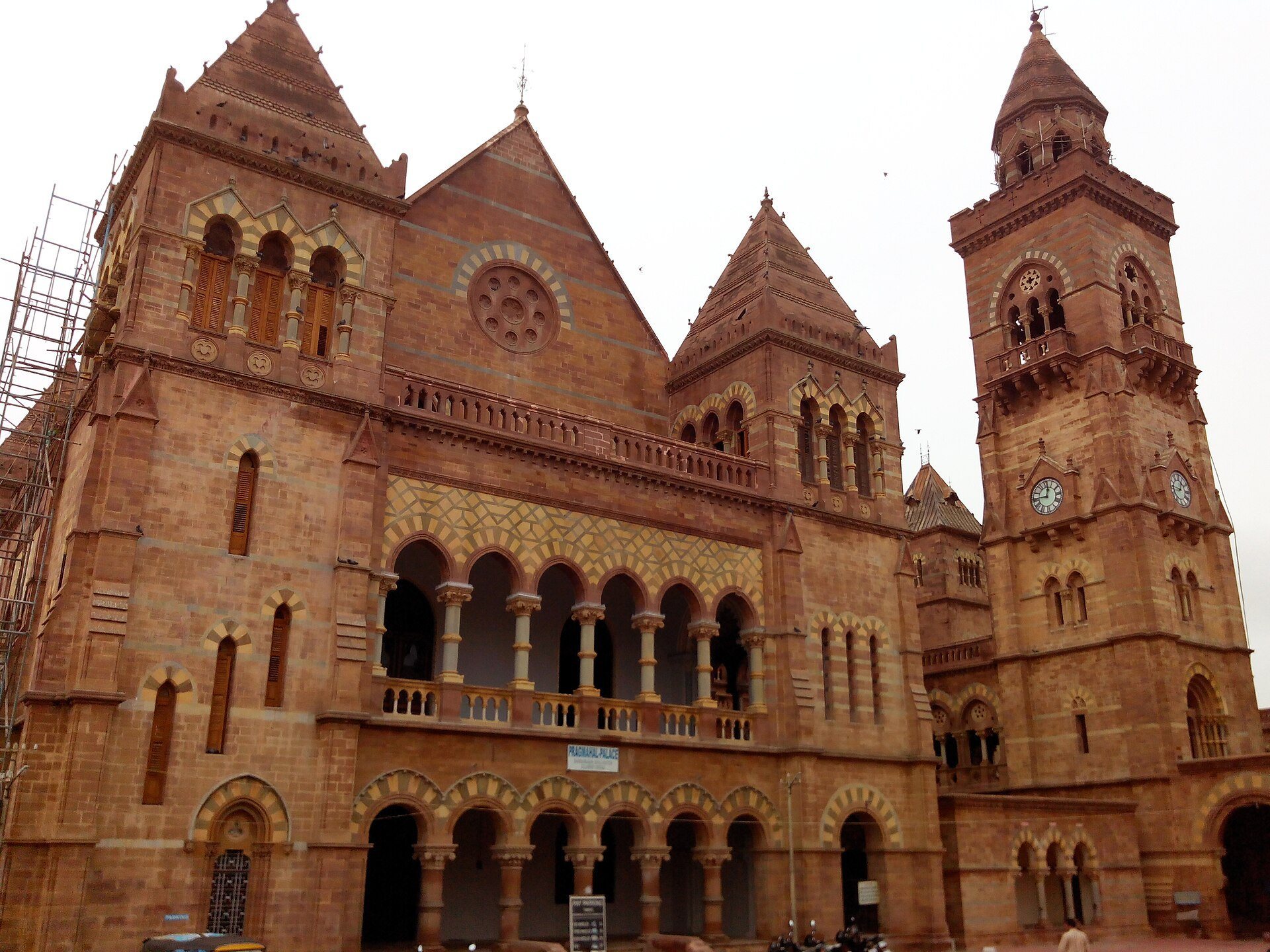
Prag Mahal is a nineteenth-century palace in Bhuj, India, commissioned by Rao Pragmalji II and built in an architectural character described locally as Italian Gothic. It stands beside the Aina Mahal and reflects the ambitions of the rulers of the princely state of Kutch.
Construction under Pragmalji II
Construction began in 1865 under Rao Pragmalji II. Colonel Henry St Clair Wilkins designed the palace, while the local Kutchi builder community known as the Mistris of Kutch also took part in its construction. Italian artisans were involved as well, and palace craftsmen were paid in gold coins. The work eventually cost 3.1 million rupees.
Pragmalji II died in 1875 before the palace was finished. His son, Khengarji III, succeeded to the leadership of Kutch, and the building was completed in 1879 during his regency.
Damage and restoration
The 2001 Gujarat earthquake severely damaged Prag Mahal. In 2006, thieves broke into the palace, taking antiques worth millions of rupees and damaging other objects. By the following year, the building was described as being in a forlorn state.
Repairs to the palace and its tower followed after the Indian actor Amitabh Bachchan took a personal interest in its restoration. Maharao Pragmalji III, the ruler of Kutch, later renovated the Durbar Hall.
Remains
Prag Mahal combines Italian marble with sandstone from Rajasthan. Its design has also been characterized as a Romanesque interpretation of the Indo-Saracenic Revival, a nineteenth-century approach that joined European forms with South Asian architectural traditions. Corinthian columns, whose capitals carry stylized acanthus-leaf decoration, and latticework depicting European plants and animals contribute to the palace’s decorative character.
Palace buildings and tower
Main hall
The main hall contains decaying taxidermy. The Durbar Hall retains broken chandeliers and classical statues, while its later renovation forms part of the palace’s continuing physical history.
Clock tower
A 45-foot-high tower rises from the palace and contains a clock. The tower and clock were repaired after the earthquake, and the tower provides views across Bhuj.
Courtyard temple
A small temple stands in the courtyard behind the palace. Its stonework is intricately carved and forms a distinct religious feature within the palace complex.