Pistyros: A Fortified Greek Trading Settlement on the Thracian Coast
Site at a Glance
- Popularity
- Very Low
- Country
- Greece
- Primary era
- Iron Age
- Eras represented
- Iron Age, Classical
- Civilizations
- Ancient Greek, Thracian
- Site type
- City
On this page15 sections
History
Iron Age occupation and Greek foundation
Pistyros was a fortified Greek settlement near Pontolivado in Greece, founded by colonists from Thasos, a Greek island city-state, in the second half of the seventh century BCE. Handmade Thracian pottery indicates that people lived at the site during the Iron Age, before the Greek colony was established.
Pistyros was probably the latest settlement in Thasos’s overseas holdings and served as a trading station on the coastal route between Asia and the Thracian-Macedonian frontier. It likely had access to ore deposits in the Lekani Mountains and also served Thasian expansion toward those resources and their smelting.
Metalworking and political connections
Metalworking became the settlement’s principal livelihood. The extraction and working of gold, silver, copper, iron, and lead brought prosperity during the second half of the sixth century BCE.
In 480 BCE, after crossing the Nestus River during his invasion of Greece, the Persian king Xerxes I passed Pistyros. Herodotus recounts that the army’s draught animals drank the neighboring salt lake dry.
A payment of 300 drachmas to Athens in 434/3 BCE may indicate that Pistyros was an independent member of the Delian League, an Athens-led alliance whose members contributed to its support. Another interpretation identifies the Pistyros mentioned by Herodotus with Cistiro, an inland place in Athenian tribute lists. The inhabitants of the coastal settlement may also have helped establish the separate trading settlement of Pistiros at modern Vetren in Bulgaria, though that connection remains uncertain amid the competing identifications.
Decline and archaeological study
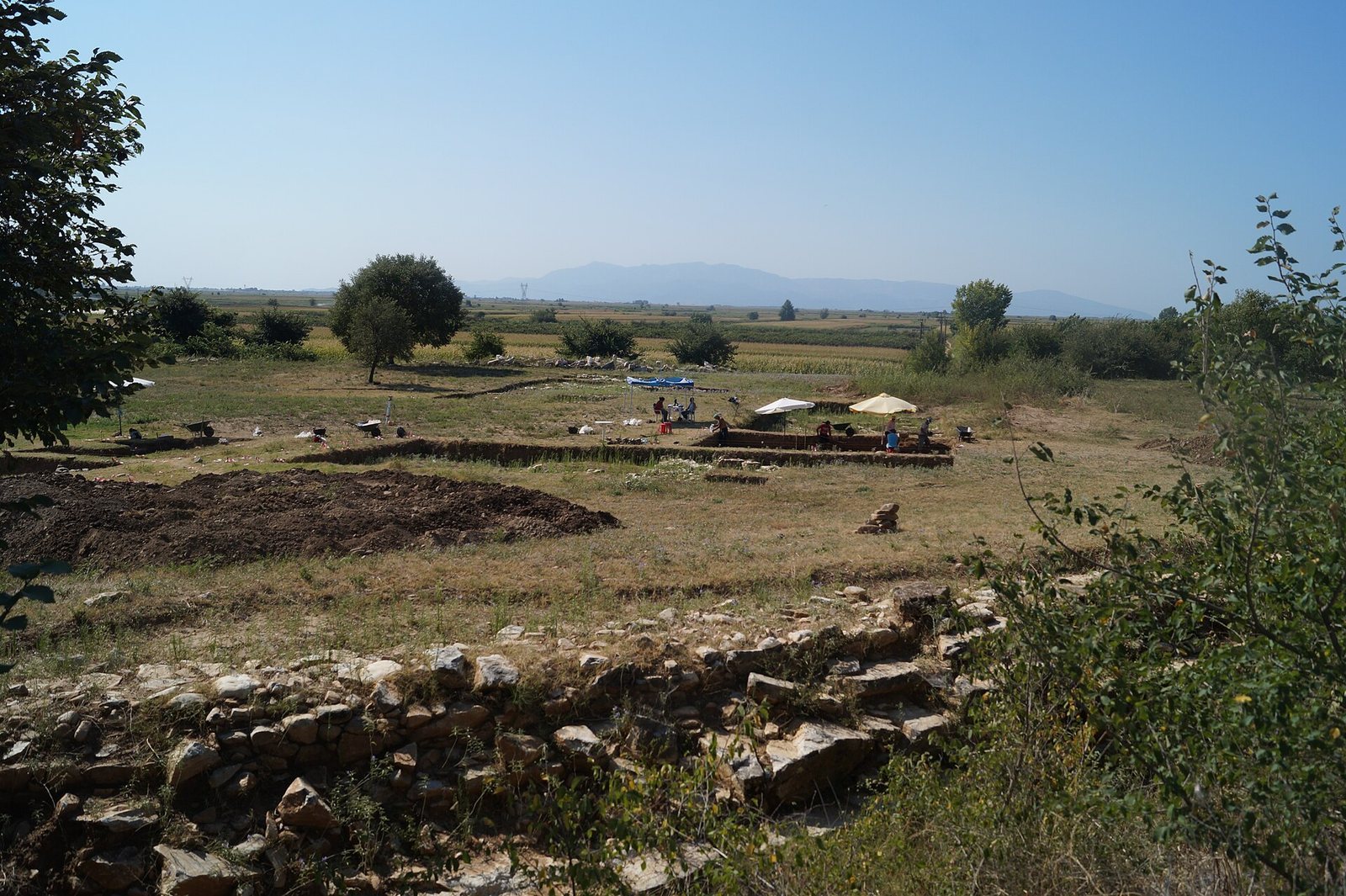
Metalworking ended in the third century BCE, after which Pistyros’s population declined rapidly. The settlement was abandoned in the first century BCE. Archaeologist Chaido Koukouli-Chrysanthaki discovered the site in 1971 and began systematic excavations. Work resumed in 2014 under Stratis Papadopoulos, a regional official responsible for antiquities. Study of Pistyros may also help clarify ancient Neapolis, whose remains lie beneath later construction.
Remains
The settlement lies about 20 km east of modern Kavala, the ancient city of Neapolis, beside a salt lake identified as Cisteris and modern Vasova Lake. The lake was described as rich in fish and about 5.5 km around. Pistyros’s fortifications follow the regular Thasian type, a defensive style associated with Thasos. Its sixth-century BCE city wall enclosed nearly 15 hectares.
Fortifications and access
City wall
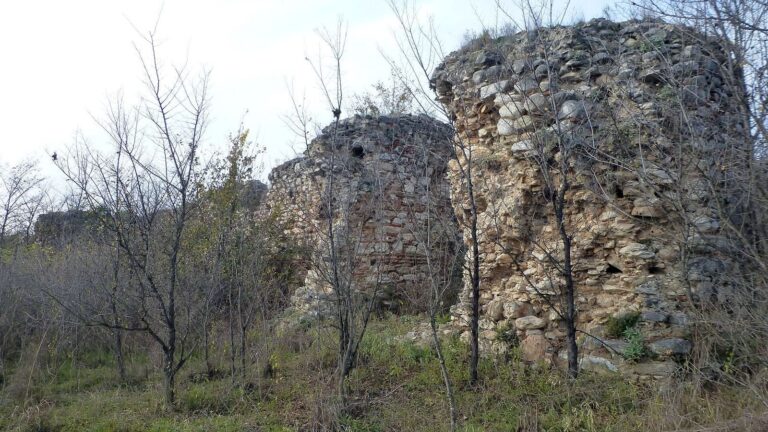
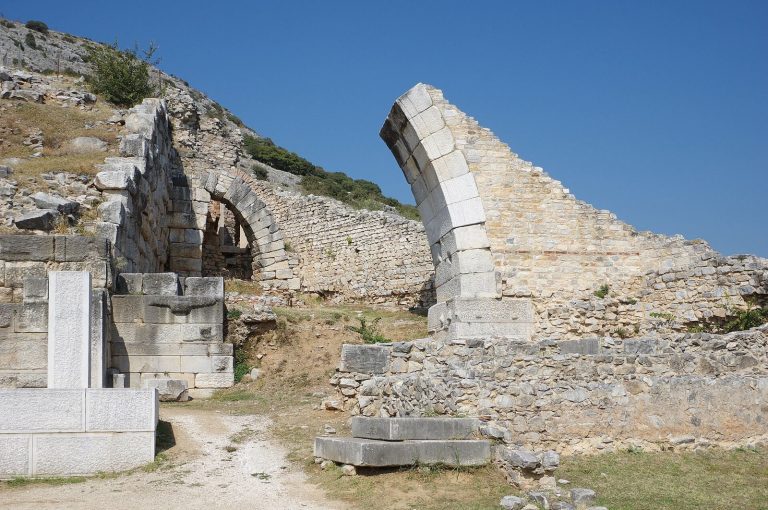
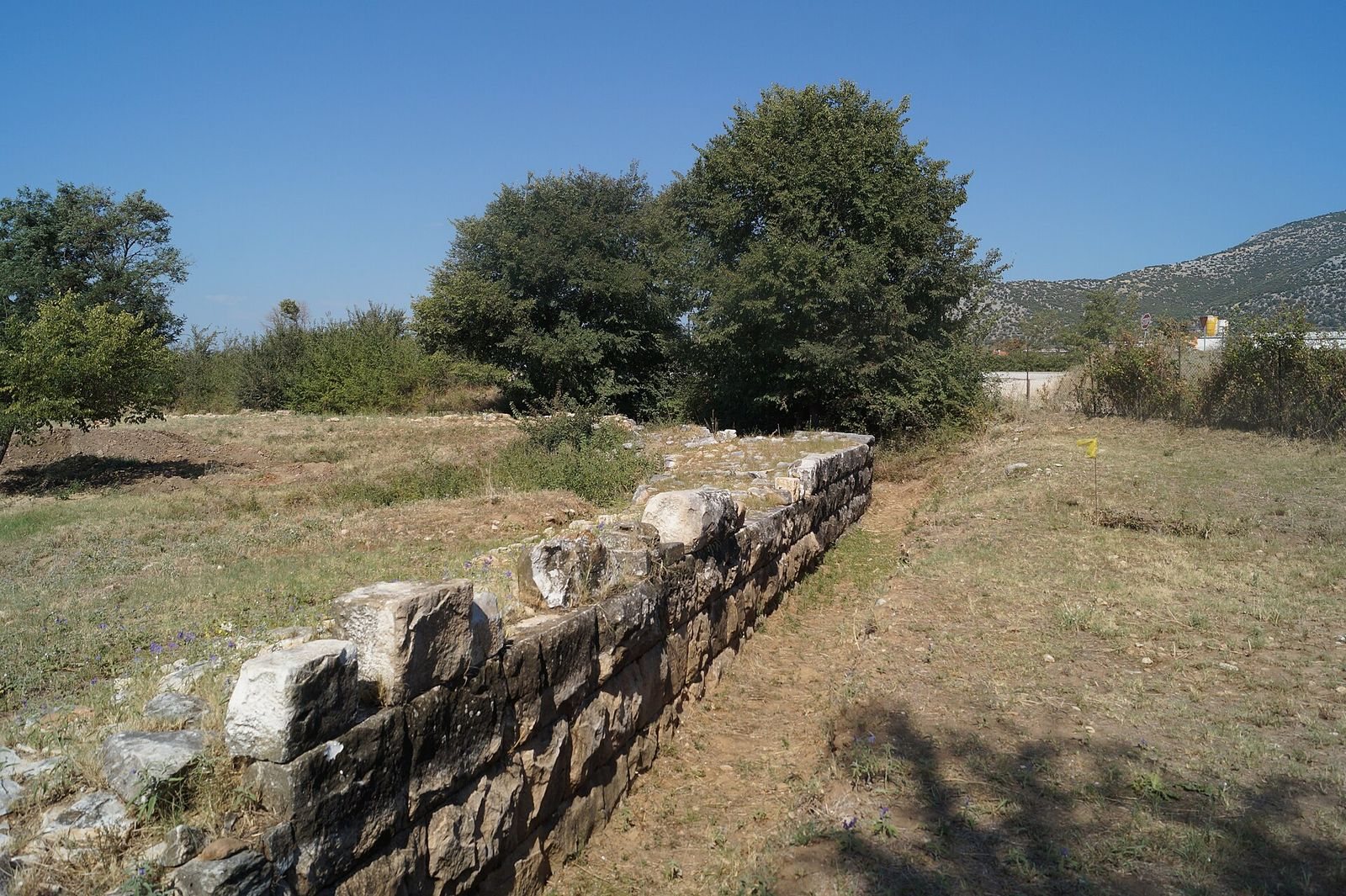
Built of Thasian marble, the wall was about 500 m long and generally 2.60 m thick, narrowing to 1.60 m on the west. It originally stood about 6 m high and had six towers and two gates. Excavations located its northeastern corner and a small tower.
Southwest gate and road
A paved road at the southwest gate probably led to the harbor, linking the settlement’s entrance with the coast.
Wall graffiti
Early Greek graffiti on the wall’s outer face use the Parian alphabet, a Greek script associated with the island of Paros.
Buildings and industrial remains
Buildings and streets
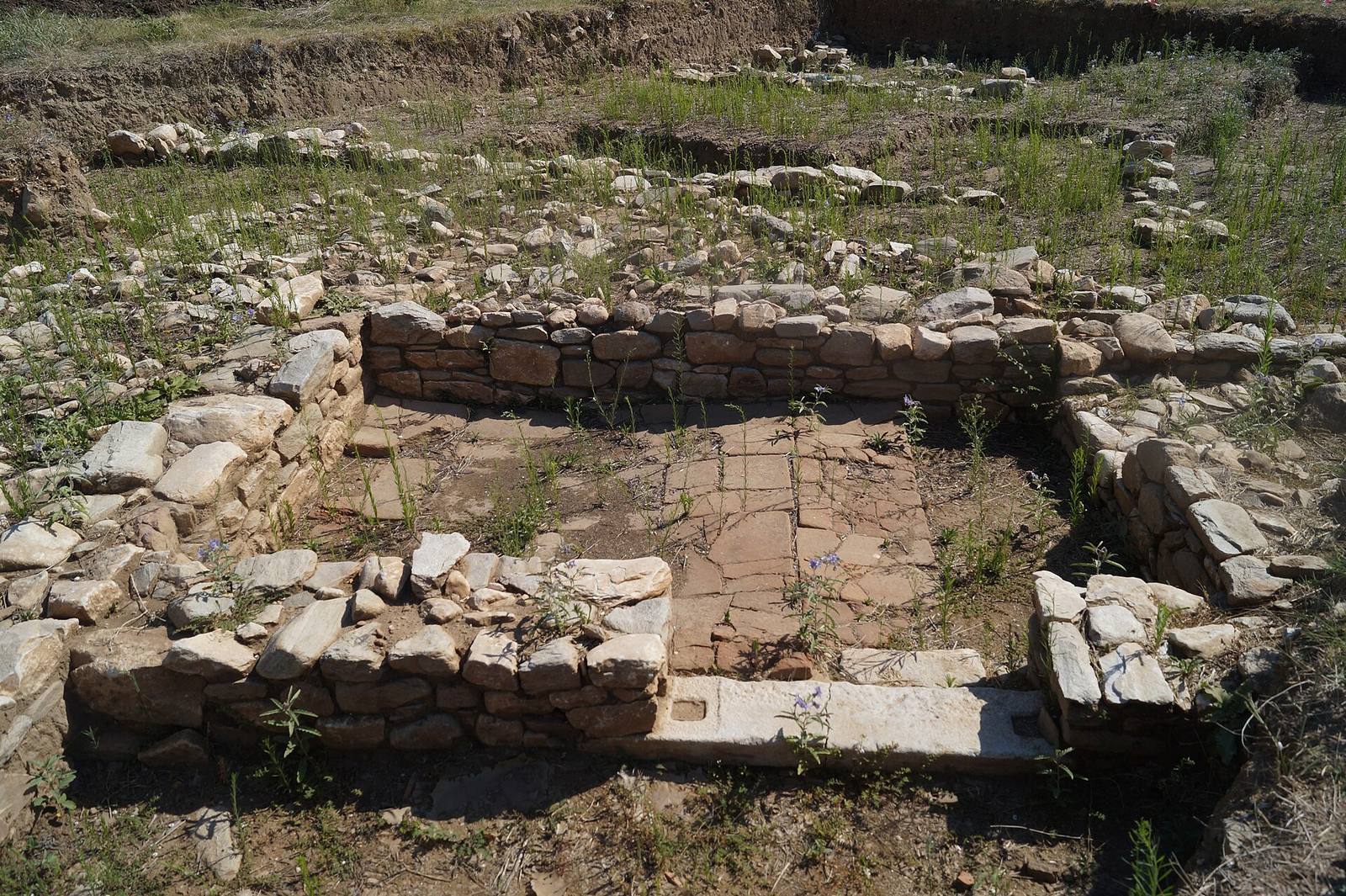
Excavations have uncovered a complex of buildings, along with buildings and streets dating to the second century BCE.
Metalworking installations
Furnaces, together with large quantities of ore and slag, are physical evidence of the metalworking that sustained the settlement.
Inscriptions and finds
Dedication to Zeus
An inscription honoring Zeus dates to the time of Philip II, king of Macedon in the fourth century BCE.
Pottery and coins
Imported pottery came from Thasos, the Cyclades, Asia Minor, and Athens. A hoard of 55 silver coins from Thasos and Neapolis dates to the last quarter of the sixth century BCE.