Pistiros: An Inland Greek Trading Center in Thrace
Site at a Glance
- Popularity
- Medium
- Country
- Bulgaria
- Primary era
- Classical
- Eras represented
- Classical
- Civilizations
- Ancient Greek
- Site type
- Settlement
- Remains
- Town
On this page15 sections
History
Pistiros was an inland Greek emporion, or trading center, near modern Vetren in Bulgaria. Greek colonists founded it in the third quarter of the fifth century BC, in ancient Thrace, and it flourished especially during the fourth century BC.
Foundation and flourishing
The settlement was established during the rule of one of the early Odrysian kings, Teres I, Sparatocos, or Sitalkes. Its position gave merchants access to timber and nearby copper, iron, and gold mines. The Hebros, the ancient name for the Maritsa River, could be navigated by small boats, and several major roads converged in the area. Pistiros developed strong trading connections with Aegean Thracian centers including Thasos, Maroneia, and Apollonia, and became an important outlet for Thracian metals bound for Greece.
Its first major phase extended from the second half of the fifth century to the end of the first quarter of the fourth century BC, when the settlement was founded and its initial defenses and infrastructure established. From the second quarter through the end of the fourth century BC, its plan was reorganized during the reign of Cotys I, and Pistiros reached its peak. More than 1,000 copper and silver coins found at the site reflect trade within Thrace and with the wider Greek world. They include issues of Thracian rulers such as Amadocus I, Bergaios, Cotys I, Amadocus II, Teres II, and Cersobleptes; Greek cities including Thasos, Maroneia, Parion, Apollonia, and Kardia; and Macedonian and Hellenistic rulers such as Philip II, Alexander the Great, Demetrios Poliorketes, Lysimachos, and Seleucus I. A hoard found in 1999 contained 552 silver and gold coins issued by Alexander, Demetrios Poliorketes, Lysimachos, and Seleucus.
Royal authority and a mixed community
An official document from the Thracian royal court, now known as the Vetren inscription, clarifies the relationship between the settlement and the Odrysian rulers. Discovered in 1990 at Bona Mansio, about three kilometres from Pistiros, it records royal guarantees for merchants from Thasos, Apollonia, and Maroneia. These covered their lives, property, land, and business, preserved debts owed to them, and exempted them from tolls on specified routes. The document also forbade placing a garrison at Pistiros, moving the settlement, or taking merchants’ property. Its oath invoked the precedent of Cotys I and prohibited the king and his family from killing or blinding citizens of Maroneia, or citizens of Apollonia and Thasos living at Pistiros, or confiscating their property. The terms show royal involvement in the settlement’s affairs while it retained political autonomy.
Stones from Pistiros’s walls had been reused in buildings at Bona Mansio, and the inscription helped identify the excavated settlement as Emporion Pistiros, known from ancient writings. This identification is strongly supported by the evidence, although it has remained disputed. Greeks and Thracians lived together at Pistiros, whose population was not ethnically uniform. Dionysos, the Greek god associated with wine, fertility, and religious ecstasy, also figured in Odrysian royal ideology: Cotys I and his successor swore an oath in the god’s name. The nearby Bessoi were associated with guarding a sanctuary of Dionysos in the Rhodope Mountains.
Destruction and later use
Pistiros’s third and final phase ran from the third century to the beginning of the second century BC. In the third century BC, the Celts burned and destroyed the settlement. A village later grew among its ruins and became a center for working metals and making ornaments. Imported luxury pottery from workshops in Attica, the region around Athens, ceased arriving at about the middle of the third century BC, a change also seen across the Thracian plain.
Excavation and interpretation
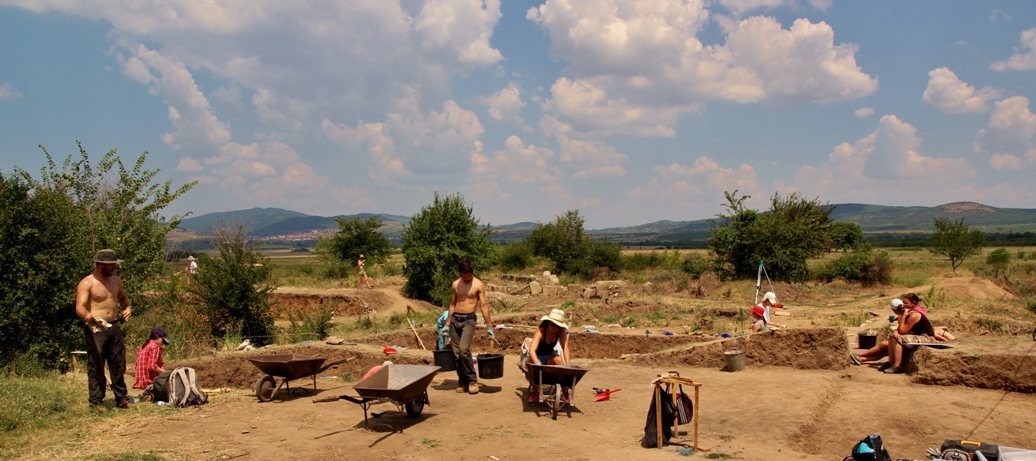
Excavations began in 1988 under Polish archaeologist Mieczysław Domaradzki, with Bulgarian, British, Polish, Czech, and French archaeologists taking part. Research was guided by the National Archaeological Institute with Museum of the Bulgarian Academy of Sciences in cooperation with the Archaeological Museum in Septemvri. An annual archaeological field school has operated at Pistiros since 2013. Domaradzki initially considered whether the settlement might have served as a royal residence for a sub-king of Upper Thrace. The lack of a palace or other evidence for a pronounced social hierarchy led him to abandon that proposal, though a few scholars continued to support it into the late 1990s. Finds from Pistiros are preserved and exhibited at the Archaeological Museum in Septemvri.
Remains
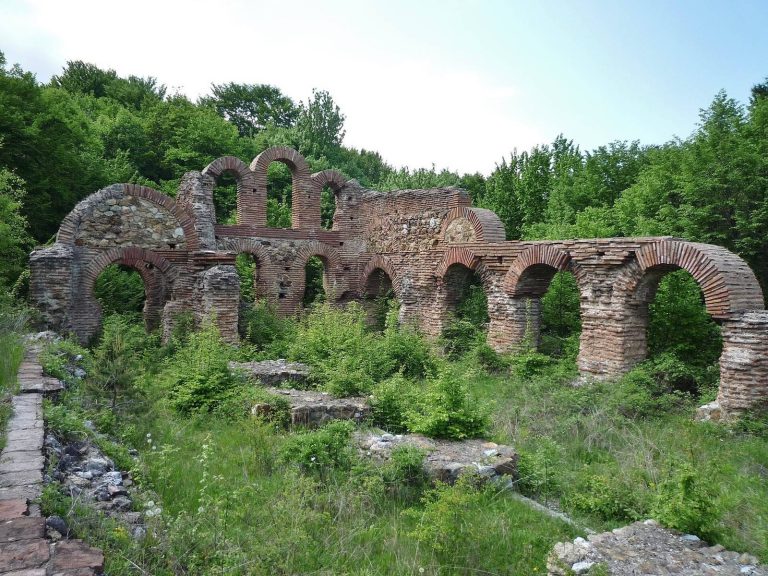
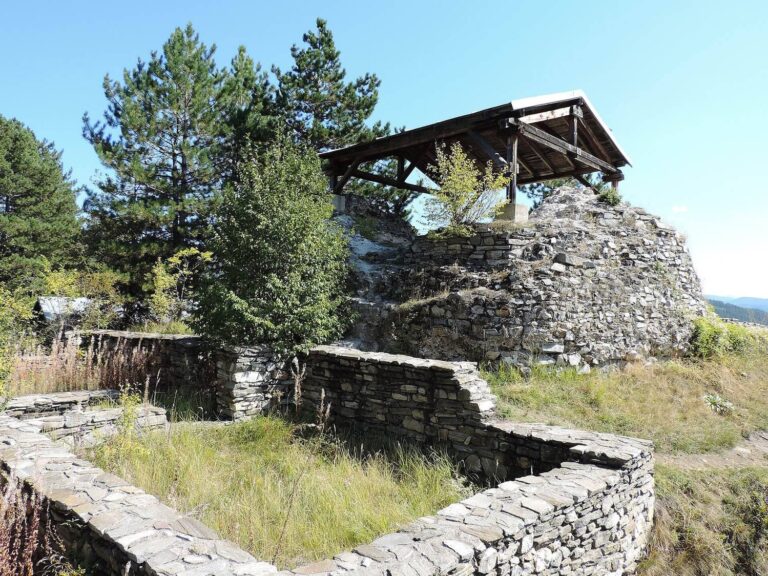
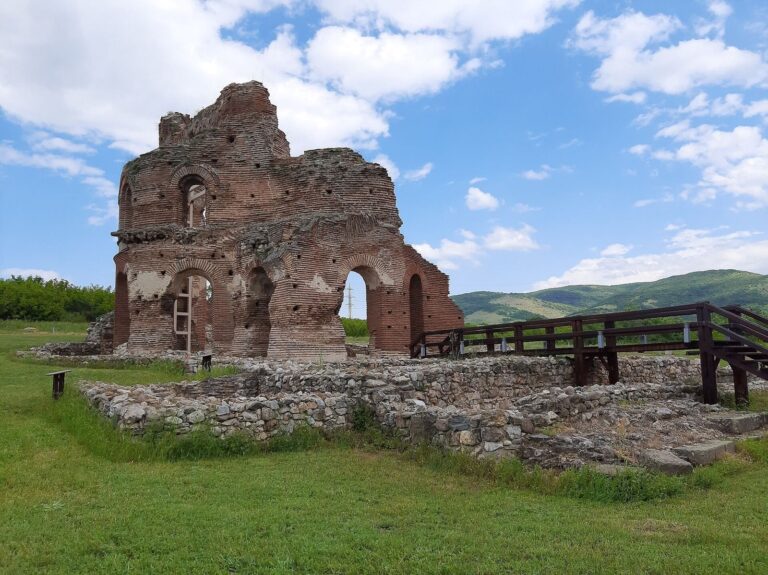
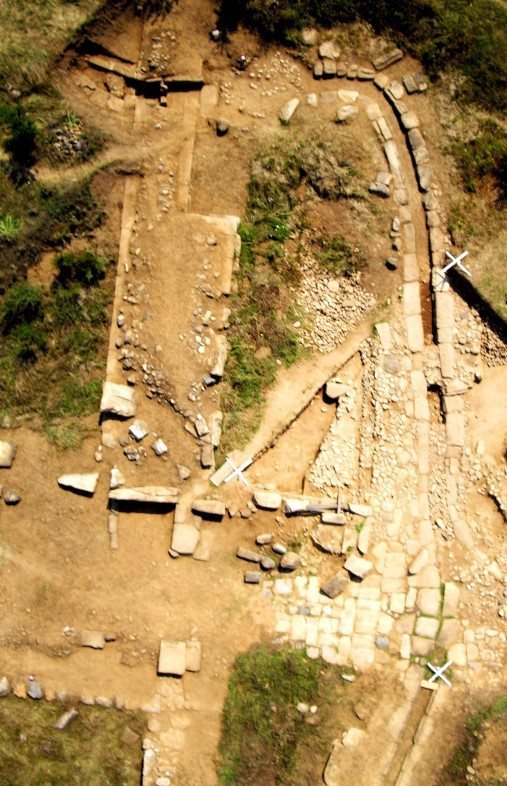
Pistiros survives as ruins with an eastern stone fortification, paved streets, buildings on stone foundations, and a sewer system. Excavations have also recovered pottery, cult objects, evidence of metalworking, inscriptions, and animal remains.
Fortifications and urban fabric
Eastern fortifications
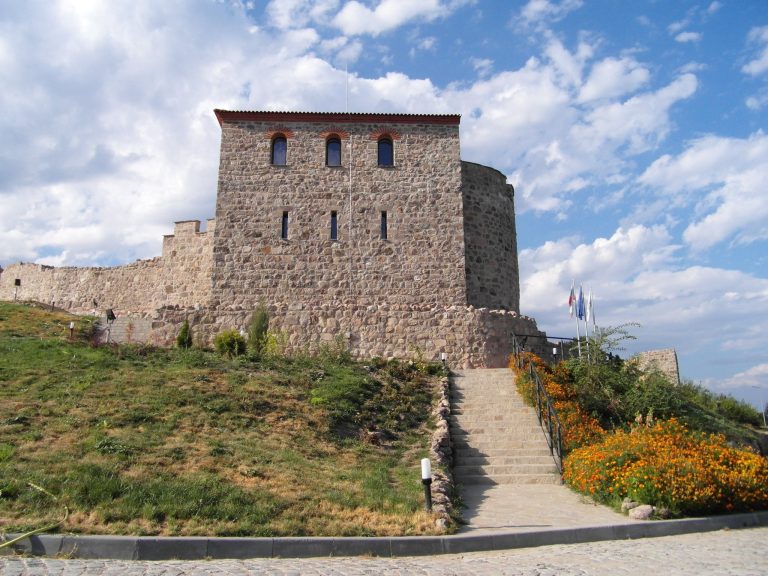
The eastern defensive wall was built from stone blocks, following the model of fortification systems on Thasos. A gate, towers, and a projecting defensive platform formed part of the wall’s defenses.
Streets, buildings, and drainage
Stone-paved streets ran among buildings with stone foundations. The settlement also had a well-constructed sewer system, part of the early urban infrastructure.
Excavated finds
Pottery
Locally made pottery, both wheel-made and handmade, is more common than imported ware. Among the transport jars, the largest group came from Thasian workshops or workshops in Thasos’s territory. Painted vessels include mixing bowls, drinking cups, and storage vessels, with scenes of everyday life, mythology, leisure, and games. Black-glazed finds include cups, bowls, small oil containers, and fish plates. Complete vessels include sealed wine jugs decorated with Dionysian scenes, among them an abduction scene and a satyr mask.
Cult objects
The excavated objects associated with cult include complete and fragmentary clay altars in varied shapes and with different decorations, some still in place. Other finds include animal-shaped figures made of clay or stone, human-shaped clay figures, miniature objects, and portable hearths.
Metalworking equipment
Crucibles, equipment for blowing air, cutting tools, and shaping tools such as matrices and molds provide evidence for jewellery production at Pistiros.
Inscriptions and marked pottery
Grave inscriptions identify Greeks from Apollonia and Maroneia. Greek and Thracian names scratched onto pottery provide further evidence of the settlement’s varied population.
Animal remains
Analysis of bird bones identified 16 species or forms, including mallards, greylag geese, common buzzards, domestic chickens, common cranes, white storks, hooded crows, and ring ouzels. The cranes were hunted, while domestic chickens made up about 69 percent of the bird remains.