Piedras del Tunjo Archaeological Park: A Rock-Art Site in Colombia
Site at a Glance
- Rating
- 4.5
- Popularity
- Very High
- Country
- Colombia
- Primary era
- Stone Age
- Eras represented
- Stone Age
- Civilizations
- Unclassified
- Site type
- Civic
- Remains
- Rock Art
On this page11 sections
History
Piedras del Tunjo Archaeological Park occupies the eastern edge of Facatativá, Colombia, where rock shelters and painted stone surfaces preserve a history whose earliest dates and makers remain uncertain. The paintings may be about 10,000 years old, and possibly as much as 12,000 years old, but it is unclear whether they were made in one period or several. Proposed links to the Herrera period, an earlier archaeological period in the region, or to the Muisca have not been established. The park is also classed as a satellite site of Bacatá, a major Muisca settlement in the Bogotá region, and grouped among pre-Muisca sites. Neither classification determines who made the paintings or when.
Muisca use and the Spanish conquest
The Muisca, an Indigenous people of the Colombian highlands, inhabited the area when the Spanish arrived. The rocks held spiritual importance for them, and Muisca rulers used the site as a refuge during the Spanish conquest. In April 1537, soldiers serving the Spanish conquistador Gonzalo Jiménez de Quesada killed the Muisca ruler Tisquesusa at one possible location within the park. The site was abandoned during the conquest.
From rural estate to protected park
From colonial times, the land formed part of a large rural estate owned by a wealthy family. The park was established in 1946 as part of a state effort to acquire and protect the archaeological site, initiated by education minister Germán Arciniegas. The acquisition was completed in 1969. It was the first time the state acquired land specifically to protect an archaeological site.
Administration passed from the National Ethnological Institute, later the Colombian Institute of Anthropology and History, to the Colombian Institute of Culture, known as Colcultura, and then to the Regional Autonomous Corporation, or CAR. Colcultura lent the park to CAR for use from 1972, and CAR assumed management in 1988.
Conservation and continuing damage
Government neglect and the lack of an effective protection policy contributed to serious deterioration. Vandalism became the principal and most aggressive source of damage, and the paintings deteriorated more rapidly in recent decades. Open fires, including fires used for roasting, were allowed for many years. Repeated heating and cooling damaged the rocks, and fires were prohibited in 2007.
In 2003, the Colombian Institute of Anthropology and History began conservation work on rock 16, removing vandal marks and whitish salt deposits while starting detailed records of the paintings. The rock was restored in 2004. Quarrying had also threatened painted rocks, and extraction may have removed entire stones. In February and March 2012, several stones at the park boundary were dynamited to sell the stone for luxury housing construction.
Remains
Rock landscape and layout
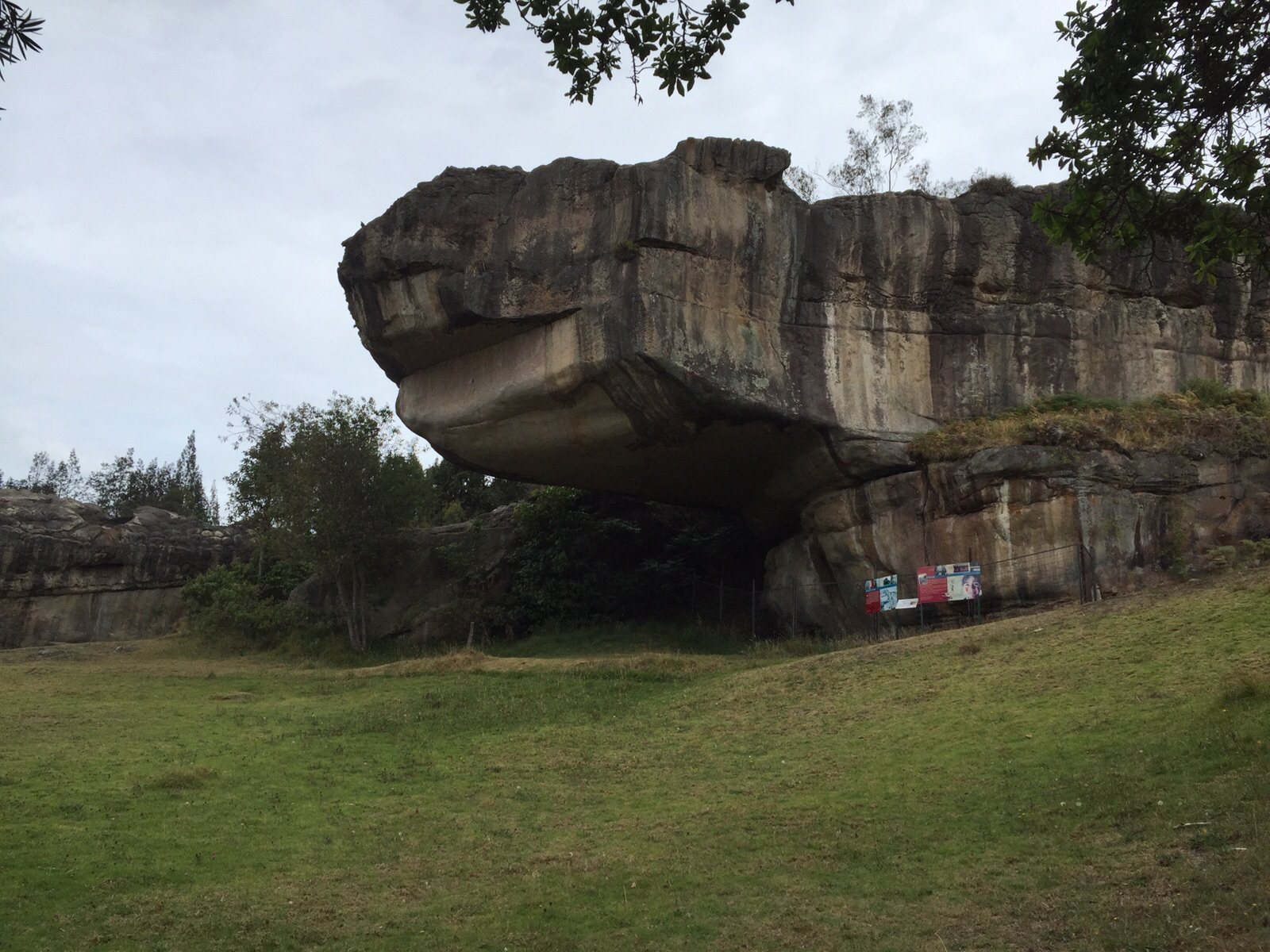
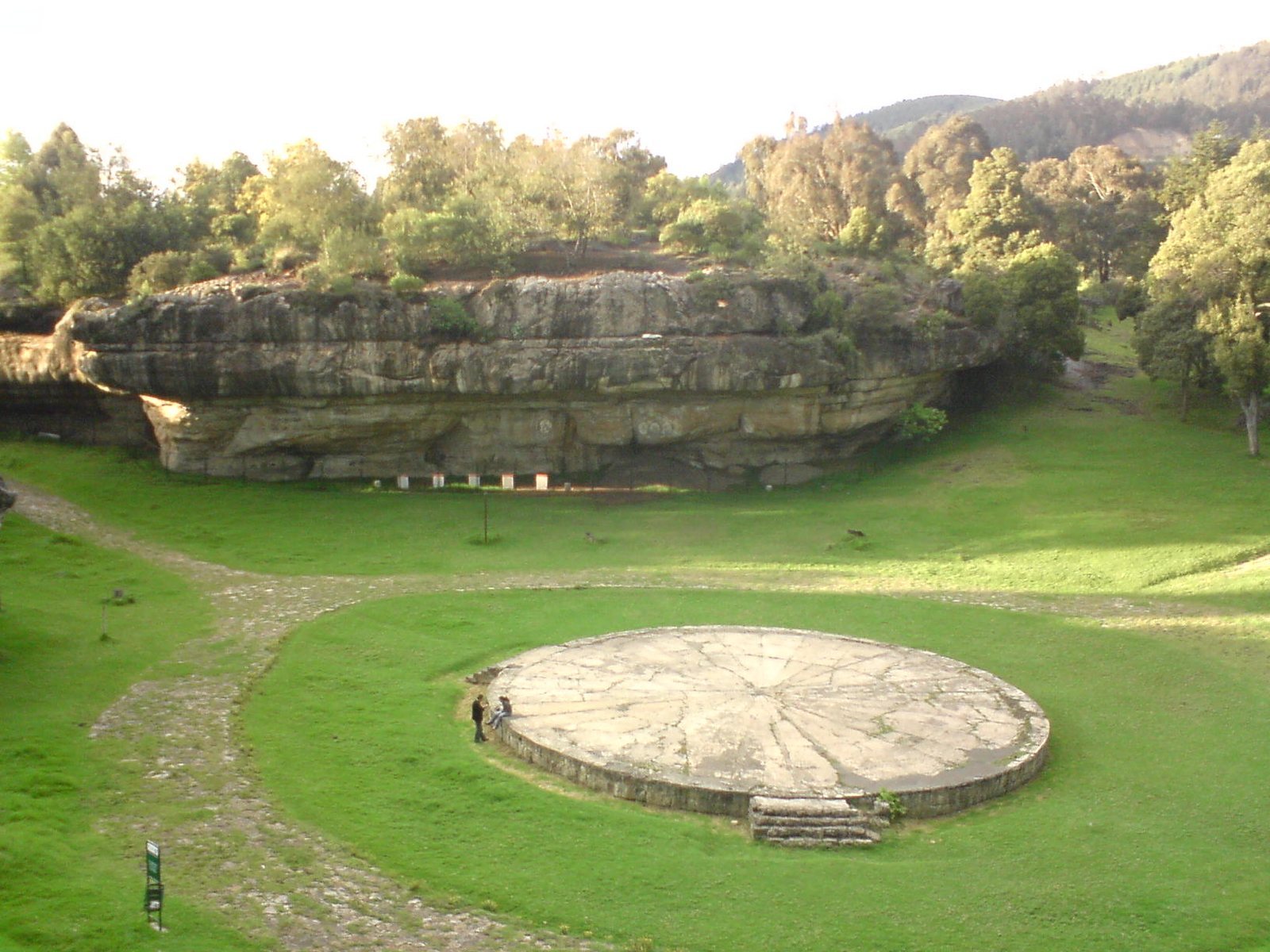
The park covers about 27 hectares at roughly 2,600 metres above sea level, around 40 kilometres northwest of Bogotá. Its ground is broken by irregularly scattered, weathered rock ledges, chiefly sandstone of the Guadalupe Group, a geological unit in the eastern Colombian Andes, with reddish clay sediments around them. Large boulders lie among wooded grounds; a circular platform occupies the centre, and a lake lies to the northeast. The park also supports valuable plant and animal life.
Painted rock surfaces
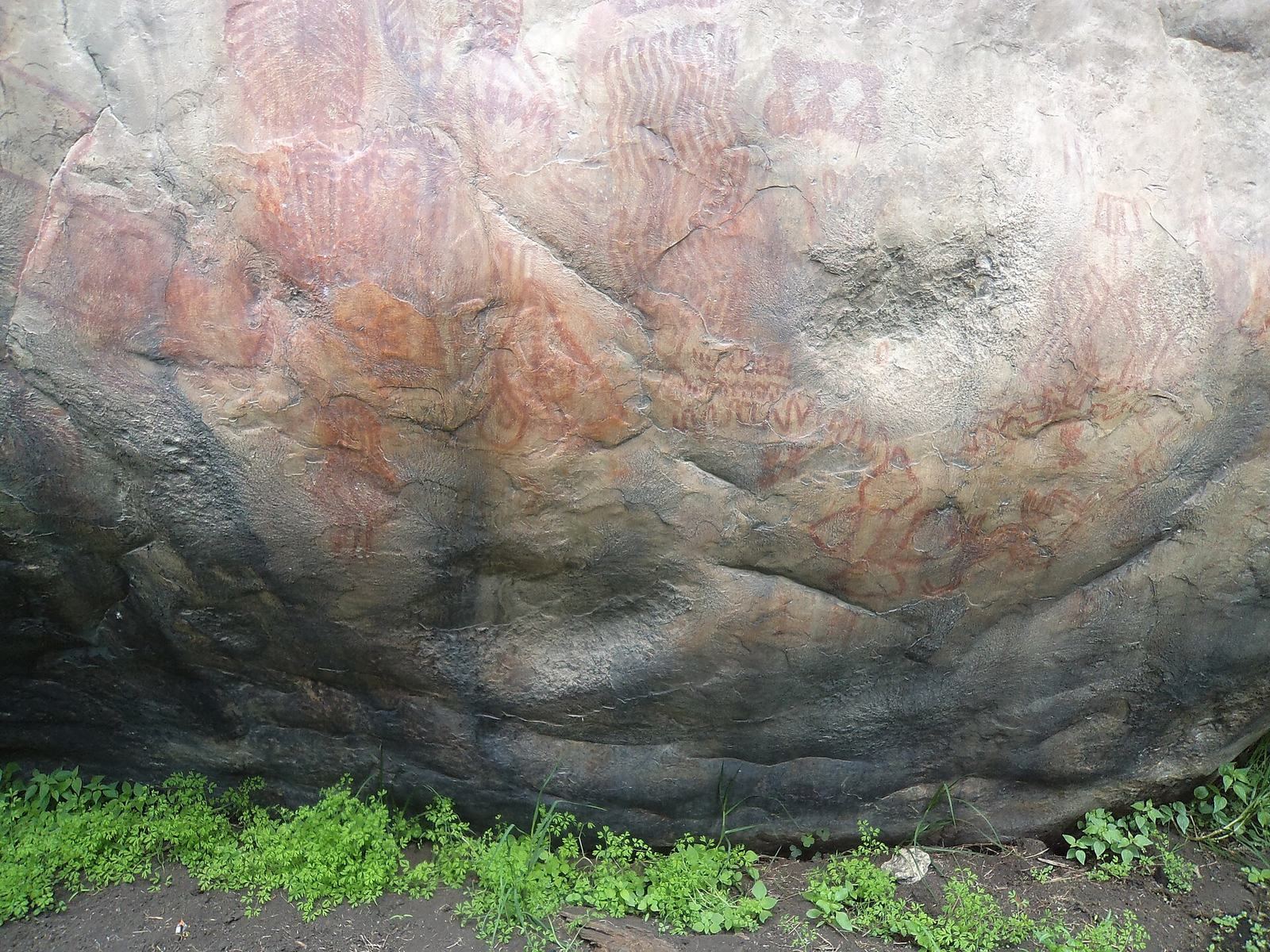
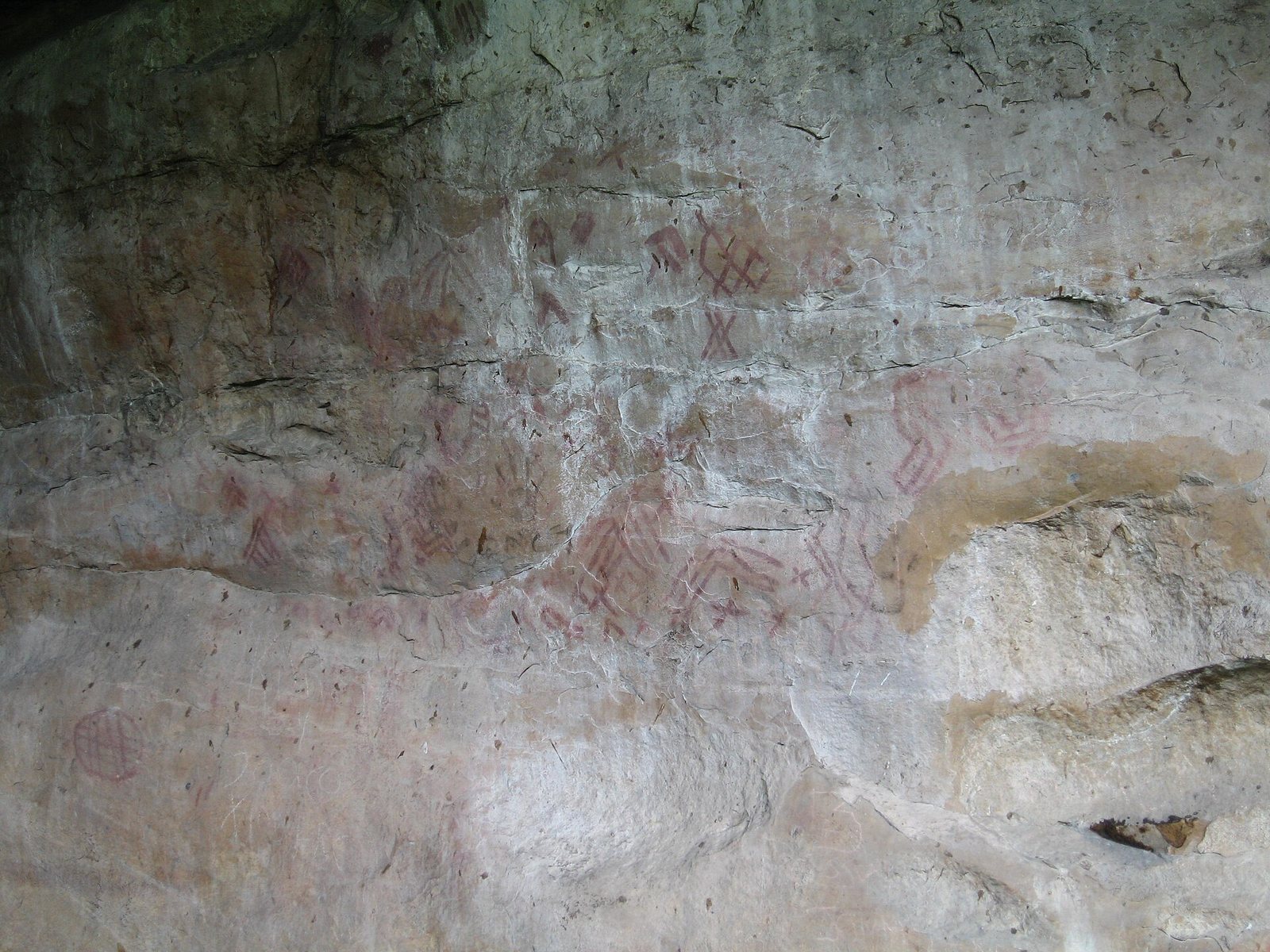
The shelters and painted rocks form one of the largest concentrations of pictographs, or images painted on rock, in an urban area. Before 1970, paintings could be seen across about 60 rock surfaces. Most are red; white paintings were noted on rock 16 after its restoration, and other colours may occur elsewhere. The paint is opaque and consistent, and may have been applied dry, though this has not been confirmed by laboratory testing. Suggested ingredients include iron- and manganese-based minerals, a red mercury mineral, charcoal and clay, as well as blood, eggs, animal fat, plant oils or colourants. These possibilities have not been verified for the park’s paintings. Some images have blurred but stable edges, perhaps because they were washed soon after being made. The surviving paintings are in advanced deterioration, and many are obscured. Their original meanings are unknown; readings based on universal symbols remain speculative.
Processes affecting the rocks
Natural weathering
Roots and vegetation growing above the rocks can split stone and damage its surface. In damp conditions, fungi and lichens cover painted areas, while runoff deposits soil and organic matter over them. Bird droppings also harm the rock physically and chemically. Water entering the stone and moving through it before evaporating leaves whitish salt deposits that obscure paintings. These deposits can harden and contribute to flaking and loss of painted surfaces; deliberately wetting images to make them clearer adds to the problem. Across the park, water between grains expands in low temperatures and contributes to surface flaking. Some paintings lie on surfaces that had already begun to flake, so this process cannot be assigned to a particular period of painting.
Fire damage
Repeated fires left soot on the rocks and caused damage through rapid temperature changes. Weekend fires burned for about five or six hours a day over roughly 30 years, heating the stone to around 50–80°C during the day. Overnight temperatures could fall to about −5°C. This cycle of intense heating and cooling fractured the rock.
Vandalism and physical damage
Vandal marks include cuts made with sharp tools, knives or broken glass, and graffiti applied with aerosol paint, markers, vinyl, chalk and acrylics. Pressurised aerosol paint can penetrate the stone and cover broad areas. Other marks were made with household and school materials, including highlighters, crayons, pens, correction fluid, pencils and water- or oil-based paints. Charcoal from roasting was also used for inscriptions. During filming at the park, crews covered some rocks with mud; it penetrated the stone, and cleared patches later attracted further graffiti. Climbing has also damaged the rocks, while quarrying may have removed whole painted stones.