All Saints Church, Loughborough: A Medieval Parish Church
Site at a Glance
- Rating
- 4.5
- Popularity
- Medium
- Country
- United Kingdom
- Primary era
- Medieval
- Eras represented
- Medieval, Modern
- Civilizations
- British, English
- Site type
- Religious
- Remains
- Church
On this page11 sections
History
All Saints Church, officially All Saints with Holy Trinity, is the Church of England parish church in Loughborough, United Kingdom. The Church of England is the Anglican church in England, and the parish follows the Broad Church tradition, which accommodates a wide range of theological views. The church belongs to the Diocese of Leicester, an area under a bishop’s jurisdiction, within the Province of Canterbury, a group of dioceses under an archbishop.
Medieval origins
A church on the site is first mentioned around 1330. An earlier Saxon or Norman church may have stood here, and the rise may have been used for worship before Christianity. All Saints grew into one of England’s largest parish churches. Its scale is understood to reflect Loughborough’s importance in the medieval wool trade.
Loughborough Grammar School was probably established around 1496 by a priest associated with the church. The local wool merchant Thomas Burton made provision for the school in his will. It occupied part of the church grounds until it moved to a purpose-built campus in 1850.
Religious change and parish institutions
Changes in church government shaped the parish during the 16th and 17th centuries. Rector John Willock was removed in 1554 and replaced by Arthur Lowe, then returned in 1559. In 1647, rector Nicholas Hall was ejected and Oliver Bromskill took his place after appointment by the Leicestershire Parliamentary committee, which was imposing Presbyterian government led by elders rather than bishops. Bromskill was removed in 1662 during the Great Ejection, when clergy who would not conform to the Church of England’s requirements were expelled. Hall returned as rector.
The medieval Old Rectory, first mentioned in 1228, served as the rectory until 1958. Most of the building was demolished before the medieval parts that remained were recognized.
Later parish history
Reverend James Bickham arrived as rector in 1761 with his personal library. At his death in 1785, he left 641 titles to the parish, of which 420 have survived. He also bequeathed two volumes of Milton’s prose to the Bishop of Worcester. George Wallace Briggs, a hymn composer, served as rector from 1918 to 1934.
All Saints is the official seat of the Archdeacon of Loughborough, a senior cleric with administrative responsibilities in the diocese. The archdeacon’s oversight extends across six deaneries, local administrative districts in the church structure: Akeley East (Loughborough), Akeley South (Coalville), Akeley West (Ashby-de-la-Zouch), Guthlaxton, Sparkenhoe West (Hinckley and Market Bosworth), and Sparkenhoe East.
Restoration and protection
Sir George Gilbert Scott directed a restoration from 1859 to 1862. A vestry was added in 1873–74, and the chancel floor was raised during the interwar years. Further restoration took place between 1992 and 2001. The church is a Grade I listed building, the highest category of protection for buildings of exceptional interest in England.
Remains
Church building
Plan and principal fabric
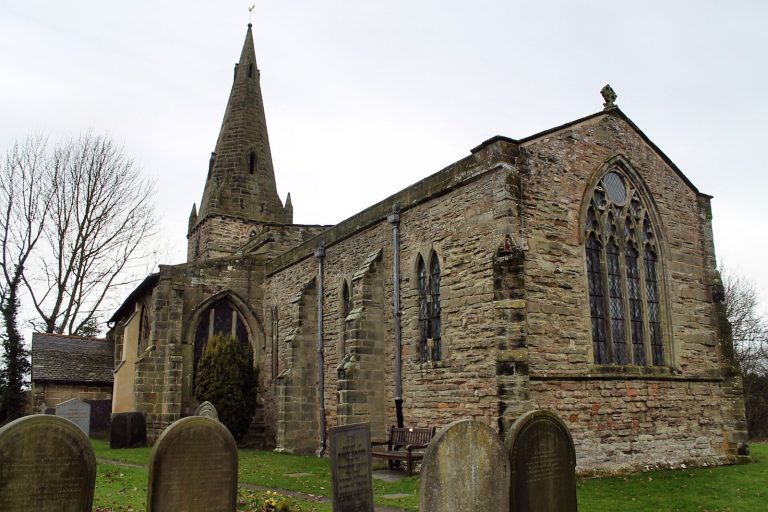
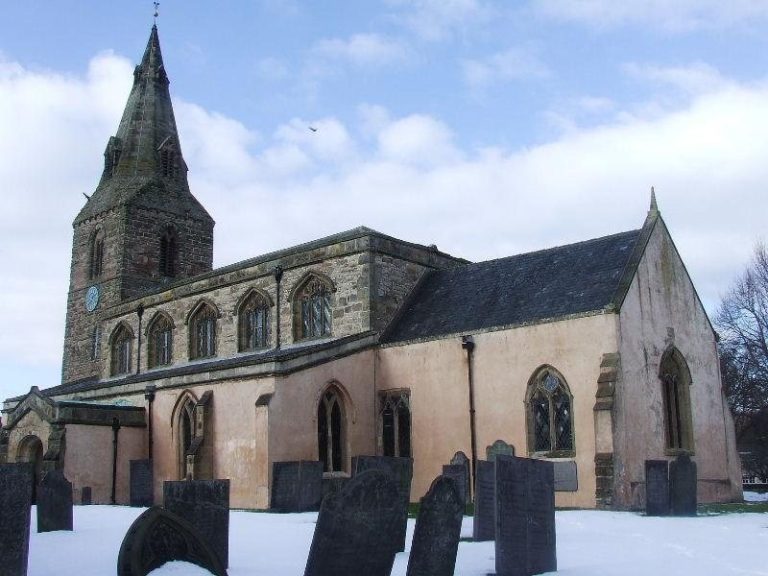
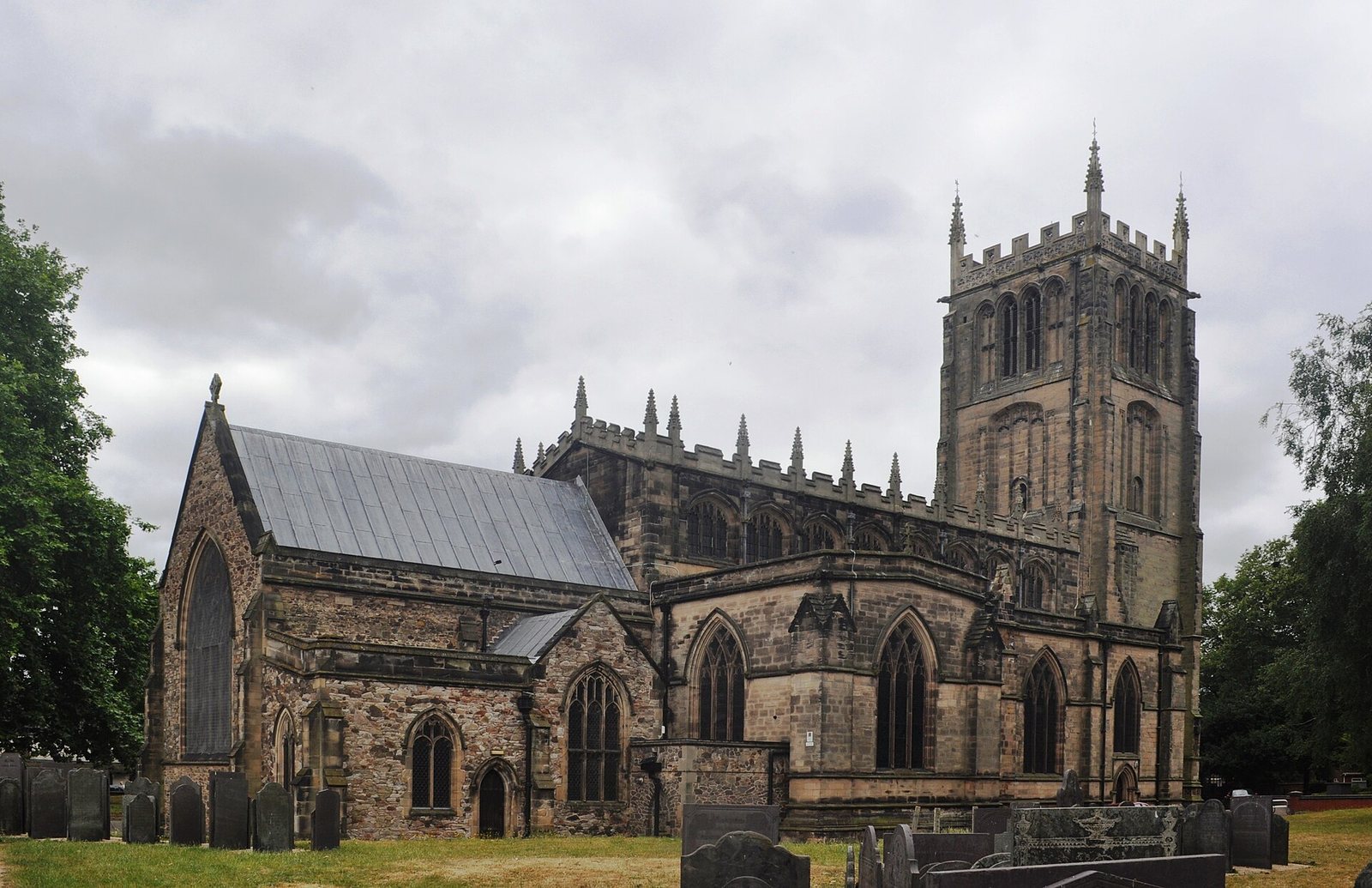
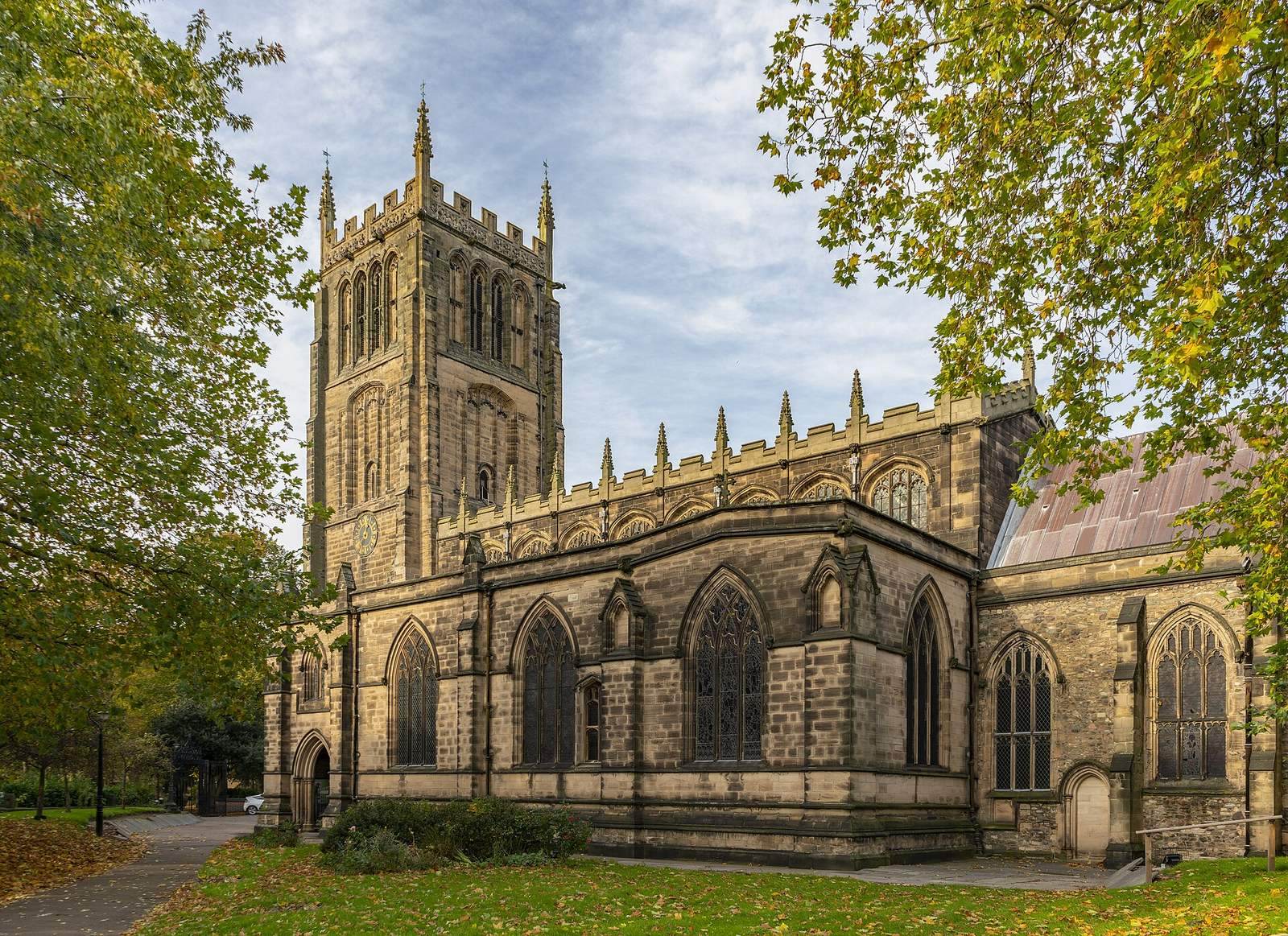
The church stands on a slight rise in Loughborough’s old town. It is a Gothic building with a three-aisled basilican plan, meaning a central nave flanked by aisles. Construction began around the time of the first recorded church, about 1330, and continued into the late 15th or early 16th century. The nave and chancel reached their present dimensions in the 14th century; the clerestory, an upper wall with windows above the aisle roofs, and the west tower belong to the late 15th or early 16th century.
Tower and bells
A single tower is attached to the west end and holds ten bells used for change ringing, the practice of sounding bells in changing sequences. The present set was cast between 1897 and 1899 at the nearby John Taylor Bellfoundry. The tenor bell weighs 30 long hundredweight and two quarters (3,420 pounds or 1,550 kilograms) and sounds in D-flat. The largest four bells were made by lost-wax casting, in which a wax model is replaced by molten metal in a mould, and carry intricate patterns around their waists.
Memorial chapel and interior features
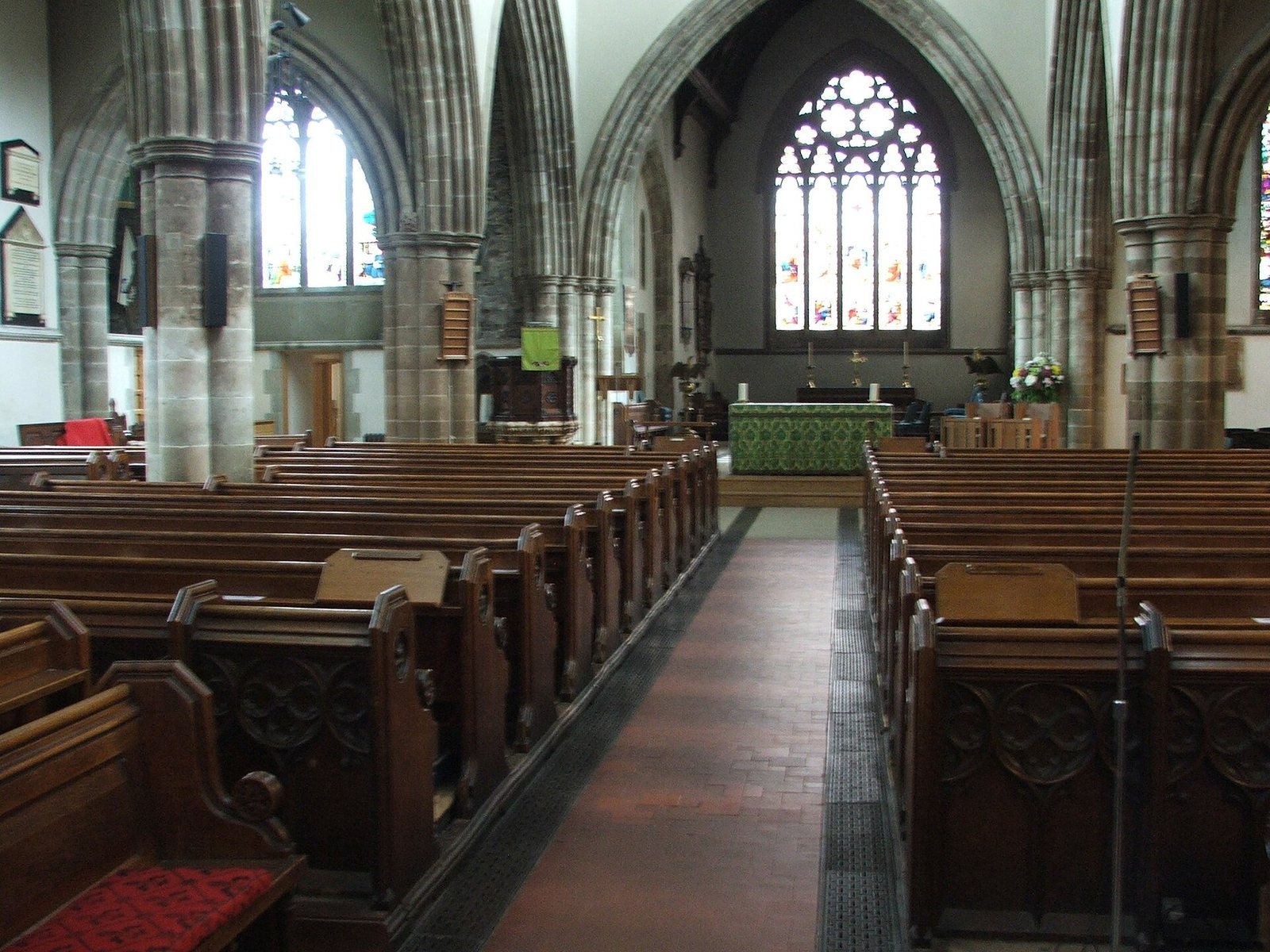
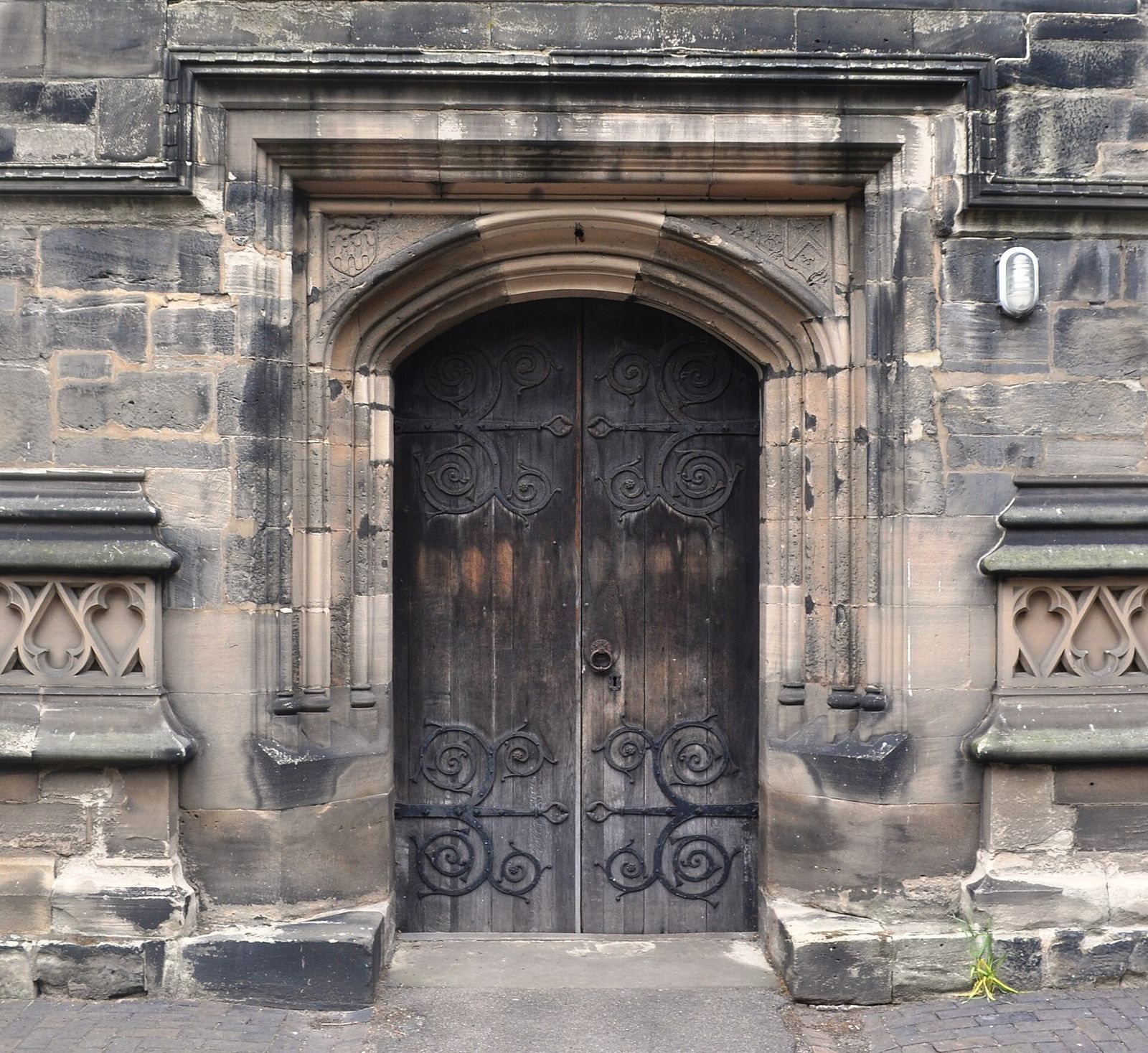
The porch beneath the tower serves as a memorial chapel to the Taylor family, including four brothers who died in the First World War. The church’s stained-glass windows date from 1862 to 1930. Its two-manual pipe organ, an instrument with two keyboards, was installed by Henry Willis in 1966; much of its pipework came from a redundant organ at Bridgway Hall in Nottingham. Scott’s restoration replaced the benches and removed the earlier pulpit, while tombstones set into the floor were transferred to a nearby cemetery.
Old Rectory
The surviving sections of the Old Rectory lie west of the church and form part of the medieval manor house. The building now houses a small museum.