Phintias: A Greek City and Commercial Port in Sicily
Site at a Glance
- Popularity
- Medium
- Country
- Italy
- Primary era
- Classical
- Eras represented
- Iron Age, Classical, Medieval
- Civilizations
- Ancient Greek
- Site type
- Settlement
- Remains
- City
On this page9 sections
History
Phintias was a Greek-founded city on Sicily’s southern coast in Italy, established around 282 BCE by its namesake, Phintias, tyrant (a ruler outside ordinary constitutional rules) of Akragas. Also called Finziade, it was the last Greek foundation in Sicily. Its late foundation meant it was not classed as a polis, a Greek political community centered on a city and its territory, and it never equaled Gela in importance.
Early occupation and foundation
Settlement occupied the site during the Archaic period, an early era of Greek history before the Classical period. Finds from this phase have been linked to settlers associated with Gela before that city was founded. In the sixth century BCE, Phalaris, another ruler of Akragas, established a fortress there. An identification of the site with Inikos, a city associated with the Sicanians, an ancient people of Sicily, is poorly supported.
In 310 BCE, a battle near the site ended with the defeat of Agathocles, ruler of Syracuse, by the Carthaginians. Around 282 BCE, Phintias founded the city and named it after himself. Diodorus Siculus says that he destroyed Gela and forced its inhabitants to move to the new settlement. Inscriptions and coins show that the residents continued to call themselves Gelans for a long time, with the name still in use into the first century BCE. They were also known in Latin as Phintiensis.
Roman control and the Punic War
During the First Punic War, Rome’s first major war against Carthage, Phintias’s harbor sheltered a Roman fleet. The Carthaginians attacked it and sank many ships. Rome freed the city after its naval victory at the Battle of Cape Ecnomus, where the Roman fleet under Marcus Atilius Regulus defeated the Carthaginians. Phintias was under Roman control from the third century BCE.
Port and grain trade
Phintias prospered in the second century BCE as a commercial port and grain-exporting center. Cicero describes its harbor as an outlet for large quantities of grain, when Sicily supplied grain to Rome. Its position near the African coast and continued connections with Halaesa on Sicily’s northern Tyrrhenian coast also supported its commerce. The population may have reached 10,000. Its inhabitants spoke Greek in the Doric dialect used in Sicily.
Decline and later history
The city declined around 40–30 BCE. Cicero calls it Phintia, while Pliny and Ptolemy describe it as inland despite its harbor. Ptolemy uses the form Fthinthia, and the Itinerarium Antonini Augusti gives the apparently mistaken form Plintis. During the Roman imperial period, the urban center may have shifted slightly; rural settlement in the surrounding area continued into Late Antiquity.
Ruins remained visible in the nineteenth century. Archaeological excavations began in the 1980s, with further work carried out from 2000 to 2014.
Remains
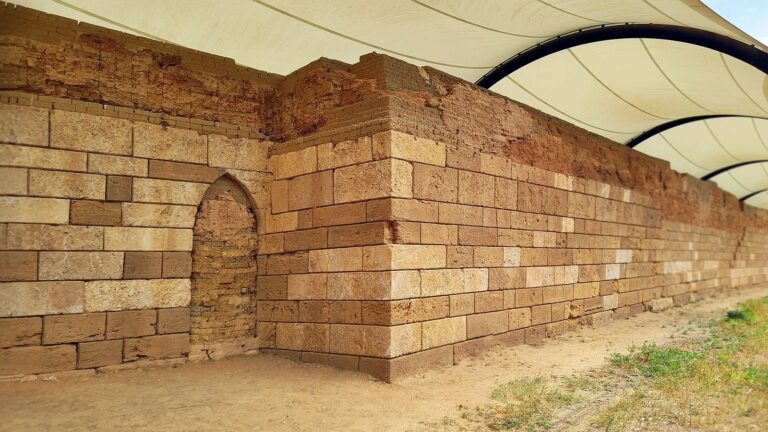
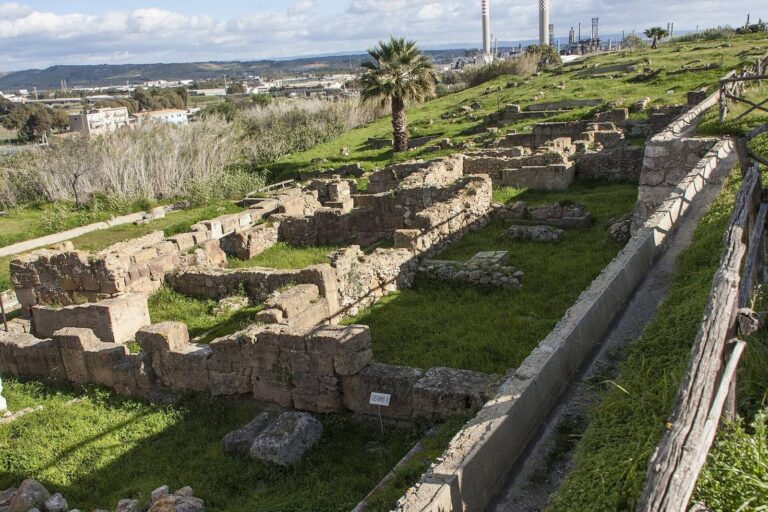
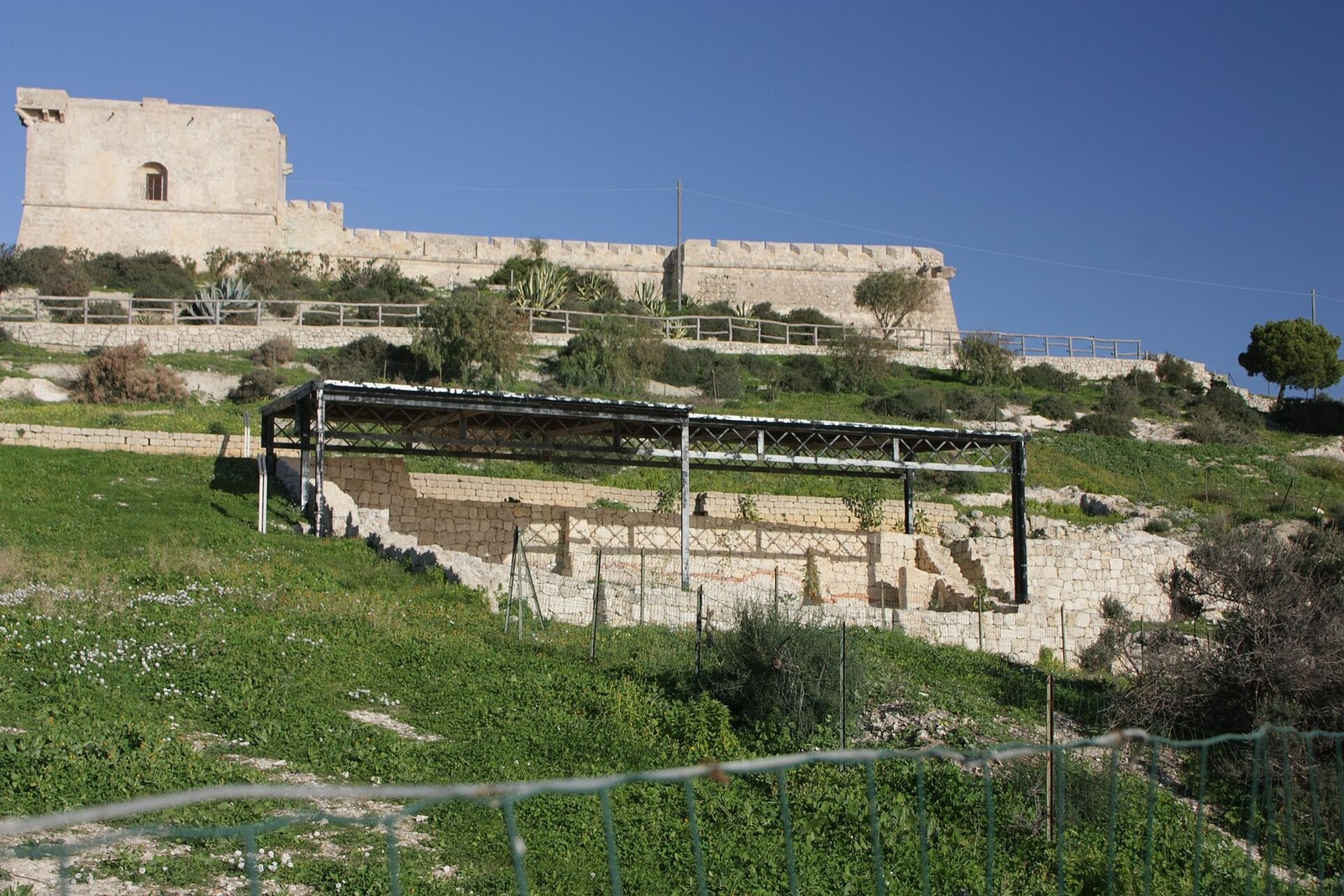
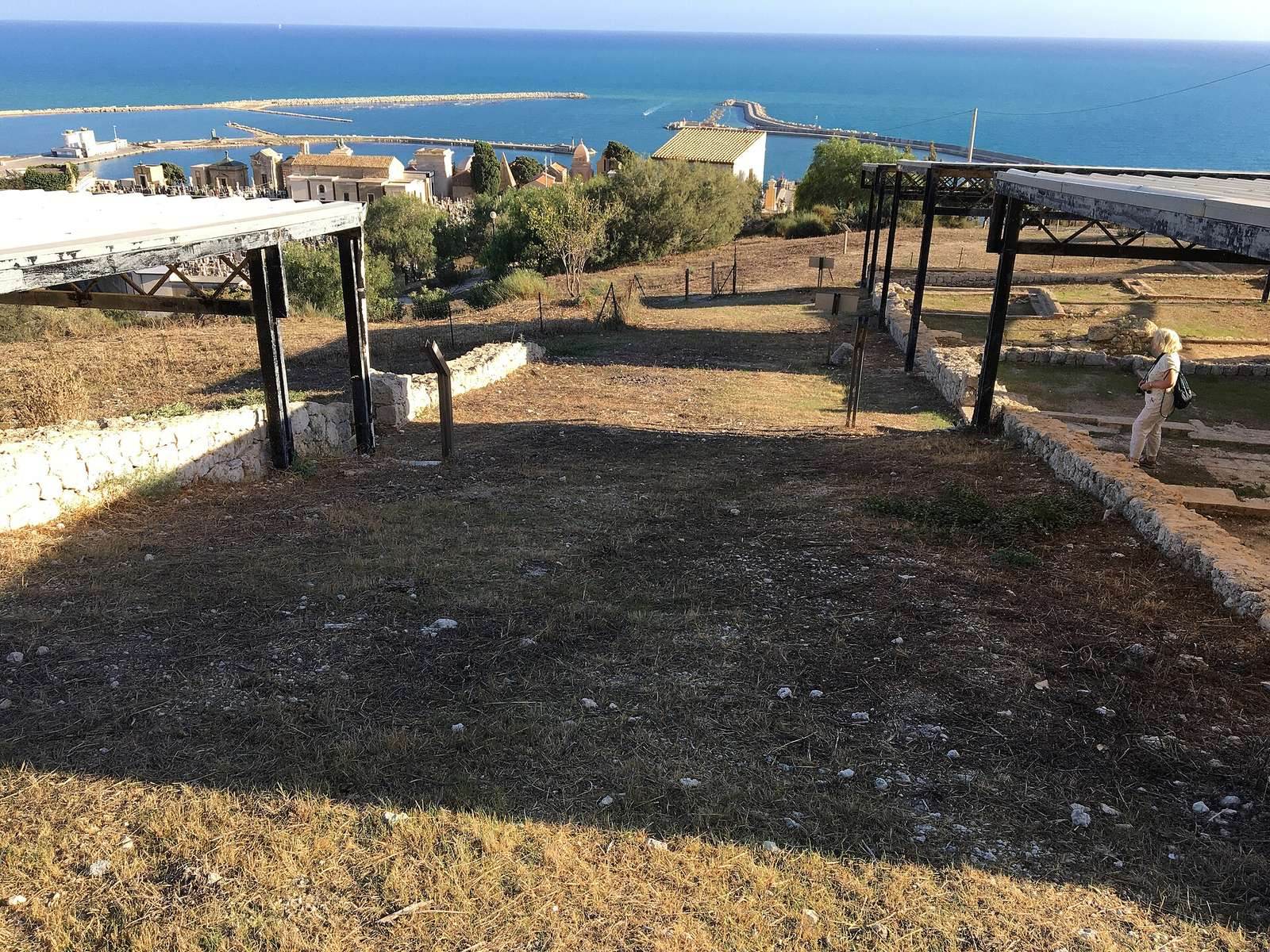
Phintias occupied Mount Ecnomus, now Monte Sant’Angelo, at the mouth of the Himera River, now called the Salso. The mount forms the eastern end of the Montagna di Licata range. Akragas lay about 37 km to the west and Gela roughly the same distance to the east. The city’s summit served as its acropolis, or fortified upper area, while residential blocks and cemetery areas occupied the slopes. Retaining structures built into the hillside supported terraces.
The summit
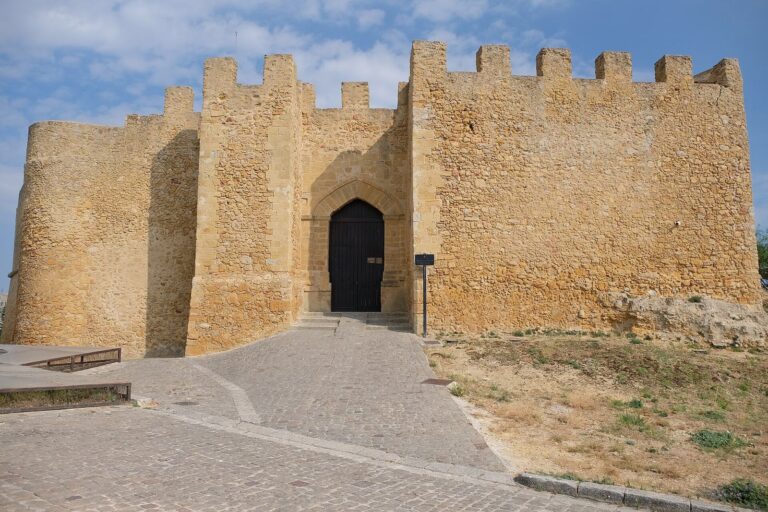
The summit was the city’s upper fortified area. The medieval Castle of Sant’Angelo now occupies it.
Residential and burial areas
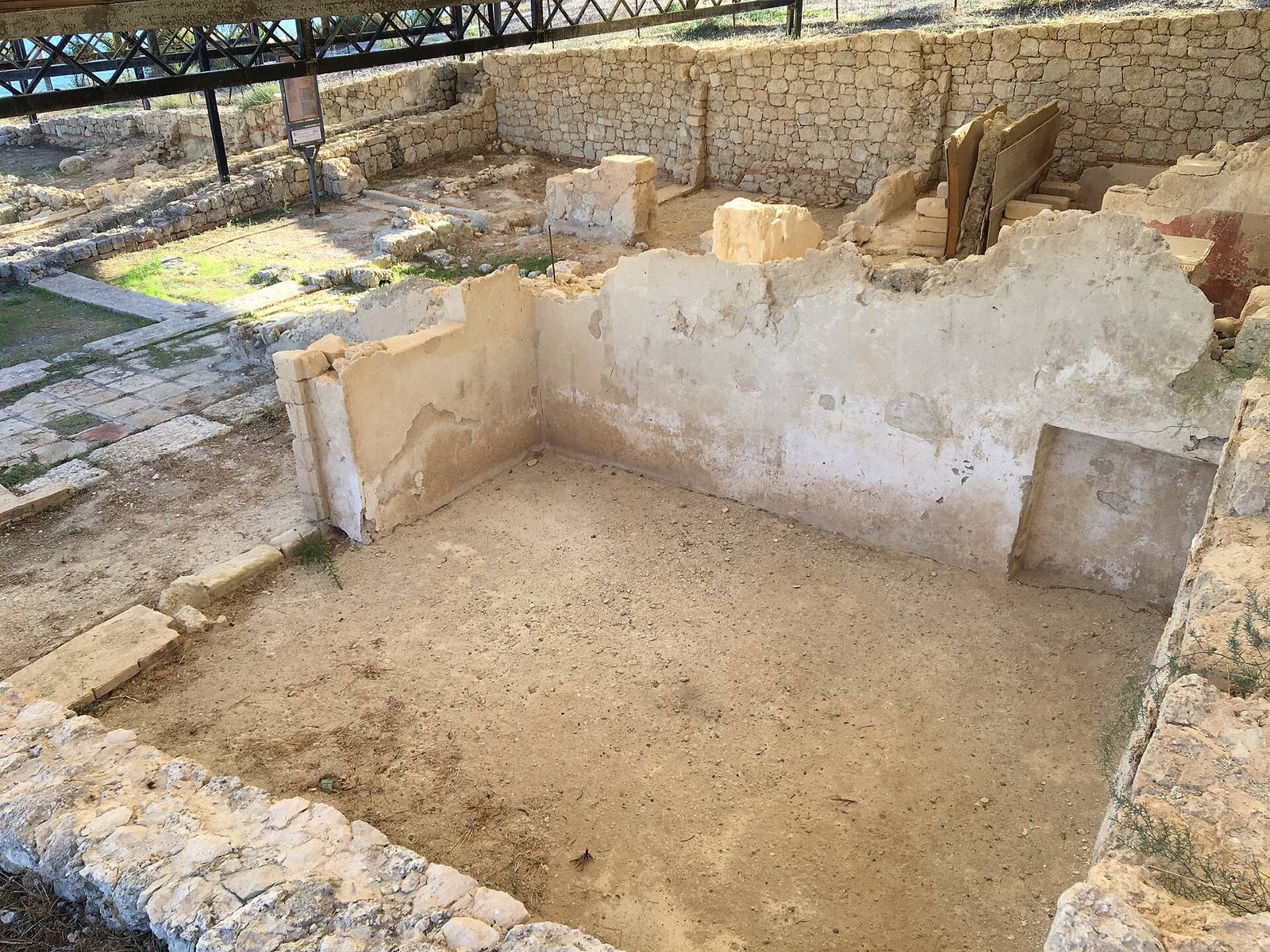
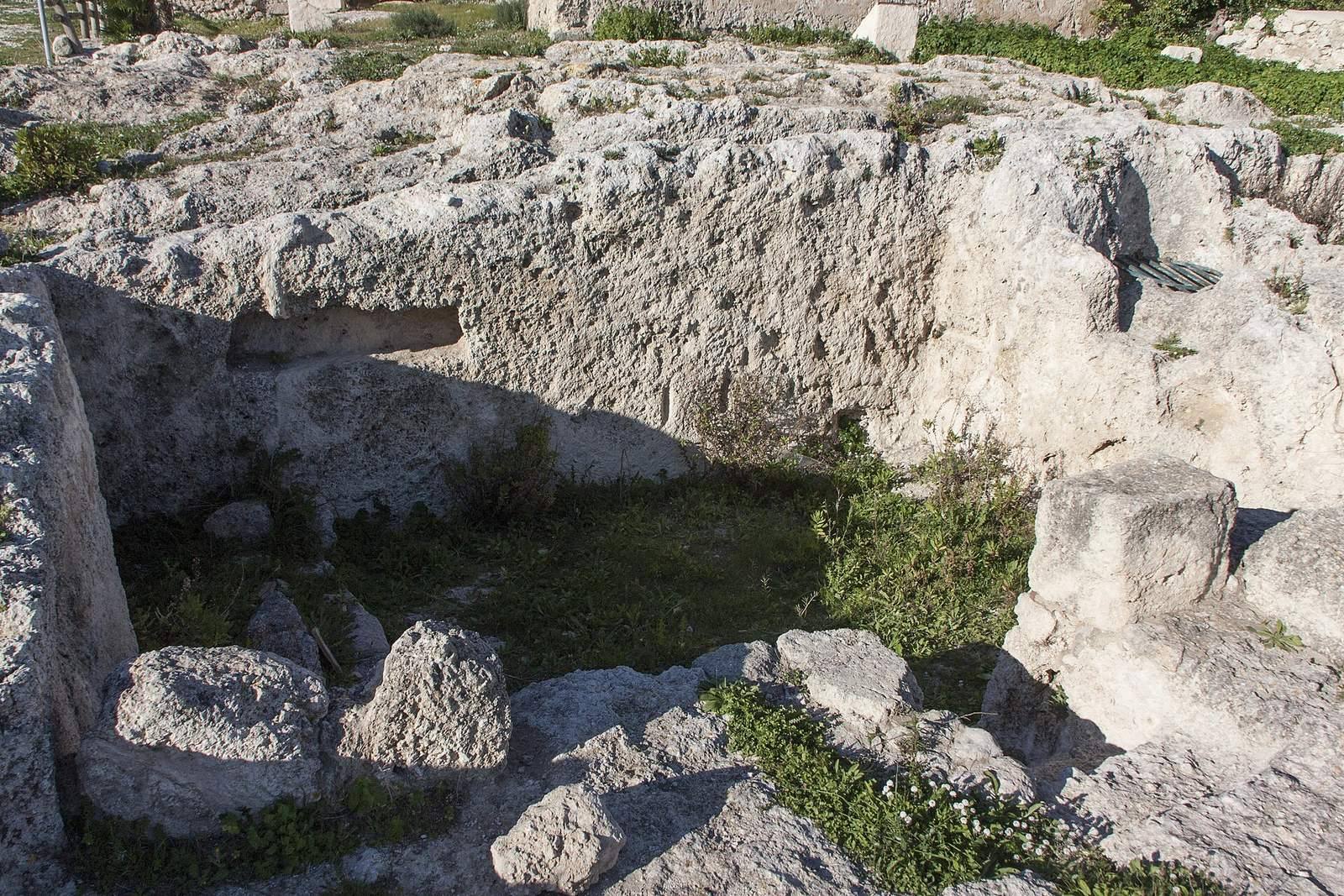
Excavated areas on the southern and northeastern slopes include residential blocks, hillside terrace-retaining works, and parts of the city’s cemeteries.
Possible civic plan
The city may have had a large-scale civic layout centered on an agora, a public gathering place for civic and commercial activity, bordered by stoas, long covered colonnades. Temples and city walls may also have formed part of the plan.