The Broad Wall: A Defensive Wall in Jerusalem’s Jewish Quarter
Site at a Glance
- Rating
- 5
- Popularity
- Very Low
- Country
- Israel
- Primary era
- Iron Age
- Eras represented
- Iron Age
- Civilizations
- Israelite
- Site type
- Military
- Remains
- Wall
On this page4 sections
History
The Broad Wall is an ancient Judahite defensive wall in Jerusalem’s Jewish Quarter, on the city’s southwestern hill in Israel. Pottery initially placed its construction in the eighth century BC, but a 2024 reassessment measuring carbon-14 remaining in organic material instead attributed it to Uzziah, king of Judah. Its discovery became important evidence in debate over whether Jerusalem expanded from its eastern hill onto the western hill during the First Temple period, the era when the First Temple stood.
Jerusalem’s western hill
The debate concerned whether First Temple-period Jerusalem remained on the City of David, the eastern hill south of the Temple Mount, or extended onto the western hill. Josephus, a first-century Jewish historian whose account describes Jerusalem in the Second Temple period, wrote of a wall around the western hill and attributed it to David and Solomon. Biblical passages were also interpreted as evidence of settlement beyond the older city. Other scholars considered a city of that scale unlikely and assigned Josephus’s wall to the Hasmoneans, a Jewish ruling dynasty of the second and first centuries BC.
An earlier model proposed that Jerusalem grew to three or four times its previous size during the eighth century BC. It linked the expansion partly to refugees from the northern kingdom after Samaria’s conquest in 722 BC and to Sennacherib’s campaign against Judah in 701 BC. More recent research places expansion toward Mount Zion, a hill on Jerusalem’s southwestern side, as early as the ninth century BC, during the reign of Joash. This interpretation connects the growth to local population increase and the consolidation of political and economic systems.
In the 1960s, Kathleen Kenyon interpreted her small test excavations as indicating that the western hill remained unsettled during the Israelite period. More extensive excavations after 1967 overturned that conclusion, showing that the earlier trenches offered limited evidence. Excavations in the Jewish Quarter became possible before its rebuilding, and Nahman Avigad found the Broad Wall in 1970 and excavated it during the 1970s.
Dating, siege, and abandonment
The wall was initially attributed to Hezekiah on the basis of pottery and understood as part of Jerusalem’s defenses against the Assyrian king Sennacherib’s 701 BC campaign. A reassessment in 2024 instead connected its construction with Uzziah and the rebuilding of Jerusalem after a powerful earthquake, rather than preparations for Sennacherib’s attack. Under the earlier interpretation, some readers proposed that Nehemiah 3:8 referred to the wall, while Isaiah 22:9–10 was read as a possible reference to the city’s defensive preparations. Jerusalem was not captured by Sennacherib, but whether he withdrew because of internal political problems or for the miraculous reason described in the Bible remains uncertain.
The Broad Wall is associated with the Babylonian siege of Jerusalem in 587 BC, and its abandonment is dated to 586 BC. It forms part of the Old City of Jerusalem and its Walls UNESCO World Heritage site, designated in 1981. The street where it stands was named Wall Builders Street in its honor.
Remains
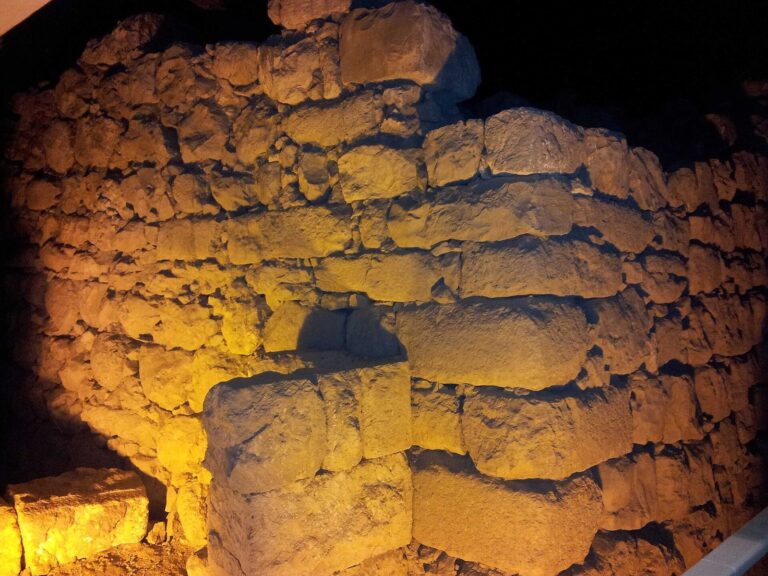
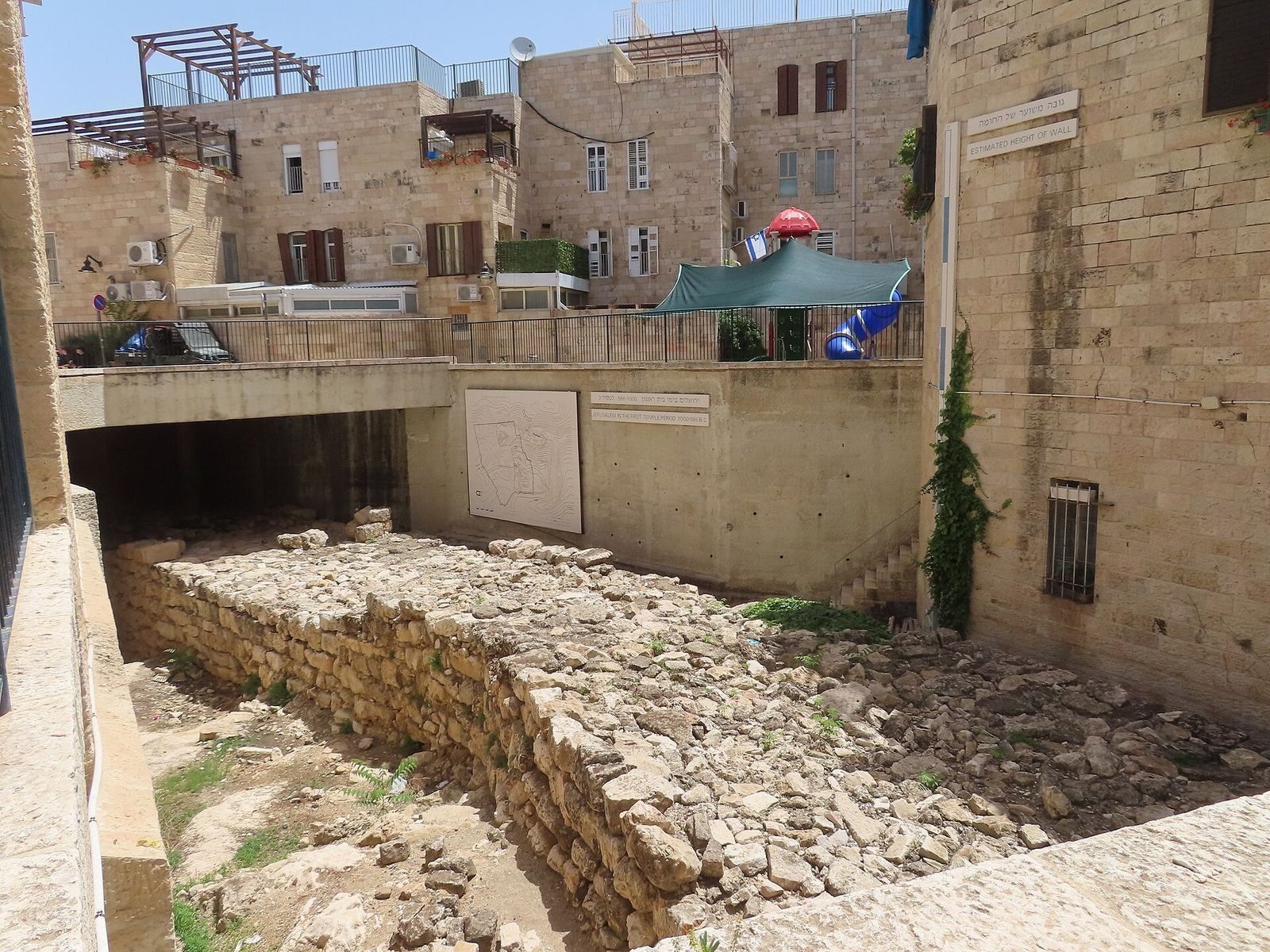
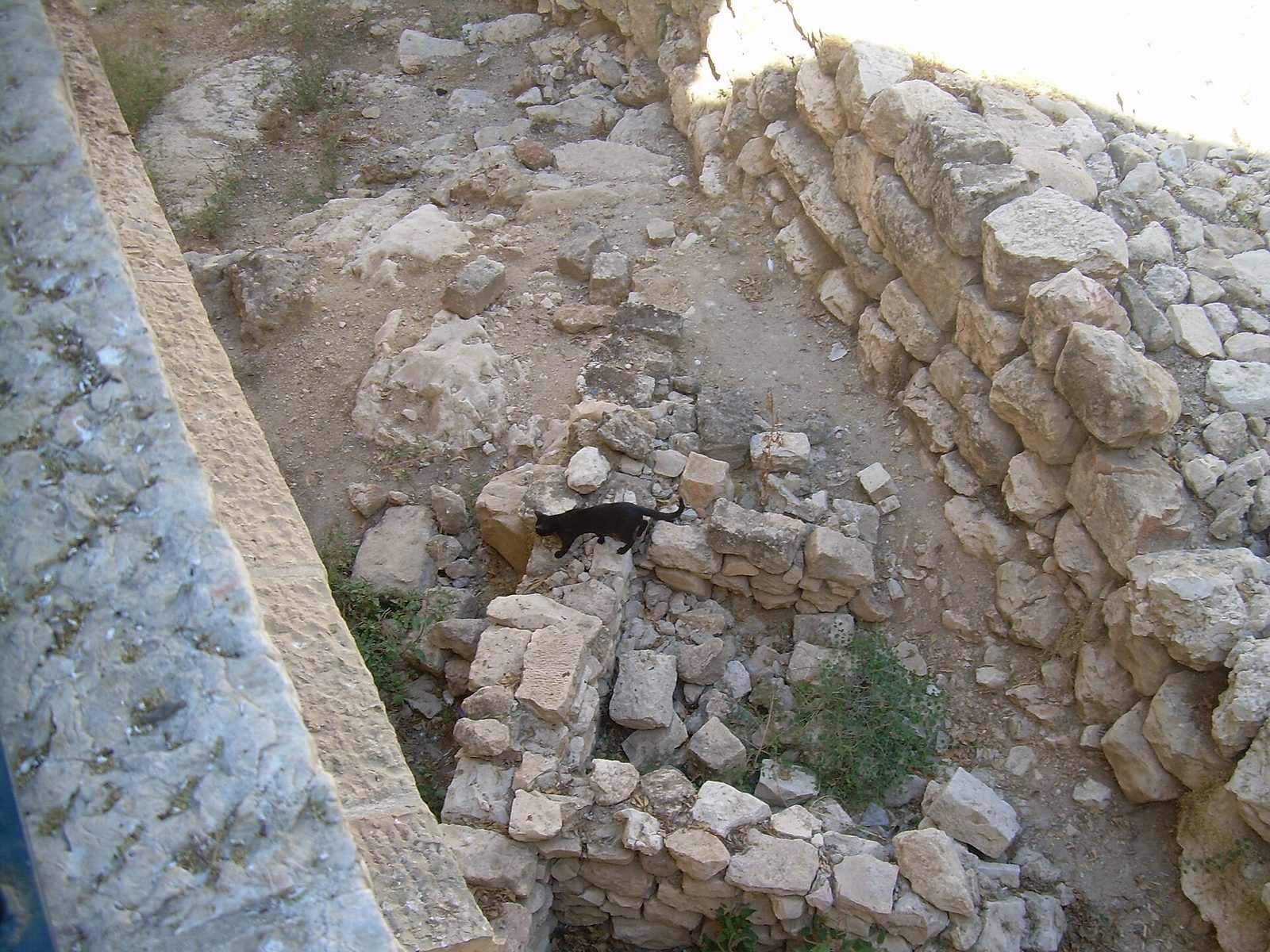
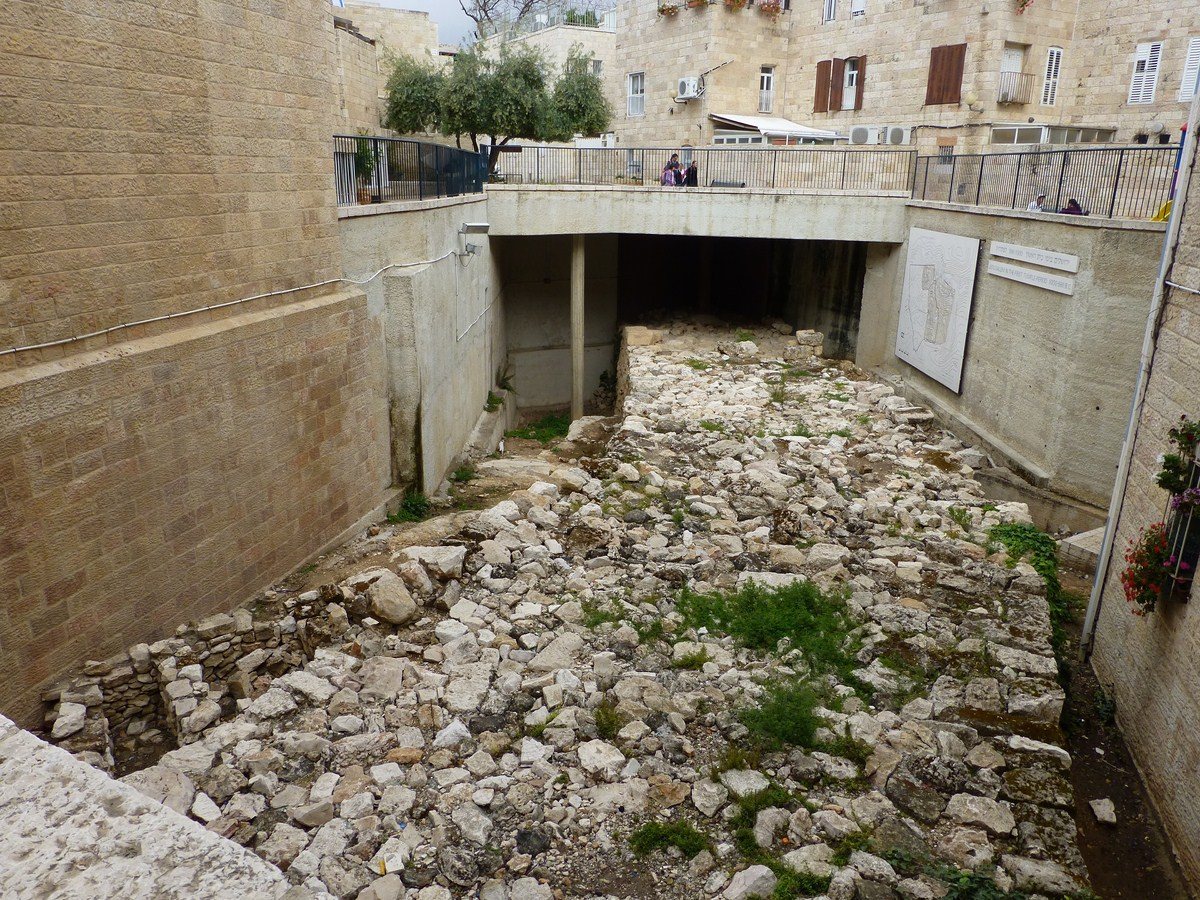
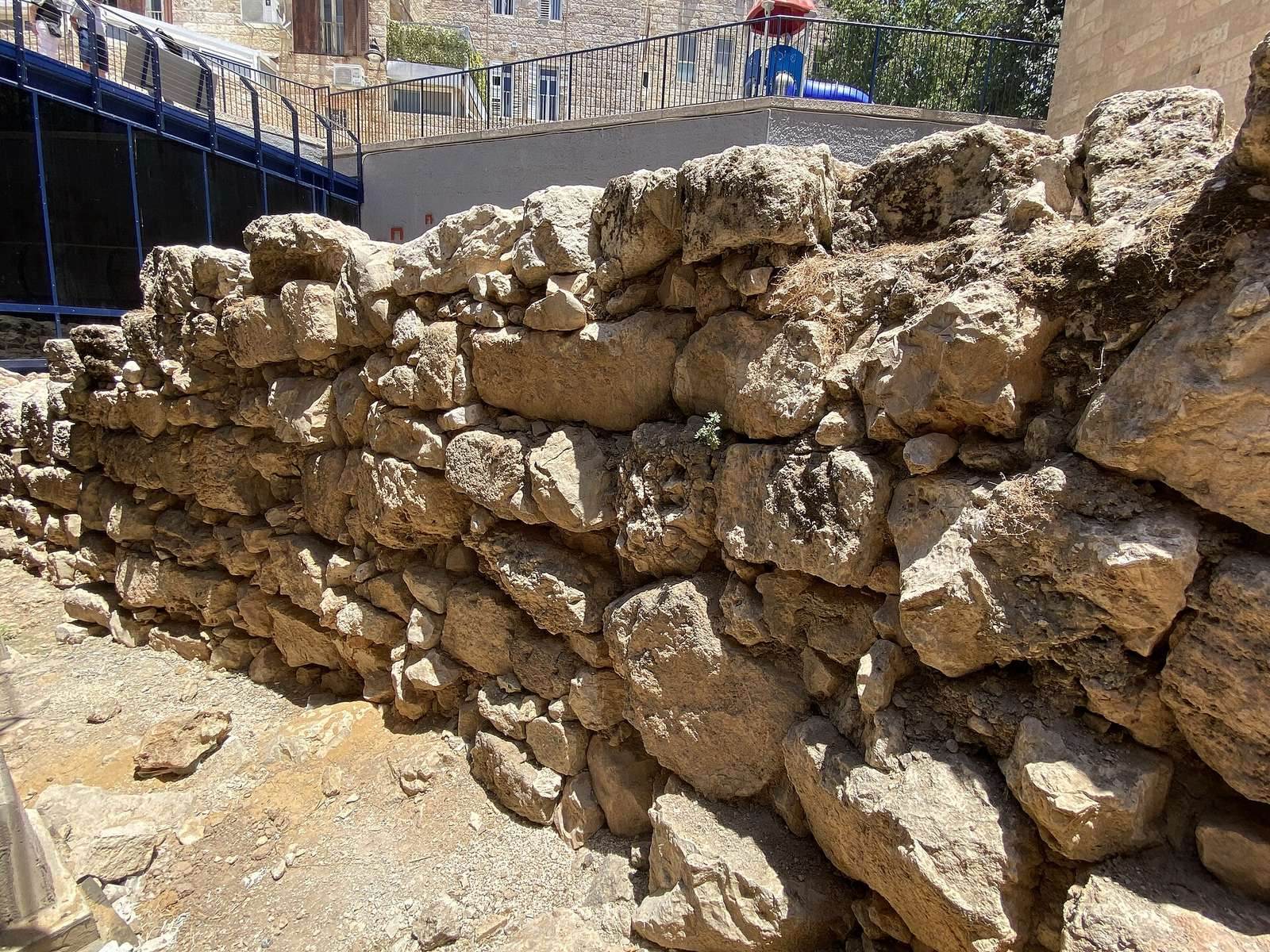
The exposed remains are a continuous stretch of limestone defensive wall measuring 65 metres long and 7 metres thick. In places, the masonry survives to a height of 3.3 metres; a marker beside it indicates the wall’s presumed full height. The fortification marked the city’s northern boundary, along a naturally less-protected edge.
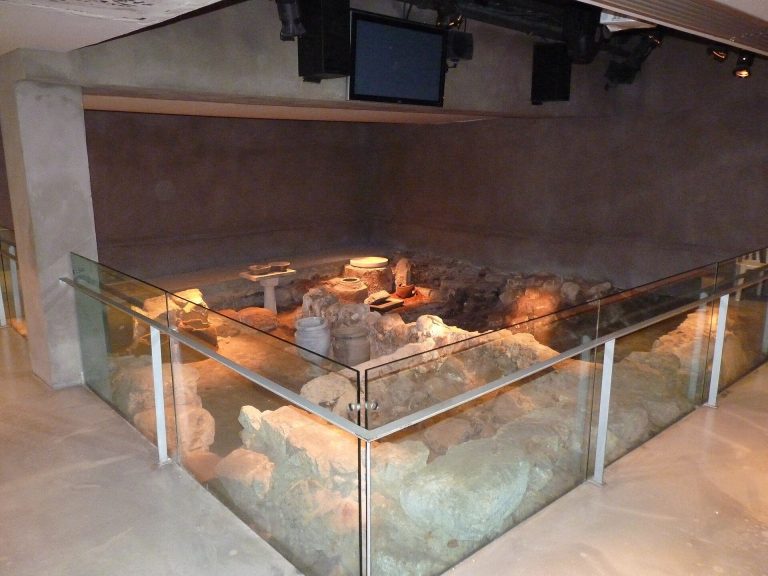
The observed course runs from north to south before turning west. It skirts a small ravine branching from the central valley and crosses a saddle between two peaks on the western hill. The continuation westward is inferred to have followed the most favourable topography. Parts of the wall were built over the ruins of earlier houses, while its route cut through existing buildings where needed. These remains show that people had settled on the western hill before it was fortified.