Pfaffenschlag: An Excavated Medieval Village in Czechia
Site at a Glance
- Rating
- 4.5
- Popularity
- Medium
- Country
- Czechia
- Primary era
- Medieval
- Eras represented
- Medieval
- Civilizations
- Holy Roman Empire, Kingdom of Bohemia, Margraviate of Moravia
- Site type
- Settlement
- Remains
- Village
On this page9 sections
History
Earlier settlement and medieval foundation
Pfaffenschlag is an excavated medieval village in Czechia, founded in the second half of the 13th century during the colonization of the Bohemian-Moravian borderlands. Slavs had probably occupied the site before abandoning their settlement sometime in the 12th century.
Under King Ottokar II of Bohemia, whose rule extended across Bohemia and Moravia, the parish priest of Slavonice founded a new village there. It was also called Bobovec, or the “Village of the Parish Priest,” but Pfaffenschlag became its established name. The new community used the three-field system, rotating crops among three fields and leaving one fallow in each cycle. It differed from its predecessor, which appears not to have practiced ironworking or horse breeding, or grown oats, barley, and fruit.
Destruction and local legend
Pfaffenschlag was burned during the Hussite Wars, early-15th-century conflicts associated with religious reform in Bohemia, and was never rebuilt. Its destruction may have been linked to its association with the parish clergy of Slavonice, a town that did not support the Hussites.
A local legend gives a different account, placing the destruction in the Thirty Years’ War, the European conflict of 1618–1648, and blaming Swedish forces. In the tale, villagers hid their valuables in a butter churn concealed in a well; the Swedes razed the village and killed its inhabitants, while those who escaped did not return. A carter’s wagon is said to appear at midnight in Slavonice, travel toward the ruins, and vanish at a spring linked to the hidden churn. The story promises that an entirely honest person who waits for it on Palm Sunday and recites an old carter’s formula will receive the treasure.
Discovery and archaeological importance
The remains came to light in the summer of 1958. The Moravian Museum investigated the site under Czech archaeologist and museum researcher Vladimír Nekuda, and excavations from 1960 to 1971 uncovered the foundations of every building. Pfaffenschlag’s layout provides evidence of the High Medieval settlement movement, a period of expansion and settlement across much of east-central Europe during the 11th to 13th centuries.
Remains
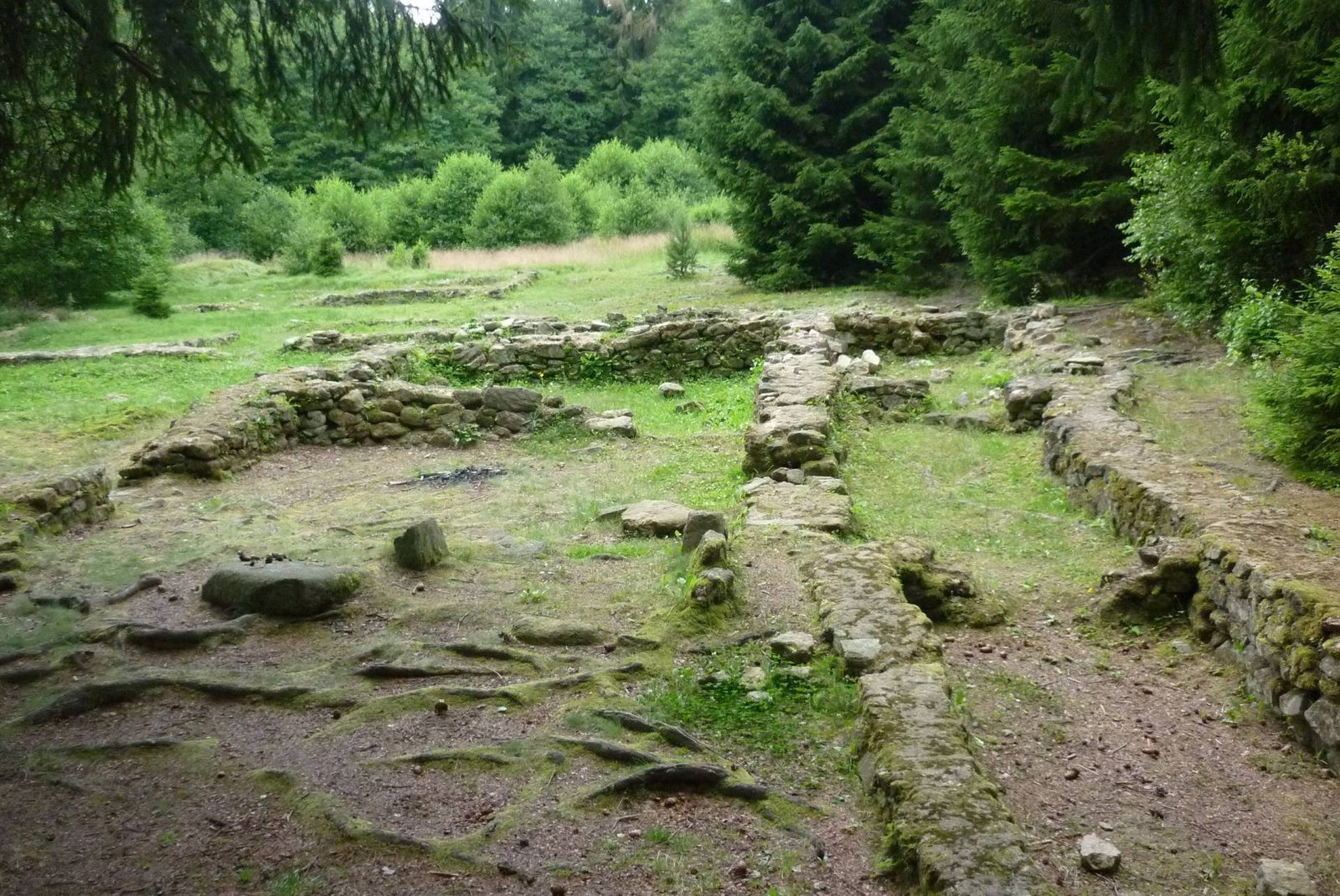
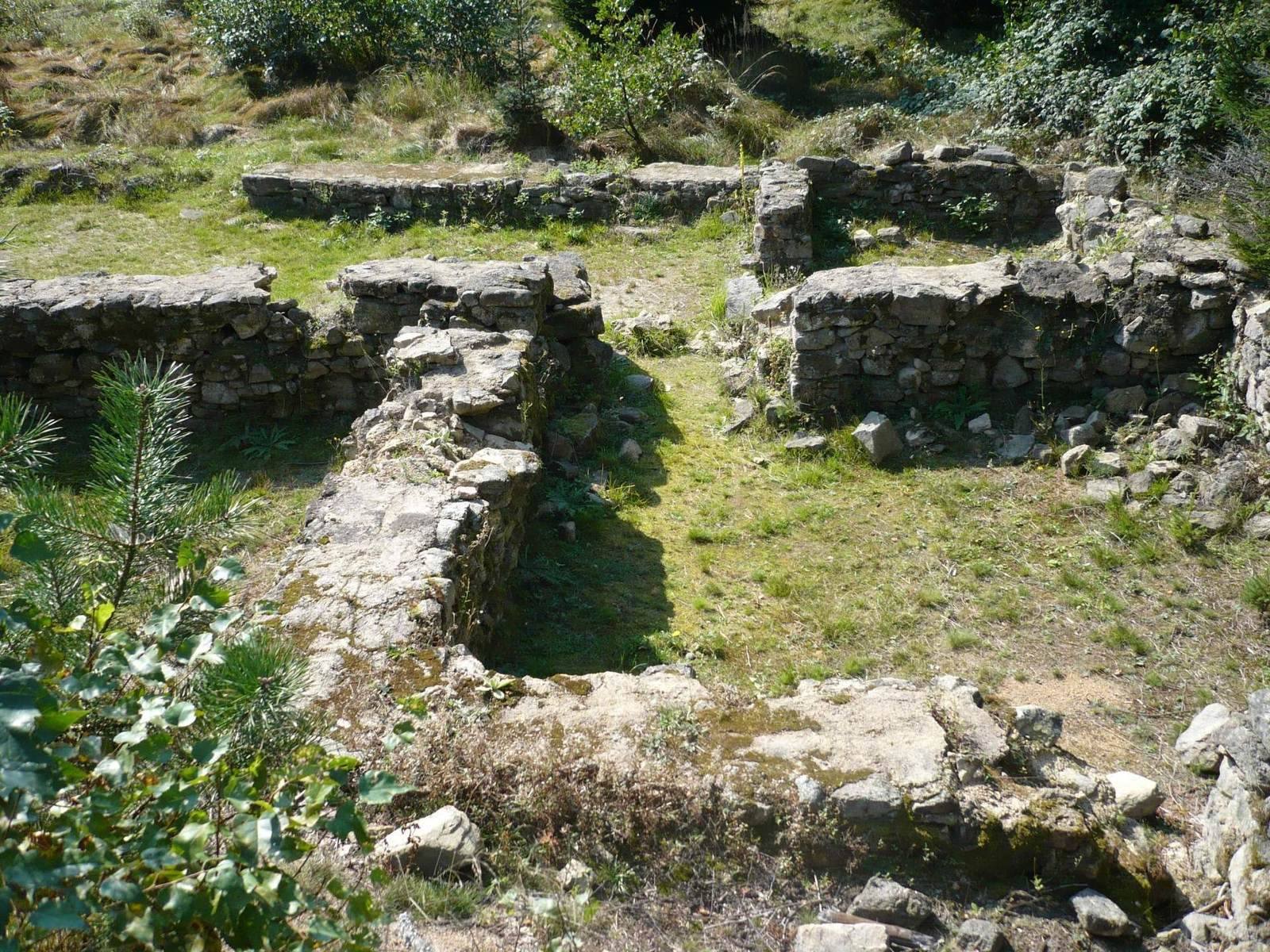
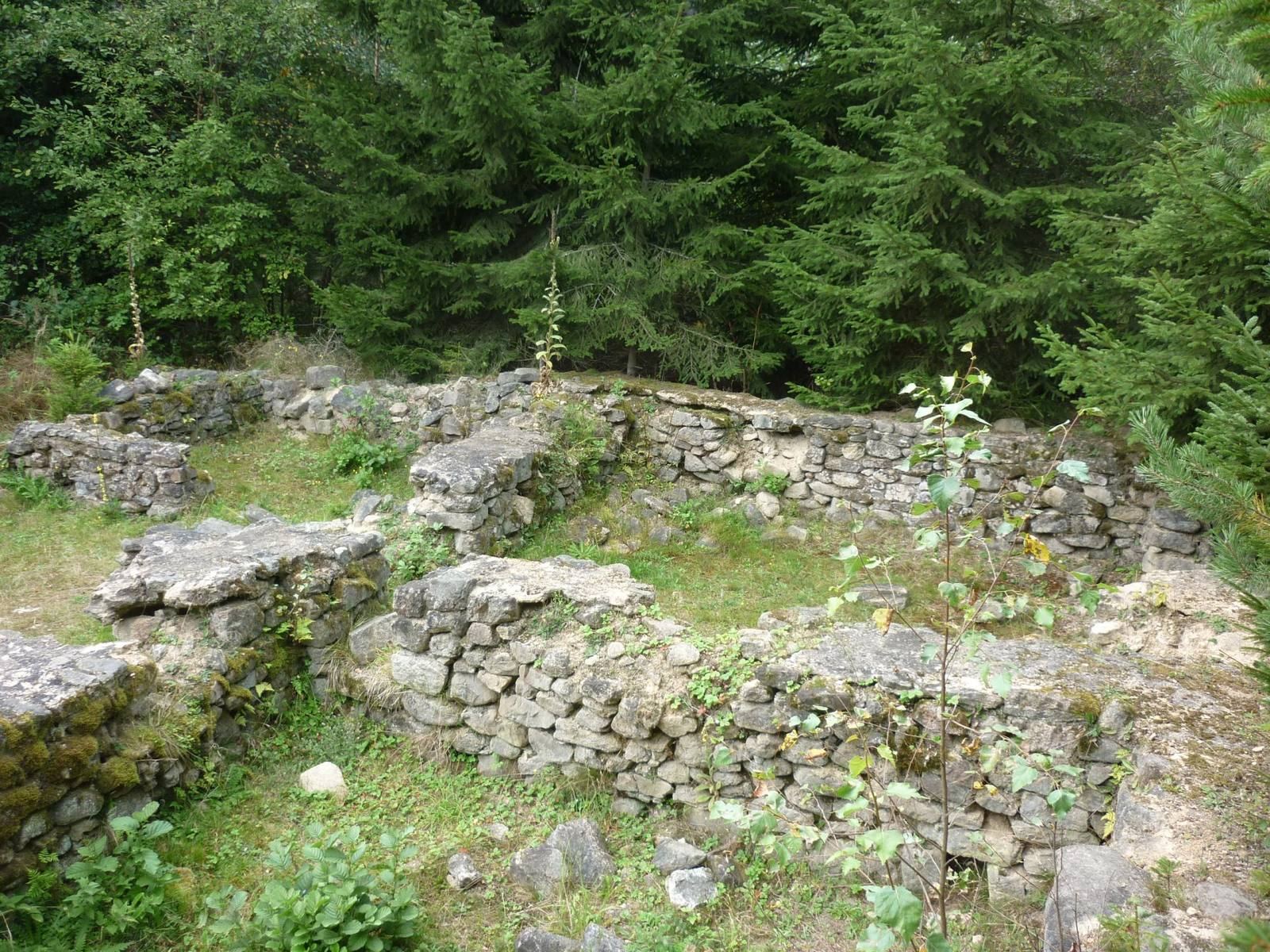
Pfaffenschlag lies in a forest west of the Slavonice cadastral area and south of the road from Slavonice to Stálkov. Its buildings formed two rows beside a stream that ran along the axis of the village square. Excavated foundations preserve the plan of the settlement, which included sixteen homesteads, eleven identified as peasant farmsteads, as well as a mill and other structures.
Homesteads and agricultural buildings
Houses and farm buildings
The houses were built of stone, while agricultural buildings used timber or wattle, a surface formed from interwoven branches or rods. A typical dwelling included a room with an oven or hearth, an entrance hall, and a chamber. Larger buildings also had a two-storey granary set into the ground.
Underground passages and surrounding land
Underground passages, up to 30 metres long, served as hiding places. Meadows and pastures adjoining the settlement belonged to the village.
Fishpond and finds
A fishpond dating to 1483 occupies the site of the former village square, placing it about fifty years after Pfaffenschlag’s destruction. Finds from the village and a model of its layout are displayed at the Slavonice Town Museum.