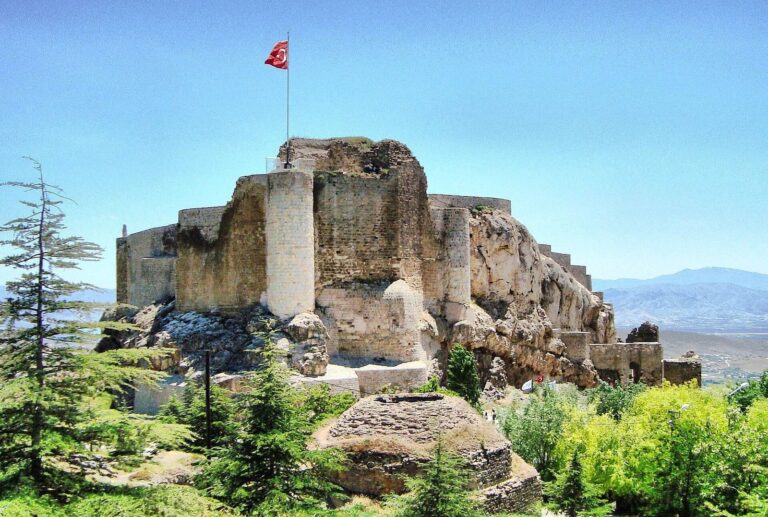
Pertek Castle: An 11th-Century Fortress in Turkey
Site at a Glance
- Rating
- 4.7
- Popularity
- Medium
- Country
- Turkey
- Primary era
- Medieval
- Eras represented
- Medieval
- Civilizations
- Unclassified
- Site type
- Military
- Remains
- Castle
On this page9 sections
History
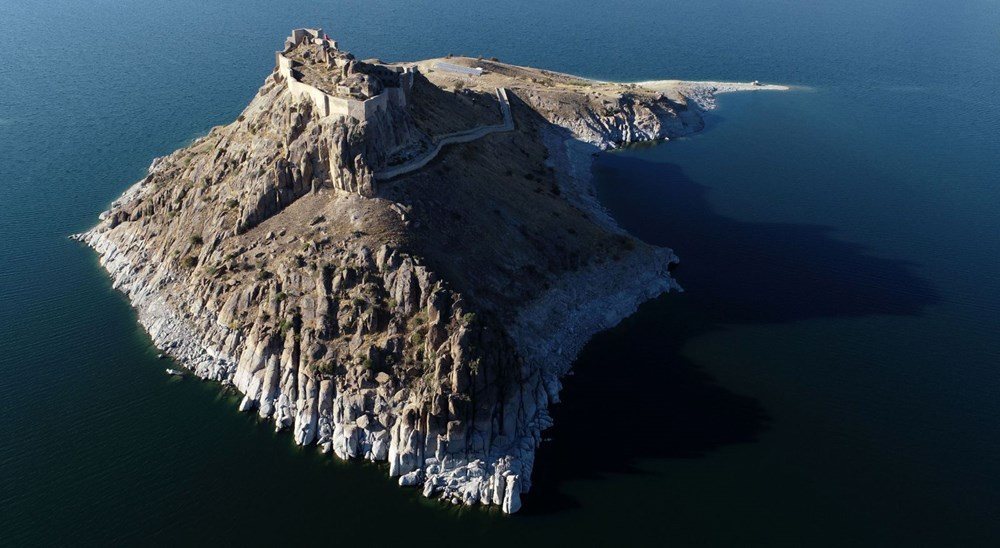
Pertek Castle is an 11th-century medieval fortress on an island in the Keban Reservoir in Turkey, built by the Mengujekid rulers. Its possible earlier origins and later history reflect successive phases of control in the region.
Possible Urartian origins and medieval foundation
Italian archaeologist Roberto Dan has interpreted features of the rock-working as characteristic of Urartu, an ancient kingdom whose territory included parts of eastern Anatolia. He proposed that a fortress on the site may have been built to control nearby mines, especially copper mines.
The present fortress was built in the 11th century, after the Mengujekid dynasty established control of the region following 1071. The Mengujekids ruled parts of Anatolia. The name Pertek derives from the Armenian Berdak, a diminutive of berd, meaning “fortress.” Pertag is another name for the castle.
Ottoman period
Under the Ottoman Empire, a state centered in Anatolia, the castle was repaired and rebuilt, probably in the 16th century. This work took place around the same period as the old town’s Sungur Bey and Çelebi Ağa mosques. The Baysungur Mosque and Çelebi Ali Mosque below the castle are attributed to Baysungur, a local ruler of Pertek.
The reservoir and relocation of Pertek
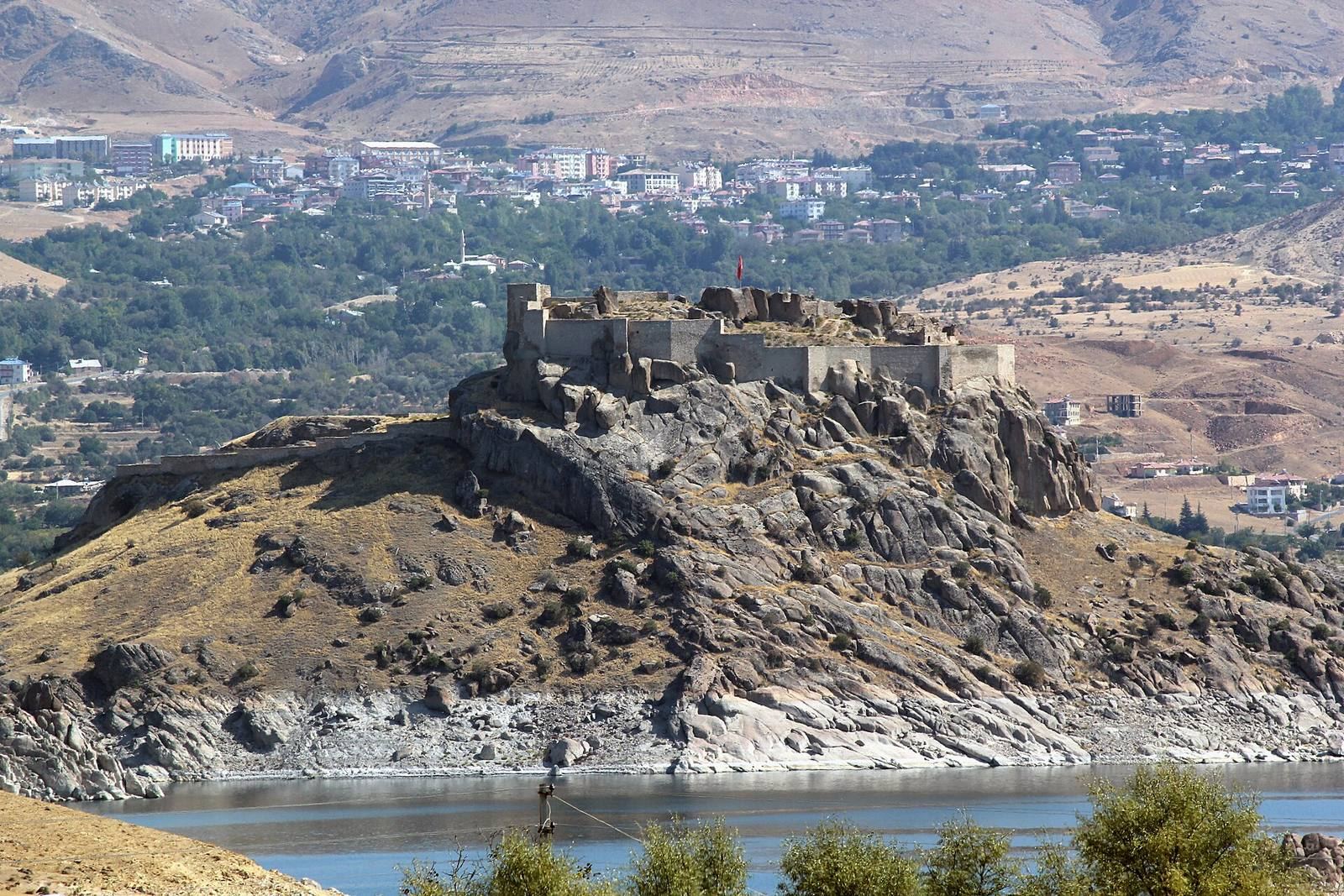
In 1974, the Keban Reservoir flooded old Pertek and the surrounding area. The town was re-established about five kilometres away on the lake’s northern side, while the castle became an island in the reservoir.
Remains
The partly restored fortress occupies a rocky height that formerly overlooked old Pertek and is now an island in the Keban Reservoir. It lies near the boundary between Elazığ Province to the south and Tunceli Province to the north, at a listed elevation of 873 metres. The castle has enclosing walls, an entrance on its northwest side, and features within its walls.
Castle structure and features
Walls and entrance
The surrounding walls are built from blocks of cut natural stone, and the exterior walls have been restored. Clinker bricks and blue tiles may also have been used in the southern walls. The entrance is on the northwest side.
Interior
Cisterns are located inside the castle. Tiled rooms stood around it.
Sculpture and inscription
The 17th-century Ottoman traveler and writer Evliya Çelebi recorded an eagle sculpture at the castle. The sculpture was later removed and replaced by an Arabic inscription.