Old Gate (Altpörtel): Speyer’s Medieval Fortification Tower
Site at a Glance
- Rating
- 4.6
- Popularity
- High
- Country
- Germany
- Primary era
- Medieval
- Eras represented
- Medieval, Early Modern, Modern
- Civilizations
- German, Holy Roman Empire
- Site type
- Military
- Remains
- Gate
On this page17 sections
History
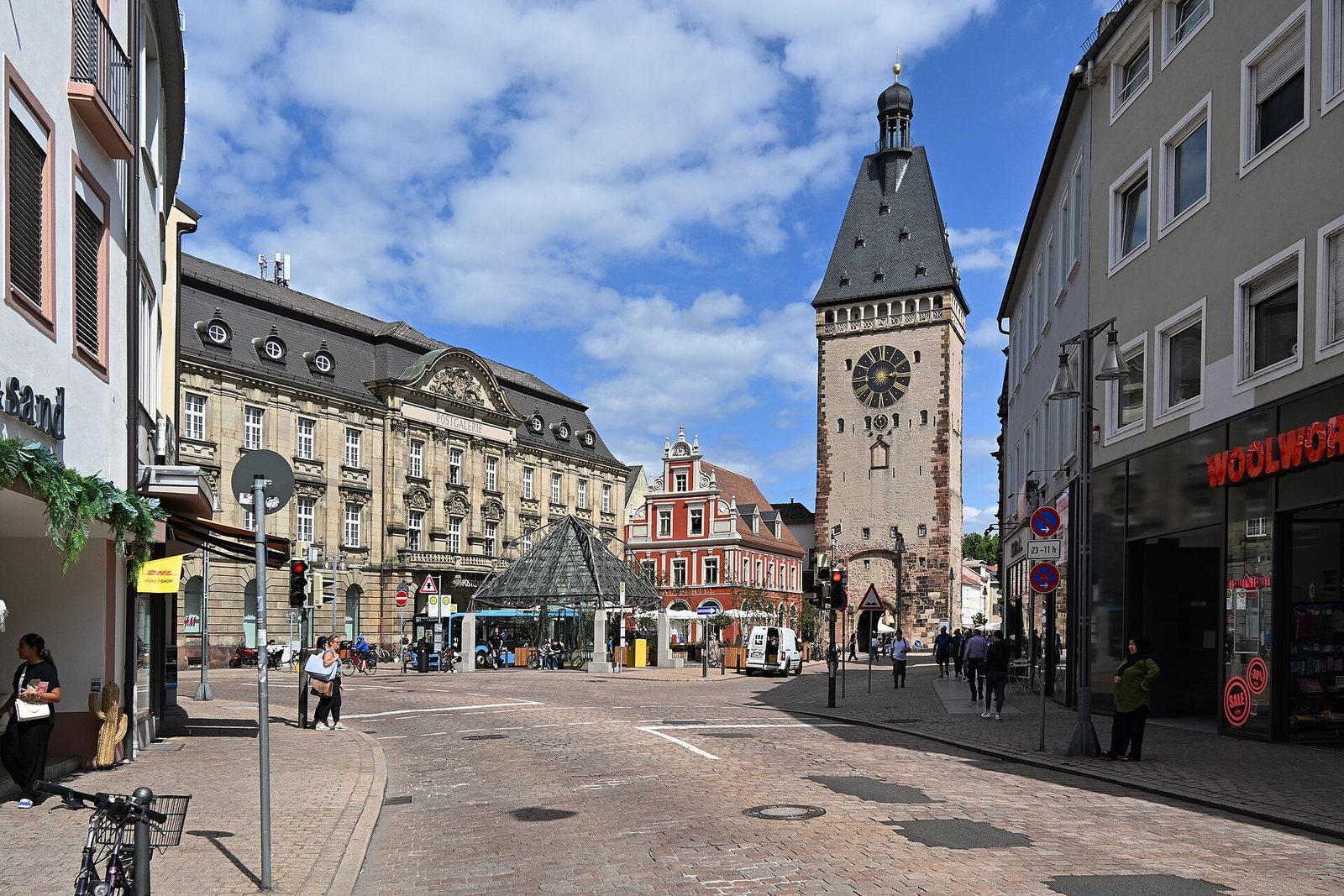
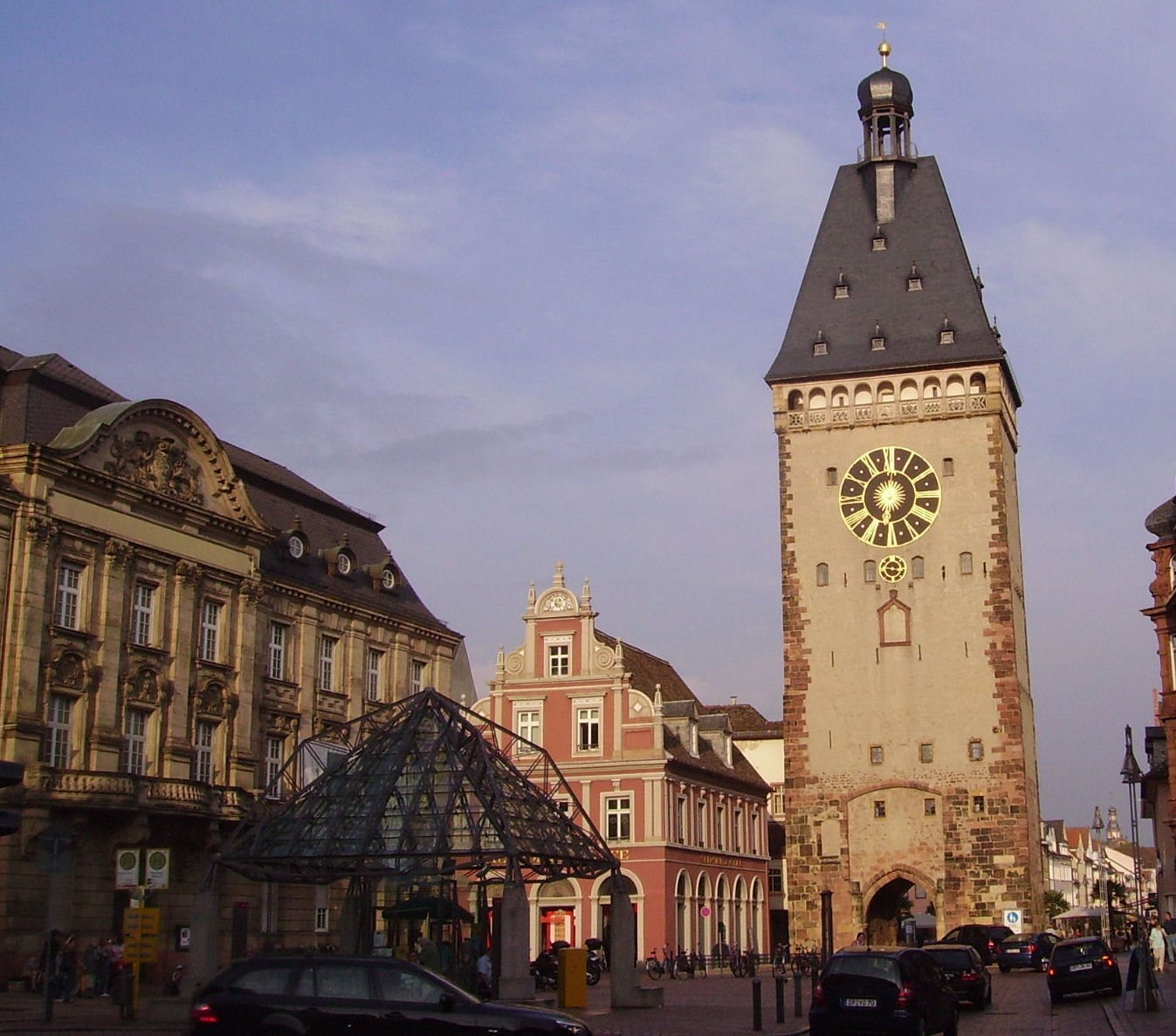
Old Gate, also known as Altpörtel, is a medieval city gate tower in Speyer, Germany, built in the first half of the thirteenth century as part of the city’s fortifications. It was regarded as Speyer’s most important gate tower and later survived the destruction of much of the city’s medieval defenses.
Origins and medieval role
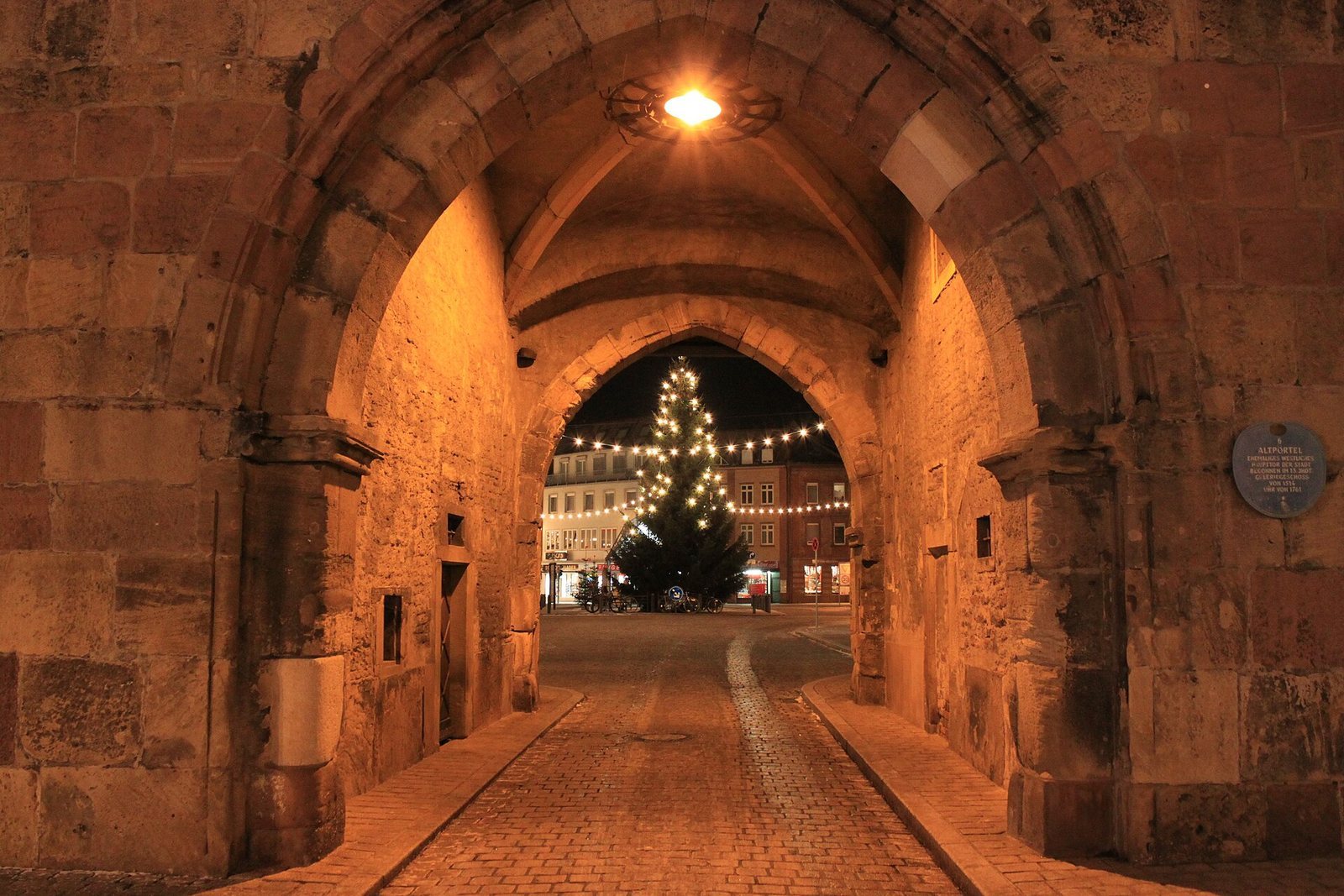
The gate first appears in a written record in 1176. In 1197, it was named in Latin as vetus porta, meaning “old gate,” a name that distinguished it from the New Gate. The tower replaced an earlier gate, and its lower section was built between 1230 and 1250.
Speyer was part of the Rhine League of Cities, an alliance of towns, from 1281, and the city strengthened its defenses. A bridge in front of Old Gate was mentioned in 1313. First built as an outer gate, it later linked the old town with the suburb of St. Gilgen.
The gate also stood at the start of a ceremonial route leading to Speyer Cathedral. On important feast days, emperors and their entourages travelled along this route to the cathedral. A clock was made for the tower in 1395. For centuries, a keeper lived or worked there, maintaining the clock and ringing a bell for the hours of prayer.
Civic, military, and prison use
Gatekeepers collected road tolls and guarded weapons and ammunition stored in the city’s towers. Guards at Old Gate and four other towers also watched prisoners held there. Municipal prison cells at Old Gate are mentioned in 1656, and the tower was referred to as a prison in 1726. An oak chest inside held the executioner’s tools.
In 1628, firearms, other equipment, and executioner’s swords were brought into the tower. Old Gate was damaged during the Thirty Years’ War in 1635. In 1689, during the War of the Palatine Succession, a conflict over the Palatinate involving France and opposing forces, French troops prepared to demolish the tower with explosives.
The prior, or senior religious leader, and community of the nearby Carmelite monastery, a Catholic religious order, warned the French commander Marshal Duras that the tower’s collapse could endanger the monastery. Duras and his entourage had their headquarters there. After the community appealed for the tower to be spared, he ordered his troops to leave it standing. Speyer and its cathedral were left in ruins, while Old Gate survived as one of the few remaining parts of the medieval fortifications.
Repairs and later uses
The tower was renovated between 1707 and 1710. In 1761, clockmaker Jacob Moellinger made a clock for it, and a storm-and-prayer bell was installed again. A mill stood beside the gate in 1773. Speyer maintained its own weights and measures into the early nineteenth century; in 1772 and 1773, Senator Johannes Becker and a municipal clerk used the city’s standard measure to survey Speyer and its four suburbs.
In 1834, citizens proposed demolishing the tower, arguing that it was dilapidated and had little architectural or other value. In 1837 and 1838, the former guardhouse and north stairway were demolished, and a fire station was established there. The tower was renovated in 1842 and adapted as a small dwelling. Roof repairs followed in 1821, 1839, around 1870, and 1914. The clock face was repainted in 1853, and the clock was repaired in 1933.
Damage was noted in 1950, and repairs carried out between 1956 and 1960 revealed chambers filled with powder from the 1689 demolition attempt. The tower now houses an exhibition on Speyer’s fortifications and its own history across its lower five accessible levels. A wedding room is on the third floor, about 15 metres above ground. Since 2014, the fifth floor has contained a permanent exhibition on the Imperial Chamber Court, a central judicial institution of the Holy Roman Empire.
Remains
The surviving medieval gate tower rises above the former city defenses, with later roofs, openings, and clock fittings reflecting changes to the building over several centuries.
Tower and setting
Masonry and defensive features
The tower is 55 metres high and is counted among Germany’s tallest and most architecturally significant surviving city gates. Its thirteenth-century lower section forms the foundation and stands over the remains of an earlier tower. Two rows of defensive openings mark the west face, while the east side has richer architectural detailing. Above the gate arch, a walkway encircled the tower. Ten stone brackets, projecting about a metre from the walls, survive from its connections to defensive walls on the north and south sides.
Approach and surroundings
The ceremonial street from Old Gate to Speyer Cathedral was about 700 metres long and between 25 and 50 metres wide. Its width has since been reduced by one row of houses. The Speyerbach stream bends north beside the tower and flows beneath houses on Korngasse.
Gallery
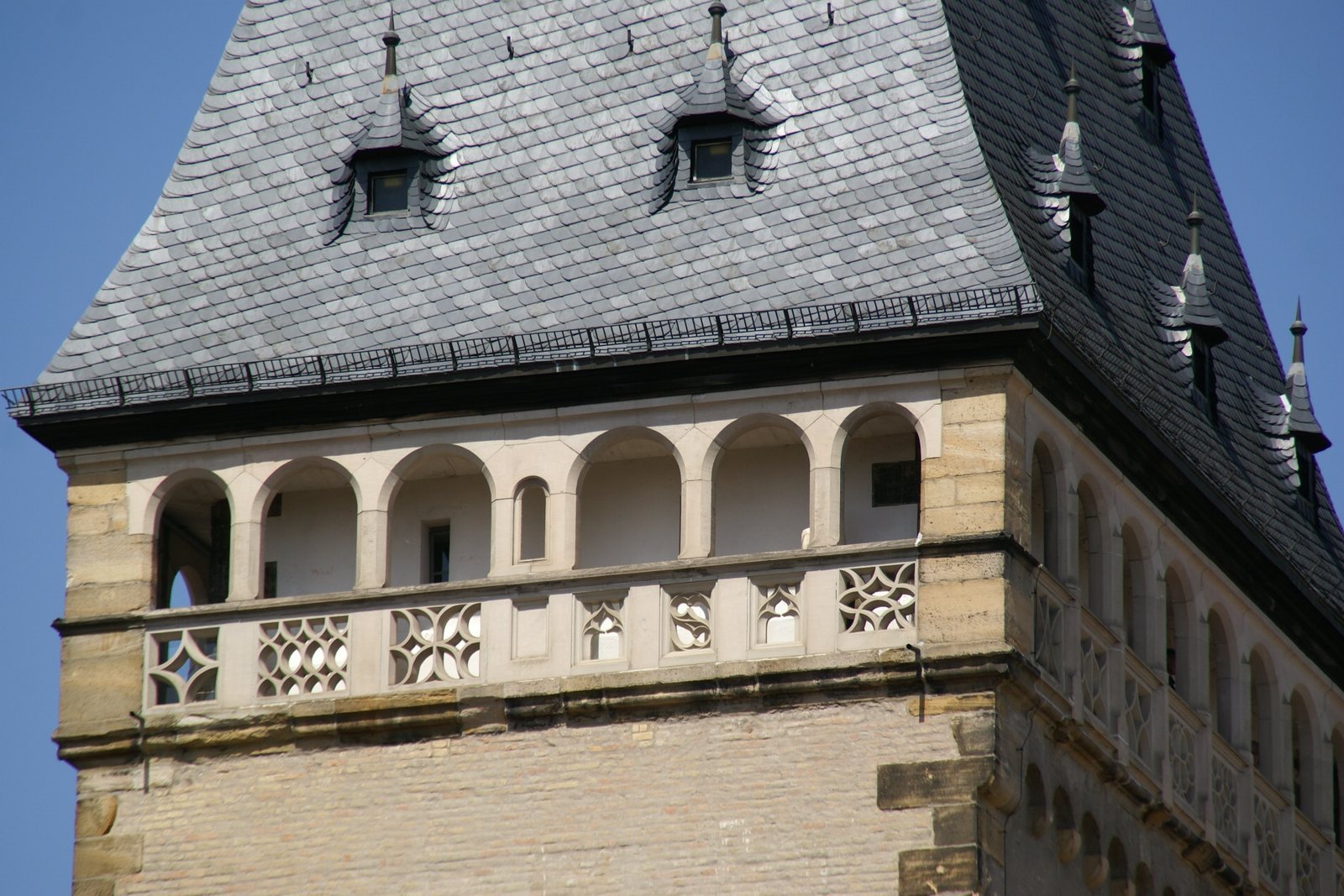
An encircling viewing gallery, formed as an open passage with arches, stands about 30 metres above ground and is reached from the top floor.
Roofs, openings, and access
Roofs
A hipped roof was added around 1600. In 1708, a steep roof 20 metres high was installed during the tower’s renovation.
Windows and entrance
Window recesses on the west side were reopened in 1842, and windows on the east side were exposed again in 1958. In 1965, access was relocated to a newly opened entrance.
Clock and civic fittings
Clock faces and mechanism
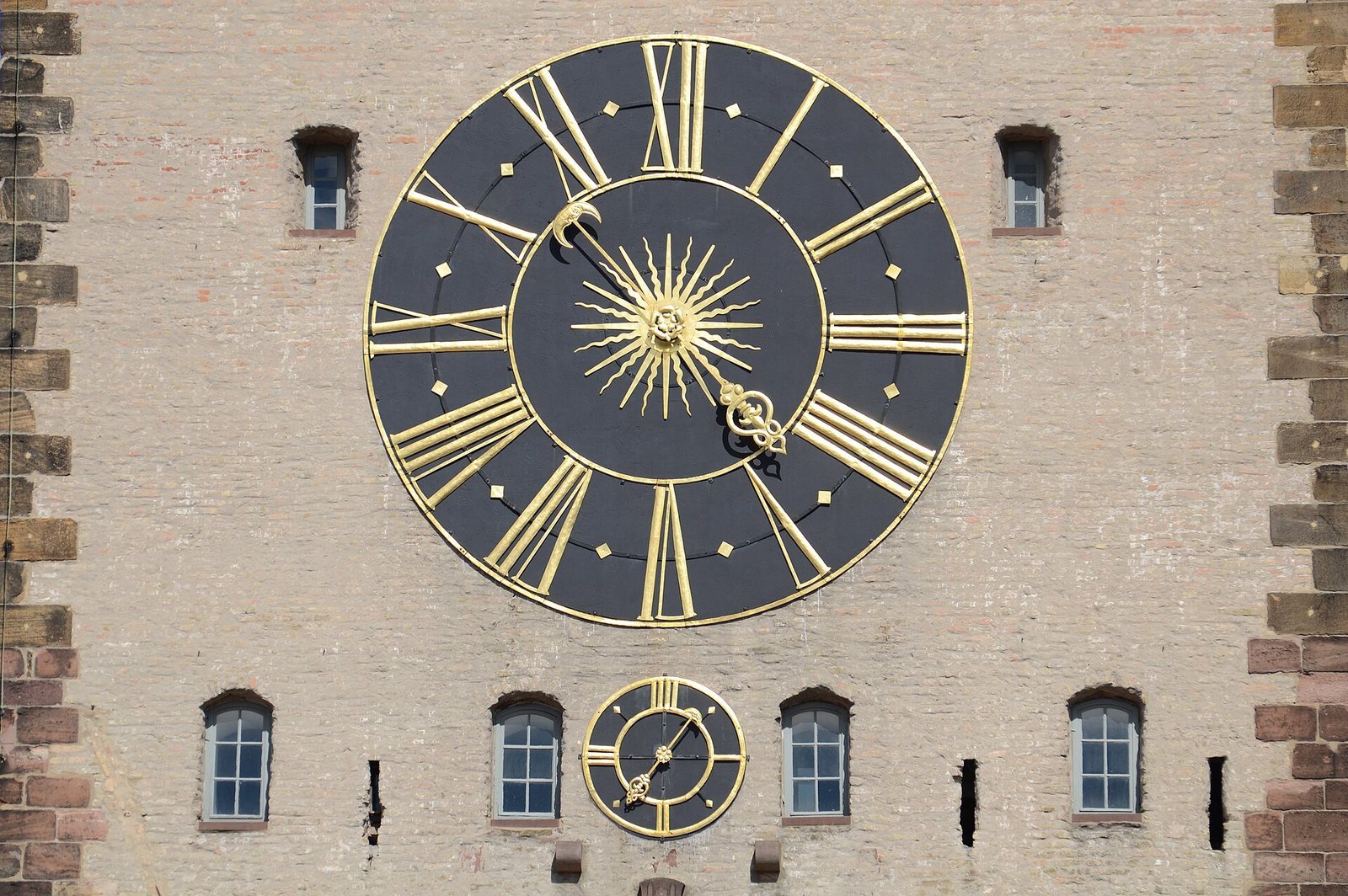
There are two clock faces on each of the tower’s east and west sides. The larger faces show the hours and the smaller ones the quarter-hours; the outer hour face is larger so it could be read from a distance. The mechanism uses weights raised on ropes and cables and includes a striking mechanism.
Bells
The hour bell, cast in 1300, is described as Speyer’s oldest bell. It is 920 millimetres high, 984 millimetres wide at its base, and weighs about 540 kilograms. Its Latin inscription asks Saint John the Baptist to protect it. The quarter-hour bell was cast in 1815 by the Schrader foundry in Frankenthal; it is 620 millimetres high, 665 millimetres wide at the base, and weighs about 200 kilograms.
Standard measure
An iron bar on the north side of the passage marks Speyer’s Werkschuh, a local unit of length used as a commercial standard. The bar is 28.889 centimetres long, divided into 12 inches, and has projecting stops at its upper and lower ends.
Engraved view
A 1640 engraving by Matthäus Merian, a seventeenth-century engraver and publisher, depicts Old Gate as number 7.