Palazzo Pandola: A Late Baroque Palace in Naples
Site at a Glance
- Popularity
- Medium
- Country
- Italy
- Primary era
- Early Modern
- Eras represented
- Early Modern
- Civilizations
- Habsburg, Habsburg Austria, Kingdom of Naples
- Site type
- Domestic
- Remains
- Elite Residence
On this page5 sections
History
Palazzo Pandola is an eighteenth-century late Baroque palace in Naples, Italy.
Eighteenth-century origins
The palace began as a wing of an eighteenth-century expansion of the adjoining Palazzo Pignatelli di Monteleone. A remodeling dated to 1718 is associated with Neapolitan architect Ferdinando Sanfelice.
The Pandola family and irredentist meetings
In 1823, Gaetano Pandola, a relative of the Pignatelli family, acquired the wing and adapted it as a residence for his family. Later, Italian irredentists met at the palace. Irredentism sought to unite with Italy territories regarded as Italian. Among those who gathered there was Guglielmo Oberdan, an activist who directed a patriotic newspaper. After a plot he had prepared against Franz Joseph, emperor of Austria from 1848 to 1916, failed, Oberdan was captured and beheaded.
Remains
Façade and courtyard
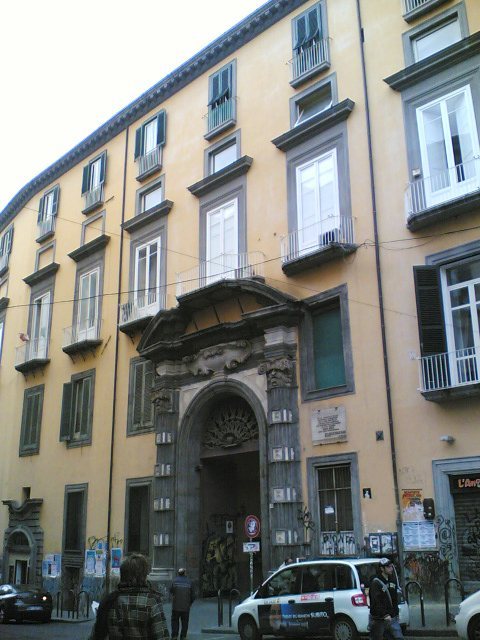
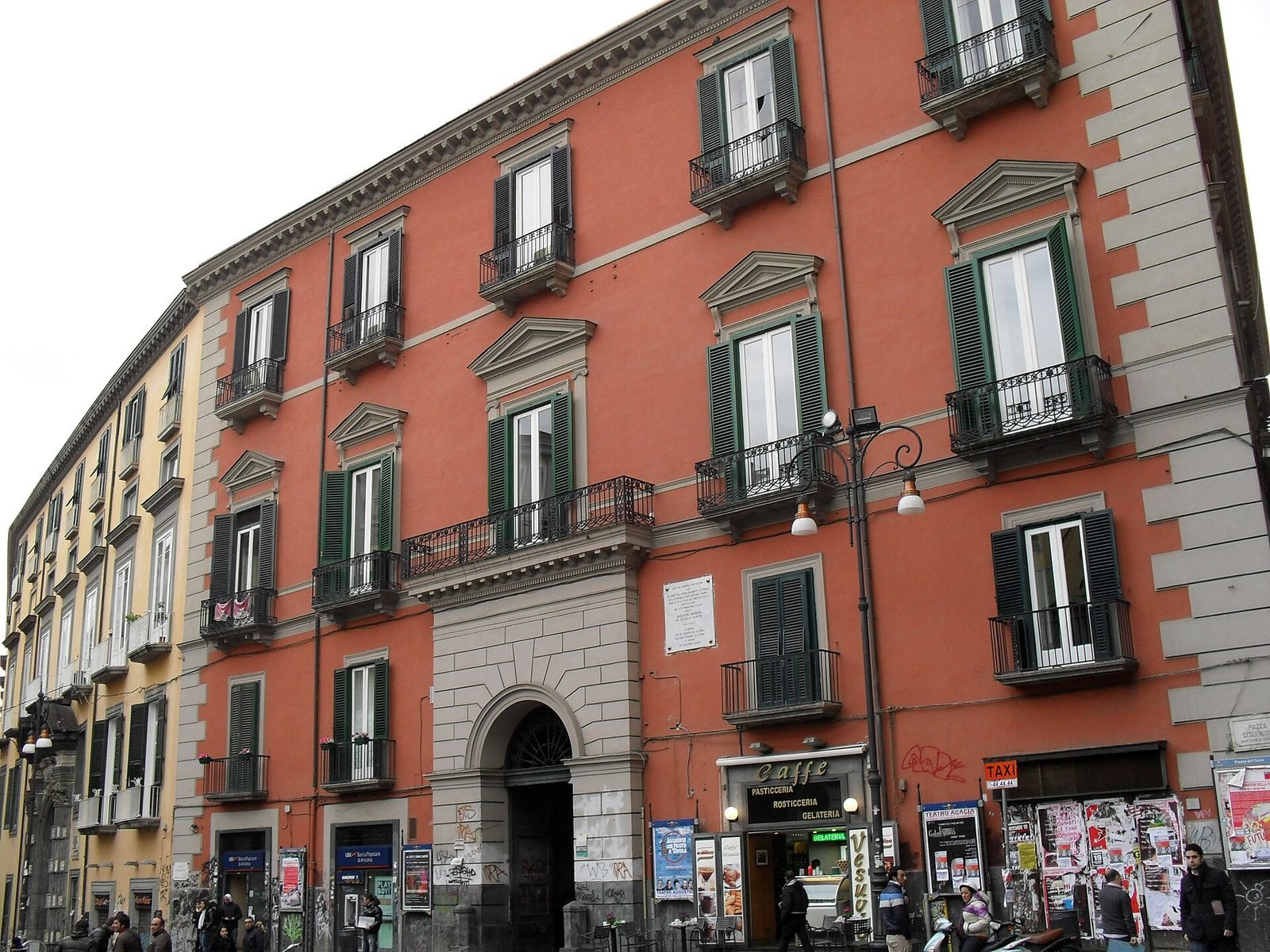
The façade was rebuilt in the Neoclassical style and features balconies and a prominent cornice. Its projecting entrance portal opens onto a courtyard, where an eighteenth-century open staircase is decorated with paintings. A plaque on the palace commemorates Guglielmo Oberdan.