Palazzo Giordano Apostoli: A Venetian Neo-Gothic Palace in Italy
Site at a Glance
- Popularity
- Medium
- Country
- Italy
- Primary era
- Modern
- Eras represented
- Modern
- Civilizations
- Italian
- Site type
- Domestic
- Remains
- Elite Residence
On this page6 sections
History
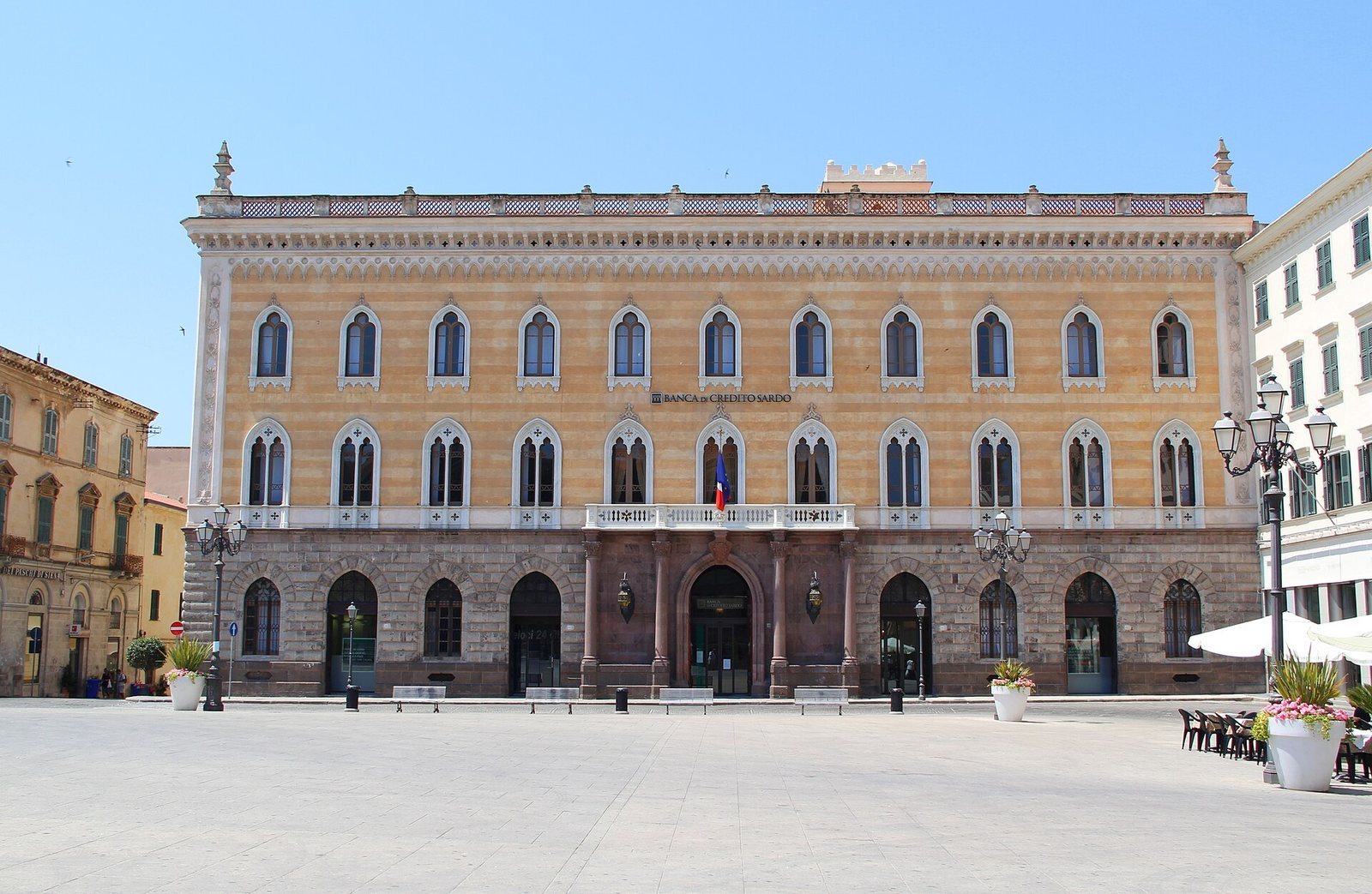
Palazzo Giordano Apostoli is a palace in Italy built in Venetian Neo-Gothic style, a revival drawing on Venice’s Gothic architecture. Construction began in November 1877.
Commission and construction
Senator Giuseppe Giordano Apostoli, founder of the newspaper La Sardegna, commissioned the building. Engineer Giuseppe Pasquali died before the work was complete. Architect Luigi Fasoli then took over, overseeing its details and decoration as construction continued through the late 1870s.
Change of ownership
Ownership passed to Banco di Napoli in 1921, and important parts of the luxurious interior furnishings were lost. The building is now used by Intesa Sanpaolo Bank.
Remains
Exterior
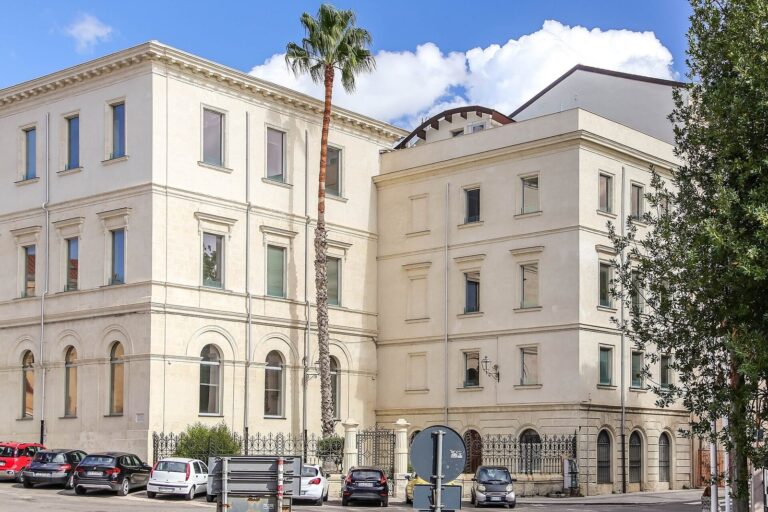
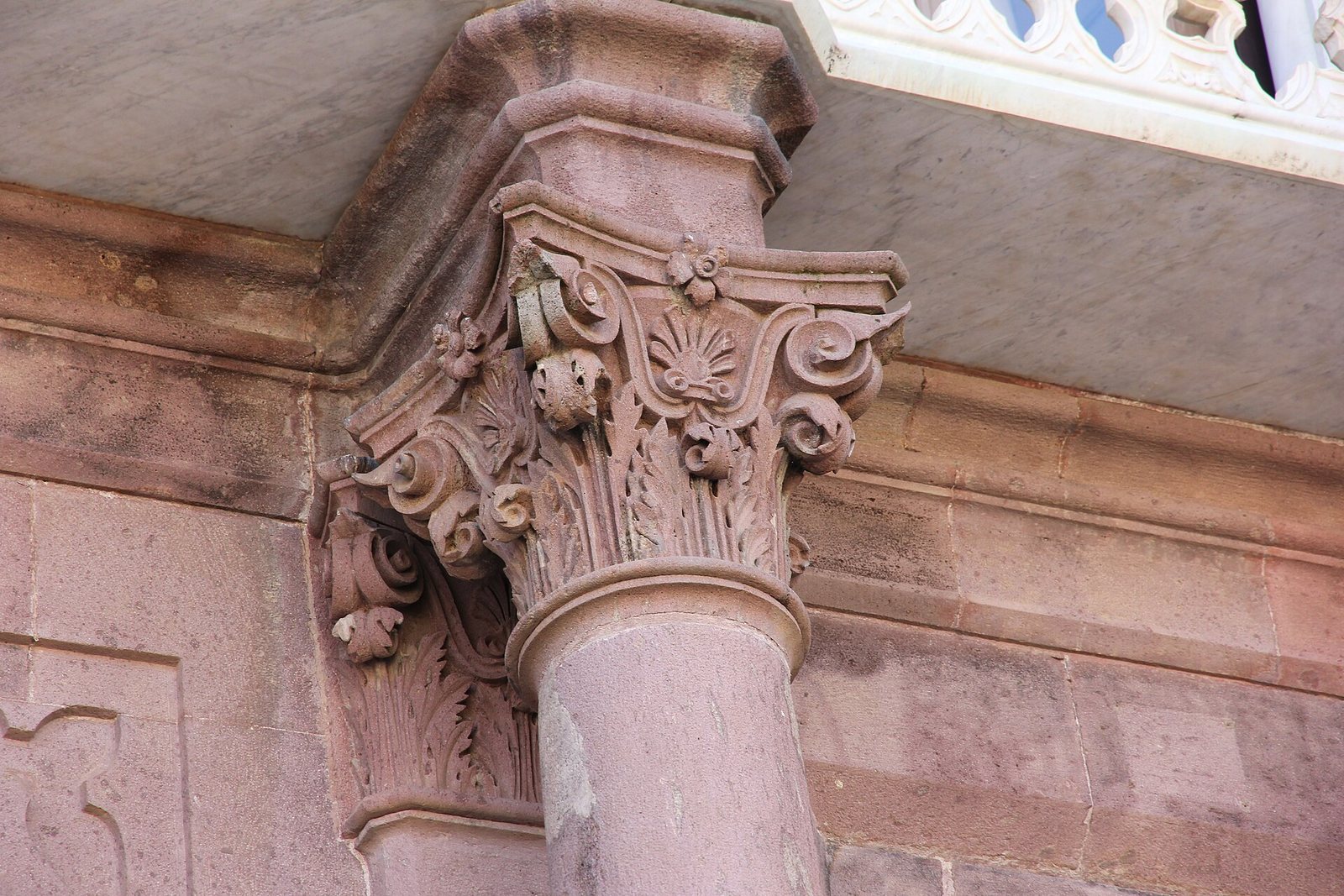
The palace has a rectangular plan and three horizontally arranged levels. Its ground floor is faced with rusticated trachyte, a volcanic rock finished with a rough, prominent texture. A central entrance portal is framed by two separated pairs of projecting columns. Pointed-arch doors and windows alternate symmetrically on either side, while the columns support a balcony on the principal floor. A horizontal band divides the ground floor from the two plastered upper storeys. The first has windows divided into two openings; the second has single-opening windows beneath three-lobed arches. Shallow, column-like pilasters and a decorative horizontal band accent the building’s outline. Beneath the projecting cornice, which supports a balustraded crown, runs a long line of small pointed arches.
Interiors
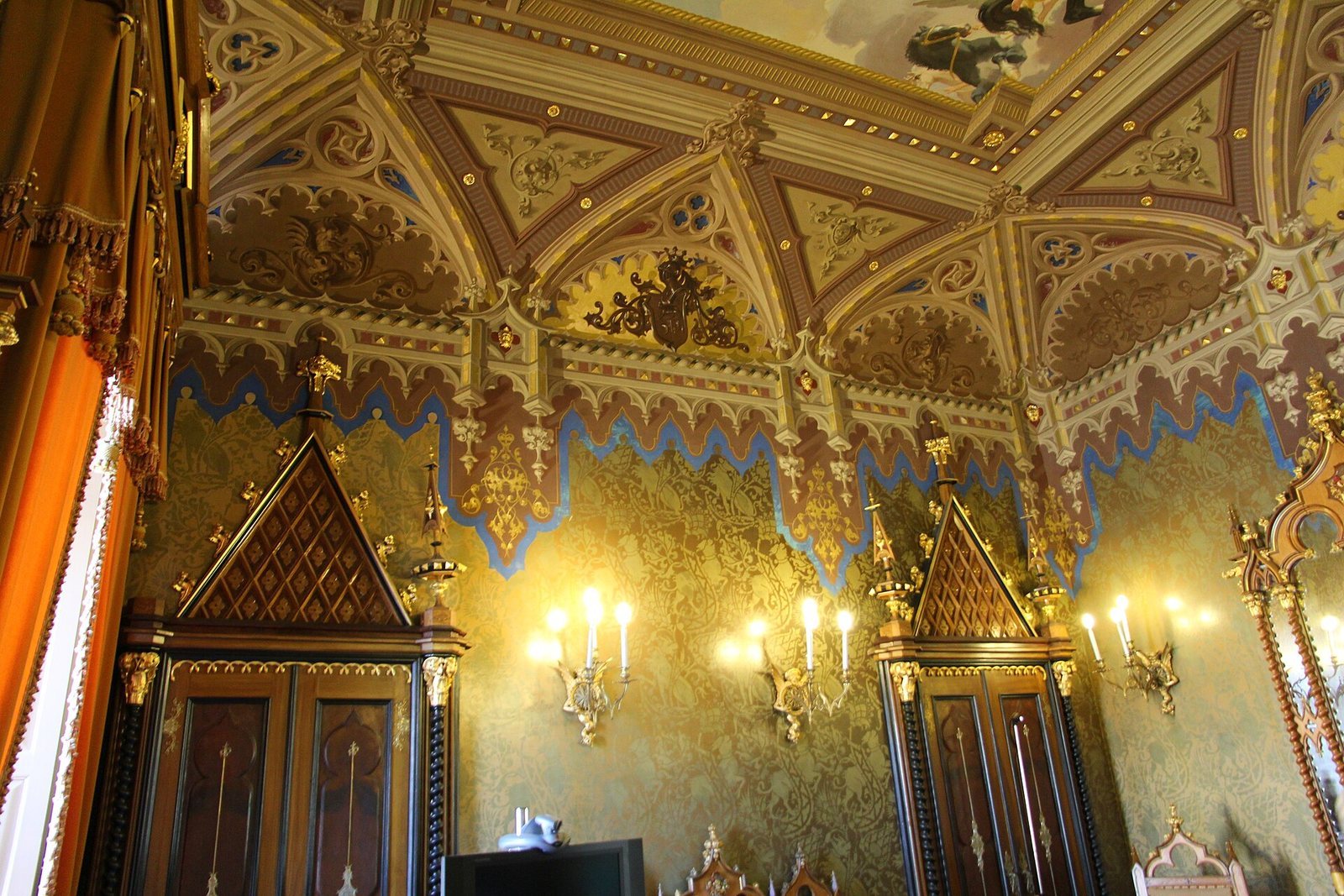
The richly decorated Neo-Gothic interiors include decorative bands, stucco work, and frescoes. In the Yellow Room, paintings by Guglielmo Bilancioni adorn a low-pitched pavilion vault, a ceiling with sloping sections on all sides. Its mosaic floor depicts a dancer; mosaicists from Rome made it to Fasoli’s design. The ornamented principal staircase has a painting by Bilancioni above it. Some Neo-Gothic furniture bearing Baron Giordano Apostoli’s coat of arms also survives in the building.