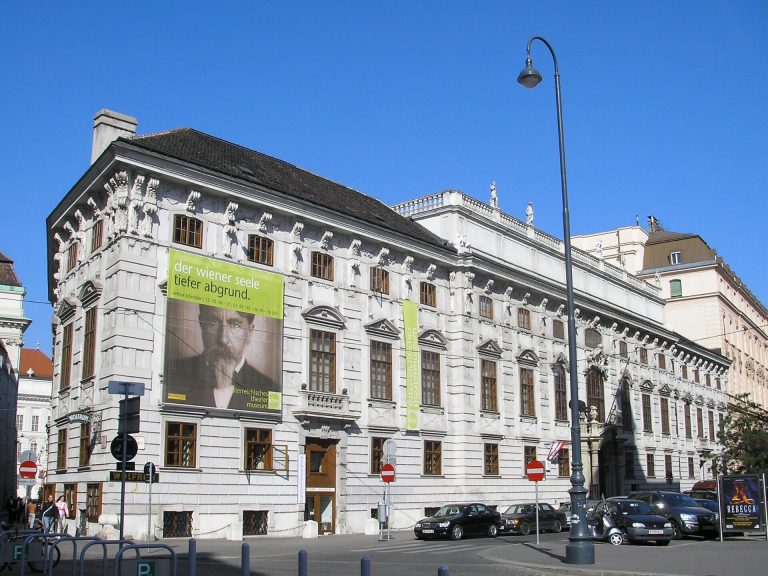
Palais Eskeles: A Vienna Palace and Home of the Jewish Museum
Site at a Glance
- Popularity
- Low
- Country
- Austria
- Primary era
- Modern
- Eras represented
- Modern
- Civilizations
- Austria-Hungary, Habsburg
- Site type
- Domestic
- Remains
- Elite Residence
On this page8 sections
History
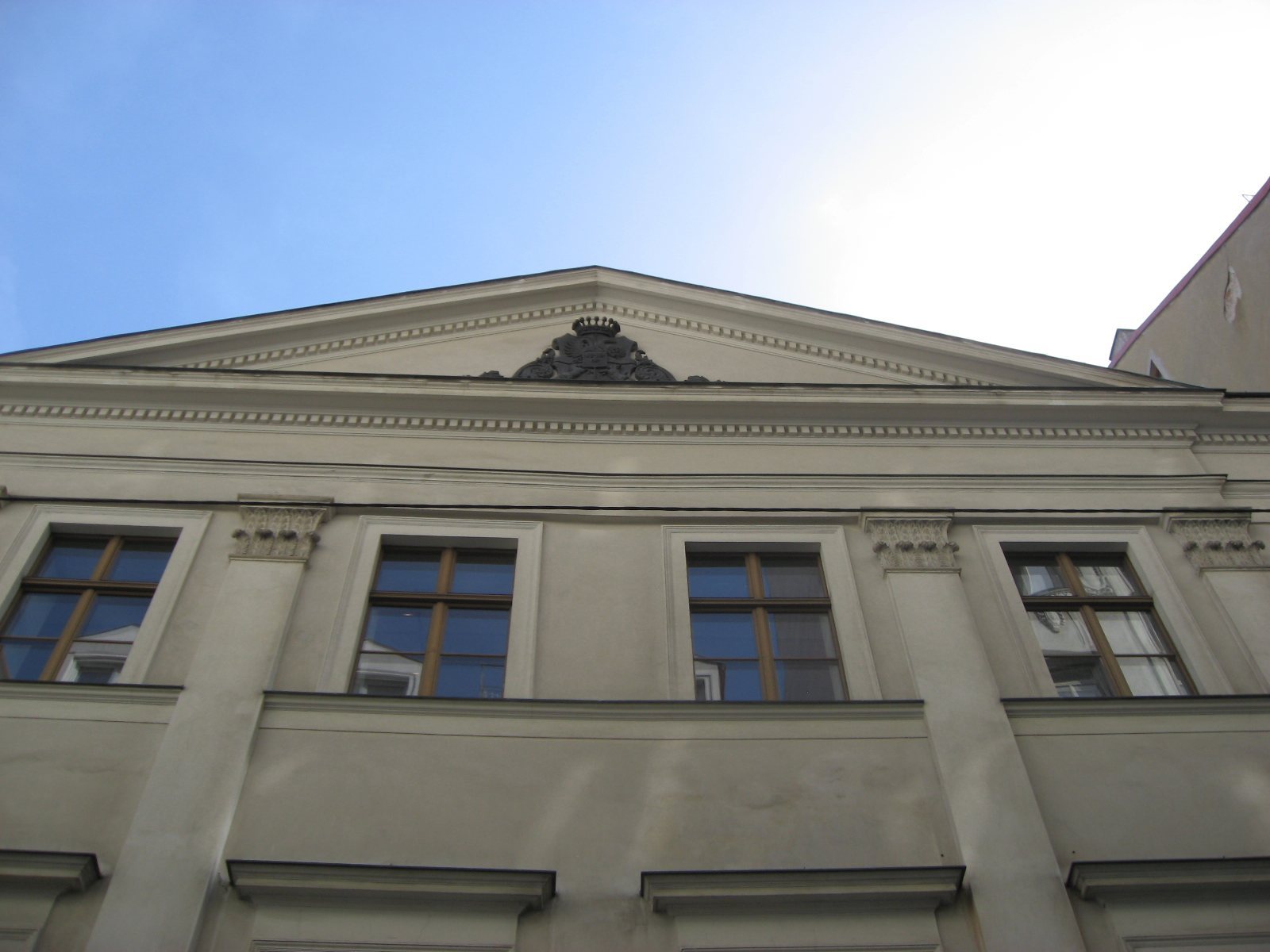
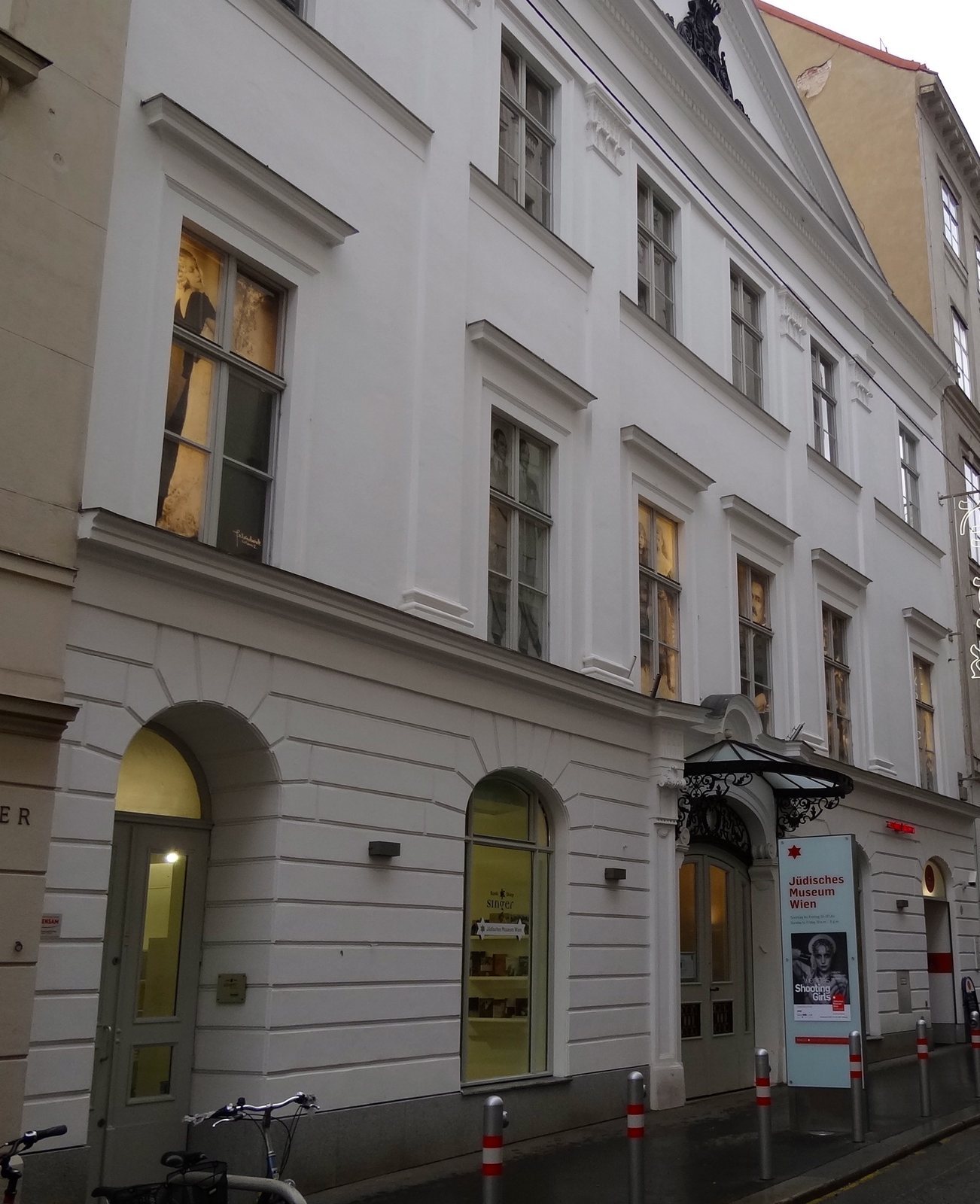
Palais Eskeles is a Neoclassical palace at Dorotheergasse 11 in Vienna, Austria, and has housed the Jewish Museum Vienna since 1993.
Monastery property and dissolution
Augustinian canons, members of a Catholic religious community, established the Dorotheer monastery in the area in 1414. Through purchases of neighboring properties, the community expanded its complex. By the early sixteenth century, it extended along the frontage of what is now Dorotheergasse 11. As upkeep became more costly, the monastery leased and sold parts of its property, including the land occupied by the present palace.
In 1782, Joseph II, a Habsburg ruler and Holy Roman Emperor, placed the monastery under the administration of Klosterneuburg Abbey, an Augustinian religious house in Lower Austria. The monastery was dissolved in 1786. The abbey then rented out the former church and other buildings. A pawnshop used the church as an auction hall; the later Dorotheum, a Viennese auction house with roots in pawnbroking, took its name from the church.
Private owners and Palais Nákó
August von Holzmeister owned the building in 1804 and sold it the following year to Anna Maria von Dietrichstein. From 1805 to 1807, she rented an apartment there to Constanze Mozart, widow of the composer Wolfgang Amadeus Mozart, and her sons Franz Xaver Wolfgang and Carl.
The property belonged to Paul III Anton, Prince Esterházy, in 1812. He sold it in 1813 to Alois, Prince Kaunitz-Rietberg, son of State Chancellor Count Wenzel Anton von Kaunitz-Rietberg. In 1823, enforcement proceedings transferred the building to Kaunitz’s creditor, the Arnstein and Eskeles banking house. Founded in 1773 by banker Bernhard von Eskeles, the firm was associated with the building in a contemporary description calling it the “princely Kaunitz house, now the Arnstein house.”
Hungarian Count Alexander Nákó de Nagyszentmiklós bought the property in 1827. After alterations, he lived there with his family and servants from 1830, and the building became known as Palais Nákó. The family owned it for almost 70 years. Alexander’s son, Count Kálmán Nákó, later sold it to builders Ignaz Fleischer and Salomon Stein.
Gallery, auction house, and museum
Art dealer Hugo Miethke acquired the palace and its furnishings in 1895 for Galerie Miethke. After the First World War, the building served as the “House of the Young Artists.” The Dorotheum became its owner in 1936.
In July 1993, the Jewish Museum Vienna moved into the palace from temporary rooms at the Jewish Community of Vienna. The museum opened at Palais Eskeles on 18 November that year.
Remains
The Neoclassical palace retains features shaped by its conversion for gallery use in 1895. Its entrance and former courtyard combine marble finishes with glass structures, while a ceiling painting came from another palace once owned by the Esterházy family.
Entrance and interior
Portal and vestibule
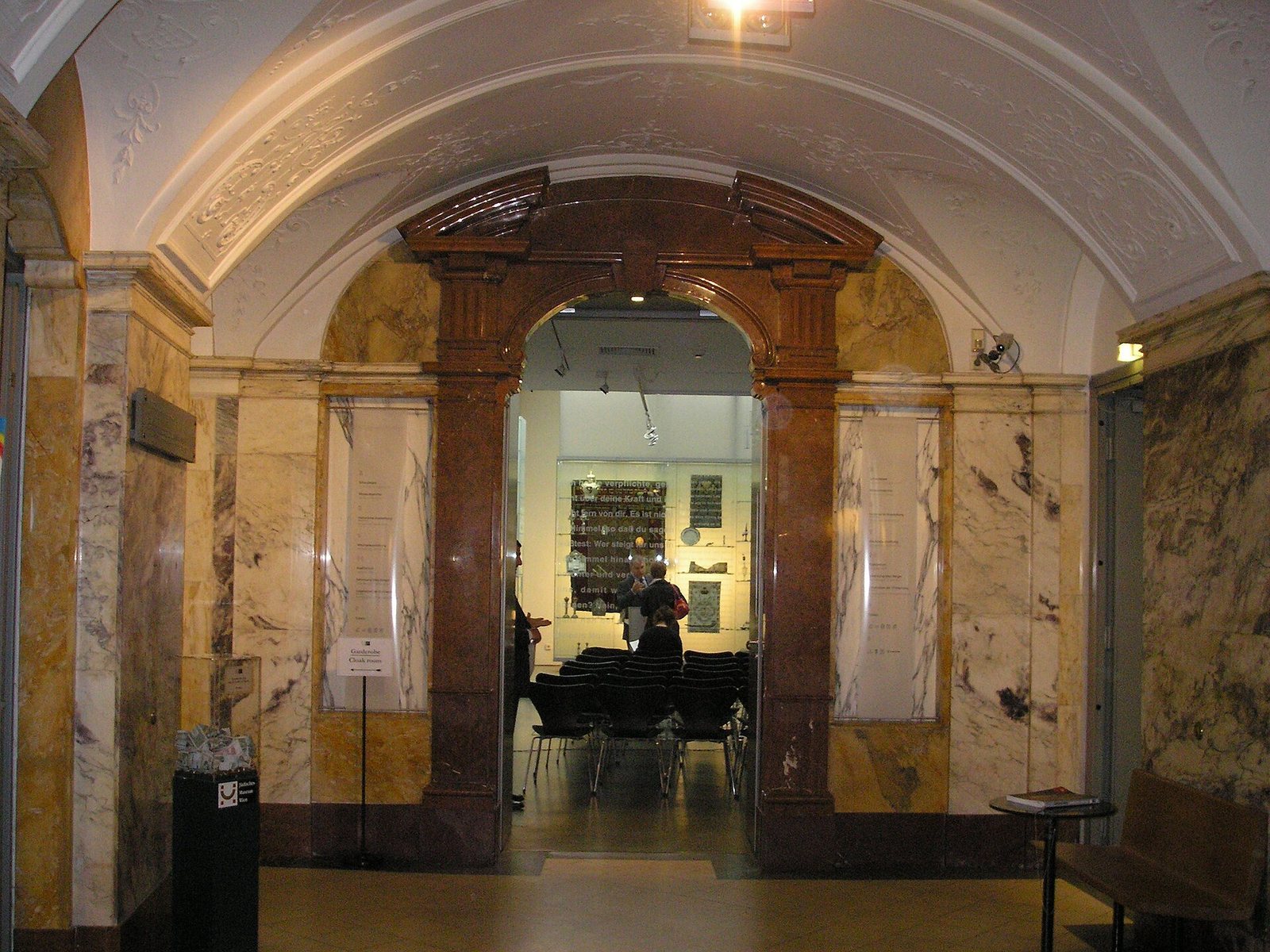
A glass-and-iron canopy covers the entrance portal. Inside, the vestibule was redesigned in the Rococo style, known for elaborate ornament. The floor was lowered by four steps to make the entrance appear higher and finished in white marble. Yellowish slabs mottled with violet cover the walls, while the wall piers and balustrades use dark-red Untersberg marble, quarried from the Untersberg massif in the Alps.
Former courtyard and ceiling painting
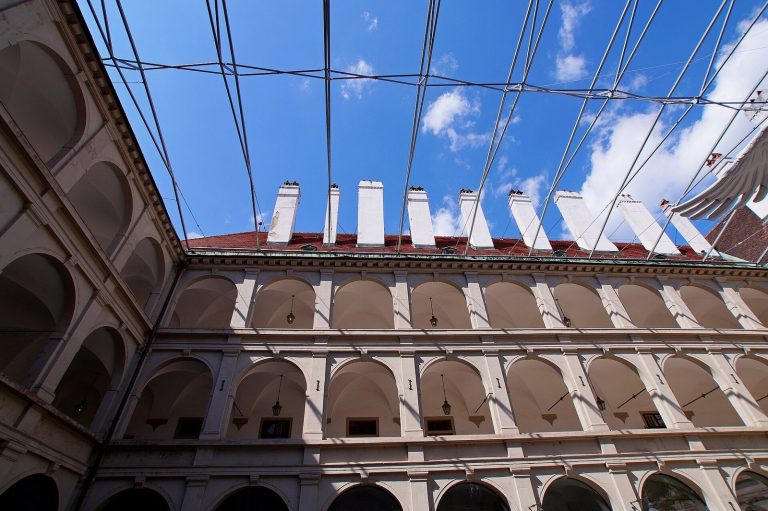
A marble portal marks the entrance to the former courtyard, which was converted into an exhibition hall by the addition of a glass ceiling. The palace also contains a ceiling painting from another Esterházy palace in Mariahilf. That building was first called Palais Kaunitz, later housed the Marian Gymnasium, a secondary school, and was demolished in 1970.