Painted Bluff: An Indigenous Rock-Art Site in Alabama
Site at a Glance
- Popularity
- Medium
- Country
- United States
- Primary era
- Medieval
- Eras represented
- Medieval
- Civilizations
- Unclassified
- Site type
- Civic
- Remains
- Rock Art
On this page10 sections
History
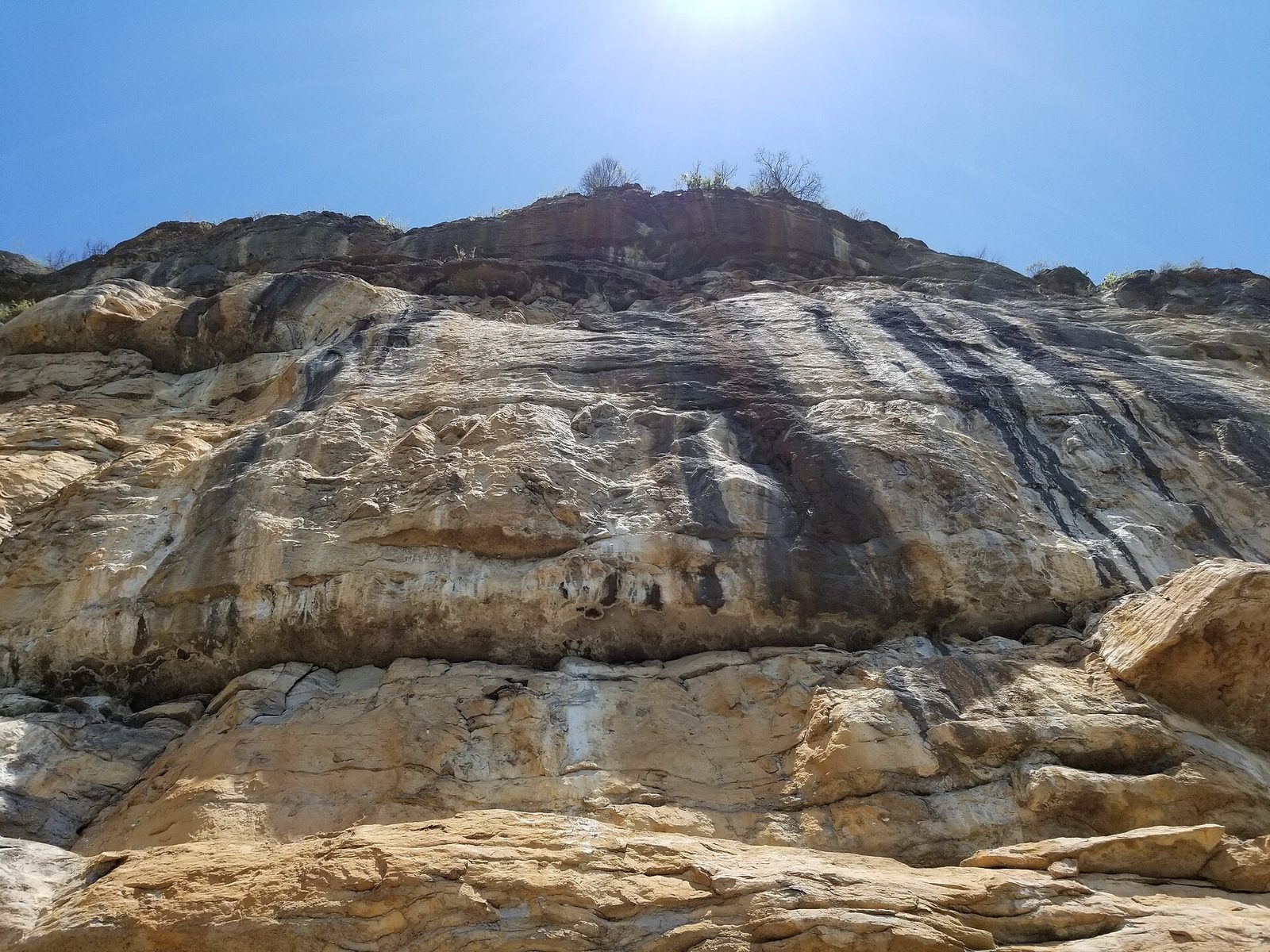
Painted Bluff is a limestone cliff overlooking the Tennessee River in Marshall County, Alabama, United States, where Indigenous people made rock art. People inhabited the site from about 800 BC to AD 1500, spanning the Woodland and Mississippian periods, archaeological terms for Indigenous societies in eastern North America. Humid conditions make open-air rock-art sites uncommon in the Southeast, and TVA archaeologist Erin Pritchard has regarded Painted Bluff as among the region’s most important examples.
Early references and study
The earliest known written references to the bluff appeared in jurist and historian John Haywood’s 1823 book The Natural and Aboriginal History of Tennessee. Haywood believed prehistoric artifacts and monuments in the region had been left by one of the Lost Tribes of Israel, a traditional name for ten tribes of the northern Kingdom of Israel said to have dispersed after its conquest by Assyria.
In 1959, the bluff’s rock-art pigment became the subject of one of the first published chemical analyses of such pigment.
Research and conservation
In 2004, the Tennessee Valley Authority (TVA) and a University of Tennessee archaeological team began documenting and studying Painted Bluff. Their work identified natural weathering and damage from human activity, including extensive graffiti. Climbers had driven steel anchors into the cliff and written climbing-route names on its walls.
The oldest graffiti dates to the nineteenth century. The Alabama Historical Commission named Painted Bluff among its Places in Peril in 2013. In early 2014, a project removed or camouflaged as many as 122 instances of graffiti. Graffiti more than 50 years old remained in place, as required by the National Historic Preservation Act. The bluff is federally owned and managed by the TVA, and the Archaeological Resources Protection Act of 1979 makes damaging or destroying protected archaeological property a felony.
Remains
Painted Bluff is a limestone cliff with three ledges: a low ledge beside the Tennessee River, a middle ledge above it, and a high ledge near the top of the cliff face. A small cave lies along the low ledge. The bluff’s elevation is 248 m (814 ft), and it is about 4 miles (6.4 km) downstream from Guntersville Dam. The cliff consists mainly of Bangor Limestone, a formation in northern Alabama created during the Carboniferous Period, about 359–323 million years ago.
Rock imagery
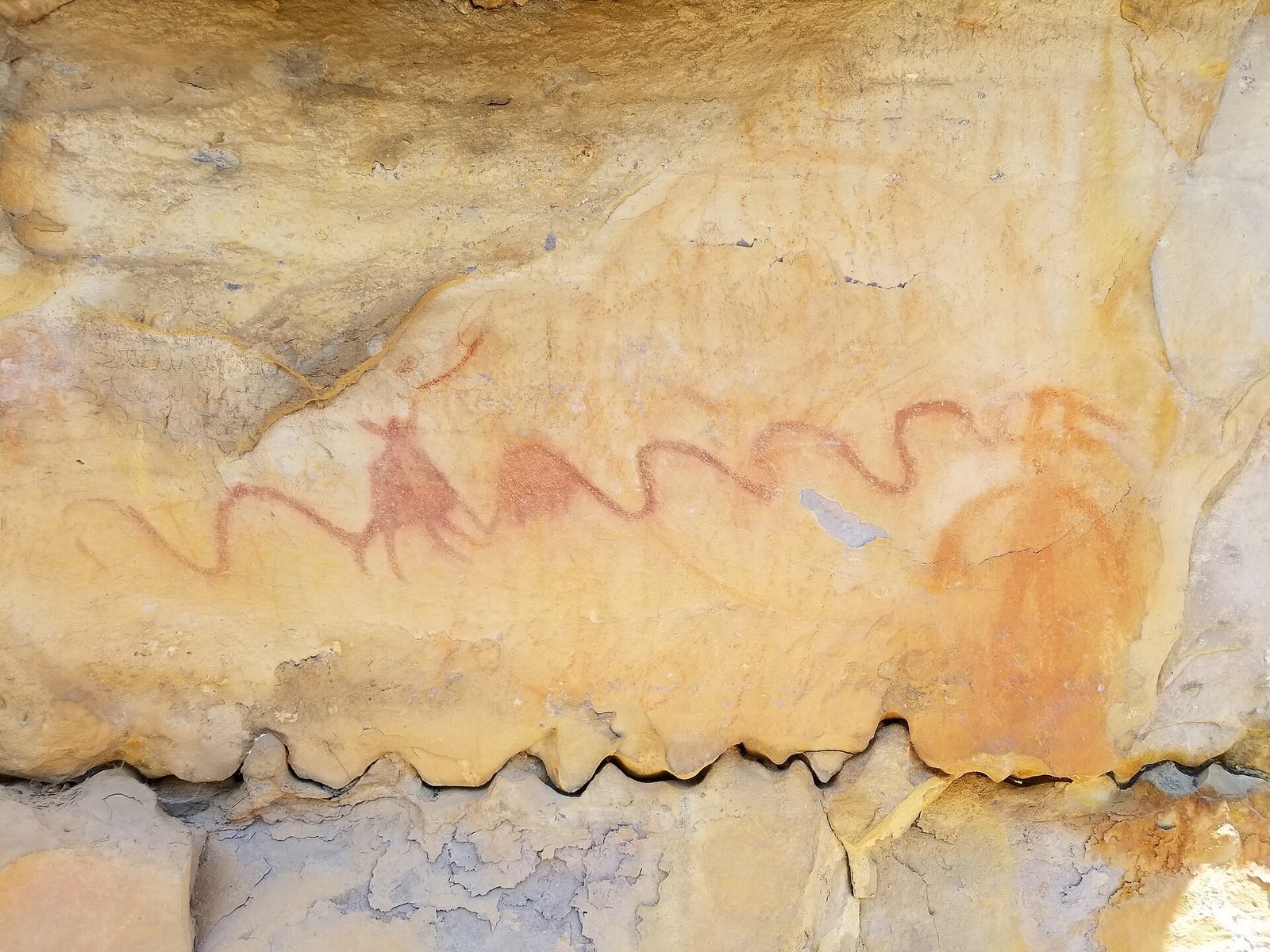
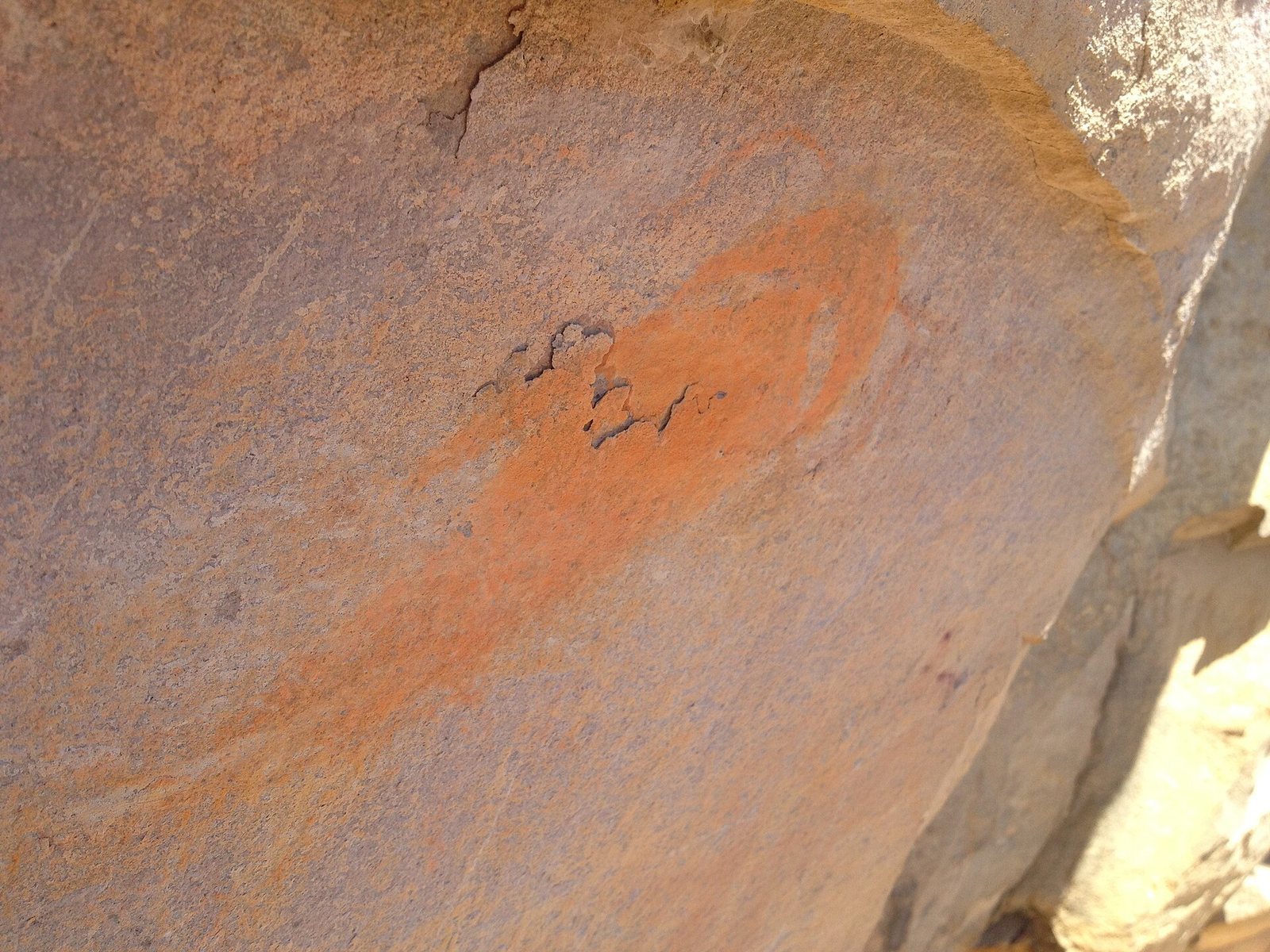
The bluff has 137 prehistoric images: 133 paintings and four engravings. They are distributed across all three ledges, with five on the low ledge, 115 on the middle ledge, and 17 on the high ledge.
Circular designs
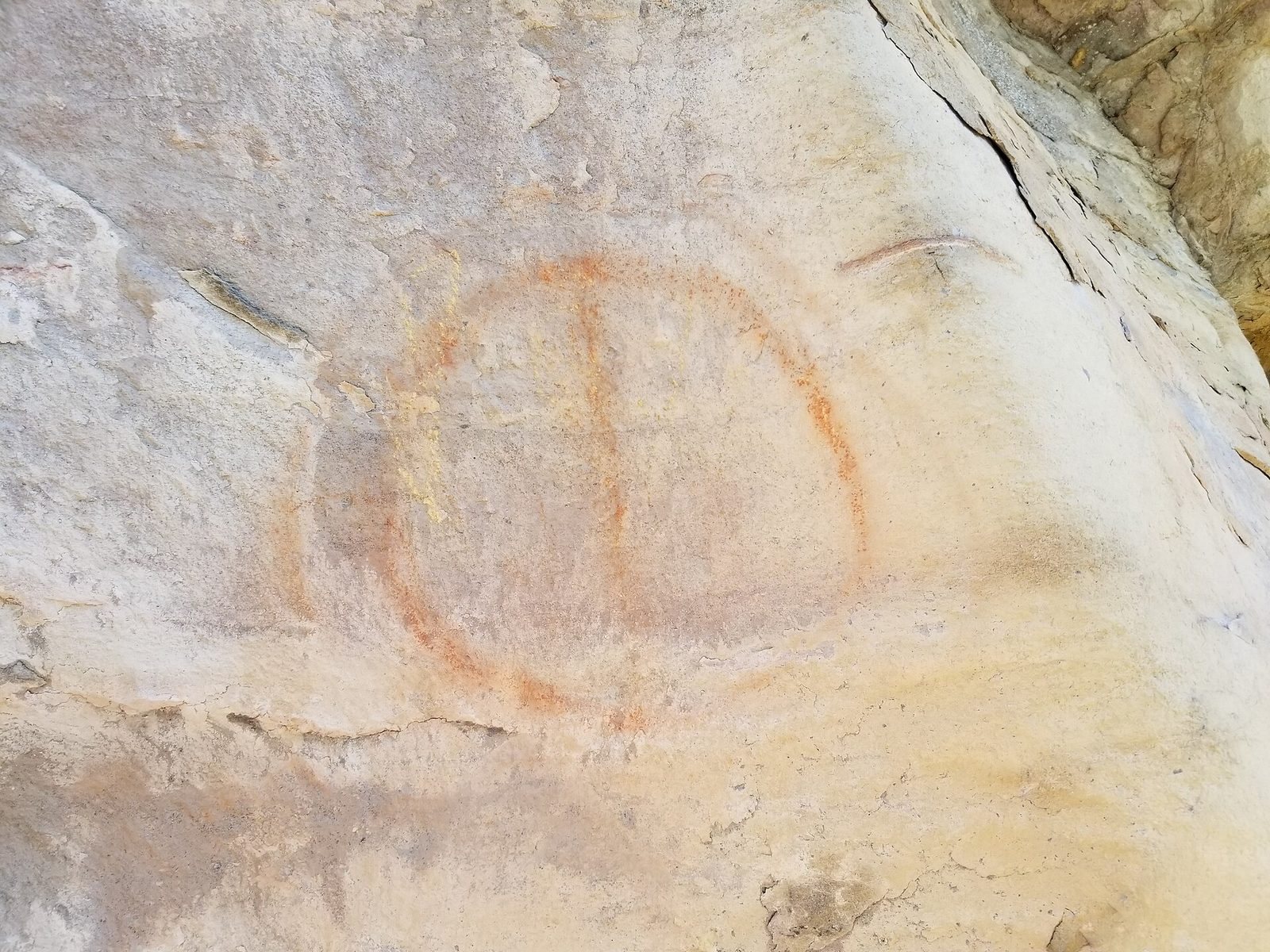
Forty-seven images are circular forms, including rings, solid disks, concentric circles, and circles filled with lines or crosses. Cross-in-circle designs were a common Native American religious icon during the Mississippian period. Circular motifs occur on all three ledges, and nearly all painted images on the high ledge have this form.
Lines, rectangles, and pigment marks
Thirty-one images consist of lines or curves, including straight segments, overlapping lines, and crosshatching. All four engravings fall within this group. Six middle-ledge images are boxes or rectangles with clear right angles; some are incomplete, open-sided, or partly eroded. Eight pigment patches or swatches also appear on the middle ledge. Some may have resulted from an applicator being swiped across the rock to clean it, while the thickness and size of most suggest they were intentional.
Weapon-like forms
Two images on the middle ledge resemble maces, club-like weapons known from other prehistoric art in the Southeast, and are interpreted as such.
Animals
Twelve painted images of animals appear on the middle ledge: five fish, four birds, and three mammals or four-legged animals. Three fish are identified as catfish and one as a species of American black bass; the fifth is too indistinct for a more specific identification. The birds are two herons, a male turkey, and either a hummingbird or a woodpecker.
Human figures and other images
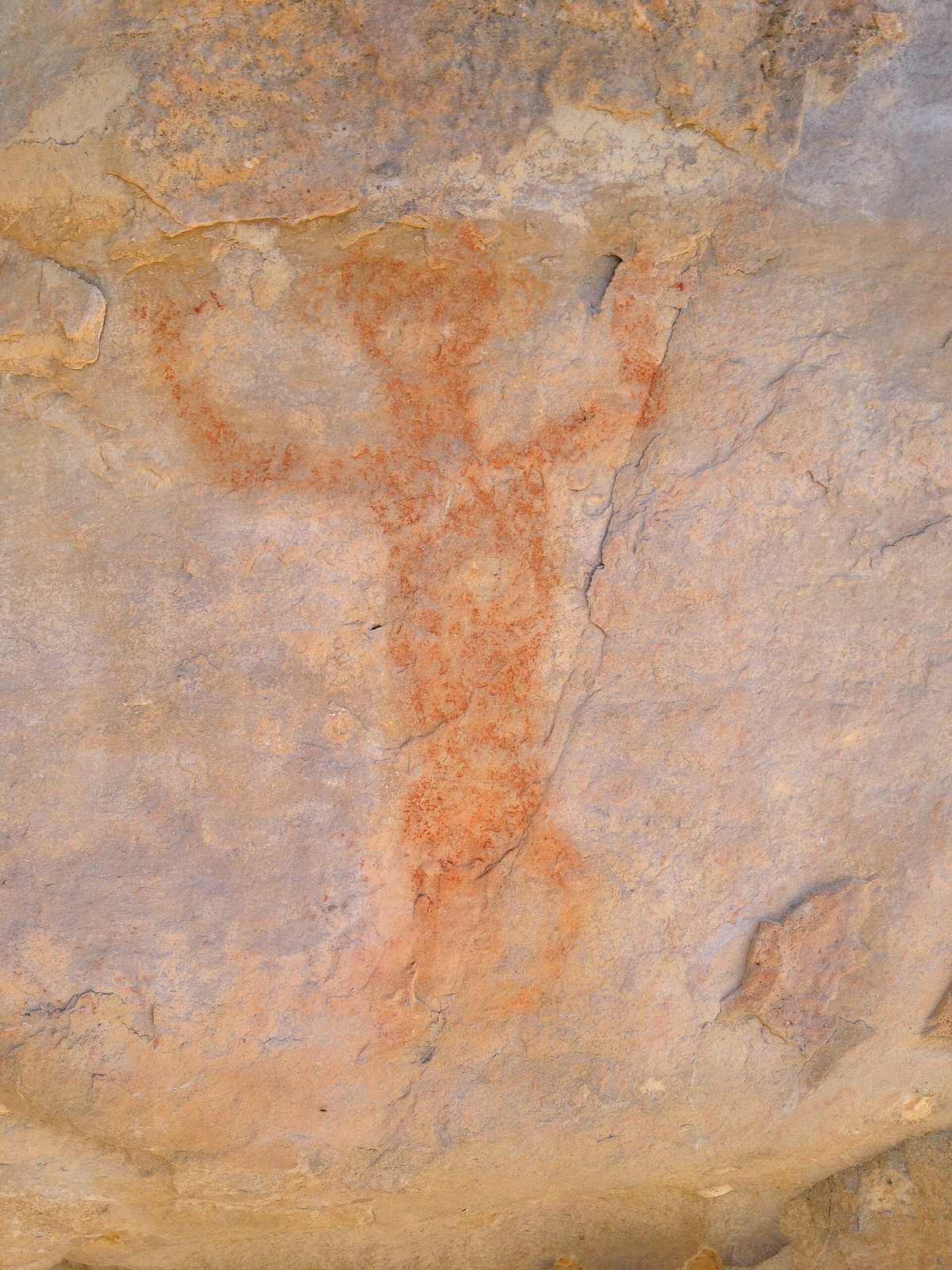
Fourteen images show human or human-like figures. Along with circles, these are the only motif group found on all three ledges. Nineteen further images are grouped as other forms because they are either unrecognizable or recognizable but unique.