Overtoun House: A Scottish Baronial Country Mansion
Site at a Glance
- Rating
- 4.5
- Popularity
- Medium
- Country
- United Kingdom
- Primary era
- Modern
- Eras represented
- Modern
- Civilizations
- British
- Site type
- Domestic
- Remains
- Castle
On this page9 sections
History
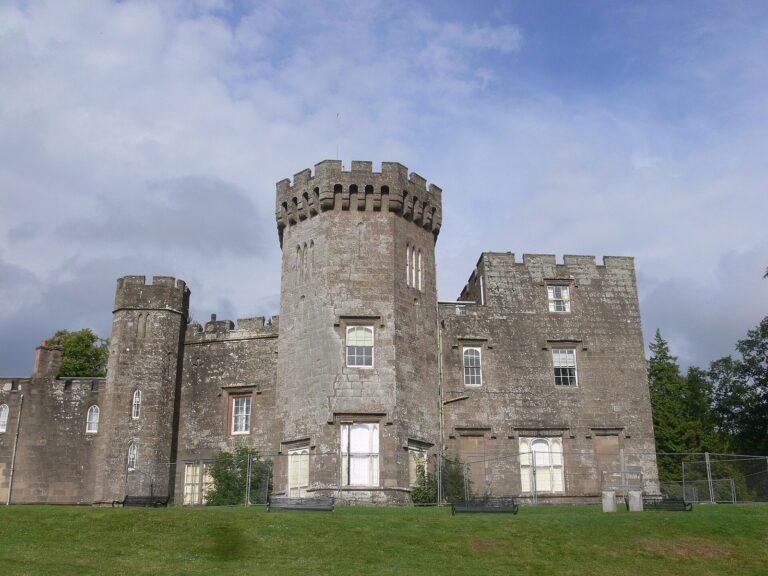
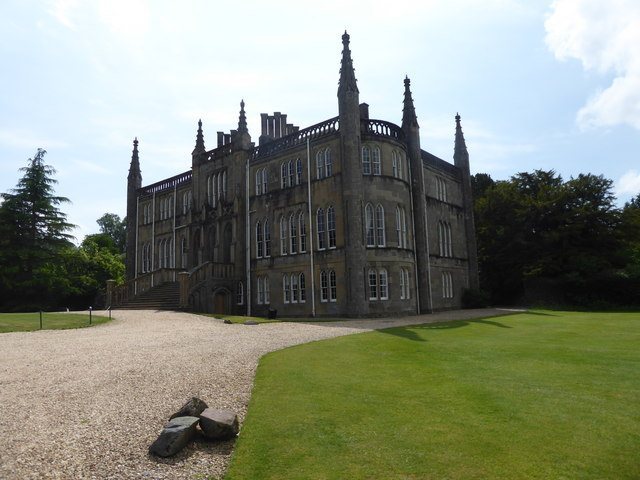
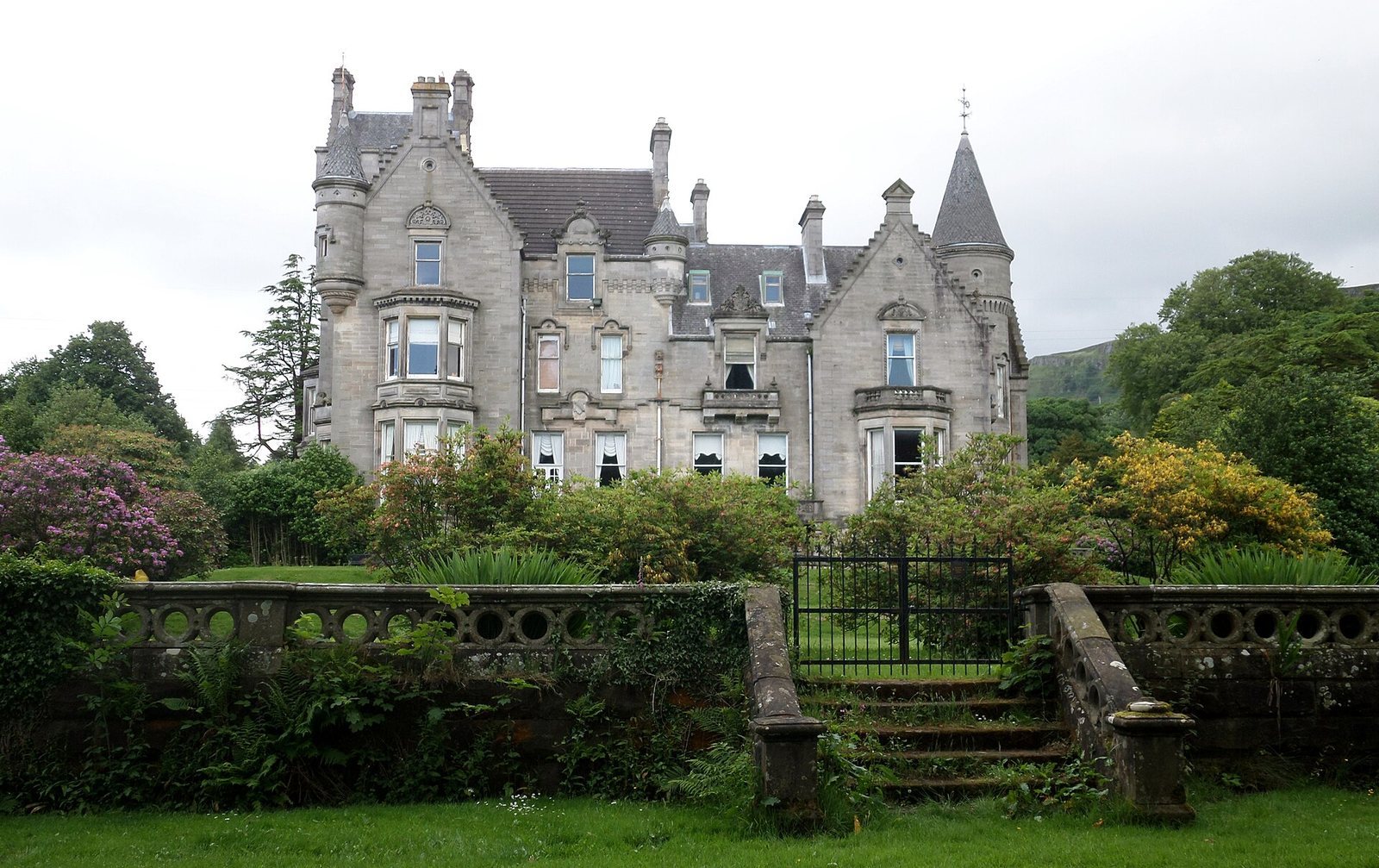
Overtoun House is a Scottish Baronial country mansion built for retired lawyer James White between 1860 and 1863 near Dumbarton, Scotland, United Kingdom. Scottish Baronial is a nineteenth-century revival style drawing on forms associated with Scotland’s castles and tower houses.
The estate and mansion
The estate lands belonged to Clan Colquhoun, a Scottish kinship community with political and territorial influence, early in the second millennium. The clan sold them in the fourteenth century to a buyer whose identity is unknown. In 1761, Gabriel Lang of Greenock acquired the estate and established a cattle farm there.
James White, co-owner of the J & J White Chemical Works in Rutherglen, bought Overtoun Farm in 1859 as the site for a country retreat. He first acquired 900 acres, about 360 hectares, and later enlarged the estate to 2,000 acres, about 810 hectares. A farmhouse was demolished before Glasgow architect James Smith designed and supervised the new house. White’s family moved in during 1862, while work continued until 1863. Smith died before completion, and a partner from his practice finished the project. C. Kemp of Birkenhead laid out the grounds, probably the landscape gardener Edward Kemp.
After White died in 1884, his son John inherited the estate and moved there in 1891. The following year, an agreement with Dixon Swan, minister and heir to adjoining Garshake Farm, allowed John to extend the estate and create the West Drive and its lodge. John took the surname Campbell and became Baron Overtoun in 1893. A baron holds a rank in the British system of hereditary and honorary titles. He died without children in 1908, and his nephew, London general practitioner Dr Douglas White, succeeded him. Lady Overtoun continued to live in the house until 1931.
Public and institutional uses
In 1938, Dr White gave the house to the people of Dumbarton, although he seldom visited Scotland. During the Second World War, it served as a convalescent home for wounded soldiers and local people. Its isolated position helped it escape bombing associated with the nearby Clydeside shipyards, part of the industrial district along the River Clyde.
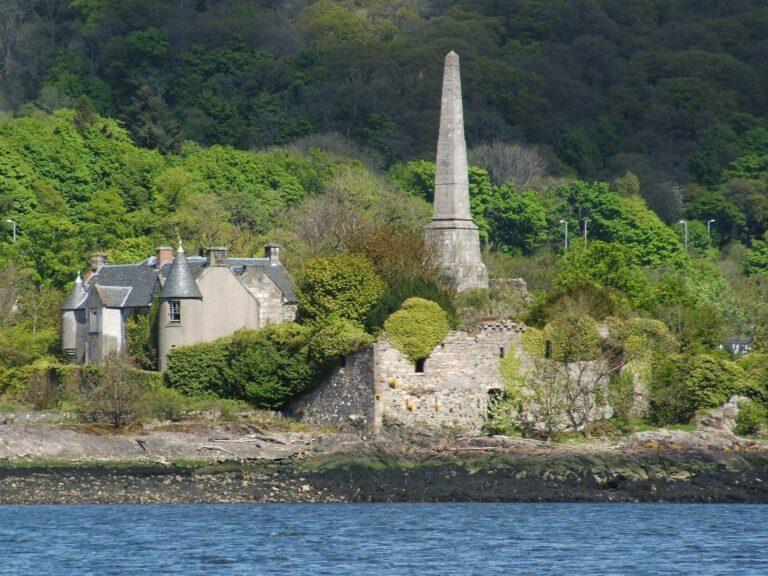
The house became a maternity hospital in 1947. A fire damaged part of the building in 1948 but caused no deaths; the hospital closed on 1 September 1970. By then, a decorative folly castle, built as a landscape feature, and the walled garden had been demolished.
In 1975, the house was chosen as a base for the British government’s Quality of Life Experiment, which also brought funding to the estate. The Spire Fellowship used the house from 1978 into the early 1980s. Youth with a Mission, a Christian missionary organization, then occupied the estate until 1994, after which the house was abandoned.
In 2001, Pastor Bob Hill of Fort Worth, Texas, leased the property from West Dunbartonshire Council to establish a Christian centre and tearoom. Renovation continued until 2015, and a centre for Scottish youth opened in 2017. The house became a Category A listed building in 1971, Scotland’s highest category for listed buildings. The grounds entered the Inventory of Gardens and Designed Landscapes in Scotland in 2006, a national register of important designed landscapes and gardens.
Overtoun Bridge and its reputation
In 1994, a man threw his infant son from Overtoun Bridge, killing him. The man believed his child was the Antichrist, a figure in Christian belief who opposes Christ, and shortly afterward tried to kill himself by jumping from the bridge.
Dogs have been believed to leap from the bridge since at least the 1950s, often with fatal results. The estimated average is about one dog a year, with five deaths in a six-month period. Many appear to have jumped from the same spot on sunny days, and many had long snouts. During an investigation, a dog that survived a fall apparently tried to jump again from the same place. A 2006 investigation linked the behavior to the scent of mink nesting beneath the bridge. On sunny days, the scent could become concentrated in the air, attracting dogs onto the sloping parapet, where they could lose their footing. Supernatural explanations have also contributed to the bridge’s reputation.
Remains
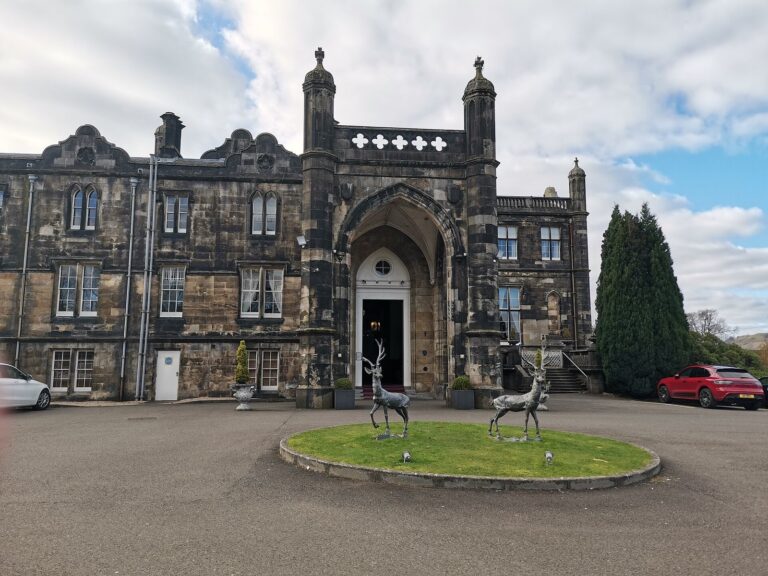
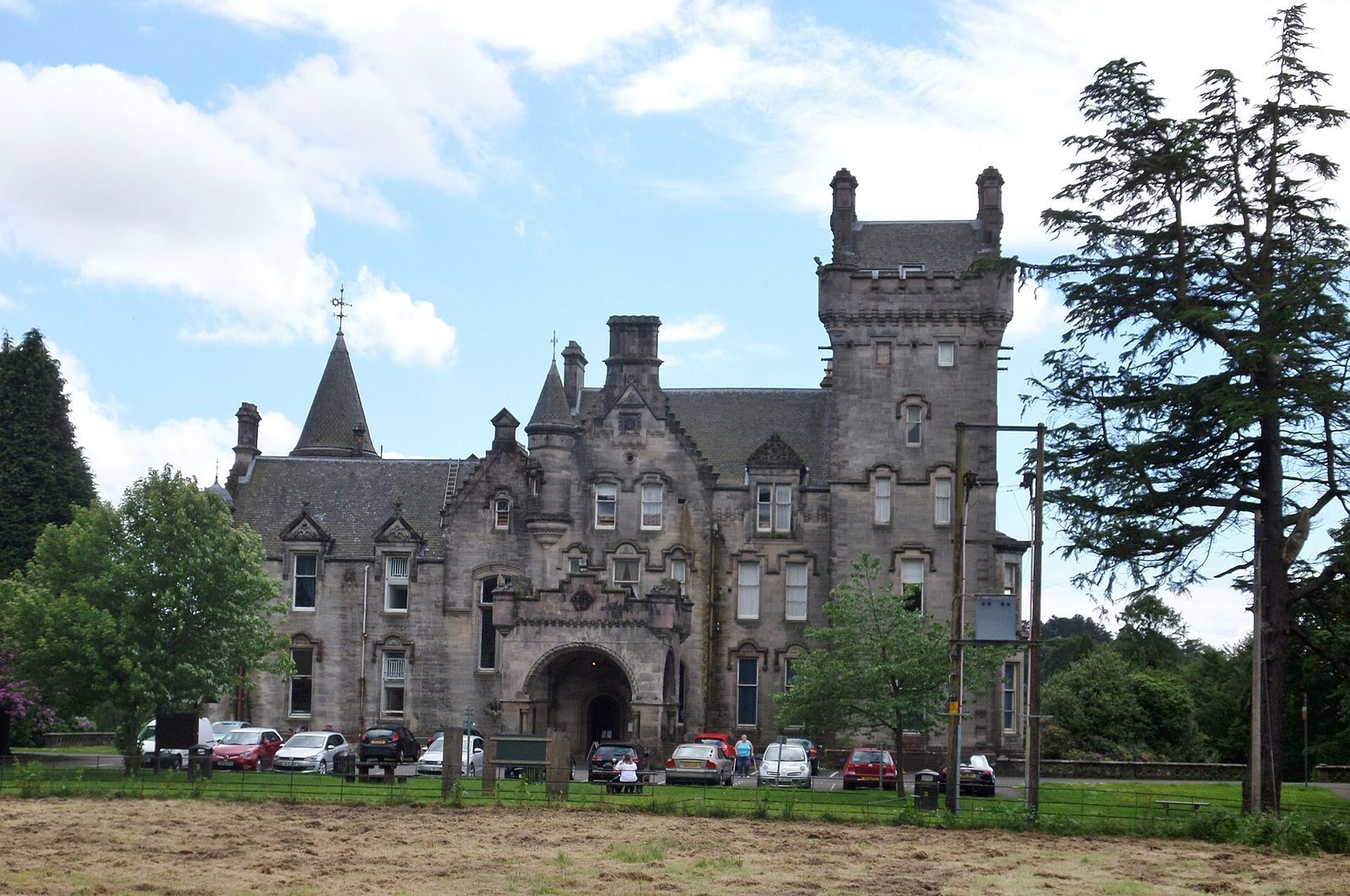
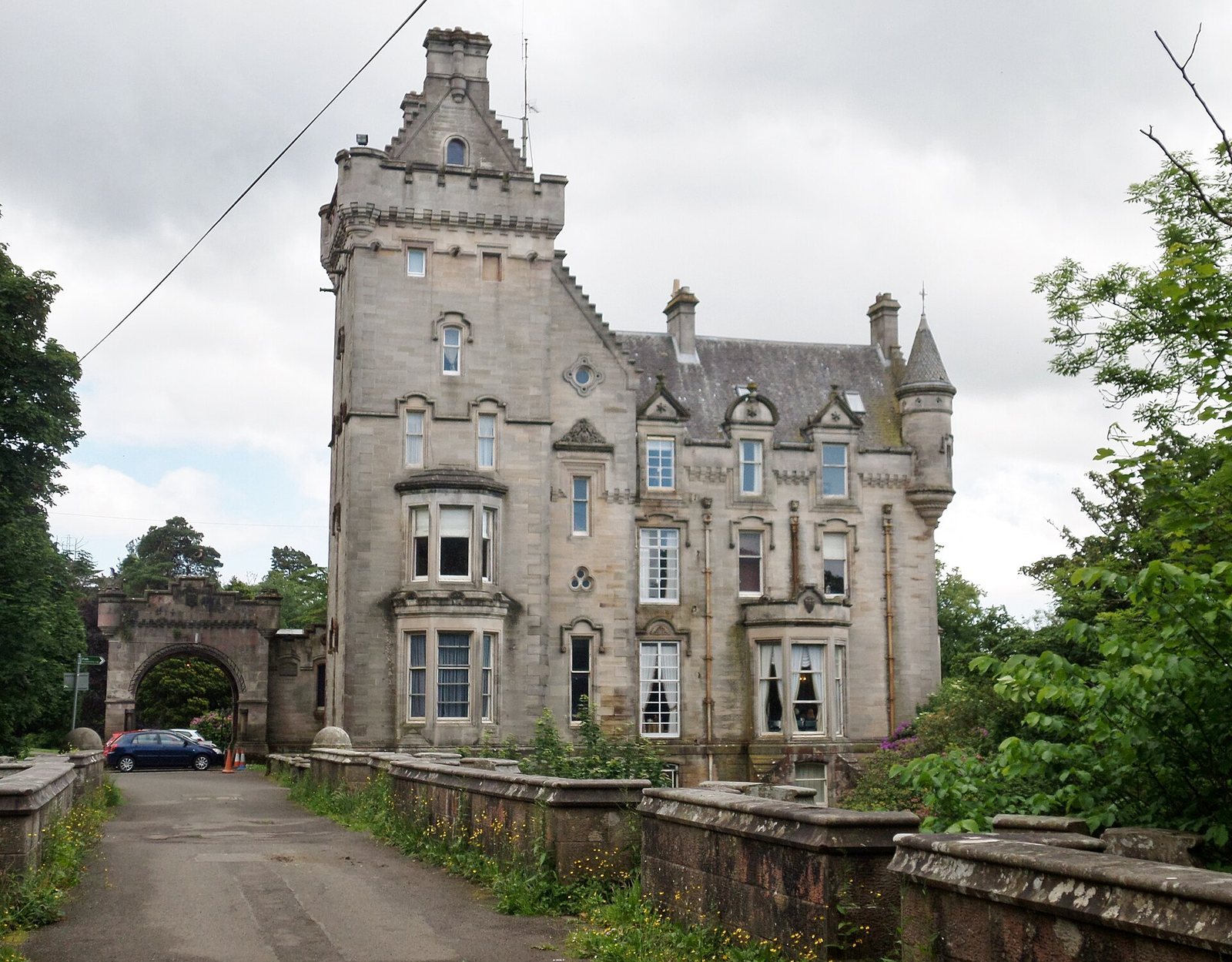
The estate covers 55 hectares on a hill above the River Clyde. Its physical features include the mansion, surrounding parkland, the Overtoun Burn and a bridge on an approach road. The house has an asymmetrical layout with sections of different heights, slate roofs and a tall square-plan tower.
Architecture and designed landscape
The mansion
The house’s two- and three-storey sections are arranged asymmetrically around a square-plan tower that rises five storeys. Slate covers the roofs, and the mansion is richly detailed. This varied massing gives the house its distinctive outline within the grounds.
Sculpture
Sculptures stand inside the house and in the surrounding parkland. They include two marble statues by Roman artist Giovanni Batista Lombardi and two busts by sculptor John Warrington Wood.
Overtoun Bridge
About 30 metres west of the house, the granite bridge crosses the Overtoun Burn, a small stream, on an approach road. Built in 1895, it rises about 15 metres. A waterfall on the burn divided the eastern and western parts of the estate; the road and bridge connected those two areas. Henry Milner, son of Edward Milner, designed the bridge.