Ostriy Fortress: A Medieval Hillfort in Russia
Site at a Glance
- Popularity
- Low
- Country
- Russia
- Primary era
- Medieval
- Eras represented
- Medieval
- Civilizations
- Grand Duchy of Lithuania
- Site type
- Military
- Remains
- Fort
On this page4 sections
History
Foundation and Lithuanian rule
Ostriy Fortress was a fourteenth-century hillfort in Russia, on the left bank of the Velikaya River near Chernetsovo. Its builders are unknown; they may have been people of the medieval Lithuanian polity or people from Novgorod, a major political center in northwestern Rus’.
A chronicle list dated to 1375–1381 names Ostriy among Lithuanian towns, using an earlier form of the name. It is the earliest settlement mentioned in the history of the present-day Novosokolniki district. The fortress remained under Lithuanian rule until 1503.
Transfer to Moscow and decline
In 1503, Ostriy passed to Ivan III, Grand Prince of Moscow. It later became the center of an extensive administrative territory called a volost, a sovereign’s estate.
Ostriy’s last known mention comes in the 1578 peace treaties between Moscow and the Polish-Lithuanian state. After that, the fortress lost its importance as a frontier stronghold. It is now listed in Russia as a cultural heritage property of federal significance.
Remains
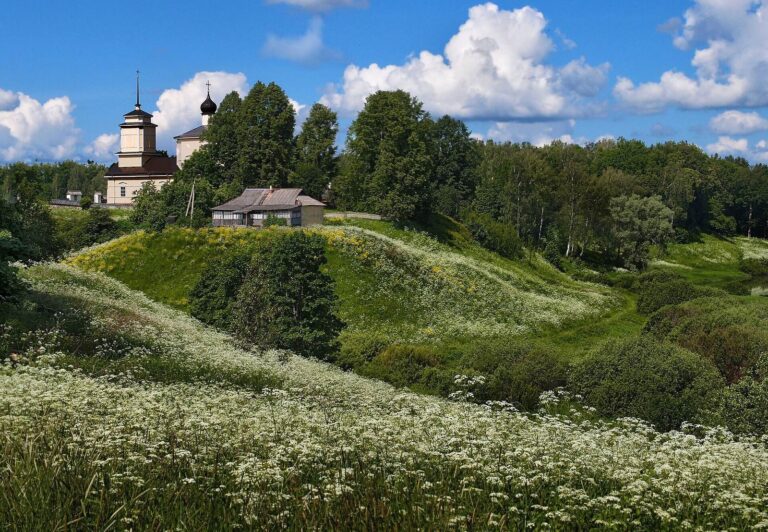
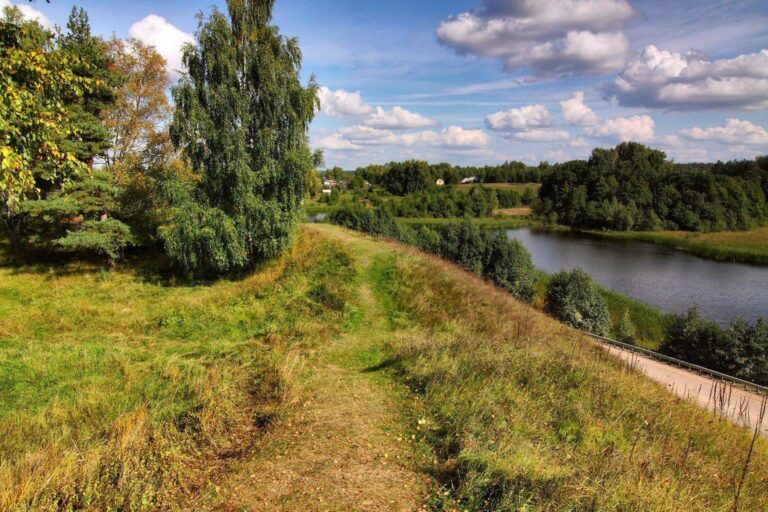
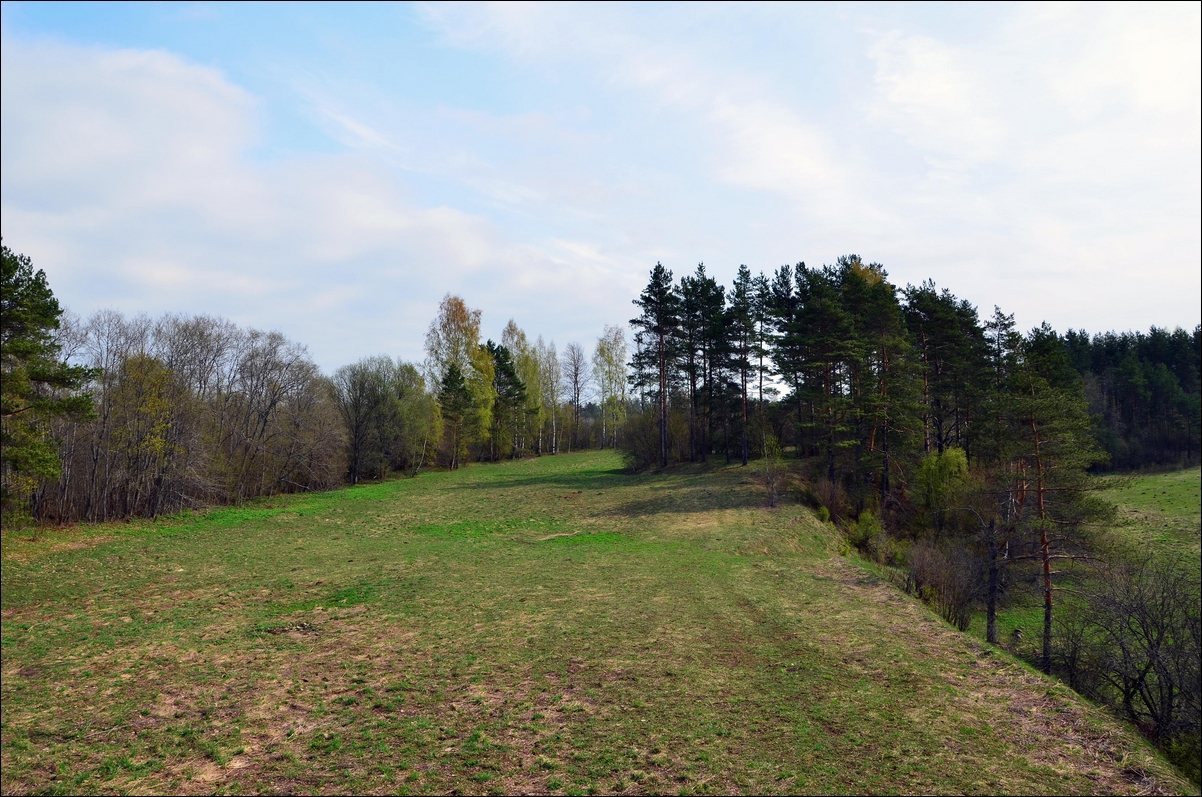
The fortress occupied a hill measuring 183 by 60 metres. The Velikaya River bordered it on three sides, while a dug ditch defended the fourth. Builders levelled the hilltop, steepened its slopes, and raised an earthen rampart around the edge of the platform. Stone blocks formed the rampart’s base, with stones set in clay strengthening it in some places.
A wall of thick upright logs stood on the rampart, with loopholes and an inner walkway for defenders. The site is now a tract, where remains of the ramparts survive.