Oenoanda: An Ancient City in Lycia
Site at a Glance
- Popularity
- Medium
- Country
- Turkey
- Primary era
- Classical
- Eras represented
- Bronze Age, Classical, Medieval, Early Modern
- Civilizations
- Ancient Greek, Byzantine, Hittite, Ottoman, Roman
- Site type
- City
On this page20 sections
History
Oenoanda was an ancient city in the Ceylan area of Muğla Province, Türkiye. Around 200–193 BCE, during the Hellenistic period, the era between Alexander the Great’s conquests and Roman imperial rule in the eastern Mediterranean, it became a colony of Termessos in Pisidia.
Bronze Age origins and Hellenistic settlement
Oenoanda’s earlier history is unclear. The Hittites, a Bronze Age Anatolian people, knew the settlement as Wiyanawanda. It lay in Lukka, a southwestern Anatolian region often associated with later Lycia. The name Oenoanda has been interpreted as referring to vines or wine. After becoming a colony of Termessos, the city was also called Termessos Minor and Termessos near Oenoanda. These names were used with little distinction and may reflect the joining of two settler groups. An inscription from the imperial period described Oenoanda and Termessos in Pisidia as having a common origin.
The Cibyra Tetrapolis and the Lycian League
Oenoanda was the southernmost member of the Cibyra Tetrapolis, a grouping of four cities that also included Bubon, Balbura, and Cibyra. In 84 BCE, the Roman commander Lucius Licinius Murena dissolved the federation. Oenoanda then joined the Lycian League, a federation of cities in Lycia, and later issued didrachms, coins worth two drachmas, possibly to pay mercenaries.
An agreement between Oenoanda and the Lycian League set rules for tolls and access to highland territory near Oenoanda, Tlos, and Cadyanda. Mount Masa remained the inalienable territory of Tlos, but Oenoandans could graze animals and cut wood there. They could not plow the land or build permanent structures. Oenoanda’s representatives included priests of Rome and Zeus; the League’s representatives included priests of Rome and Apollo. The Oenoandan delegates had names typically associated with Pisidia.
The agreement is dated to year 34 of Oenoanda’s local era, whose starting point is unknown. Since the worship of Rome appears to have been established in Lycia only after 167 BCE, the agreement probably dates to a later time. Cos served as arbitrator. The terms called for boundary markers, a payment to Oenoanda of 25 talents in Rhodian currency, and a 100-talent penalty if either party broke the agreement. A talent was an ancient unit of weight and monetary value.
Roman civic life, roads, and festivals
A bridge across the Xanthus was built under Emperor Claudius in the middle of the first century AD. A Latin inscription connects it with the governorship of Titus Clodius Eprius Marcellus, who held office in AD 54. The bridge formed part of a regional road network during Roman efforts to secure routes and suppress banditry. It remains uncertain whether it belonged to a new Roman road-building project or completed an older network.
Oenoanda’s city council, or boule, had 500 members, an unusually large body for a small city. An inscription for Licinnia Flavilla records her family line and reflects the high standing some women could attain in Roman Asia.
Gaius Julius Demosthenes, a wealthy Roman citizen who had served as a procurator, a Roman administrative official, in Sicily, retired to Oenoanda and founded the Demostheneia festival in AD 125. It was devoted to music and theatre and initially had no athletic contests, unlike other known festivals in Roman Asia Minor. This choice may have reflected Demosthenes’ own preferences. Emperor Hadrian, who favored Greek culture, sent him a brief letter of encouragement. In the second half of the third century, the festival became less centered on cultural events, and its inscriptions list victories in athletic contests.
Philosophy and the Byzantine period
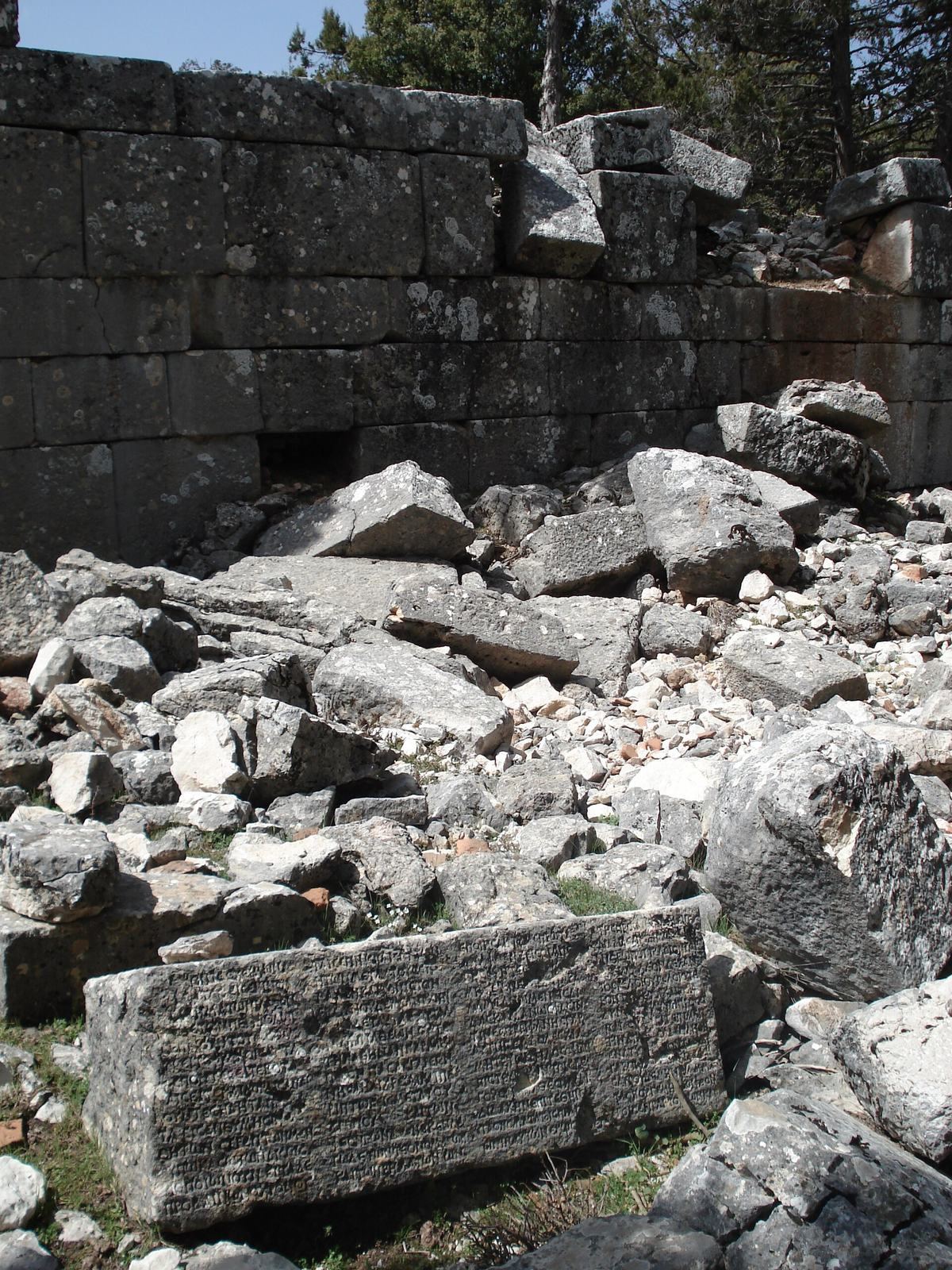
In the Hadrianic period, AD 117–138, Oenoanda’s wealthy and influential Epicurean citizen Diogenes dedicated a large philosophical inscription on a roadside portico. Epicureanism, a school of Greek philosophy, taught that understanding nature and overcoming fear were central to a good life. Around AD 260, the portico was dismantled and its blocks reused in the defensive wall. Another inscription on a block reused in the wall points to continued intellectual activity in the city.
Oenoanda became Christian under Byzantine rule and served as the seat of a diocese, an ecclesiastical district governed by a bishop. Its bishop Palmantios was involved in the Monophysite crisis around the death of Emperor Anastasius in 518. The dispute concerned the belief that Christ had a single nature. In 1933, Oenoanda became a Roman Catholic titular see, a bishopric title retained without a functioning local diocese.
Recording and archaeological work
British travelers Richard Hoskyn and Edward Forbes recorded Oenoanda in 1841; their account appeared in 1842, and a site plan followed in 1847. Interest in Diogenes’ long Greek inscription grew from 1884. In June 1885, Georges Cousin made the first surveys of its text and identified Diogenes as its dedicant. By 1895, 88 fragments had been published.
Martin Ferguson Smith resumed excavation in 1968, finding 38 more fragments and clarifying the original positions of pieces found in the nineteenth century. Systematic archaeological work with the British Institute at Ankara began in 1974, with surveys in 1974–76; official excavations started in 1997. Further campaigns began in 2007, and the German Archaeological Institute began work at the site in 2009. By 2012, researchers had identified more than 300 fragments of Diogenes’ inscription. Survey methods also recovered 160 fragments and helped reconstruct the monument’s three-dimensional arrangement.
Remains
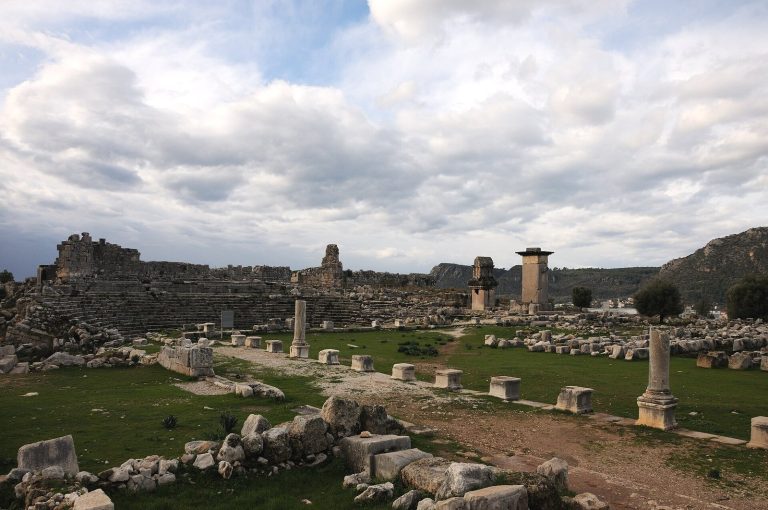
The city occupies steep, rugged ground at about 1,400 m above sea level, west of modern İncealiler. The modern settlement extends across the plain to the east and partly overlies the ancient site. Oenoanda lay near Lycia’s northern boundary, at the edge of the Cibyra Tetrapolis territory in Phrygia. Its surviving remains include civic spaces, defensive works, water infrastructure, and buildings from the Byzantine period.
Civic spaces and surrounding heights
The northern civic area
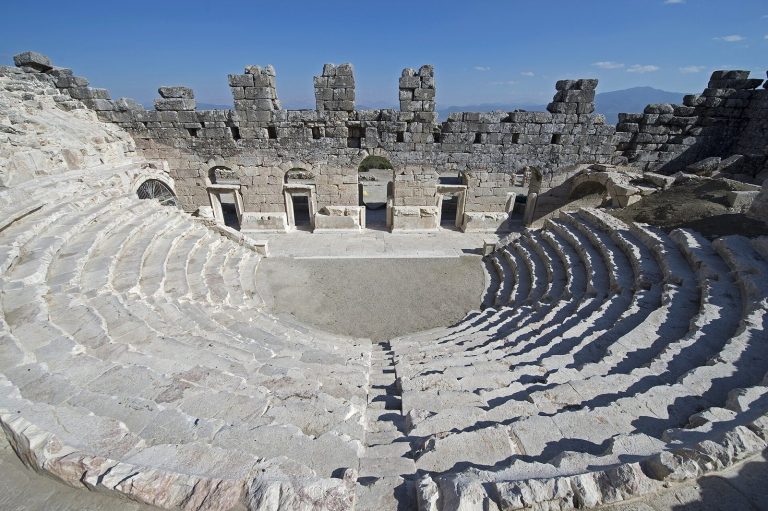
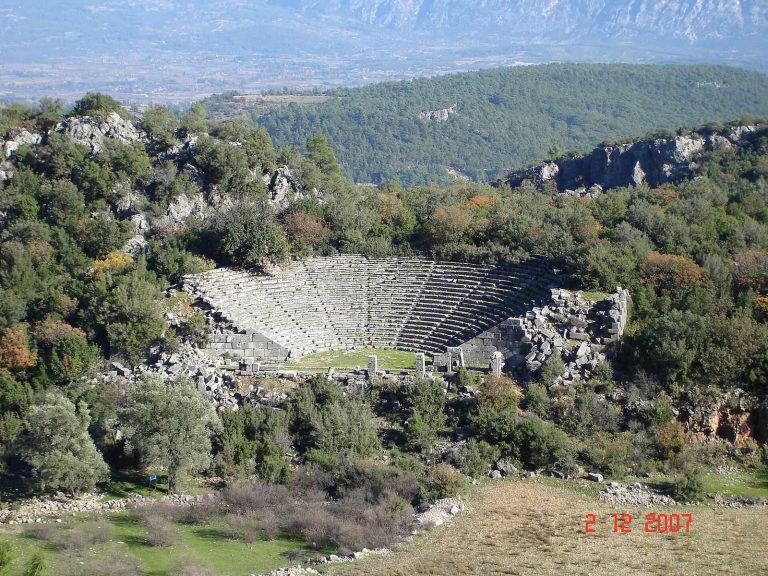
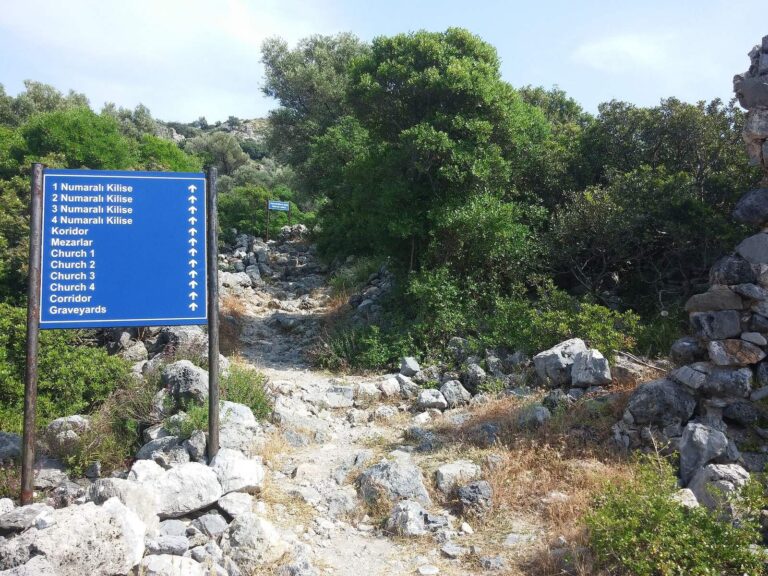
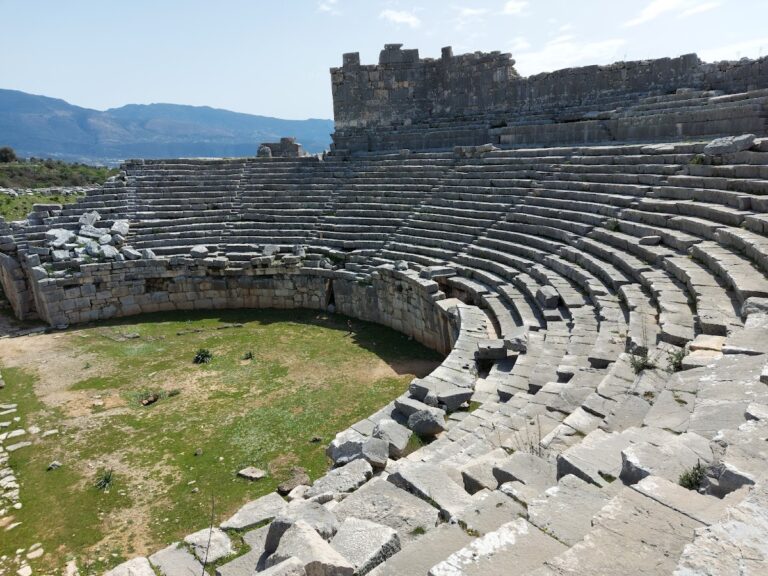
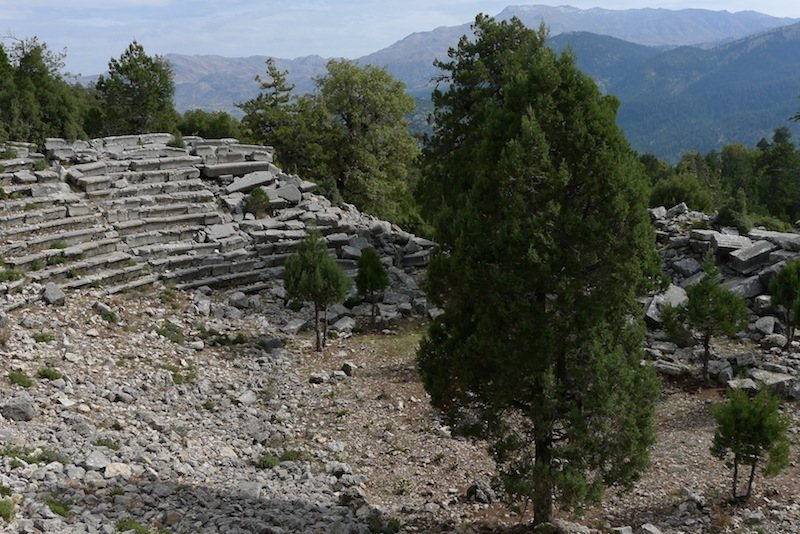
An esplanade in the settlement’s northern part is identified as the Hellenistic agora, a public civic gathering place and marketplace. The theatre was cut into the rock. The city also had baths, porticoes, and a sanctuary of Asclepius, the Greek god of healing. A Byzantine fortress and churches formed part of the settlement’s later built landscape, including an early Byzantine church brought to light in excavation.
Mount Eren Tepe
Mount Eren Tepe rises to 1,532 m outside the ancient settlement and is sometimes described as Oenoanda’s acropolis, or elevated stronghold. On its northern slope, an enclosure about 60 m in diameter is built of dressed stone. It may have served as a cattle pen.
Defences and water supply
City walls
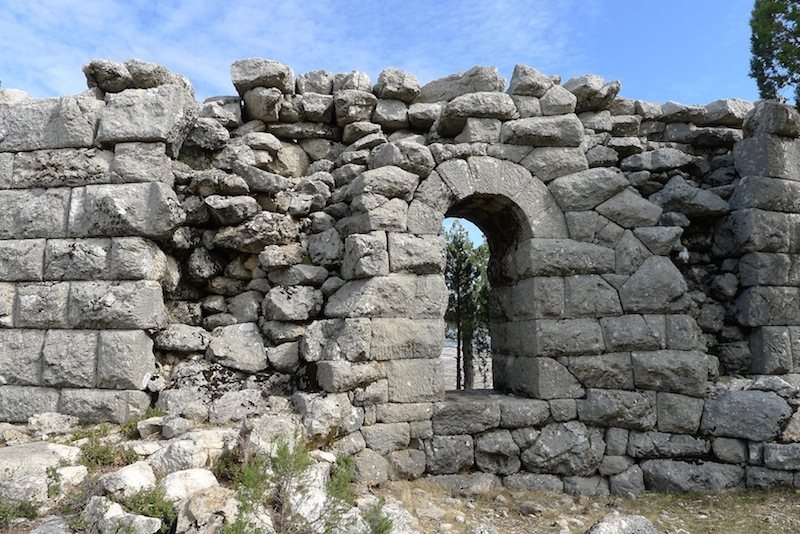
Substantial stretches of Oenoanda’s walls survive, reaching about 10 m high in some places. A Hellenistic section extends for more than 65 m. It uses polygonal masonry, made from stones shaped with polygonal faces, with small stones on the inner face and large, carefully cut ashlar blocks on the exterior. A partly preserved wall also enclosed the southeastern side of the settlement.
Aqueduct
An aqueduct crosses the southeastern wall. Its surviving remains include sections of stone pipe from a siphon, a conduit that carried water under pressure through a lower part of its route.
Roadside structures
Diogenes’ portico
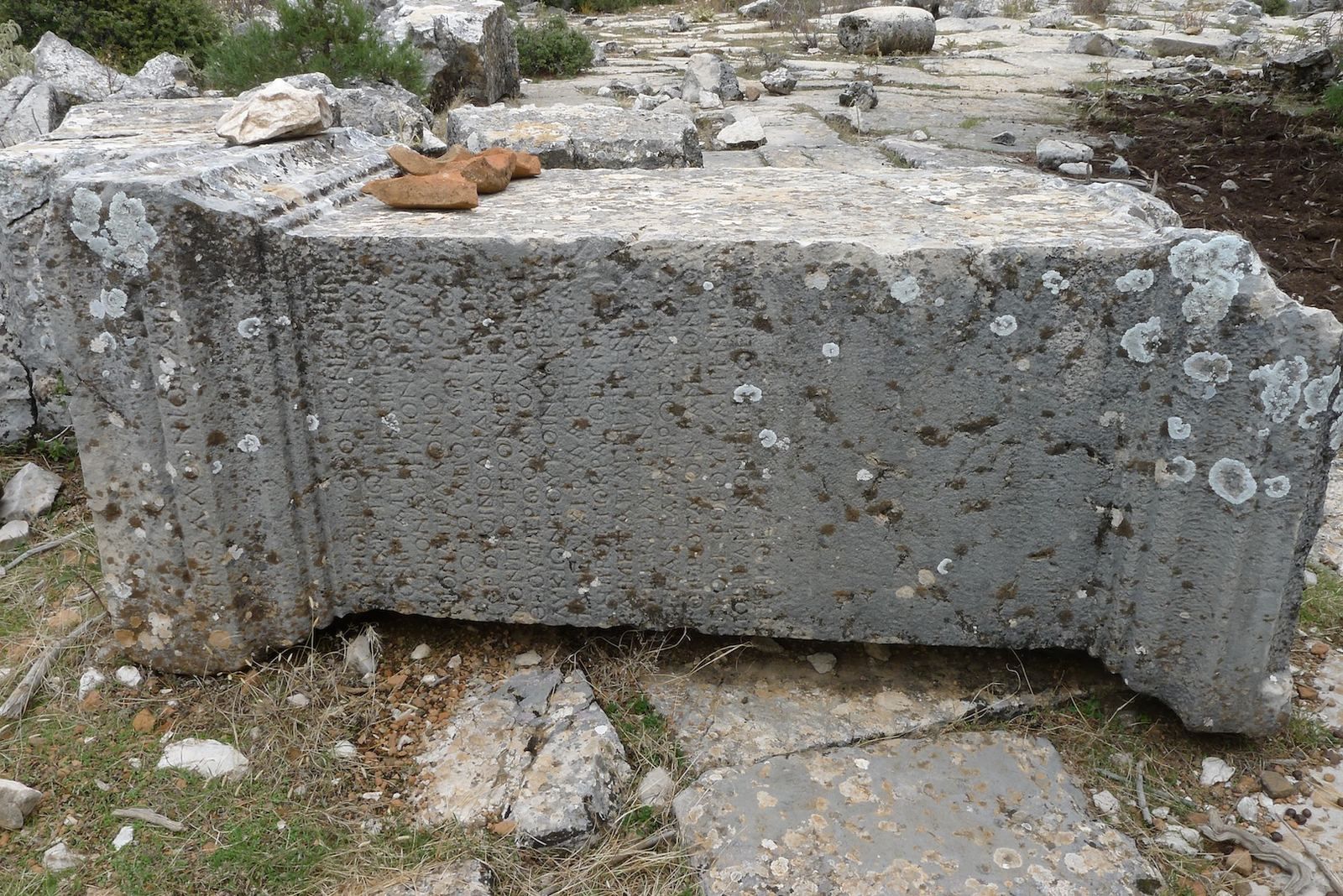
Diogenes’ inscription occupied the wall of a stoa, a covered colonnade used as public space, beside a road. The portico was about 100 m long. The inscription itself extended roughly 80 m, covered around 260 square metres of wall, and contained approximately 25,000 words. Its text discusses nature, knowledge, and ethics, and presents Epicurean teaching as a way to reach happiness. Diogenes is associated with the dedication, but the inscription cannot be assumed to have been written by him.
More than 300 fragments have been identified, from pieces bearing only a few letters to passages that run across several blocks. Blocks reused in the defensive wall preserve parts of the text with their inscribed faces turned inward. The work is regarded as the longest known inscription of the ancient world and an important source for Epicurean philosophy.
The Xanthus bridge
The arched Oinoanda bridge crossed the Xanthus about 2 km north of the city, near modern Kemerarası. Reused stone blocks in its construction indicate that it lay within Oenoanda’s civic territory. An Ottoman bridge replaced it and still survives.
Other inscriptions and domestic remains
The altar-shaped block
An altar-shaped block reused in the defensive wall bears a six-line invocation to a god described as self-born, motherless, unshaken, and known by many names. The text identifies the deity as all-seeing Aether and tells worshippers to pray facing east at dawn. Its wording has notable similarities to an oracle of Apollo at Claros and may have been modeled on it.
Civic inscriptions
Other substantial inscriptions include one associated with Licinnia Flavilla and texts recording the Demostheneia festival. The inscription for Flavilla preserves her genealogy, while the festival inscriptions include records of athletic victories.
Wine press
A screw-operated wine press was found in a house. It supports the possibility that wine-making continued in Oenoanda’s later history, consistent with the proposed association between the city’s name and vines or wine.