North Acropolis, Tikal: Royal Necropolis of the Mutul Kingdom
Site at a Glance
- Rating
- 4.8
- Popularity
- Very Low
- Country
- Guatemala
- Primary era
- Classical
- External website
- Open
- Eras represented
- Classical, Medieval
- Civilizations
- Maya
- Site type
- Burial
- Remains
- Necropolis
On this page21 sections
History
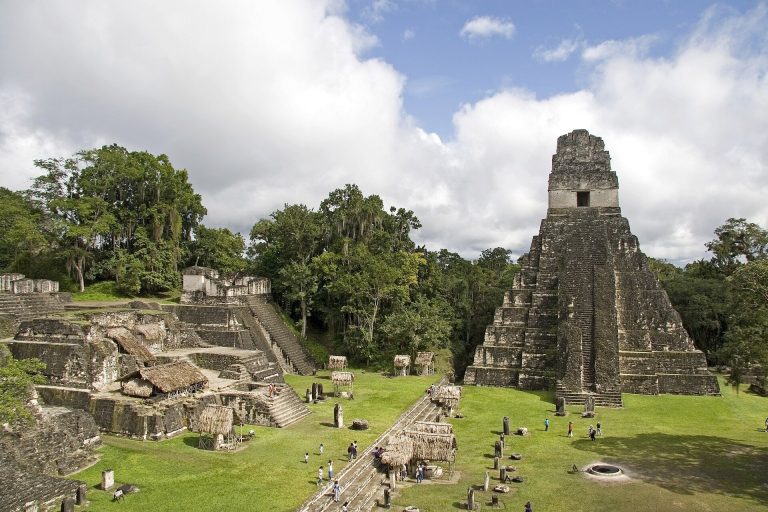
The North Acropolis, Tikal, is a Maya royal and funerary complex at Tikal in Guatemala. It served as the necropolis of the Mutul kingdom, the Maya kingdom centred on Tikal, for more than 1,300 years. Human activity began there around 800 BCE, and the first structures were built around 350 BCE, near the end of the Middle Preclassic period.
Preclassic foundations
The earliest activity took place before the acropolis became a monumental complex. Deep cuts into the limestone bedrock, together with refuse from domestic and ceremonial activity, date to approximately 800 BCE. Around 350 BCE, the first structures were constructed. During the Late Preclassic period, a 49-metre causeway linked the North Acropolis with Mundo Perdido, a major earlier complex to the southwest.
The earliest dated architecture in the acropolis dates from the second century BCE. It consisted of a low northern platform and two smaller southern platforms, which preceded a later arrangement of three pyramids. Earlier versions had existed beneath these buildings, but their destruction prevents their physical sequence from being reconstructed.
During the first century CE, the North Acropolis expanded and gradually replaced Mundo Perdido as Tikal’s principal ceremonial centre. It also received the city’s first royal burials, although the rulers placed in the earliest tombs have not been conclusively identified. Late Preclassic funerary activity is represented by Burial 85, beneath the later Temple 26, and Burial 125, beneath the complex’s later central axis. Both have been tentatively associated with Yax Ehb’ Xook, regarded as the founder of Tikal’s first ruling dynasty.
Early Classic royal centre
Around 250 CE, the complex was extensively redeveloped. Earlier buildings were demolished, and a massive basal platform was built to support a new group of temples. During the Classic period, when Maya cities and dynastic kingdoms flourished, Tikal’s rulers developed the North Acropolis into a royal necropolis by placing successive temples over earlier structures.
The structures on the basal platform form Tikal’s greatest concentration of purely Early Classic architecture. Their construction methods differ from those used for the major Late Classic temples around the Great Plaza. Around 400 to 450 CE, the complex was enlarged southward with a row of four tall pyramids. This expansion separated the earlier architecture from the Great Plaza and gave the acropolis much of its later relationship to the city’s principal public space.
The acropolis preserved a long sequence of royal burials. Excavations associated tombs with Yax Nuun Ayiin I, who ruled from 379 to approximately 404; Siyaj Chan K’awiil II, who ruled from 411 to 456; Wak Chan K’awiil, who ruled from 537 to 562; and the ruler nicknamed “Animal Skull,” who ruled approximately from 593 to 638. Burials 85 and 125 were tentatively identified as those of Yax Ehb’ Xook.
Conflict and the Tikal Hiatus
Major construction and inscription production were interrupted during the period known as the Tikal Hiatus, approximately 562 to 692. This interruption followed Tikal’s defeat by the Kanul kingdom, a major Maya polity centred at Calakmul, and by Caracol, another important centre in the southern lowlands.
The interruption did not end the complex’s dynastic importance. Its temples and monuments continued to express royal history, while later rulers modified earlier buildings to accommodate new burials and commemorative programmes. By the ninth century, the North Acropolis contained 43 stelae and 30 altars. Eighteen of these monuments carried hieroglyphic texts and royal portraits, and several reflected the influence of Teotihuacan, the powerful ancient city in central Mexico whose political and artistic influence reached Tikal during the Early Classic period.
Late Classic transformation
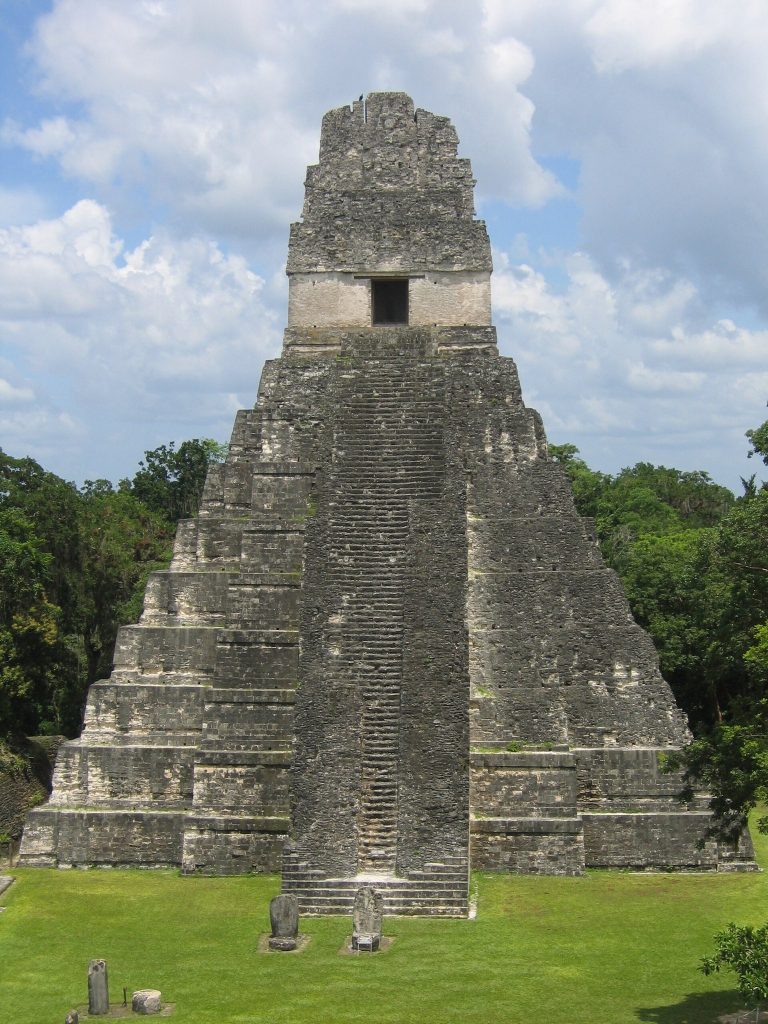
In the late seventh century, King Jasaw Chan K’awiil I ordered a new version of Temple 33, possibly to contain the remains of his father, Nuun Ujol Chaak. This construction blocked the former main entrance to the North Acropolis and helped end its role as Tikal’s preferred royal burial ground. Around 734 CE, Jasaw Chan K’awiil I was buried in Temple I on the eastern side of the Great Plaza, ending the tradition of interring Tikal’s rulers in the North Acropolis.
The final version of Temple 33 later served as a prototype for Temple I. Archaeologists controversially dismantled it in 1965 in order to examine the temple’s earlier construction stages. The complex continued to receive funerary activity into the Postclassic period, approximately 900 to 1525. During Tikal’s declining occupation in the tenth or eleventh century, squatters searched elite tombs for jade grave goods, and some accessible burials were looted.
Excavation and interpretation
University of Pennsylvania excavations directed by Edwin M. Shook and William Coe took place from 1957 to 1969. They identified royal burials, architectural sequences, monuments, and evidence for the changing ceremonial and funerary role of the acropolis. The North Acropolis consequently became one of the most extensively studied Maya architectural complexes.
Remains
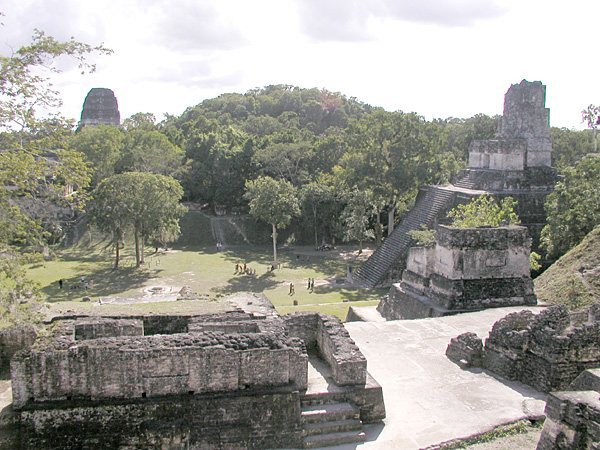
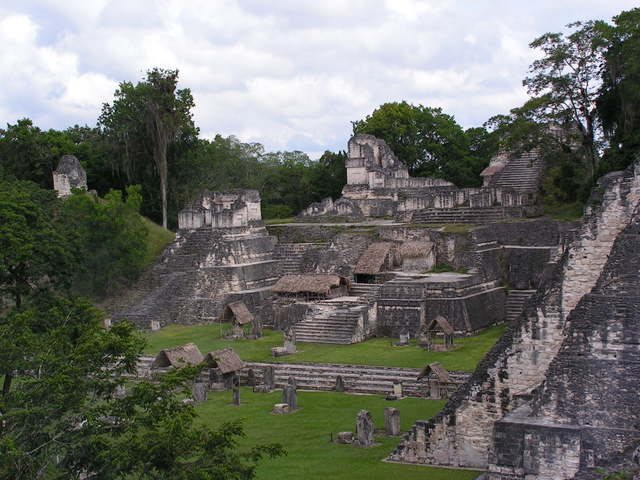
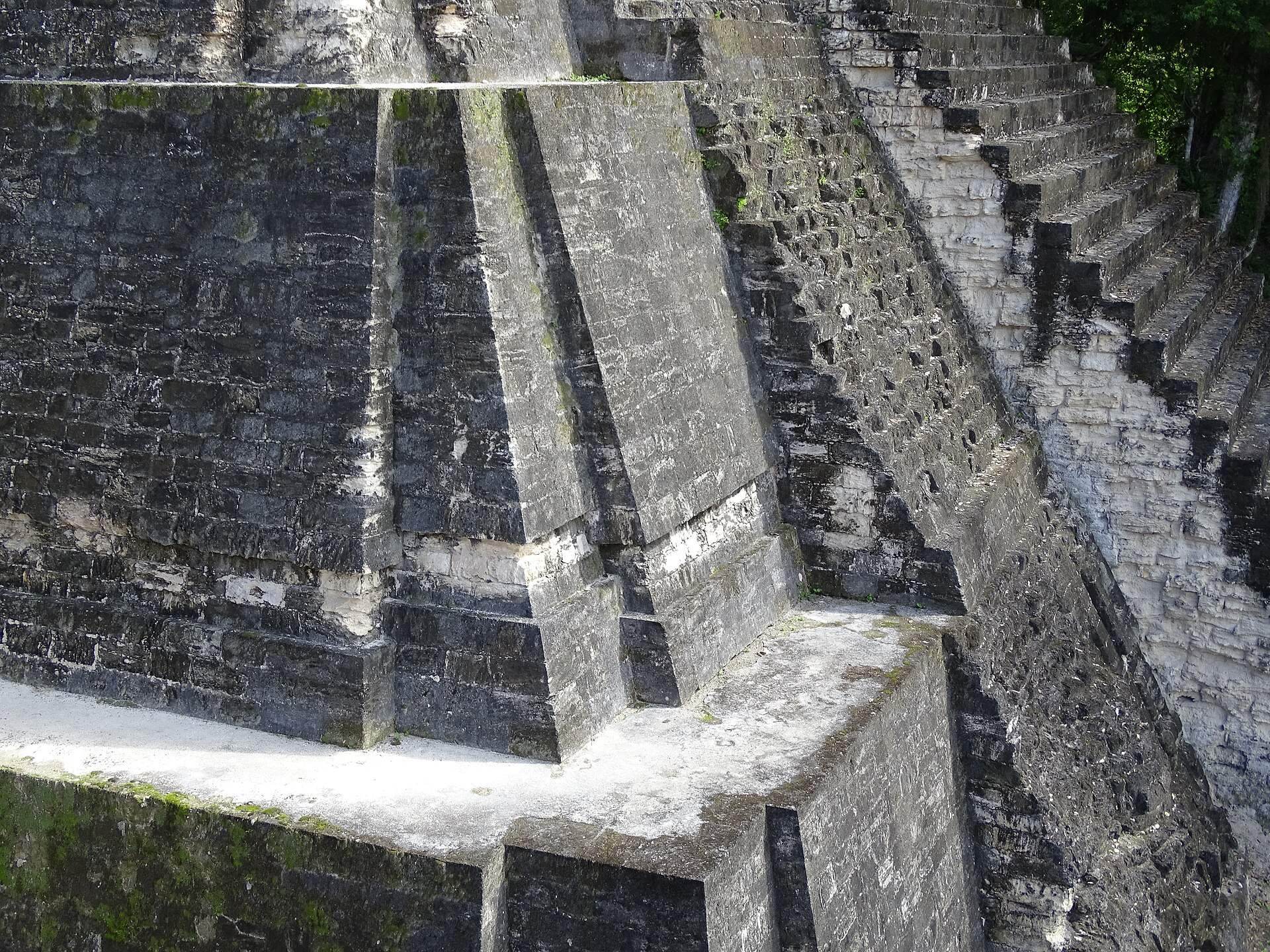
The North Acropolis closes the northern side of Tikal’s Great Plaza. Its basal platform covers approximately 2.5 acres, or 8,094 square metres, and measures about 100 by 80 metres. It rises roughly 9 metres above its bedrock foundation and 12 metres above the Great Plaza. Several stairways approach it from the south, while further access was provided from the terrace and the eastern side.
The basal platform and temple arrangement
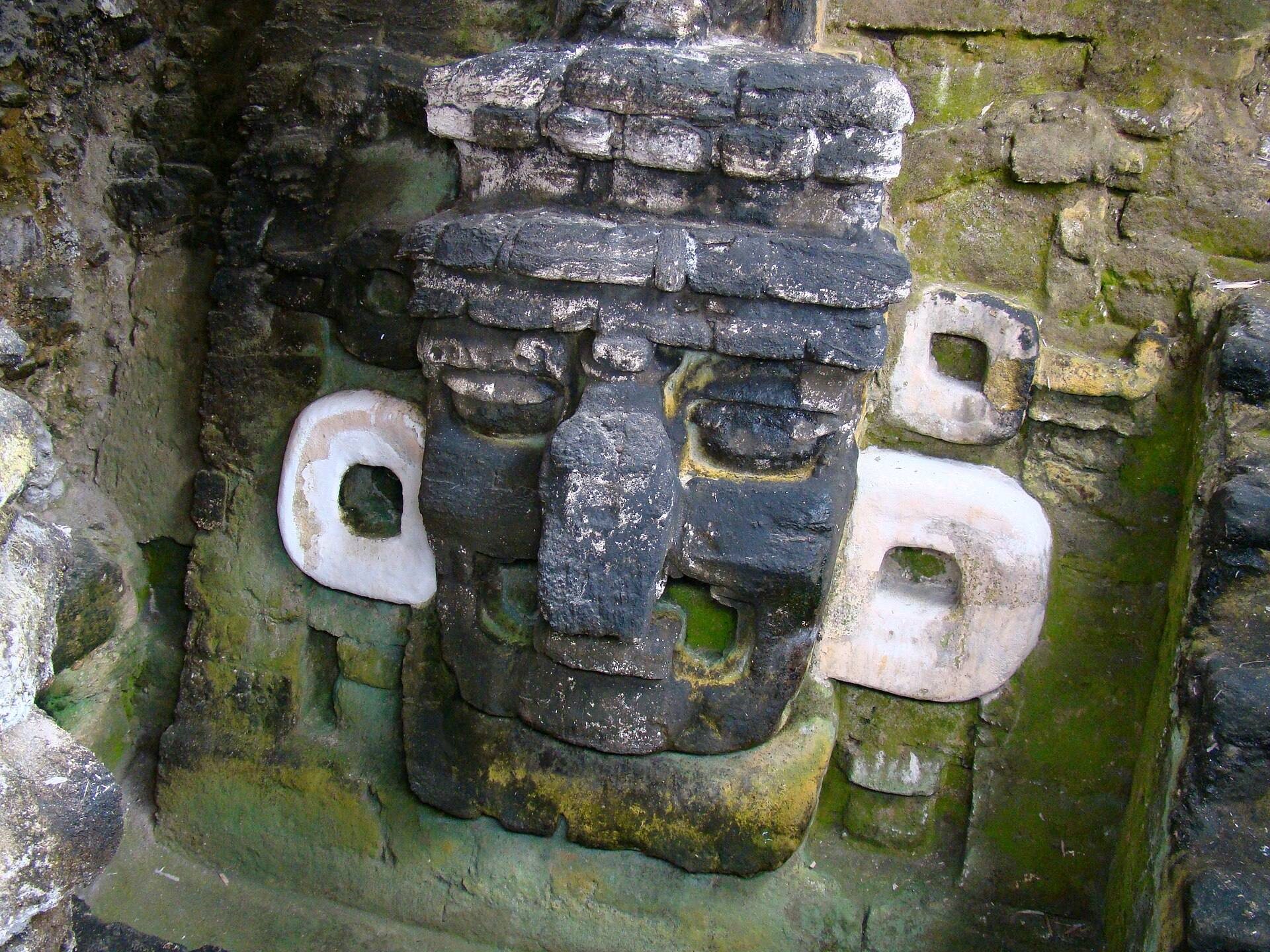
The basal platform was completed as a distinct architectural unit before additional temples were placed upon it. During the Preclassic period, temple façades were decorated with brightly coloured stucco, a plaster-like material used to coat and model architectural surfaces. Large stucco masks flanked some stairways. By the Early Classic period, eight temple-pyramids stood on the platform, each with an access stairway, flanking masks, a summit shrine, and an elaborate roof comb, the raised framework above a Maya temple roof.
Most structures on the platform underwent two successive Early Classic construction phases, while Temple 22 underwent three. The buildings were arranged symmetrically over approximately three centuries. Their successive rebuilding created a layered architectural record in which later temples covered earlier shrines and tombs.
Temples 20 to 27
Temple 20, or Structure 5D-20, occupies the northwest corner of the basal platform and faces north. Temple 21 stands at the northeast corner, also faces north, and forms a pair with Temple 20. Both date approximately to 550 CE.
Temple 22 stands at the centre of the platform’s north side and faces south. Its first version was built around 250 CE, a second version was raised over it around 350 CE with large stucco masks, and its final version dates to the fifth century. Portions of the final construction were removed to expose the earlier phases. A tomb inside the temple was looted during the Postclassic period.
Temple 23 stands at the centre of the western side and faces east. It dates to the middle of the third century CE and has been partially restored. Temple 24 occupies the eastern side, faces west, and forms a pair with Temple 23. It dates approximately to 250 CE and has not been archaeologically investigated.
Temple 25 stands at the southwest corner. Its first version was built around 250 CE, and a second Early Classic version completely covered the earlier building. Temple 27 stands at the southeast corner, forms a pair with Temple 25, and was built around 250 CE. It is thought to have undergone the same two Early Classic construction phases as Temple 25.
Temple 26 is the central building on the south side of the basal platform and overlooks the terrace. Its earliest version dates approximately to 250 CE. The temple has been fully excavated and restored, and its northern portion stands over Burial 85. A tomb inside the temple was looted during the Postclassic period.
Terrace buildings and controlled access
Building 28
Building 28, or Structure 5D-28, stands at the top of an eastern access stairway. It probably functioned as a guardroom controlling movement from the terrace. Its width blocked direct passage from the stairway, requiring people to pass through an interior chamber where their movement could be observed or stopped. Curtained doorways and benches lined the chamber. The building dates to the sixth century and may have become especially important after Temple 33 blocked the main stairway from the Great Plaza.
Temples 29, 30, and 31
Temples 29, 30, and 31 form a group of small Early Classic temples on a shared platform at the eastern end of the terrace. All face west. The platform was probably built specifically for the three temples, which were constructed at approximately the same time, although an earlier version of Temple 30 may have preceded the platform and later buildings.
Temple 29 stands at the eastern end of the terrace. Stela 40 was excavated at its base in 1996. Its corbel vault, a roof made from inward-projecting masonry courses, and its roof collapsed, filling three chambers with rubble. Traces of red paint survive on this temple. Its basal platform is about 3.5 metres high, and its superstructure walls are about 2.3 metres high.
Temple 30 stands beside Temples 29 and 31. Its roof and vaulting collapsed into its three summit chambers. Temple 31 also has three summit chambers filled by collapsed vaulting and roofing. Both temples date to the Early Classic period and have basal platforms about 3.5 metres high, with superstructure walls approximately 2.3 metres high. The shared platform and all three temples have not been archaeologically investigated.
Front-terrace pyramids
Temples 32 and 33
Temple 32 stands immediately east of Temple 33. It was partially investigated in the mid-1960s and dates to the first half of the seventh century CE. Its shrine contains three large chambers. The pyramid was built over Burial 195 in a single construction phase.
Temple 33 is a 33-metre-high funerary pyramid between Temples 32 and 34. It occupies the front row facing the Great Plaza and underwent three construction phases over approximately two centuries. The first, designated 33-3, included a shrine constructed in 457 and Burial 48. The second, 33-2, added superstructures, stucco masks, panelled revetments, and graffiti showing people and hieroglyphic signs on the shrine walls. The final version, 33-1, was built during the Tikal Hiatus.
Temple 34
Temple 34 was the first pyramid built along the front terrace of the North Acropolis. It dates to the Early Classic period and was erected by Siyaj Chan K’awiil II over the tomb of his father, Yax Nuun Ayiin I. Its summit shrine contained three chambers arranged one behind another. A trench cut across the temple in 1959 exposed the bedrock-cut tomb beneath it and two earlier versions of the building.
Temple 35
Temple 35 is a tall Late Classic temple at the southwest corner of the basal platform. It is the westernmost of the south-facing pyramids overlooking the Great Plaza. The temple has not been investigated and is considered one of two possible locations for the tomb of the seventh-century ruler Nuun Ujol Chaak.
Monuments and carved records
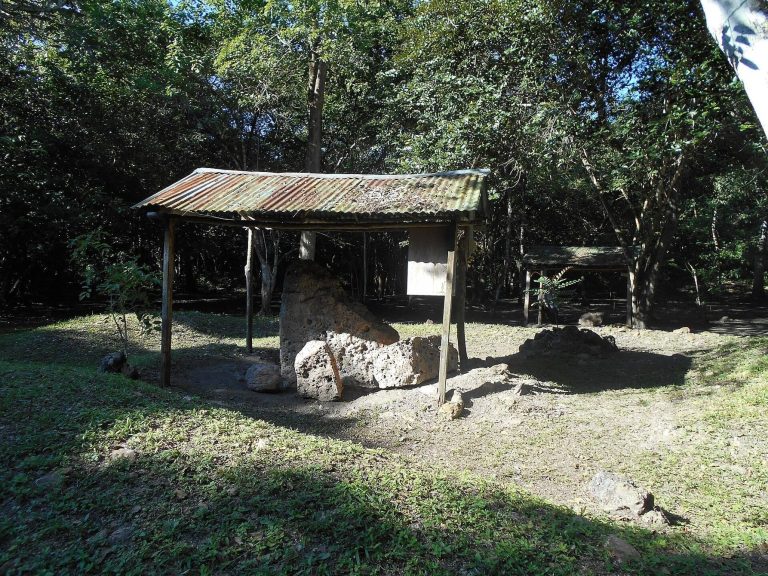
Stela 4 was erected by Yax Nuun Ayiin I to commemorate the completion of a k’atun in 396 CE. A k’atun was a Maya calendrical period of approximately 19.7 years. The monument was later re-erected at the base of Temple 34. It shows the ruler frontally with the Underworld Jaguar God and Tlaloc, a rain-and-thunder deity. His unusual frontal pose and Teotihuacan-style War Serpent helmet express the connection between Tikal and Teotihuacan. Stela 18 was also erected by Yax Nuun Ayiin I for the 396 CE calendrical completion and was later placed at the base of Temple 34.
Stela 26 was originally erected at the foot of Temple 34 during the Early Classic period. It was probably broken at the beginning of the Late Classic period, dragged up the temple steps, and placed beneath a masonry altar in the summit shrine. The shrine was later looted, and the altar was broken during the Postclassic period.
Stela 31 is the surviving upper portion of a broken monument placed above the tomb of Siyaj Chan K’awiil II in Temple 33. Dedicated in 445 CE, it depicts Siyaj Chan K’awiil II and his father, Yax Nuun Ayiin I, who appears twice as a Teotihuacan-style warrior. Its rear hieroglyphic text presents the dynastic credentials of Siyaj Chan K’awiil II.
Stela 40, found at the base of Temple 29, dates to 468 CE. It depicts the ruler K’an Chitam holding a Teotihuacan-style headdress, while his parents, Siyaj Chan K’awiil II and Lady Ayiin, appear on its sides. The rear text records K’an Chitam’s birth in 415, his promotion to a junior rank in 434, his accession in 458, and part of his father’s reign.
Altar 19 was buried in the fill of the final version of Temple 33 in front of the second version of the summit shrine. The limestone altar dates approximately to 445 CE. Broken into several pieces, it retains only part of its sculpture of a seated person. Its fragments were buried with Stela 31, and the altar is now held in the Tikal site museum.
Royal burials
Burials 10, 23, and 24
Burial 10 is a large chamber cut into the bedrock beneath Temple 34. It contained the remains of Yax Nuun Ayiin I on a wooden bier. His skull was painted red, and the chamber also contained nine human sacrifices and a headless caiman. Grave goods included ceramics with imagery related to Teotihuacan, five turtle shells from a musical instrument resembling a marimba, and a small jade caiman-head ornament. The caiman may relate to ayiin, meaning “crocodile,” in the ruler’s name.
Burial 23 lies beneath Temple 33, south of Burial 48. It was created by destroying the second version of the temple’s access stairway. Its occupant is unidentified, although the tomb is one of two proposed locations for Nuun Ujol Chaak. Plaster splashed onto grave goods and a flint pick left by a worker indicate that the chamber was prepared hastily. The body lay on a cinnabar-painted litter covered with jaguar pelts and layers of marine shells.
Burial 24 was inserted into the rubble core of the final version of Temple 33. It contained painted ceramic vessels bearing the names of Nuun Ujol Chaak’s father and grandfather, both earlier rulers of Tikal.
Burials 48, 85, and 125
Burial 48 lies beneath Temple 33 on the central north-south axis and has been identified as the tomb of Siyaj Chan K’awiil II. The king was placed in a seated, bundled position between a child and an adolescent who had been sacrificed. His skull, hands, and thigh bones were absent. Hieroglyphs on the stucco-covered walls indicate that the tomb was sealed in March 457, one year after his death.
The grave goods in Burial 48 included 27 ceramic vessels, stone and shell objects, a metate and handstone, jade discs, hundreds of beads from a semicircular collar, earspools, additional beads, and two obsidian blades. A metate is a flat stone grinding surface, while its handstone is the handheld stone used with it.
Burial 85 is a Late Preclassic tomb dating to approximately 100 CE beneath the later Temple 26. It contained a single male skeleton wrapped in textiles as an upright bundle. A small greenstone mask with shell-inlaid teeth and eyes replaced the missing head. The grave goods included a stingray spine, a spondylus shell, and 26 ceramic vessels. Spondylus is a spiny-oyster shell used for ornaments and ritual objects in ancient Mesoamerica. The burial has been tentatively associated with Yax Ehb’ Xook and represents the early movement of ceremonial focus from Mundo Perdido to the North Acropolis.
Burial 125 has also been tentatively identified as a burial of Yax Ehb’ Xook and dates to approximately 90 CE. A cache 6 metres to the east may have contained its associated grave goods, because the tomb itself held no artefacts. The cache contained ceramics and objects of jade, shell, and bone. This burial established a new central axis that served as a reference for many later royal burials through the eighth century.
Burials 195 and 200
Burial 195 is a corbel-vaulted chamber cut into the bedrock beneath Temple 32. It contained the remains of the ruler nicknamed “Animal Skull,” wrapped in red-dyed cloth. Flooding soon after the tomb was sealed preserved the hollow forms of decayed wooden objects in thick mud. By filling those hollows with plaster, archaeologists reconstructed four large carved panels showing the ruler, a small throne decorated with hieroglyphs, a ballgame yoke, and four stucco figurines of K’awiil, a Maya deity associated with royal power, lightning, and agricultural fertility.
Burial 200 is a masonry tomb within Temple 22. It contained the remains of the sixth-century ruler Wak Chan K’awiil, adding another royal interment to the long sequence preserved within the North Acropolis.