Normanton Down Barrows: A Neolithic and Bronze Age Burial Cemetery
Site at a Glance
- Rating
- 5
- Popularity
- Very Low
- Country
- United Kingdom
- Primary era
- Bronze Age
- Eras represented
- Stone Age, Bronze Age
- Civilizations
- Unclassified
- Site type
- Burial
- Remains
- Necropolis
On this page12 sections
History
Normanton Down Barrows is a prehistoric burial cemetery on a low ridge about 1 km south of Stonehenge in the United Kingdom. Its Neolithic and Bronze Age burials date from about 2600 to 1600 BC. The cemetery developed over time and is regarded as one of Britain’s major groups of burial mounds, alongside Winterbourne-Stoke.
Early Bronze Age cemetery
Early Bronze Age graves associated with the Beaker culture, whose communities used distinctive pottery and burial practices, often included grave goods and were covered by round burial mounds. Many of those mounds have not survived. Such burials are thought to have been concentrated in the cemetery’s western area, where older long and oval mounds also occur. Some later mounds were raised over earlier Beaker graves.
The cemetery’s burial pattern developed into a line along the ridge, arranged around three focal areas and tending toward larger mounds. Several people could be buried beneath a single mound, and some graves were clustered, including at Bush Barrow. Most of the mounds had been built by the end of the Early Bronze Age.
Burial arrangements and grave goods suggest that the cemetery served people of high social standing. Older men buried with daggers were laid on their left sides. They may have been community leaders who carried daggers in everyday life.
Middle Bronze Age
During the Middle Bronze Age, burials associated with Deverel-Rimbury, a British archaeological culture identified partly through its pottery and burial remains, were placed in clusters of small mounds. Burial activity at Normanton Down declined, and may instead have shifted farther west, near Wilsford Shaft.
Antiquarian investigations and later study
In the 1720s, antiquary William Stukeley gave Bush Barrow its present name, referring to trees planted on the mound. It was also known as the Green Barrow. In 1808, William Cunnington and Sir Richard Colt Hoare excavated several mounds, including Bush Barrow. Cunnington recorded the burial and its objects, and Hoare published a detailed account of the work in 1812.
In 1925, many of the barrows became scheduled monuments, a designation that protects sites under national law. In 1957, L. V. Grinsell identified and numbered at least 35 surviving mounds. A Neolithic mortuary enclosure south of the long barrow was discovered through aerial photography and excavated in 1959.
Normanton Down forms part of the Stonehenge, Avebury and Associated Sites World Heritage Site, inscribed in 1986. Excavation became more strictly controlled, and later research increasingly drew on existing finds and non-intrusive fieldwork. In 2007, researchers from the University of Birmingham began studying artefacts from British Bronze Age burials, including the Bush Barrow finds. In 2010, English Heritage surveyed the condition and setting of the barrows as part of its Stonehenge landscape project.
Remains
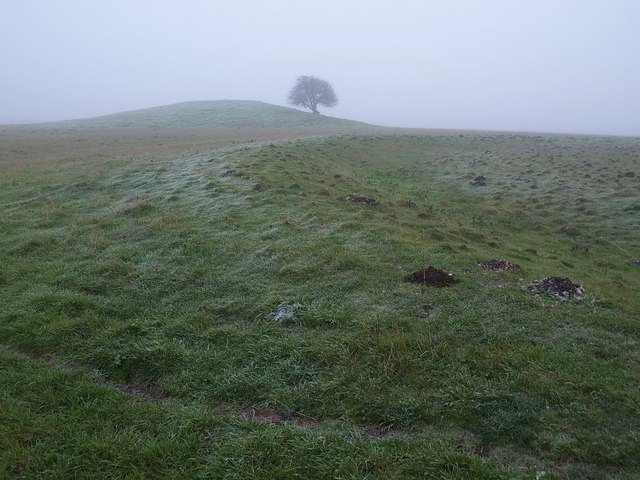
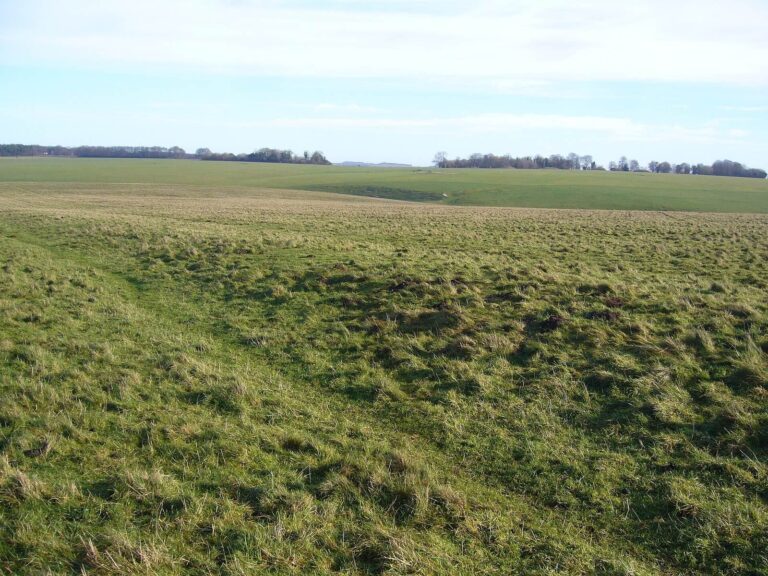
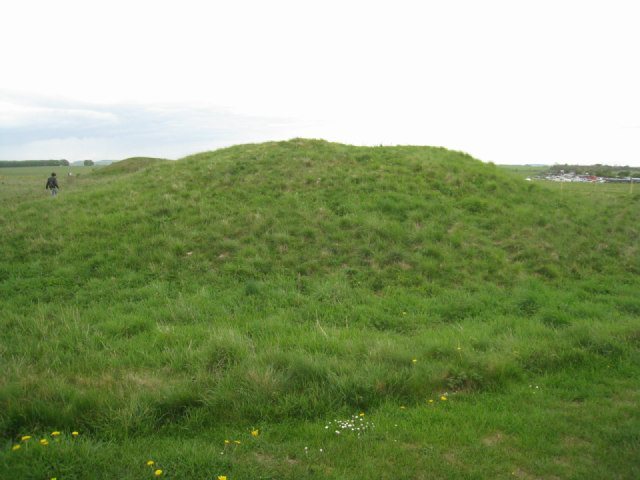
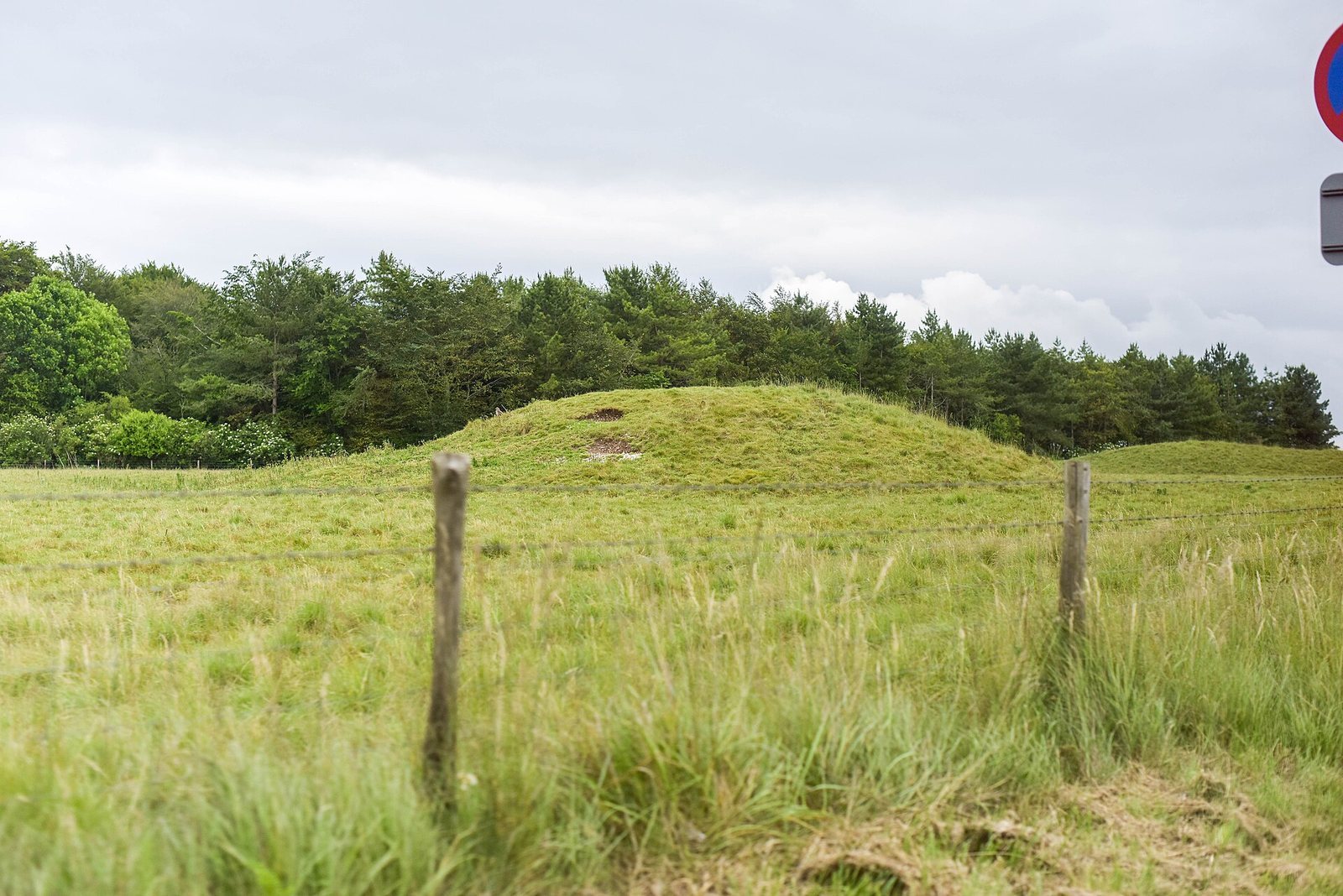
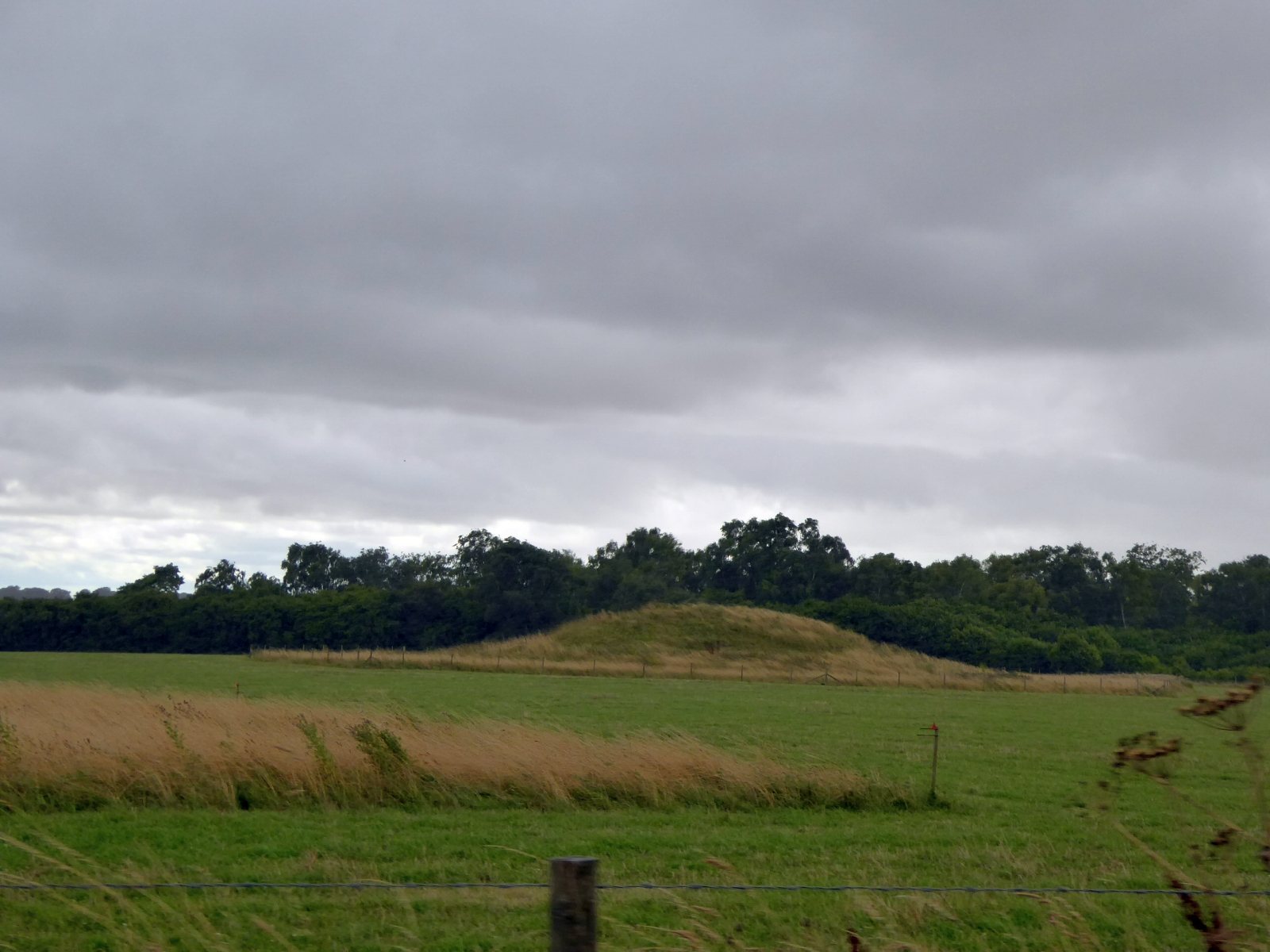
The cemetery occupies the crest of a low ridge and extends for about 1 km, covering around 0.5 km². Its remains include a Neolithic long barrow and approximately 40 Bronze Age round mounds. A classification counts 38 round barrows: 25 bowl-shaped, seven disc-shaped, five bell-shaped, including one double mound, and one saucer-shaped. These names describe broad differences in mound form.
Landscape and cemetery layout
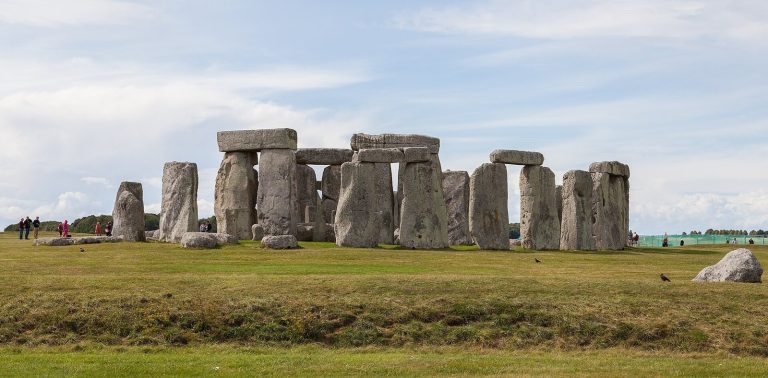
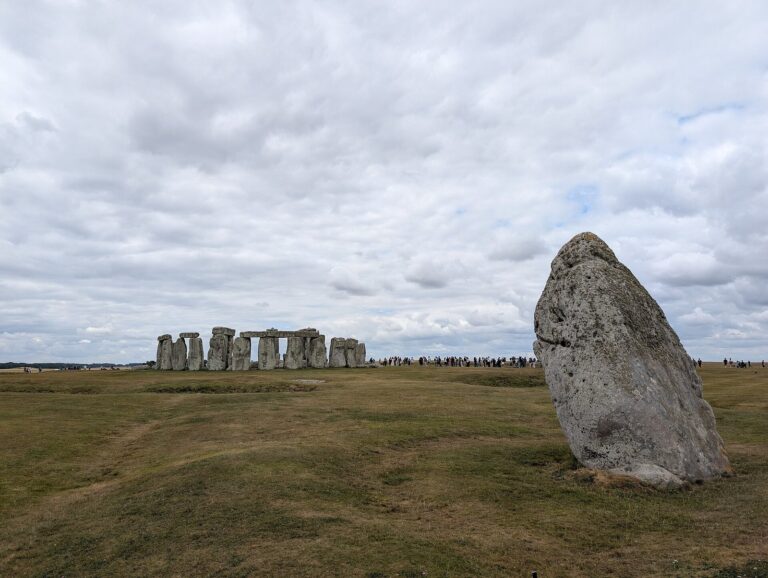
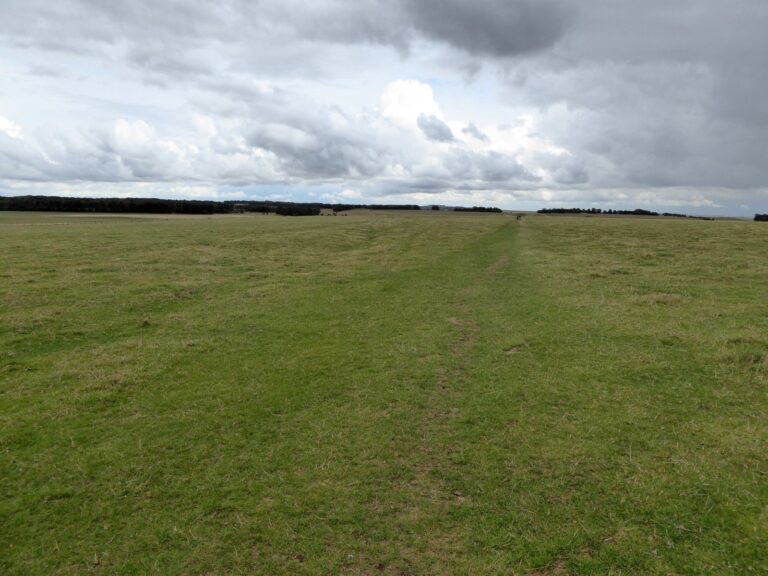
The ridge setting connects the cemetery visually with its surroundings. From Stonehenge, Normanton Down is visible along the southern horizon. From the cemetery, views extend toward Stonehenge and other ridge tops in every direction except northwest. The solstitial axis passing through Stonehenge, an alignment associated with the sun’s position at a solstice, also crosses the cemetery.
Bush Barrow
Burial
Bush Barrow, about 40 m across and 3 m high, is the cemetery’s best-known mound. Its grave dates to about 1900–1700 BC. The man’s body lay on the mound floor rather than in a pit, oriented south to north with his head to the south. Cunnington described him as tall and strongly built; the thigh bone measured 20 inches.
Grave goods
The burial contained three daggers, including a large bronze example, a bronze spearhead, an object interpreted as a shield, a belt hook, bone implements and rings, and a stone mace head. Two gold lozenges were also found. The larger measured about 7 by 6 inches and was decorated with indented lines, checks and zigzags arranged as nested lozenge shapes. A perforated stone object was included as well. Cunnington did not regard it as a domestic tool and proposed that it had special significance.
Objects from Bush Barrow are displayed at the Wiltshire Museum in Devizes, which also preserves Cunnington’s manuscript notes and drawings by Philip Crocker. Finds from other mounds include amber, gold and shale pendants and beads; bronze daggers, vessels and pins; lignite rings; and a perforated swan bone that may have been used as a flute.
Neolithic remains
Long barrow
The cemetery’s Neolithic long barrow has four closely grouped sets of human remains at its eastern end.
Mortuary enclosure
A rectangular enclosure lies south of the long barrow. It was used for excarnation, the exposure of a body until it decomposed before the bones were buried or otherwise treated. The enclosure has since been ploughed out.