Nocoroco: A Timucua Village Site in Florida
Site at a Glance
- Popularity
- Medium
- Country
- United States
- Primary era
- Medieval
- Eras represented
- Medieval, Early Modern
- Civilizations
- Unclassified
- Site type
- Settlement
- Remains
- Village
On this page9 sections
History
Nocoroco is a Timucua village site on the Tomoka River in Florida, United States, associated with the late St. Johns period, a regional archaeological period in Florida. Indigenous people used the area about 7,000 years ago, where fish and shellfish were plentiful and a barrier island to the east offered shelter. The Timucua, Indigenous peoples of northeastern Florida, inhabited the site about 1,200 years ago. Nocoroco represents one of the last Timucua strongholds in the region.
Spanish Contact
In 1605, Spanish explorer and cartographer Alvaro Mexia visited Nocoroco as European acculturation was beginning. His expedition explored Florida’s east coast at the request of the Spanish governor. Europeans later encountered descendants of the Timucua in the area.
British Occupation and Later Cultivation
Great Britain took control of Florida from Spain in 1763, beginning a period of British rule. Nocoroco became part of the Mt. Oswald land grant, held by Scottish merchant and diplomat Richard Oswald, and the plantation there grew indigo and rice. Florida returned to Spain in 1783, and the area was likely cultivated afterward. Many plantations were destroyed near the beginning of the Second Seminole War, a conflict between the United States and Seminole people that began in 1835.
Recognition and Legend
Nocoroco was added to the U.S. National Register of Historic Places, the federal register of properties recognized for their historic importance, on May 7, 1973. Its potential to provide information about Indigenous history was a reason for its listing. A legend associated with the site has been referenced for more than a century. It tells that Tomokie arrogantly drank from a sacred spring, bringing about his death and the deaths of his entire band.
Remains
Village Deposits
Shell Midden
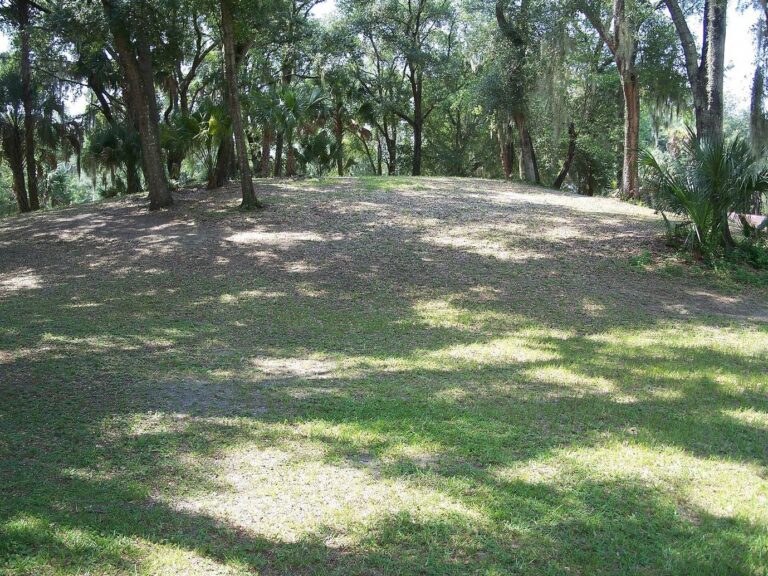
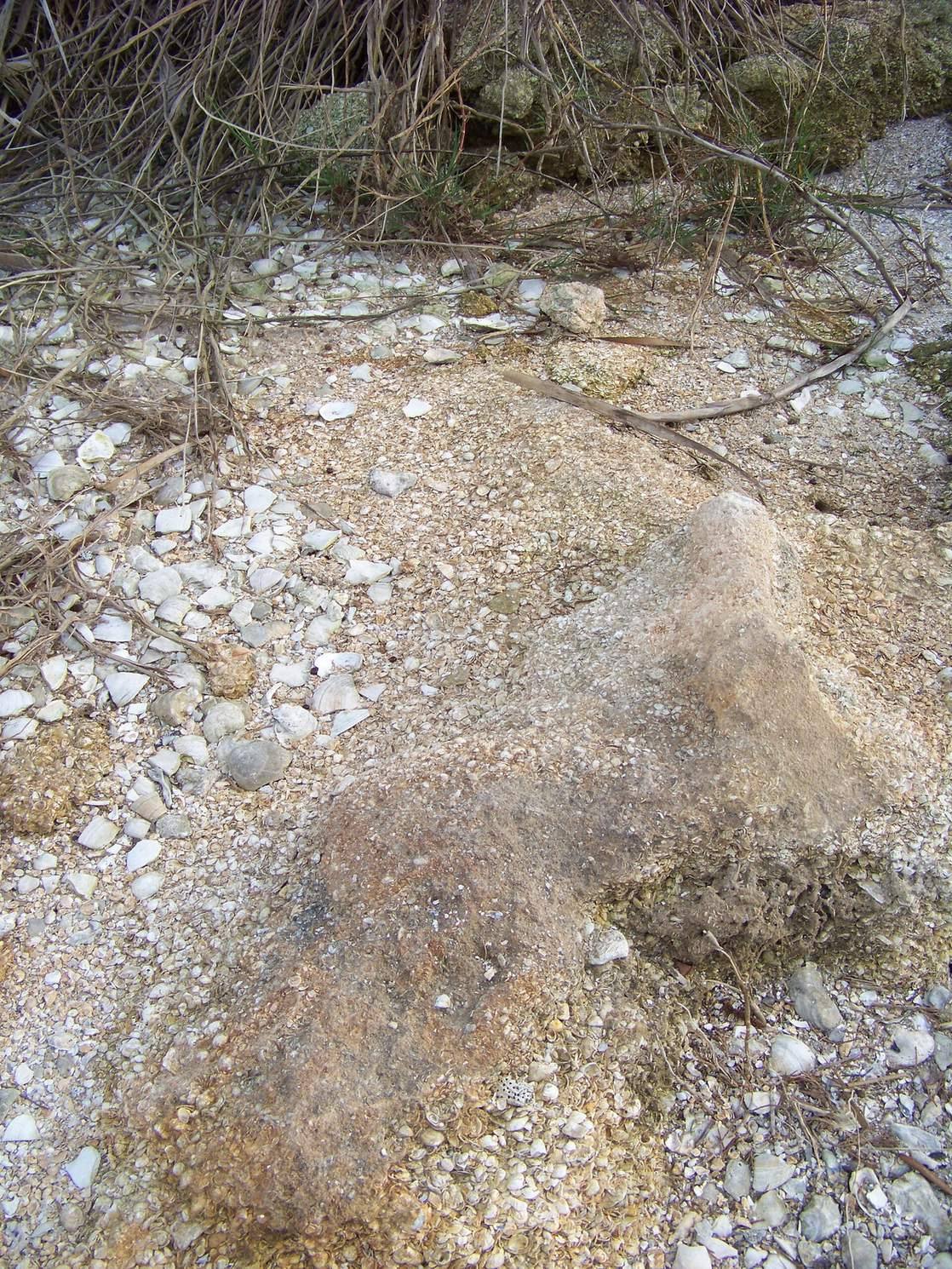
The surviving traces of the Indigenous inhabitants are shell middens, archaeological deposits of discarded shells often mixed with other accumulated material. At Nocoroco, the midden consists chiefly of black earth, with pockets of shell and a few larger shell deposits. This composition differs from that of most regional middens, which are mainly shell. The shell types include Crassostrea virginica, Mercenaria mercenaria, Tagelus plebeius, Arca sp., Donax variabilis, Geukensia demissa, Sinistrofulgur perversum, and Hexaplex fulvescens.
Animal Remains
Animal bones from the site are poorly preserved and generally fragmentary. Deer appears to have been the most common mammalian food source. Fish, turtle, and alligator remains are also present.
Tomokie Fountain
A large fountain sculpture called the Tomokie Fountain marks the village site. American painter and muralist Frederick Dana Marsh created it as an artistic interpretation of the Tomokie legend.