Nicula Monastery: A Byzantine-Rite Marian Pilgrimage Center in Romania


Site at a Glance
- Rating
- 4.7
- Popularity
- Medium
- Country
- Romania
- Primary era
- Modern
- External website
- Open
- Eras represented
- Modern
- Civilizations
- Habsburg
- Site type
- Religious
- Remains
- Monastery
On this page10 sections
History
Nicula Monastery is a Byzantine-rite Christian monastery and Marian pilgrimage center in Romania, near Nicula village in Cluj County, Transylvania. Its history is shaped by competing foundation traditions, devotion to a Marian icon, and its transfer from the Romanian Greek-Catholic Church, which follows the Byzantine rite while recognizing the pope, to the Romanian Orthodox Church after 1948.
Origins and the Marian icon
An oral tradition connects the name Nicula with a fourteenth-century hermit called Nicolae, although this story has no documentary support. Another tradition places an Orthodox hermitage, or skete, at the site around 1552. The monastery’s foundation date remains disputed between the two church traditions. Orthodox histories commonly use 1552, referring to a wooden church near Nicula, while Greek-Catholic histories generally place the first monastery church around 1700 to 1712.
After the union of the Metropolitanate of Transylvania with Rome in 1698, formalized in 1700, a wooden church was built on Vergheleu Hill to shelter a Marian icon believed to have wept in 1699. The icon, a sacred image of the Virgin Mary, is attributed to Luca of Iclod, a priest of Ruthenian birth, who painted it in 1681. An Austrian officers’ report places the weeping between 15 February and 12 March 1699, while other historical documents give 1694.
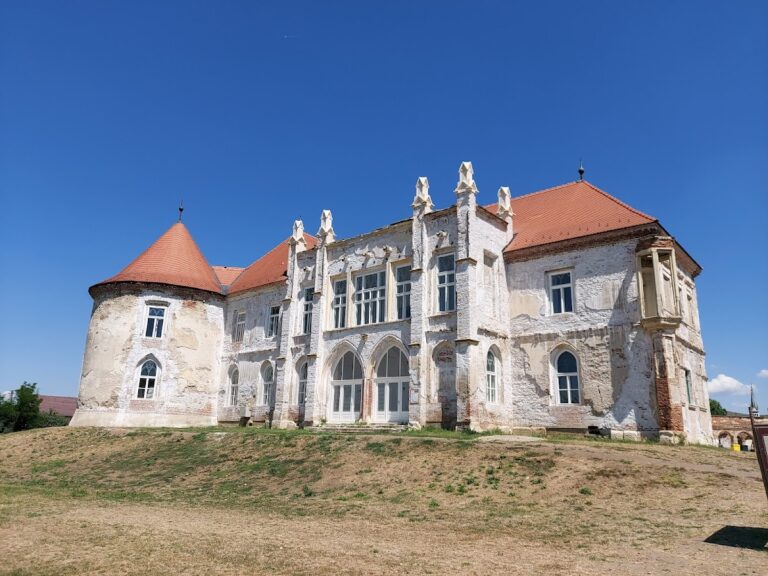
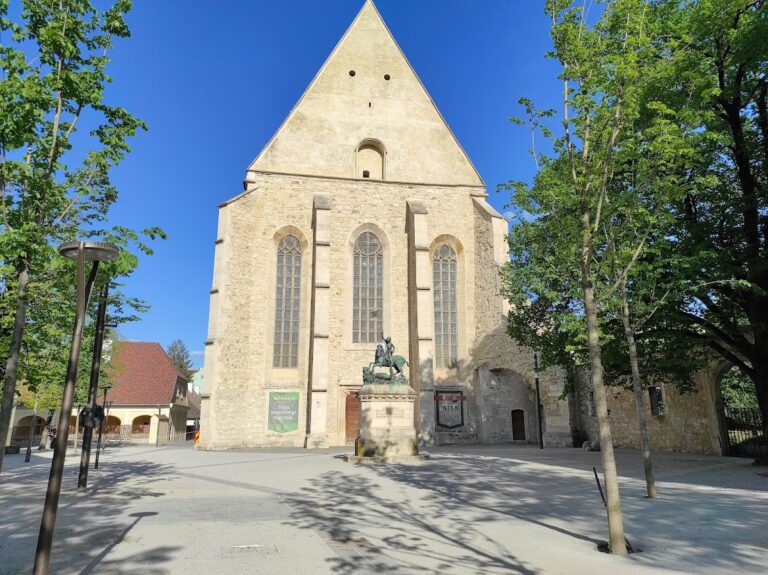
Tradition associates the church’s foundation with Sigismund Kornis, governor of Transylvania, and with an inscription dated 1712. Another account says that Emperor Leopold I ordered its construction after a dispute between Kornis and villagers over possession of the icon. This latter explanation remains a tradition rather than a documented event. In 1713, Kornis moved the icon to his residence at Kornis Castle in Benediugu Dejului. It later went to Cluj before returning to Nicula. One tradition places an intermediate transfer at Mănăstirea and then at the Jesuit church in Cluj, now the Piarist Church, whose order was devoted particularly to education. The icon is also said to have been given to the villagers by Ioan Cupșa, a Catholic Romanian nobleman.
Greek-Catholic pilgrimage and monastic life
Pope Clement XIII granted plenary indulgences in 1767 to pilgrims visiting Nicula on the Marian feasts held on 15 August and 8 September. A large annual pilgrimage developed during the nineteenth century around the icon regarded as the original. In 1928, Pope Pius XI recognized the Greek-Catholic monastery as a Marian sanctuary, a Christian pilgrimage site dedicated to the Virgin Mary.
In 1936, Bishop Iuliu Hossu entrusted the monastery and its icon to the Order of Saint Basil the Great, a monastic order serving Eastern Catholic communities. The Basilian monks established a permanent community and remained responsible for the site until the communist suppression of the Romanian Greek-Catholic Church. The communist authorities closed the monastery in 1948 and arrested the monks in October. Its abbot, Hieromonk Leon Manu, died in Gherla Prison.
Orthodox administration and the disputed icon
On 18 December 1948, Hieromonk Varahiil Jitaru was installed as Orthodox abbot, and Orthodox monks took control of Nicula. The identity of the revered icon had already become contentious. In 1938, the Orthodox periodical Renașterea argued that the icon at Nicula was a pseudo-icon and that the original was in the Piarist Church in Cluj. After the pilgrimage center passed to Orthodox administration, Orthodox interpretations instead identified the Nicula icon as the original.
During the communist period, the icon was hidden in a niche inside the home of Vasile Chezan. It was rediscovered in the early 1960s with a chest containing cult objects from the monastery. After being brought to Nicula, it was confiscated several days later by the communist security authorities and transferred, at the request of Archbishop Teofil Herineanu, to the chapel of the Orthodox Archdiocesan Palace in Cluj.
In 1991, the icon underwent an intervention described as repainting rather than restoration, which radically altered its appearance, before it was returned to Nicula. Greek-Catholic interpretations have alleged that their original icon was destroyed during the work and replaced by a pastiche. Its authenticity and continuity with the historic image therefore remain contested.
Post-communist claims and continuing pilgrimage
After the Greek-Catholic Church was re-legalized in 1989 and 1990, the Greek-Catholic Diocese of Cluj-Gherla sought the monastery’s return or shared use. A restitution lawsuit begun under Archbishop George Guțiu was transferred to the Bacău Tribunal, and the effort was apparently abandoned under Bishop Florentin Crihălmeanu. The monastery remains under Orthodox control, while the Greek-Catholic Church has no official access to it.
Nicula continues to be an important pilgrimage center in northern Transylvania for both Greek Catholics and Orthodox Christians. Tens of thousands of pilgrims attend on 15 August. Orthodox services take place at the old monastery, while Greek-Catholic pilgrims celebrate the Feast of the Dormition, which commemorates the Virgin Mary’s death and assumption into heaven in Catholic tradition, at the newer parish church outside the monastery. In 2020, Nicula was included in the Via Mariae, a 1,400-kilometre Marian pilgrimage route linking Mariazell Basilica in Austria with Șumuleu Ciuc Monastery.
Remains
The monastery occupies wooded hill sites near Nicula village, in the commune of Fizeșu Gherlii. The earlier wooden church stood on Vergheleu Hill, south of the village, while the church associated with the 1552 tradition may have occupied another hill known as Podereiul. The complex now combines an older monastic ensemble with later churches, domestic buildings, access features, bells, and a small cemetery.
Wooden churches
The wooden church built to shelter the Marian icon disappeared in a fire in 1973, along with the objects inside it. A replacement wooden church was brought to the monastery in the years that followed from Țop-Pădureni in Cluj County. That building had previously been moved from Gostila in Sălaj County, giving it a history of relocation before its arrival at Nicula. The church belongs to the popular Transylvanian wooden-architecture tradition associated with the pilgrimage complex.
Stone church
A stone church was erected beside the earlier wooden church during the late nineteenth century, at the expense of the Diocese of Gherla during the episcopate of Mihail Pavel. Its interior contains a carved limewood iconostasis, the screen separating the sanctuary from the main worship space in a Byzantine-rite church. The Marian icon was incorporated into this screen in 1936. Its appearance was substantially changed by the 1991 repainting, and its present relationship to the historic icon remains disputed.
Monastic ensemble and newer construction
The older complex includes former monastic cells and a latrine attached to the wall of the former Basilian cells. Other features include a newer abbot’s residence, an entrance gate, an entrance avenue, bells, and a small cemetery. The buildings reflect several architectural traditions, including Transylvanian wooden construction, Austrian-influenced neoclassical design, and newer Romanian architecture in the southern and eastern Brâncovenesc style. Brâncovenesc combines local traditions with Byzantine, Ottoman, and Renaissance elements. A new Orthodox church has been under construction since 2002, aligned with the old church within the monastery precinct.
Glass icon painting
Nicula is also associated with a school of painted-glass icon production. In this technique, religious images are painted on the reverse side of glass and viewed through the glass surface. The practice developed under Austrian influence and became an important artistic tradition in Transylvania, where it was connected with popular Catholic religious culture in Bohemia, Austria, and Bavaria. Artists associated with the Nicula school include Emil Weiß, Moritz Hachmann, and Karl Müller.
Nearby sites