Murad Pasha Mosque: An Early Ottoman Mosque and Mausoleum in Damascus


Site at a Glance
- Rating
- 4.7
- Popularity
- Very Low
- Country
- Syria
- Primary era
- Early Modern
- Eras represented
- Early Modern
- Civilizations
- Ottoman
- Site type
- Religious
- Remains
- Mosque
On this page7 sections
History
Ottoman foundation
Murad Pasha Mosque is an early Ottoman-period mosque and mausoleum in Damascus, Syria, built in 1568 under Ottoman rule in the architectural tradition of the period. It was named after Murad Pasha, who served as Ottoman governor of Damascus from 1568 to 1569. The complex was established in the Suwayqa sector of the Al-Midan quarter, along the historic Road to Mecca, and its angled construction made it exceptionally visible.
The building is also known as Al-Muradiyya Mosque and Murad Pasha Sufi Lodge. Its name Al-Naqshabandi Mosque reflects its later role as a center of the Naqshbandi order, a major Sunni Sufi religious tradition. As a takiyya, or Sufi lodge that could offer accommodation and charitable services, the complex combined religious functions with institutional support for its community.
The Road to Mecca
The mosque formed part of Damascus’s long-standing relationship with pilgrimage. During the Mamluk period, which preceded Ottoman rule from 1260 to 1516, and throughout the Ottoman period, Damascus served as a major gathering point for regional pilgrims traveling to Mecca. About 30,000 pilgrims assembled outside the western walls of the Old Town each year, and the Murad Pasha complex included a hospice for poor pilgrims.
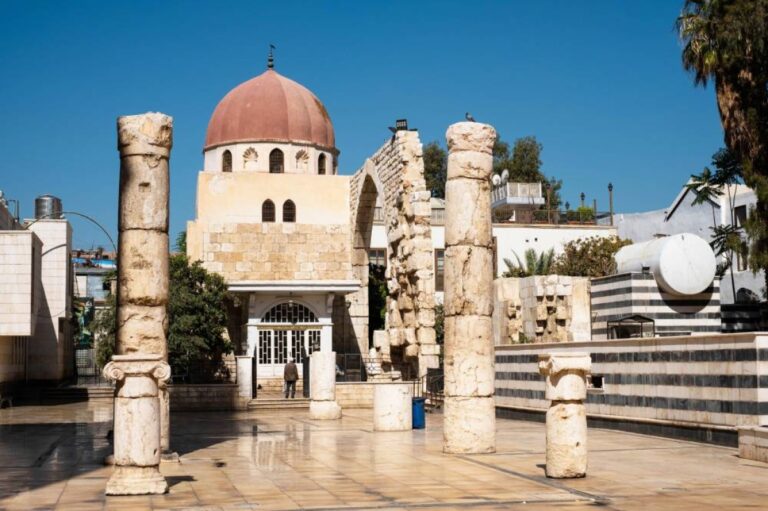
The mosque remains affiliated with Sunni Islam and continues to function as an active place of worship. Its institutional role also includes the mausoleum of Murad Pasha, who was buried within the complex.
Remains
Courtyard and surrounding cells
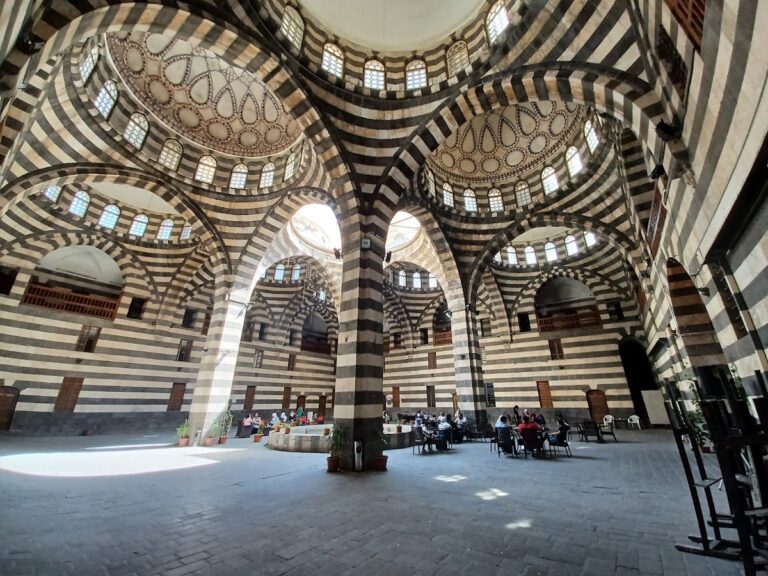
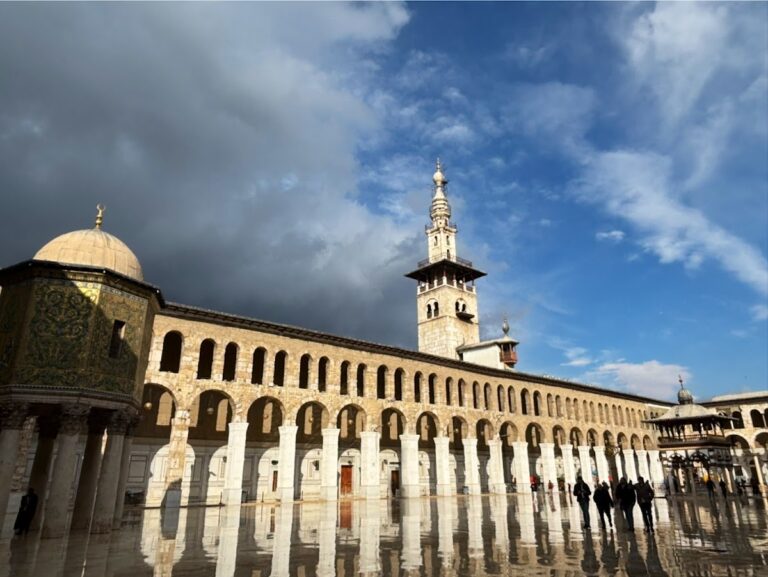
The complex is arranged around a large sahn, or open mosque courtyard, with an elaborate fountain used for ablution. A riwaq, meaning a roofed arcade, encloses the courtyard. Its domed cells served as sleeping rooms for students and scholars, giving the building a layout that supported both worship and religious study.
Prayer hall and minaret
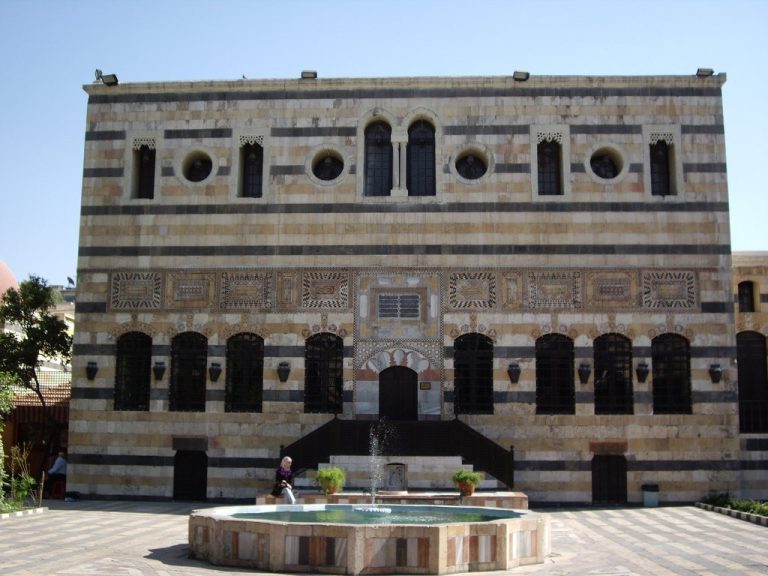
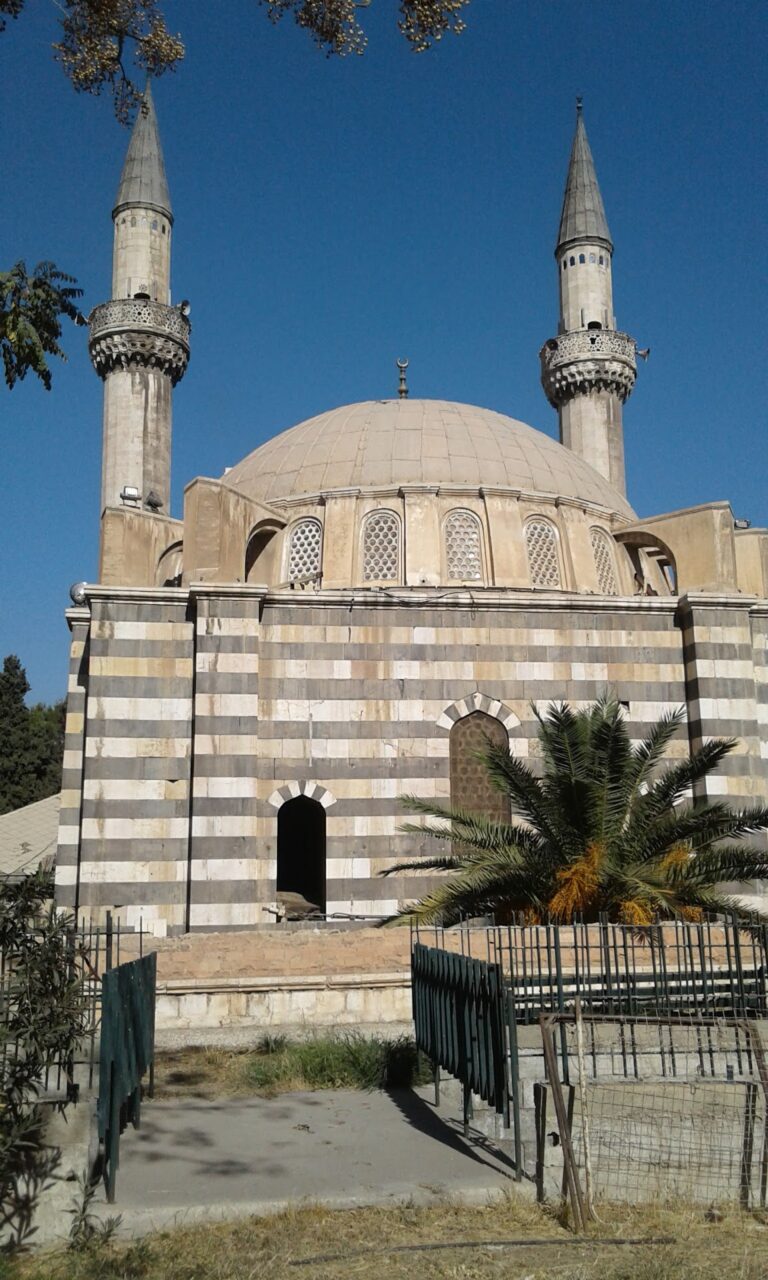
Stone walls built with alternating courses of black and white masonry define the complex. The monumental main facade has an ornate muqarnas entrance, a three-dimensional decoration formed from layered, niche-like elements. Elaborate qashani panels, made from glazed ceramic tiles, decorate the walls. The rectangular prayer hall is covered by a single Ottoman-style dome clad in lead.
A prominent hexagonal minaret rises from the complex. Its form follows the appearance of minarets traditional to the Arab lands, while the principal architectural character of the mosque follows Ottoman principles. In this respect, the building has been compared architecturally with the Sulaymaniyya Takiyya Mosque and the later Darwish Pasha Mosque in Damascus.
Murad Pasha’s mausoleum
Murad Pasha’s mausoleum occupies a corner on the eastern side of the mosque complex. The main entrance carries Kufic inscriptions, an angular style of Arabic calligraphy, that record the mosque’s construction date and identify its patron.