Moni Katholiko: An Orthodox Monastery in Crete
Site at a Glance
- Country
- Greece
- Primary era
- Early Modern
- Eras represented
- Early Modern
- Civilizations
- Venetian
- Site type
- Religious
- Remains
- Monastery
On this page11 sections
History
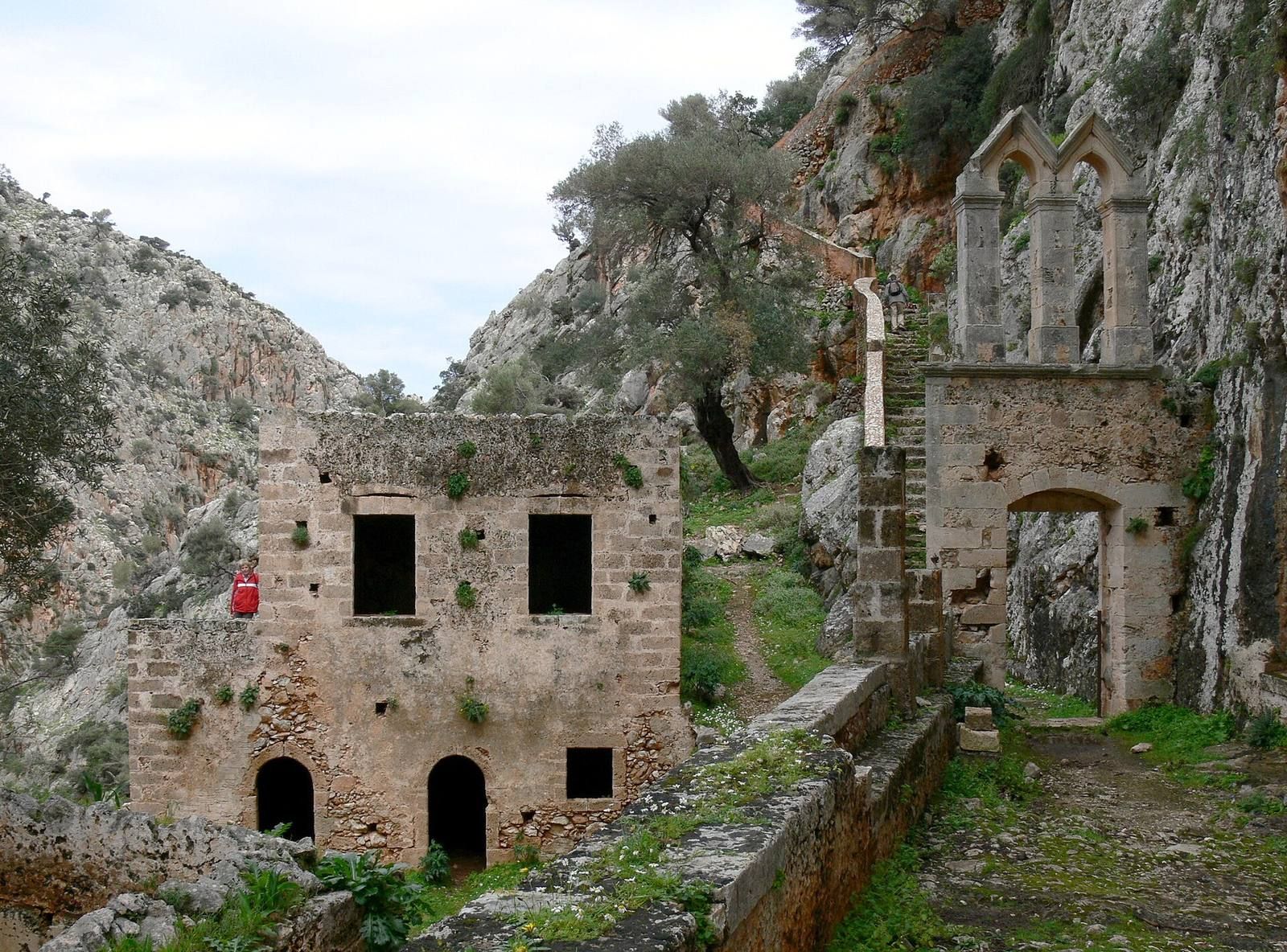
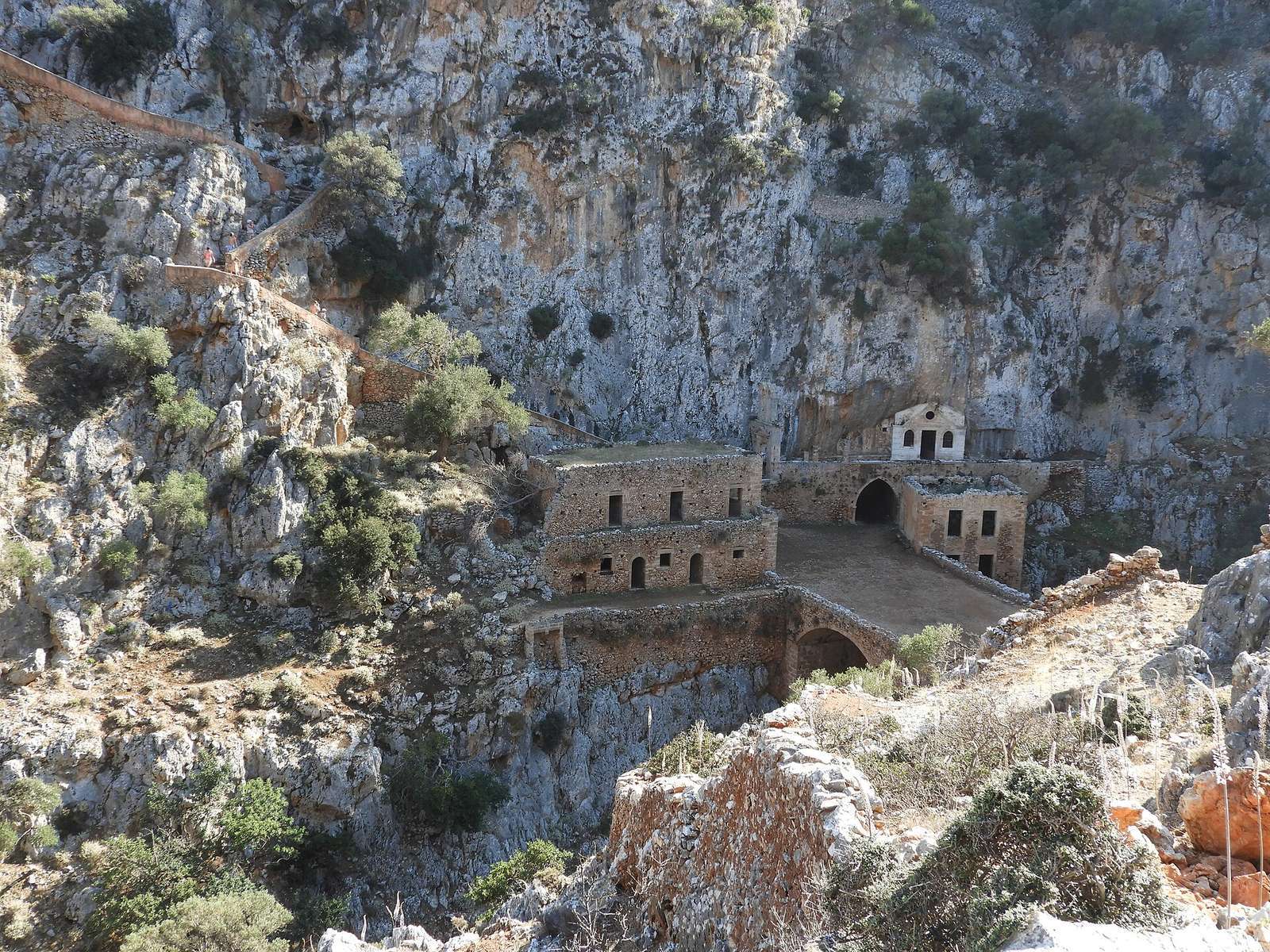
Moni Katholiko is a ruined Orthodox monastery in the Avlaki Gorge on the Akrotiri Peninsula in Crete, Greece. Orthodox Christianity is a major Christian tradition that developed primarily in eastern Europe and the eastern Mediterranean. The monastery is traditionally regarded as Crete’s oldest, though its early history is uncertain. Its visible buildings date broadly to the 16th or 17th century, with a more specific main phase in the early 17th century, during Venetian rule, when the Republic of Venice held political power on Crete.
Earlier use and monastic tradition
Archaeological excavations indicate that the Bear Cave was a place of religious worship during the Minoan civilization, a Bronze Age culture centered on Crete, between about 2600 and 1450 BCE.
Tradition attributes the monastery’s beginnings to John the Hermit, an ascetic who lived apart from society for prayer. He is said to have come from Egypt around the 11th century and to have lived in a cave beside the later monastery. After he was reportedly wounded accidentally by a hunter and died, other ascetics established a small hermitage. John is also credited with founding Gouverneto Monastery. The name Katholiko comes from katholikon, the principal church of a monastery, and has been interpreted as suggesting a long history of monastic use.
Venetian-era construction and abandonment
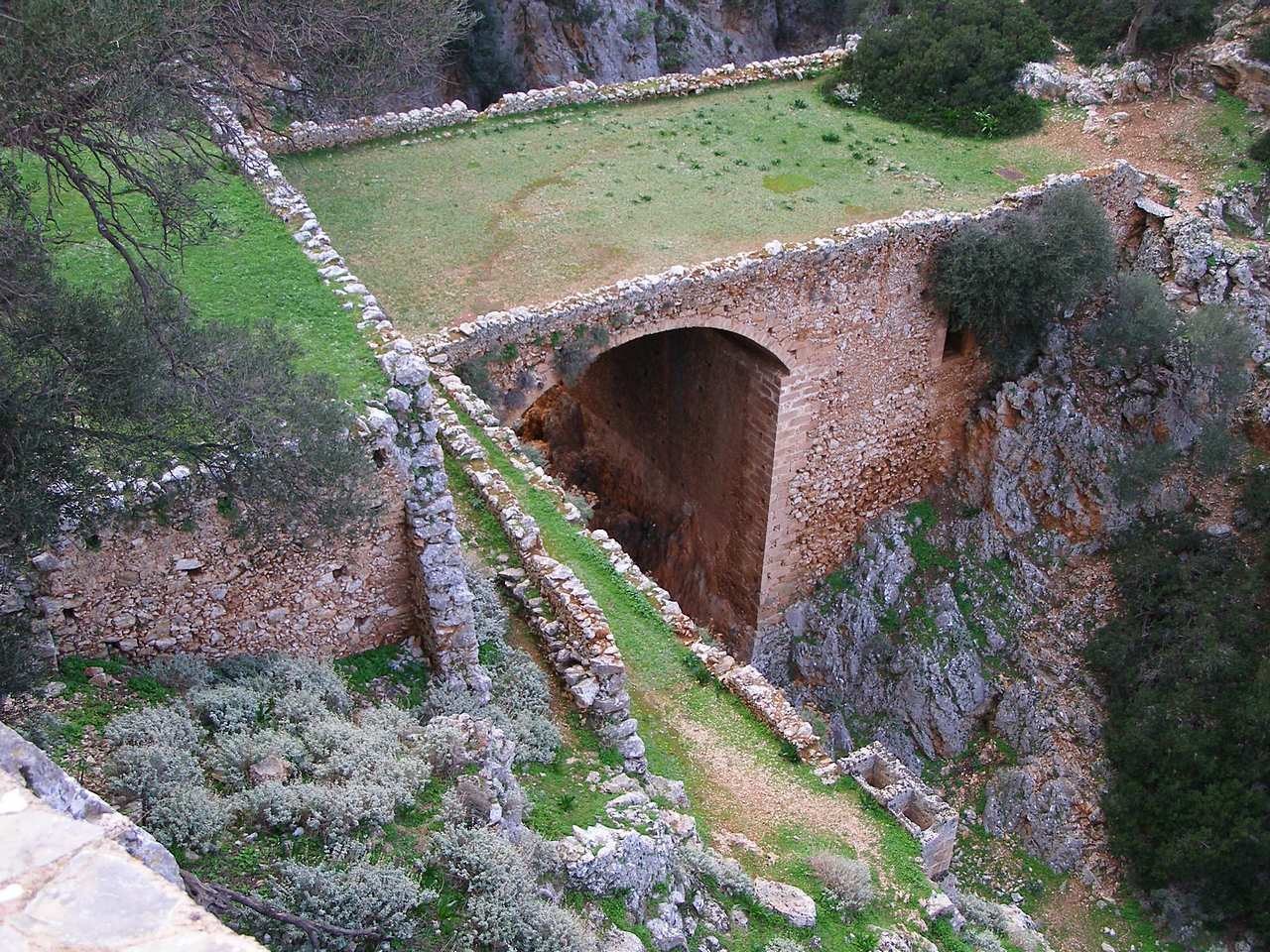
Around 1600, Jeremiah Tzagarolos, a Venetian monk who had converted to Orthodox Christianity, built the bridge at Katholiko. Pirates landed in Avlaki Bay during the 16th century, and repeated attacks may have contributed to the monastery’s abandonment in the 17th century, although the reason is uncertain. A related tradition holds that the monks then established Gouverneto farther from the coast, but this account is also uncertain. Katholiko has remained uninhabited since its abandonment, and the monastery and Avlaki area lie on land belonging to Gouverneto.
Remains
The ruined complex stands about 75 metres above sea level, roughly 21 kilometres northeast of Chania, where the Avlaki Gorge descends towards the sea. Some buildings remain well preserved. The monastery has Venetian-style features, and its church incorporates Renaissance elements shaped by renewed interest in classical design.
Monastery buildings
Church
The church occupies a small, cave-like recess and is partly cut into the rock. Its northern section is built of carefully cut stone. The front sits beneath a rock wall, behind which a cave-like hall opens. In front of the church, a courtyard is carried on arched supports.
Bridge and monastic rooms
A monumental arched bridge, about 20 metres long and more than 8 metres wide, spans the gorge. It links the church to the opposite slope and also encloses the monks’ cells. Other rooms and service buildings stand around the bridge.
John the Hermit’s cave
Beside the church is a tunnel-like cave more than 100 metres long, associated with John the Hermit. An altar inside holds an icon, a devotional religious image.
Caves and coastal features
Bear Cave
The Bear Cave, also called Arkoudiotissa or Arkoudospilios, lies roughly halfway along the route between Gouverneto and Katholiko. A stalagmite, a mineral deposit rising from a cave floor, is nearly 4 metres high and resembles an upright bear. At the entrance stands a 16th-century chapel dedicated to the Virgin Mary under the title Mother of God of the Bear Cave. Small Roman-period fired-clay plaques depicting Artemis, a Greek goddess associated with hunting, and Apollo were found in the cave. They are now displayed at the Archaeological Museum of Chania.
Avlaki Bay
Avlaki Bay is a rocky inlet with a fjord-like shape. A quarry there supplied building stone for the walls of Gouverneto Monastery, and remains of older buildings lie along the shore.