Meghri Fortress: A Medieval Stronghold in Armenia
Site at a Glance
- Popularity
- Medium
- Country
- Armenia
- Primary era
- Medieval
- Eras represented
- Medieval, Early Modern
- Civilizations
- Armenian
- Site type
- Military
- Remains
- Fort
On this page6 sections
History
Medieval fortress
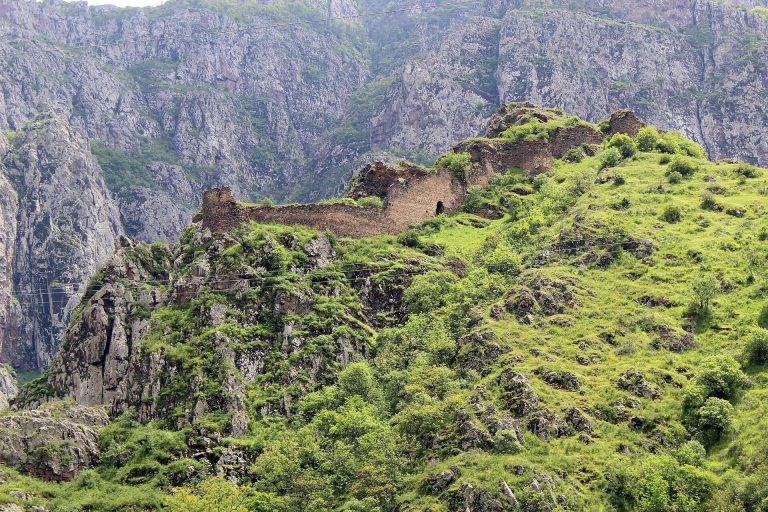
Meghri Fortress is a medieval stronghold on a mountain ridge north of Meghri, Armenia. It probably arose in the late 10th or 11th century, as the Syunik Kingdom, a medieval Armenian kingdom, was taking shape and gaining strength. The historian Orbelian records the fortress in 1083, when it was already standing.
The fortress took part in military operations in Arevik, in southern Syunik. Repeated destruction and rebuilding changed it over time, making its earliest form difficult to establish. After Kapan was captured in 1103, Meghri was among the fortresses preserved under Grigor II, one of Syunik’s kings. The Seljuk Turks, a medieval dynasty that ruled much of western Asia, captured it in 1152.
18th-century rebuilding
In the early 18th century, the Armenian military commander Davit Bek rebuilt the fortress to withstand Turkish attacks. This reconstruction renewed its military role and altered its defenses.
Remains
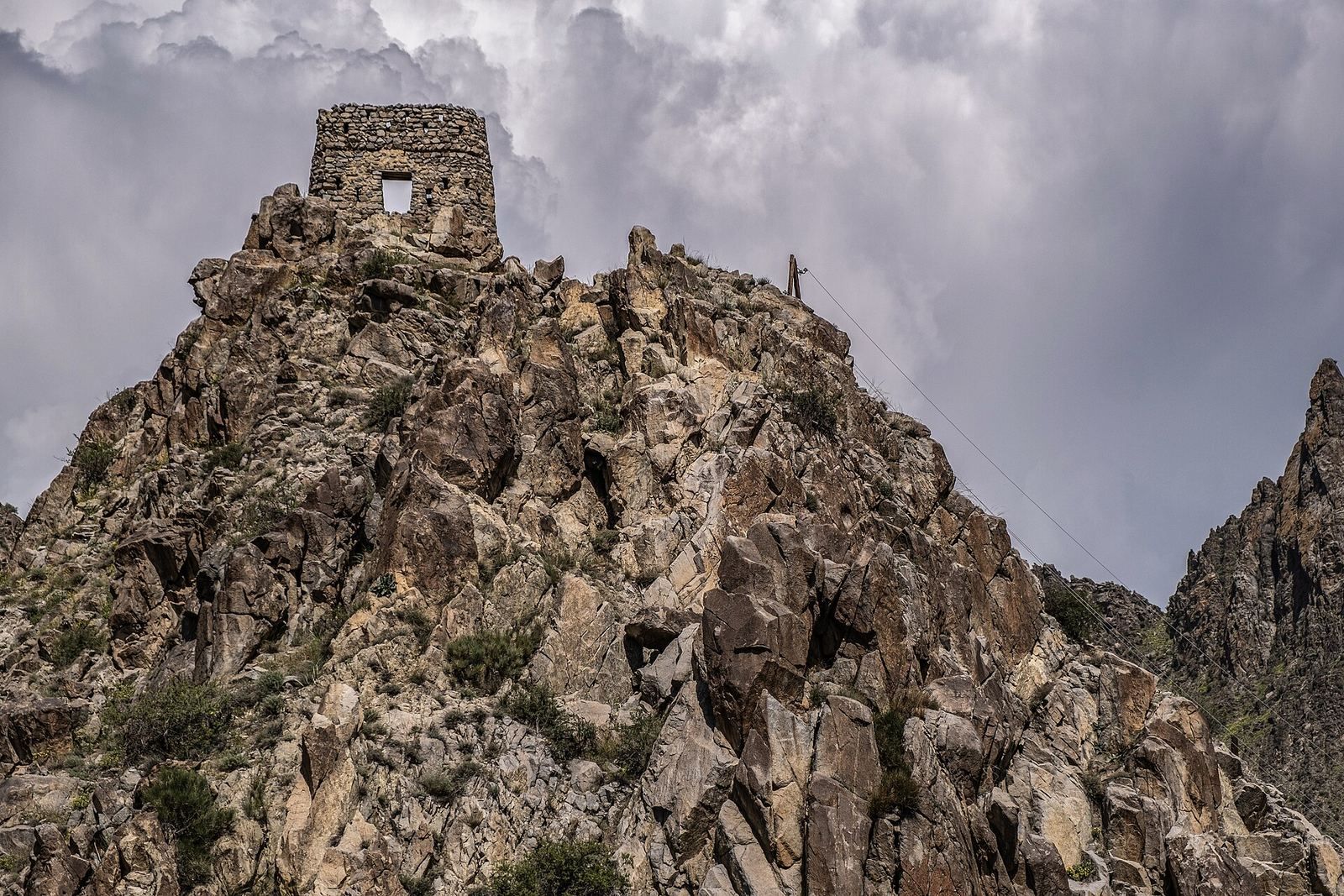
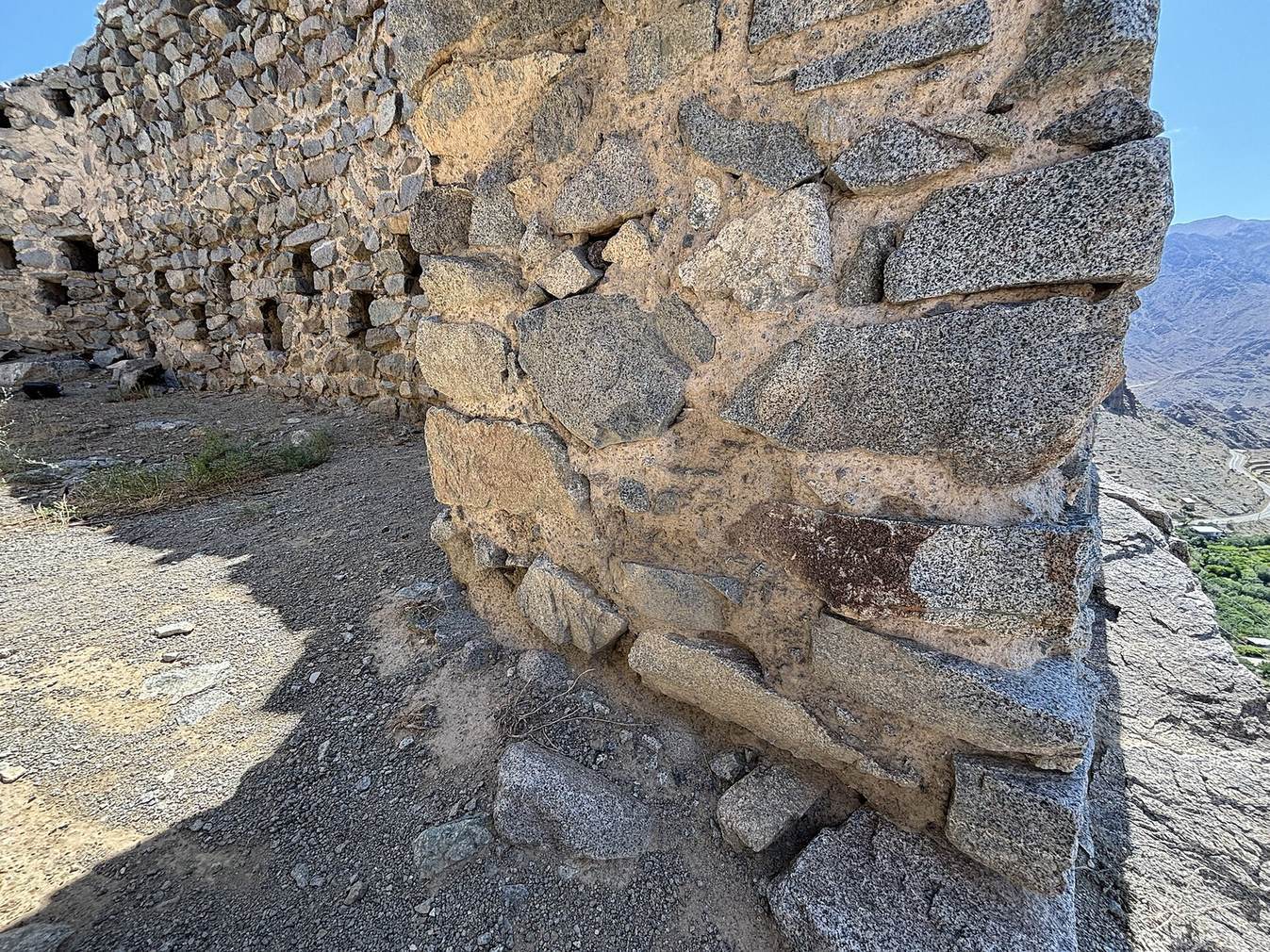
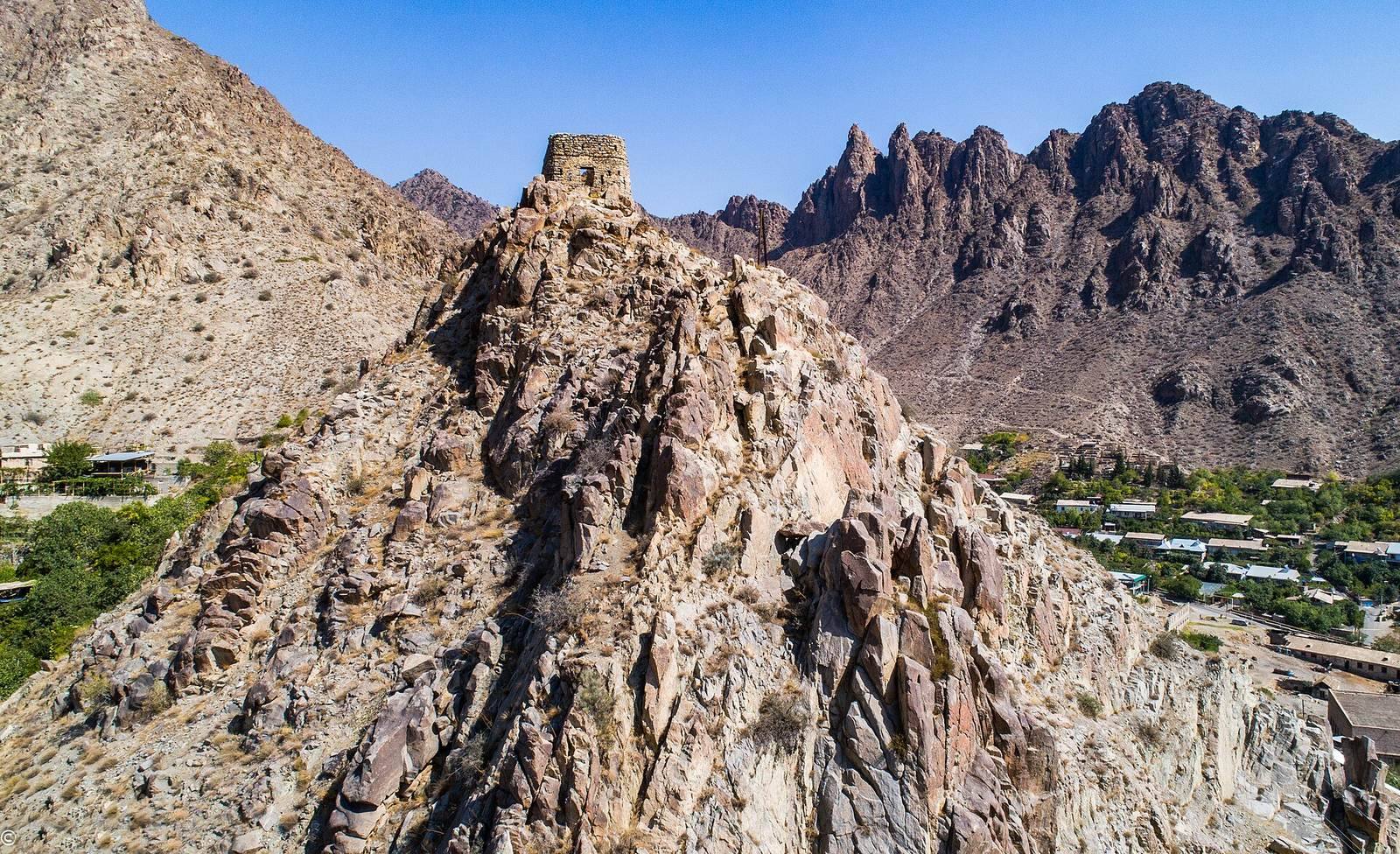
The fortress occupies a ridge overlooking the old part of Meghri, near the Iranian border. Its defensive layout used the steep, rough granite slopes alongside separate towers, with further barriers protecting the southern part of the town.
Ridge towers
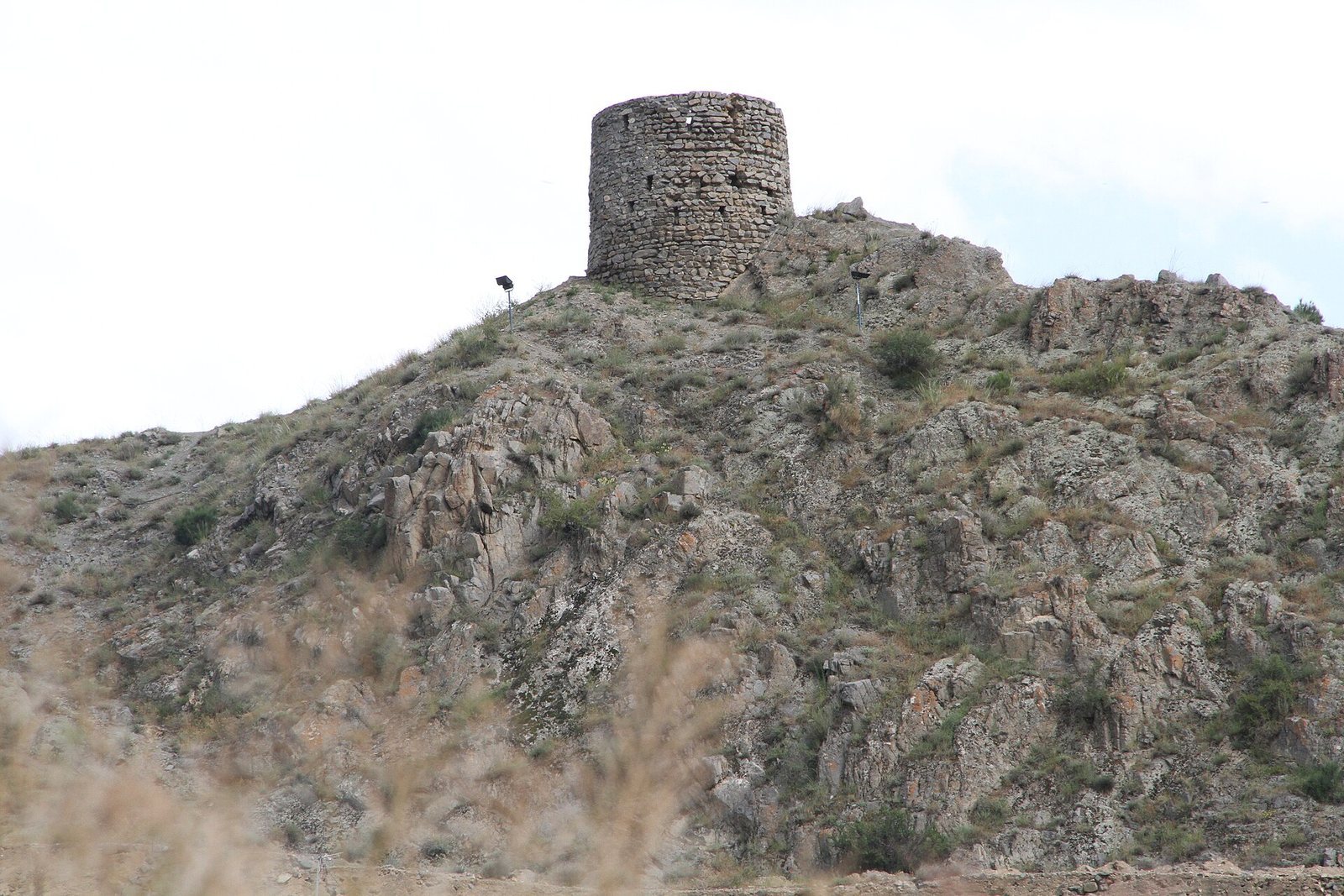
Six stone towers once stood along the ridge, and five survive in the ruined fortress. Four are round and two rectangular. The round towers have an exterior diameter of 5.5 metres. Each tower had two storeys, about two metres high apiece, and rows of oak beams reinforced the stonework around its perimeter as protection against earthquakes. The outer faces taper, while the inner faces remain vertical.
The tower entrances face north, where natural barriers protected the fortress, leaving the opposite direction as the approach for an attacker. During the 18th-century reconstruction, the towers received radially arranged openings for firearms.
Southern barriers
The Meghri River helped defend the town’s southern part. Tower-like houses along its bank formed additional barriers.