Manor in Malinovo: A Medieval Water Castle Transformed into a Noble Residence
Site at a Glance
- Popularity
- Low
- Country
- Slovakia
- Primary era
- Early Modern
- Eras represented
- Medieval, Early Modern, Modern
- Civilizations
- Habsburg, Hungarian
- Site type
- Domestic
- Remains
- Manor House
On this page10 sections
History
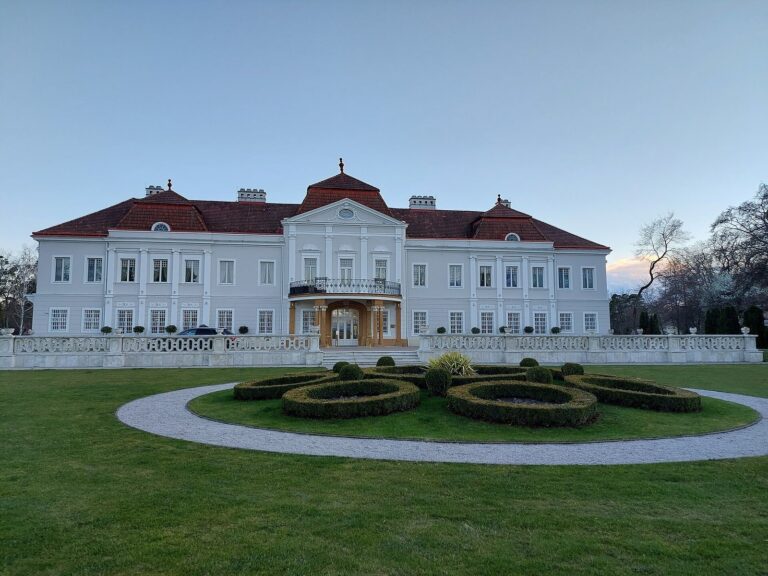
The Manor in Malinovo is a historic residence in Slovakia that grew from a water castle established probably between 1344 and 1385 by the counts of Saint George and Pezinok. The castle guarded a ford, a shallow river crossing, over the Little Danube toward the Great Rye Island. Its late Renaissance transformation took place in 1677–1680, while nineteenth-century renovations gave it a Classicist appearance, based on classical forms and symmetry.
Eberhard and the medieval castle
The settlement was first recorded in 1209, when King Andrew II of Hungary granted it to Sebus, an ancestor of the counts of Saint George and Pezinok. Its early names included Yberhart, Ybrehart and Eburhardi. Eberhard derived from a Germanic personal name.
In 1385, Moravian margrave Prokop of Luxembourg captured the castle while supporting his cousin Sigismund’s bid for the Hungarian crown. As Prokop’s men left with their spoils, they asked Bratislava’s townspeople for 160 wagons. Count Peter of Saint George and Pezinok paid a ransom to recover the castle and its associated property.
Noble ownership and Renaissance rebuilding
The estate passed among several noble families, including those of Saint George, Pezinok, Mérey, Pálffy, Balassa, Pázmány, Hederváry and Forgách. The Illésházy family later held it. Archbishop Georg Szelepcsényi acquired the property and had the castle rebuilt between 1677 and 1680 as a late Renaissance residence and fortified complex. The work supported Habsburg interests and Catholic reform efforts.
The Apponyi estate and twentieth-century changes
The Apponyi family acquired the property in the nineteenth century and reshaped the manor in the Classicist style. With its park, it became the family’s principal residence until the early twentieth century. Hungarian politician Albert Apponyi often stayed there with his family. On 17 April 1910, he received former US president Theodore Roosevelt at the manor during Roosevelt’s European tour.
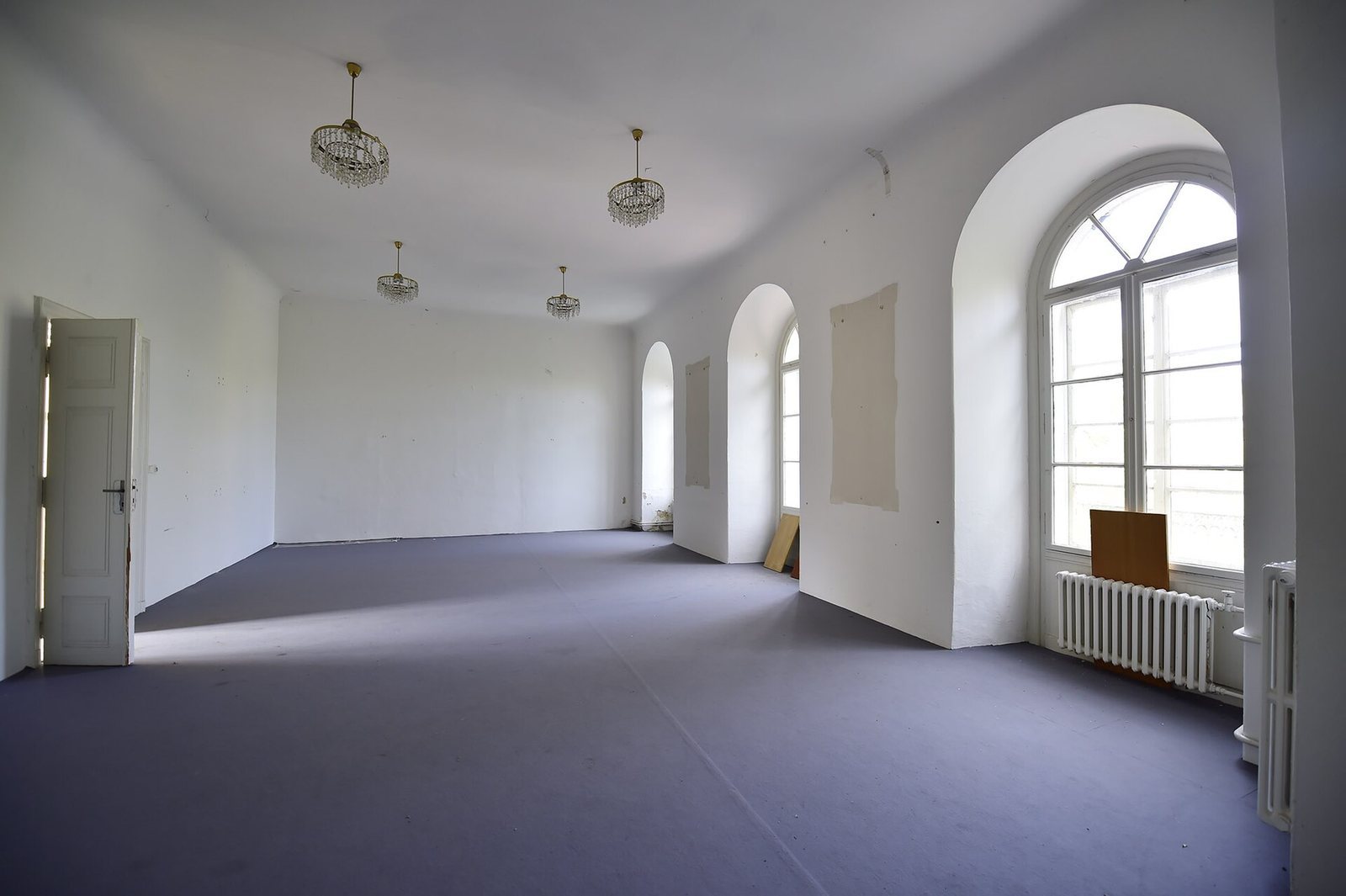
After Czechoslovakia was founded, the estate had been parcelled out by 1923, and a state gardening school occupied the manor. The settlement and manor adopted the name Malinovo in 1946, in honor of Soviet Marshal Rodion Malinovsky. The school, which changed names several times, moved to a nearby building in 2010, after which the manor was largely vacant. The manor and adjoining park are protected as national cultural monuments.
Restoration and archaeological work
Restoration began in June 2017 and included repairs and roof replacement. Archaeologists investigated the site during renovation work in 2026. Their finds help illuminate the medieval castle and the area around its moat and bridge.
Remains
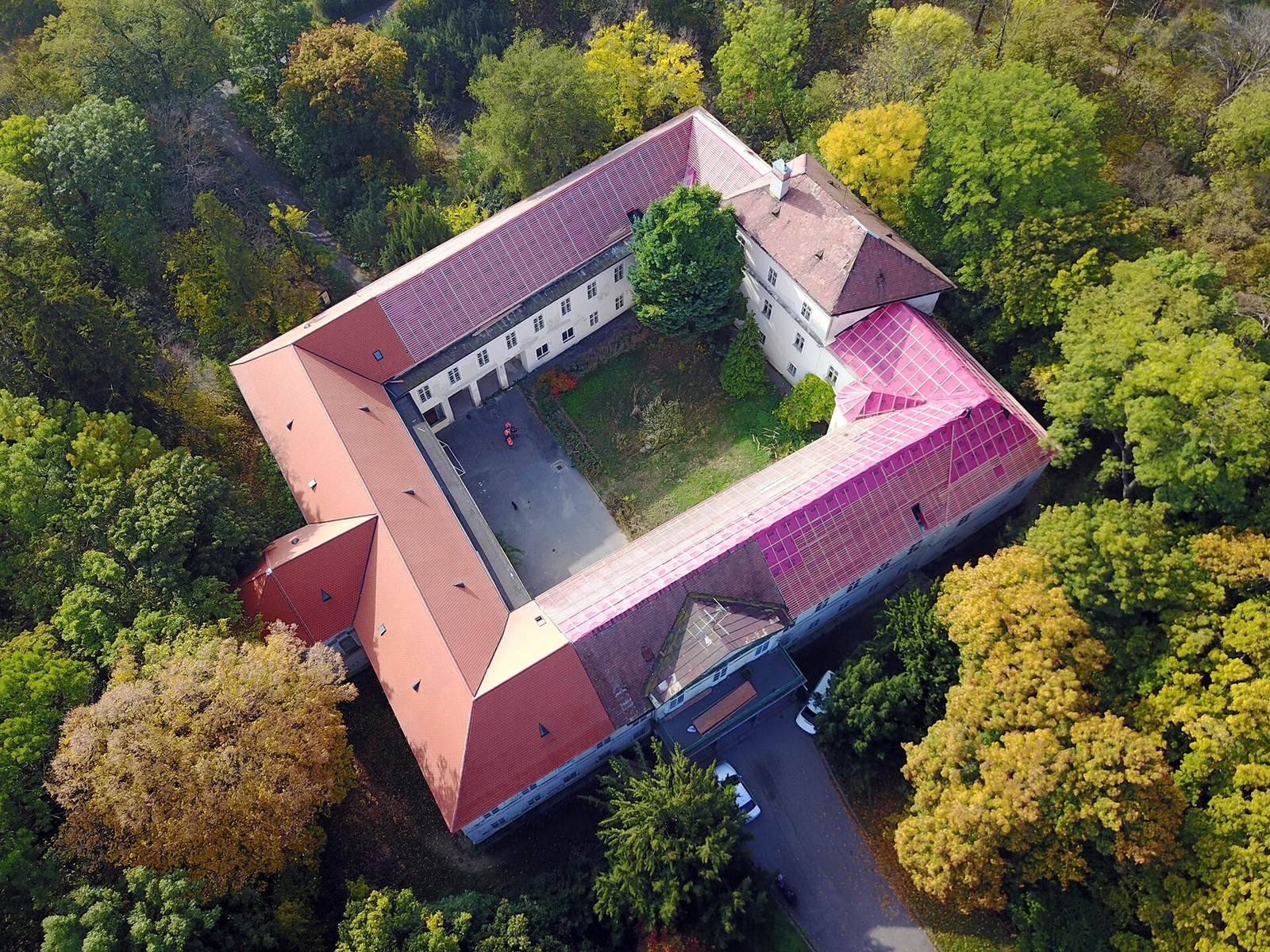
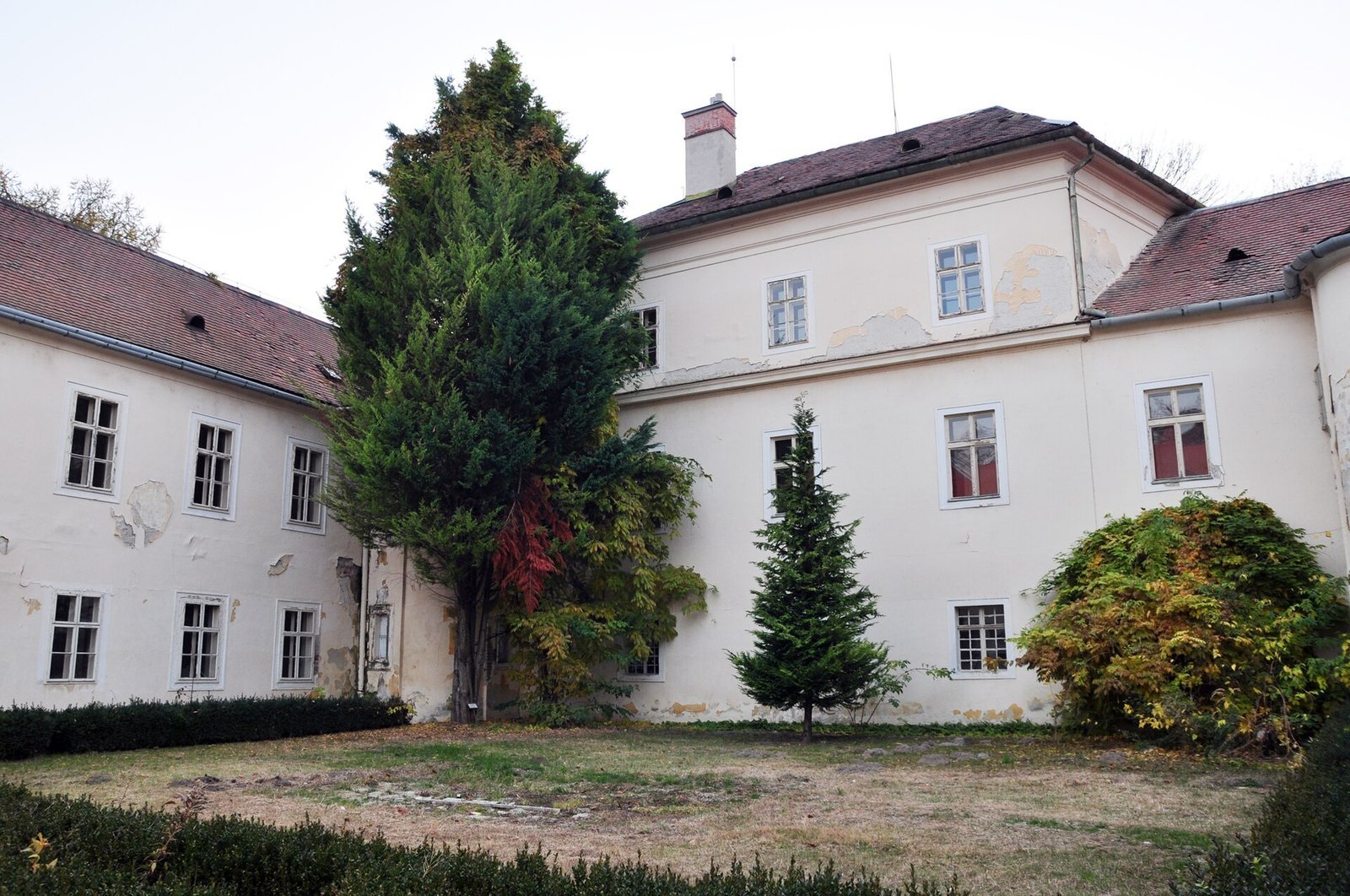
The complex brings together the partly visible remains of a three-towered medieval water castle and a four-wing residence arranged around a central courtyard. A surviving stretch of moat and features from several building phases reflect the site’s development from fortified castle to noble residence. The manor stands within a nineteenth-century English park.
Medieval castle and moat
A description from 1412 records buildings arranged in two rows along the castle’s perimeter wall. A gate tower stood midway along the north side, with two further towers at the corners of the west wing. The castle foundations remain partly visible, and much of its moat survives. A section beside the bridge was filled during the later Classicist alterations.
Residence and bridge
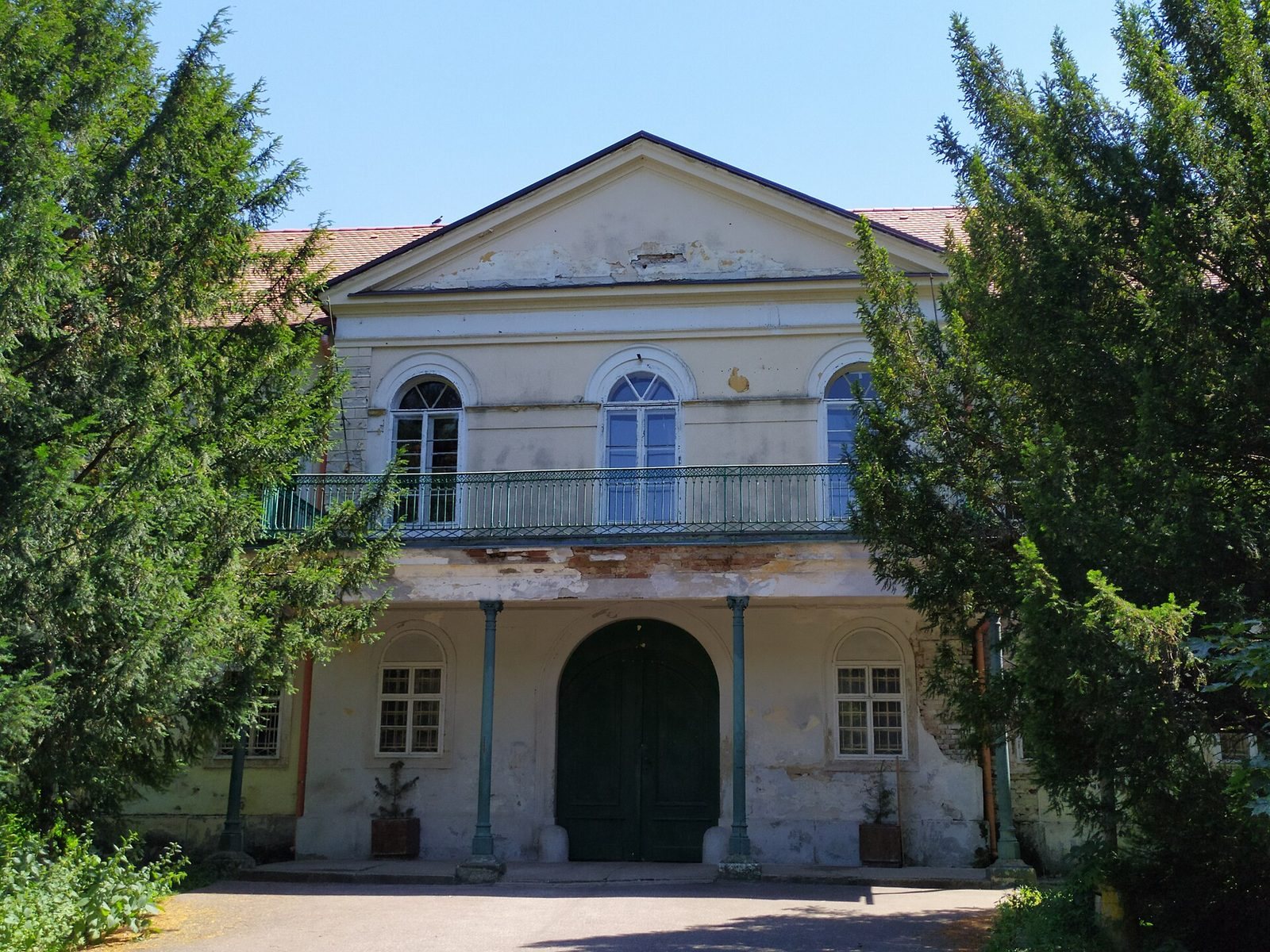
The residence has four wings, semicircular projections at its corners and a central courtyard noted for its acoustics. Above the entrance gate, four columns support a terrace with a triangular tympanum, the panel above a doorway. A masonry bridge once led to the gate. Remains of a bridge, probably dating to the Renaissance period, have been exposed near the moat. Renaissance vaulted ceilings survive on the ground floor of the south wing.
Chapel and interior
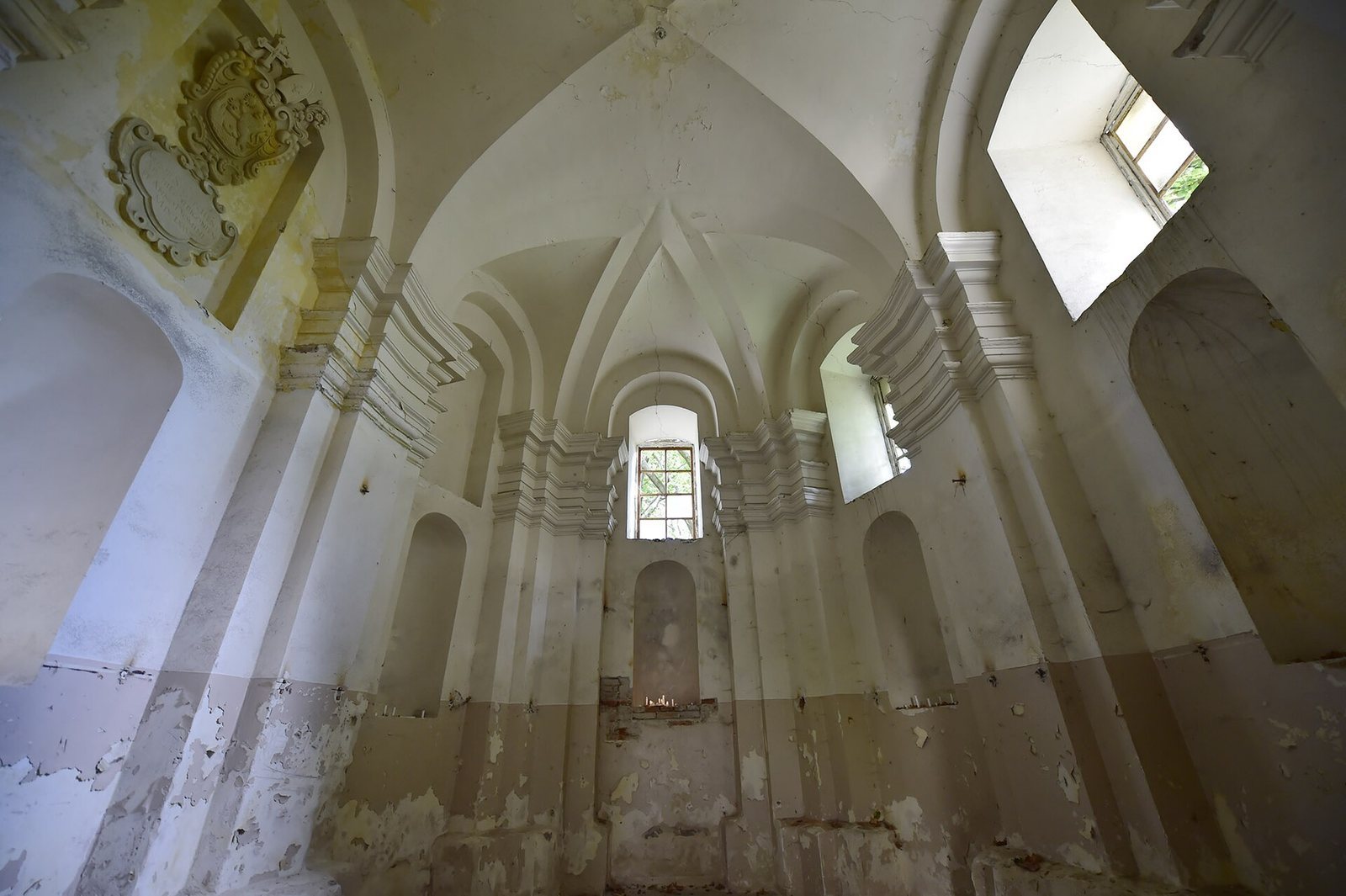
A chapel created in the east wing during the late Renaissance rebuilding projects from the middle of that wing; it was later altered in the Baroque style. The interior was adapted for the gardening school and retains coats of arms associated with Szelepcsényi, as well as early Baroque stucco ornamental faces.
Archaeological finds and commemorative plaque
Finds recovered during renovation work in 2026 include brick fragments called “fingernails,” pottery shards, roofing remains, plaster, mortar and numerous nails. Metal objects include crossbow arrowheads and a key. Stone architectural pieces probably came from the original castle, and most of the finds came from near the moat and bridge remains. A plaque on the manor commemorates Roosevelt’s reception there in 1910.