Leh Palace: Royal Residence of the Namgyal Dynasty in India
Site at a Glance
- Rating
- 4.4
- Popularity
- High
- Country
- India
- Primary era
- Early Modern
- Eras represented
- Early Modern
- Civilizations
- Unclassified
- Site type
- Domestic
- Remains
- Palace
On this page10 sections
History
Foundation and Namgyal Rule
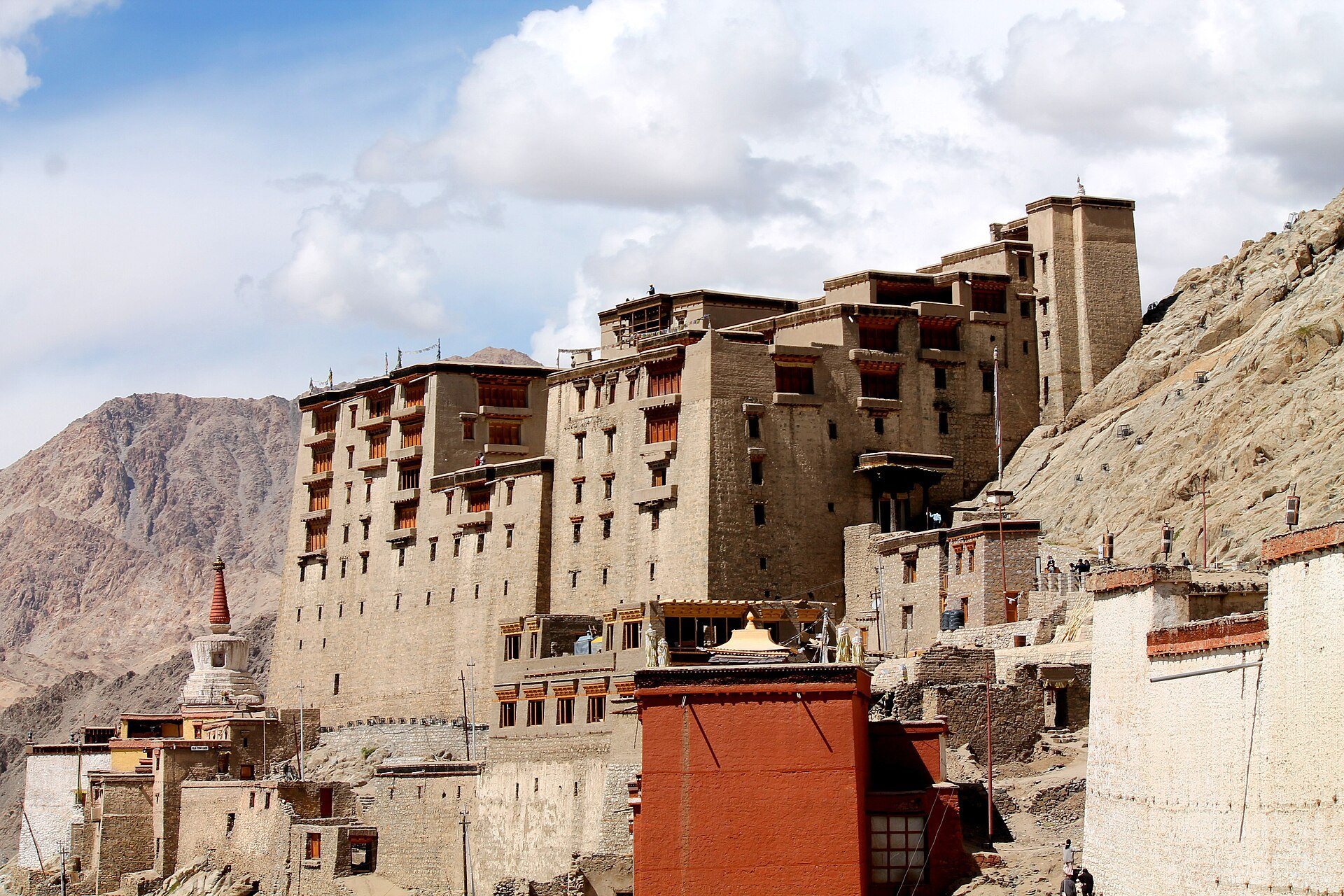
Leh Palace is a Tibetan-style royal residence in Leh, India, built around 1600 by Sengge Namgyal, ruler of Ladakh from 1616 to 1642 and the principal builder of the Namgyal dynasty. A smaller residence with defensive works occupied the site from the early fifteenth century. Construction may have begun under Jamyang Namgyal, but after his death Sengge probably moved the project to the opposite side of the mountain, whose shape was compared with an elephant’s head. The palace was completed three years later.
The building became the royal residence of the Namgyal dynasty, Ladakh’s ruling house, and was planned to accommodate the king, his family, ministers, and 60 elders. Its construction belonged to a period when the Buddhist kingdom of Ladakh experienced renewed prosperity under Sengge Namgyal. A later legend says that Sengge ordered the chief stonemason’s right hand cut off so that he could not construct a better palace elsewhere.
Dogra Conquest and Abandonment
Dogra forces invaded Ladakh in 1834 as the Jammu-based Hindu ruling power expanded into the region. After Leh was contested by the Dogras and Tibet, Dogra troops defeated Tibetan forces that had besieged the city in 1842. The royal family then left Leh Palace for Stok Palace, built in 1825 and previously used as a summer residence. Leh Palace has remained unoccupied since that transfer.
Much of the palace’s interior decoration and its large wall paintings were later lost. The Archaeological Survey of India is responsible for restoration and maintains offices in the building. Other parts are used as a museum and an observation platform. Monks from Ladakhi monasteries continue to hold the annual Dosmoche festival at the palace, with prayers and sacred dances, including performances by monks from Tuktuk. The courtyard also hosts occasional ceremonies and performances.
Remains
Palace Structure and Layout
Exterior and Ceremonial Entrance
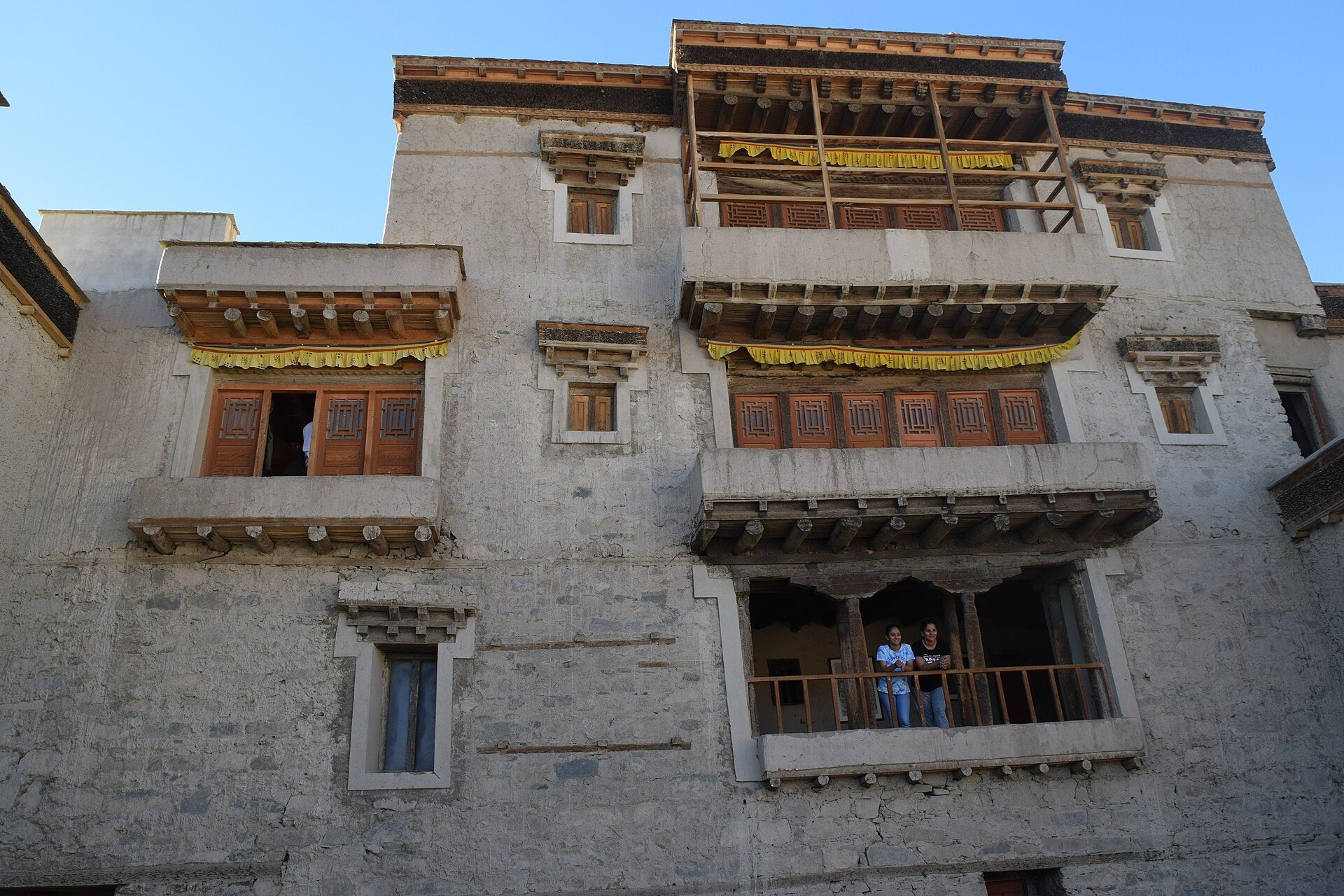
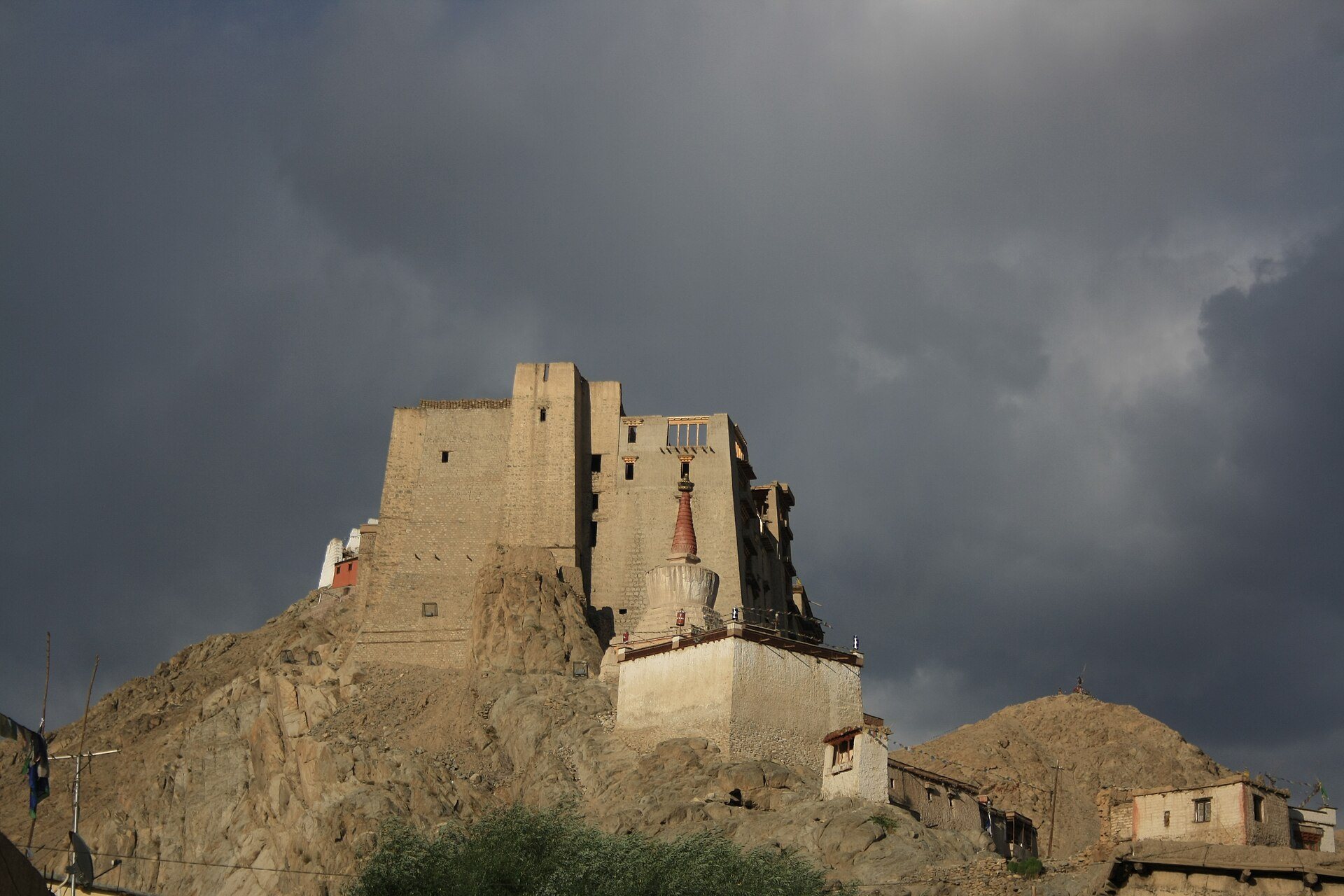
Leh Palace is a nine-storey stone structure built against the Tsemo ridge above Leh. Its massive exterior walls slope steeply, while broad wooden balconies extend across the upper floors. The principal ceremonial entrance lies on the north side and opens onto the third floor. Large columns decorated with snow-lion imagery frame the entrance, and a staircase leads from it to the internal courtyard on the fourth floor.
Courtyard and Interior Levels
The fourth-floor courtyard is a constructed inner court used for special gatherings of palace residents and for public or cultural events. Near the staircase, in the northeastern corner, stands the Dukhar Lhakhang, a small royal-family temple dedicated to the thousand-armed Tara, a Buddhist female deity associated with compassionate aid.
The upper floors contained royal apartments, two small temples, a throne room, a reception hall, rooms for religious ceremonies, and quarters for the royal family. Storerooms and stables occupied the lower levels, while servants lived in small rooms on the first through third floors. The fifth and sixth floors held the reception and assembly hall, royal-family rooms, and balconies, and are currently closed. The seventh floor contained the throne room, a temple, and the king’s east-facing room. Several rooms on the eighth floor have unclear original purposes, while another temple occupied the ninth floor.
Surviving Religious Features and Collections
Most of the interior has been destroyed or has deteriorated, but the fourth floor retains images of thousand-armed Tara, Shakyamuni, the historical Buddha, and Padmasambhava, an Indian Buddhist teacher associated with the introduction of Buddhism to Tibet. The palace also preserves 103 volumes of the Kanjur, the Tibetan Buddhist scriptural canon containing translations regarded as the Buddha’s teachings. Wall and column decoration survives in the reception and throne halls.
The palace museum contains jewellery, ornaments, ceremonial clothing, crowns, masks, musical instruments, ceremonial weapons, and Buddhist thangkas, religious paintings usually made on cloth. Some of the thangkas are more than 450 years old, and their intricate designs retain bright colours produced from crushed and powdered gems and stones.
Buildings Around the Palace
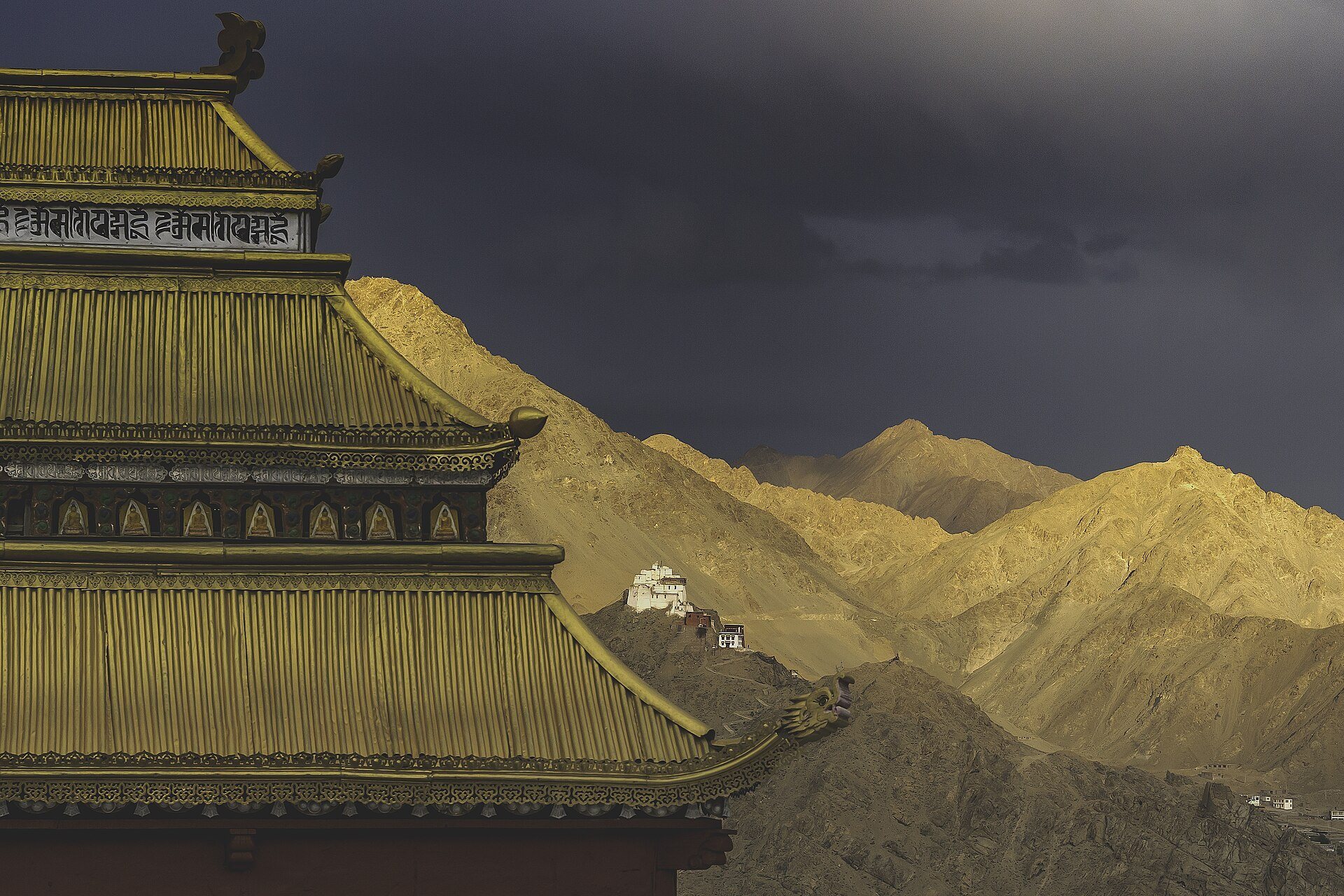
Structures at the base of the palace include the Namgyal Stupa, a Buddhist monument traditionally associated with relics or commemorative remains, the colourfully muralled Chandazik Gompa, a Buddhist monastic institution, and the 1430 Chamba Lhakhang, a Buddhist temple or shrine. Medieval mural fragments survive between the inner and outer walls of the Chamba Lhakhang. Namgyal Tsemo monastery stands above the palace, while other religious buildings are nearby. These structures are separate from Leh Palace, and Namgyal Tsemo monastery was built in the nineteenth century.
Roof and Surrounding Landscape
The palace roof provides views across Leh and the surrounding area, including Stok Kangri in the Zanskar range.