Maebashi Tenjinyama Kofun: A Fourth-Century Japanese Burial Mound
Site at a Glance
- Rating
- 3
- Popularity
- Low
- Country
- Japan
- Primary era
- Classical
- Eras represented
- Classical
- Civilizations
- Unclassified
- Site type
- Burial
- Remains
- Burial Mound
On this page4 sections
History
Maebashi Tenjinyama Kofun is a monumental burial mound in Japan, built during the first half to middle of the fourth century. Its grave goods show characteristics associated with early burial mounds in eastern Japan.
An excavation may have taken place before 1968, but its details are uncertain. In the summer of 1968, investigators began work shortly before land development was set to remove the mound. The front portion had already been cut away, and removal of the rear portion was planned. The initial investigation did not find a burial chamber.
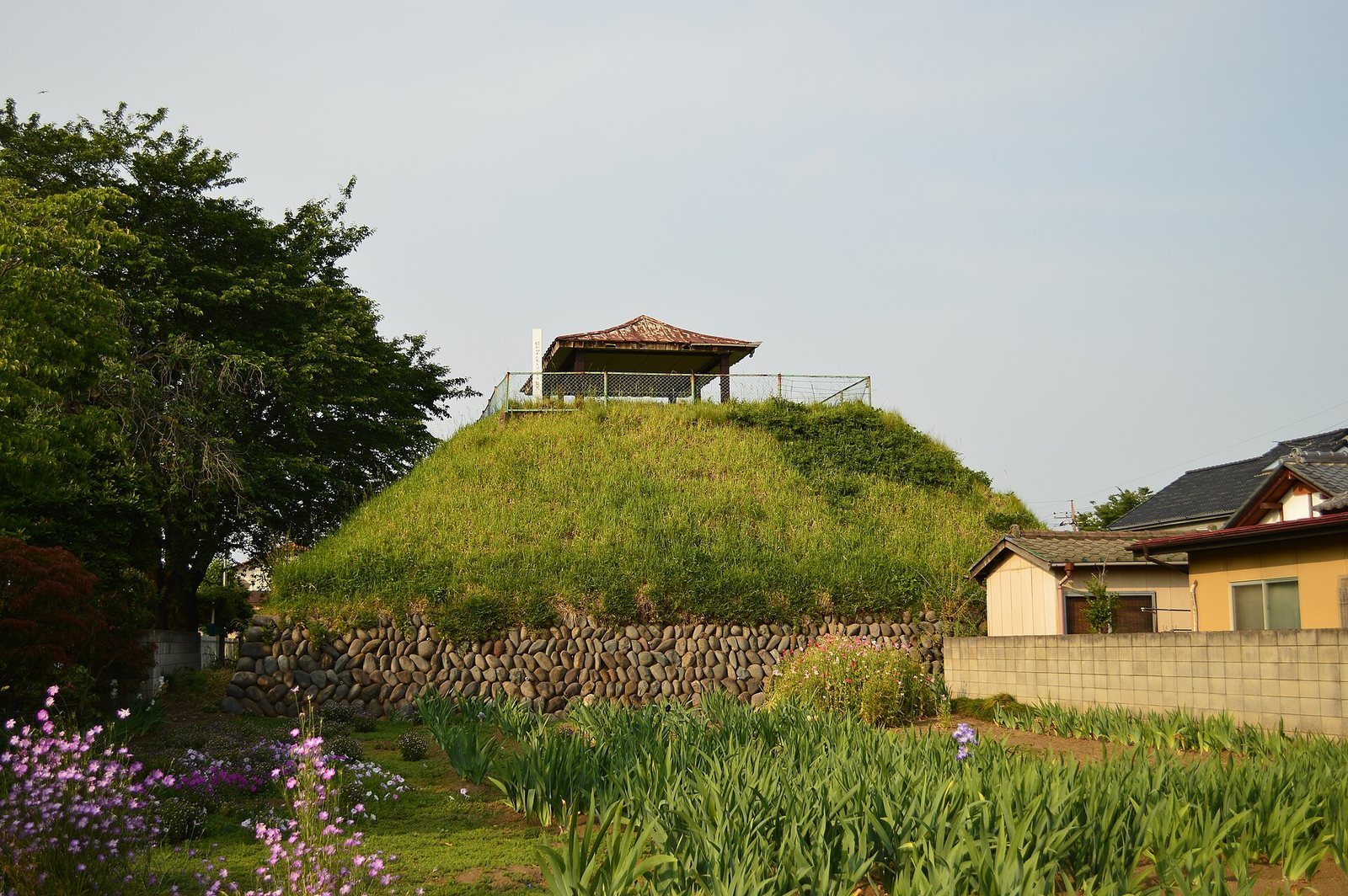
A high-school student who had joined the excavation continued visiting and spotted a mass of clay in an exposed cut face. Work stopped, and the chamber was investigated the following winter. Its discovery brought recognition of the mound’s importance and led to preservation of the surviving portion. The site became a Gunma Prefecture historic site in 1970, and its excavated grave goods received national Important Cultural Property status in 1979.
Remains
Mound and surface features
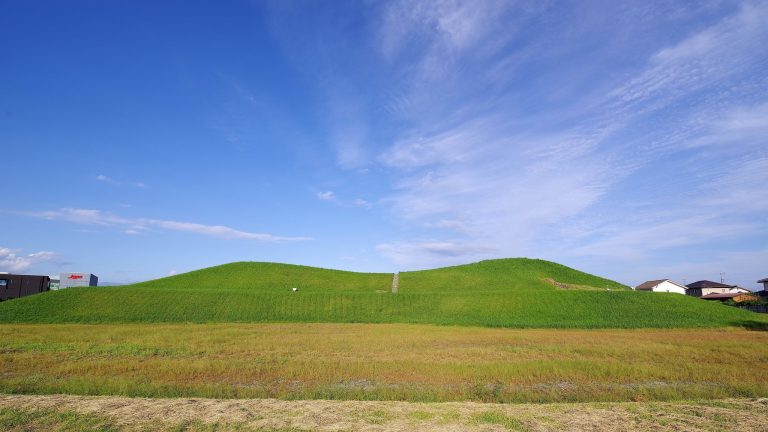
Set on the Maebashi Plateau, the mound had a keyhole-shaped plan, combining a rounded section with a projecting rectangular one. It measured 129 metres long and 9 metres high, with three tiers and a surrounding moat. Stones covered the level surfaces of the middle and lower tiers, while straight rows of stones followed the slopes. Red-painted jars with perforated bases were arranged on the summit in a pattern resembling cylindrical haniwa, clay objects placed on or around burial mounds.
Burial chamber and grave goods
At the centre of the mound’s rear, rounded section was a clay burial chamber with an interior length of 7.8 metres and width of 1.4 metres. The chamber is preserved, while land development removed most of the mound, leaving a small remnant.
Excavation recovered 165 grave goods representing 15 types. They include weapons, tools, Haji ware, a type of ancient Japanese earthenware, and a bronze mirror with a triangular rim decorated with five deities and four animals. Mirrors made from the same mold have been found at Sakurai Chausuyama Kofun and Kurozuka Kofun. The excavated objects are held at the Tokyo National Museum.