Madonna di Campagna: A Renaissance Sanctuary in Verona
Site at a Glance
- Rating
- 4.4
- Popularity
- Low
- Country
- Italy
- Primary era
- Early Modern
- External website
- Open
- Eras represented
- Medieval, Early Modern, Modern
- Civilizations
- Venetian
- Site type
- Religious
- Remains
- Basilica
On this page8 sections
History
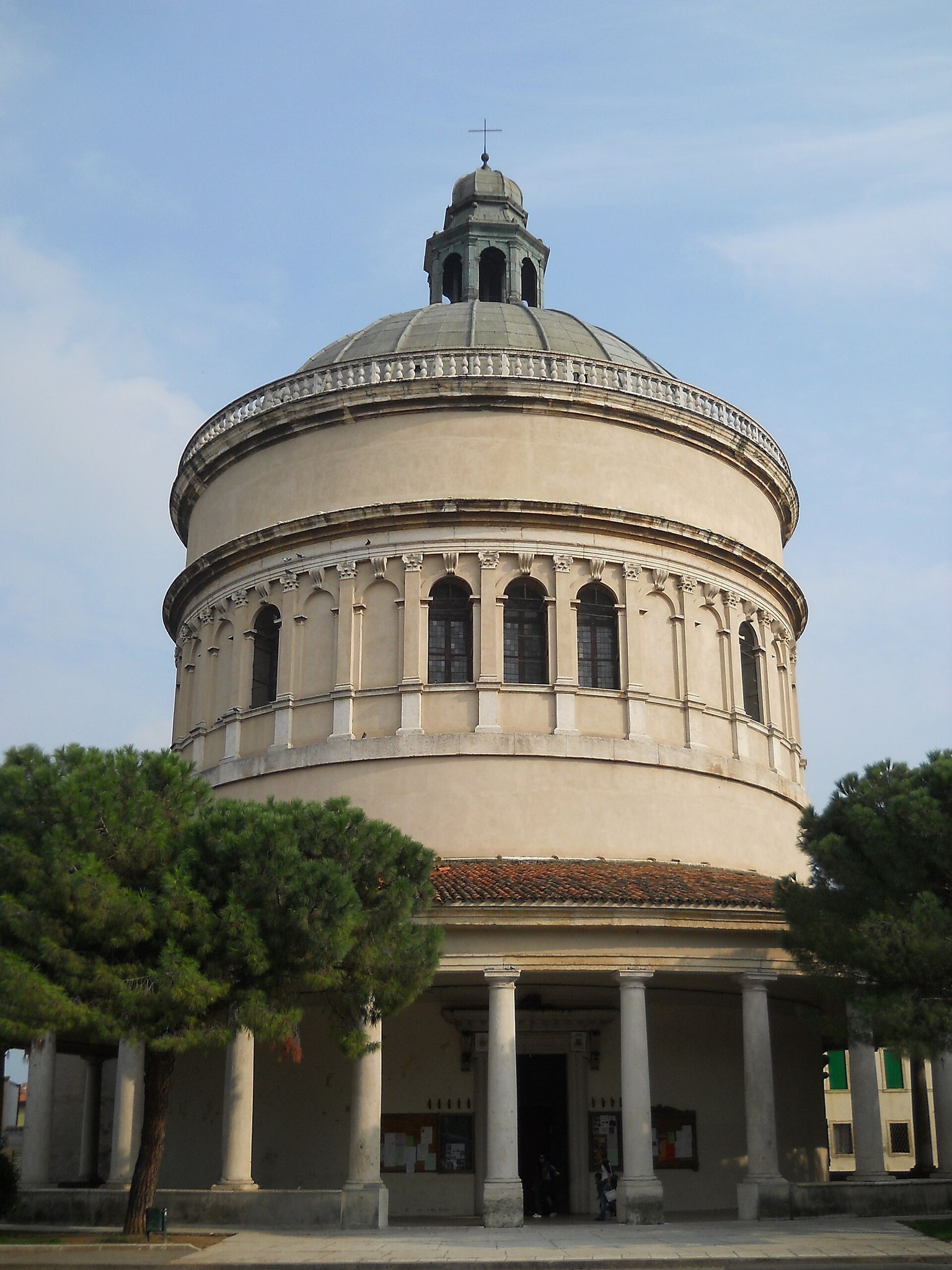
Madonna di Campagna, formally Santa Maria della Pace, is a Roman Catholic sanctuary in Verona, Italy, built in the Renaissance to preserve a revered image of the Madonna and Child. Construction began in 1559 and was completed in 1589, creating a church that remains associated with Verona’s religious history and with the architectural work of Michele Sanmicheli.
From surviving fresco to sanctuary
In 1517, the Republic of Venice ordered the demolition of buildings within one mile of Verona’s walls. A small section of wall survived because it carried a fresco showing the Madonna and Child enthroned between Saints Bartholomew and Anthony Abbot. The image became an object of devotion among the Veronese community, and Bishop Agostino Lippomano, a sixteenth-century bishop of Verona, commissioned Michele Sanmicheli to design a church for its protection.
Sanmicheli, an Italian Renaissance architect known for churches and fortifications, began the project in the year of his death. By 1561, construction was substantially advanced, and the fresco had been installed behind the high altar. The finished building differed in several respects from Sanmicheli’s original design. Giorgio Vasari, the painter, architect, and art historian, criticized these alterations, attributing them to the poverty, weakness, and poor judgment of those directing the work.
Restoration and later status
The church was restored in 1633 and again in 1903 after earthquake damage. It was enlarged in 1931 and 1932 to designs by Francesco Banterle, producing its present appearance, and was reconsecrated on 17 September 1932. On 17 October 1987, the Catholic Church granted it the title of minor basilica, a designation given to churches of particular religious or historical importance without making them cathedrals.
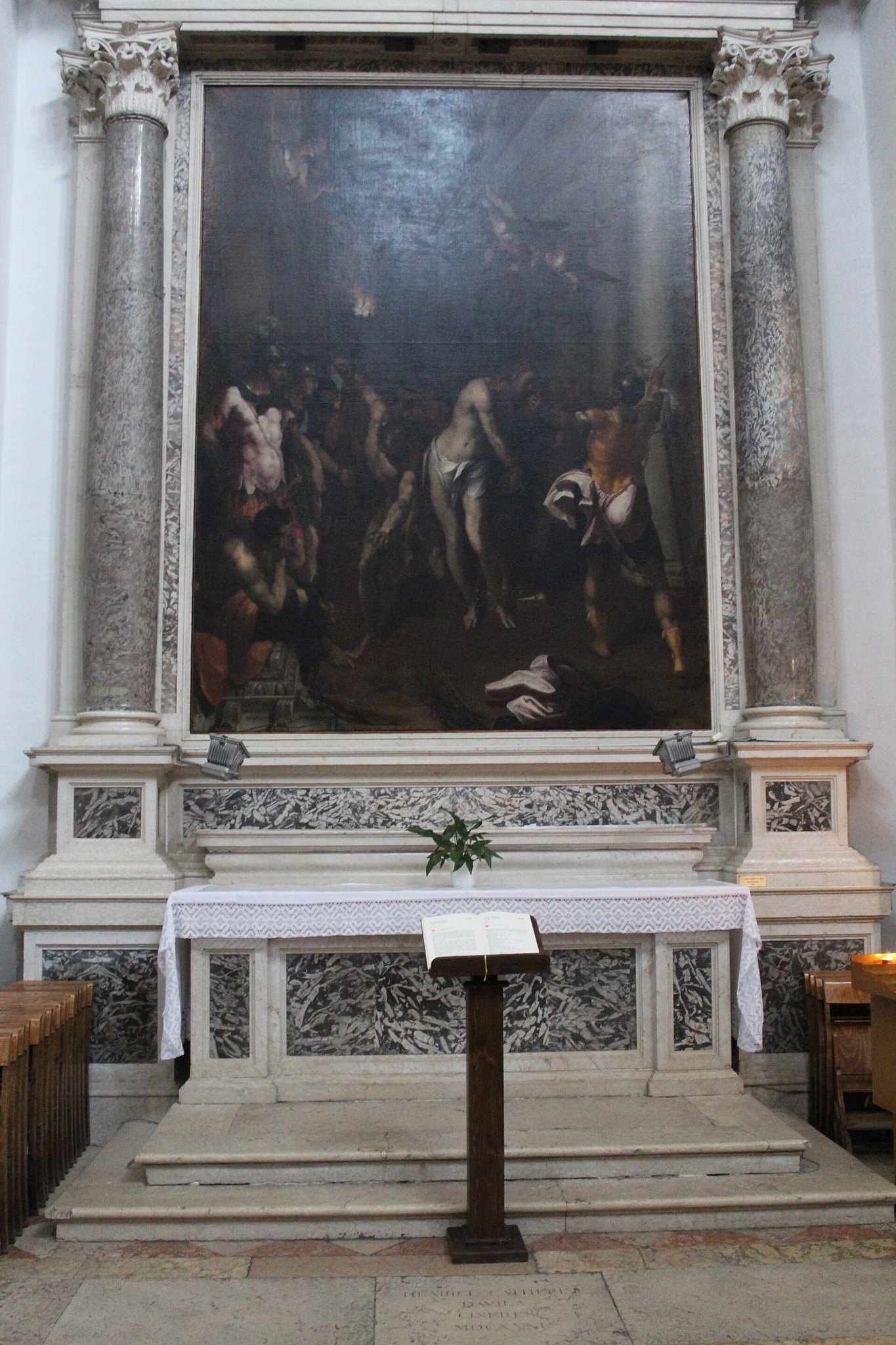
Madonna di Campagna also contains the remains of Enrico Davila, a commander of the Republic of Venice and author of Historia delle guerre civili di Francia. Davila died during a fatal altercation at an inn in San Michele di Campagna while travelling to Crema, where he had been appointed governor. The church is also associated with paintings by Felice Brusasorzi, Paolo Farinati, and Claudio Ridolfi.
Remains
Exterior and portico
The church has an approximately oval exterior rather than a truly circular one, and it lacks a principal facade. Three entrances are sheltered by a portico that encircles the building. Its columns use the Tuscan order, a classical architectural system defined by its column and entablature forms. Sanmicheli intended the surrounding colonnade both to provide shelter and to recall Roman temples, including the Temple of Vesta in Rome and the Temple of the Sibyl at Tivoli.
Centralized interior
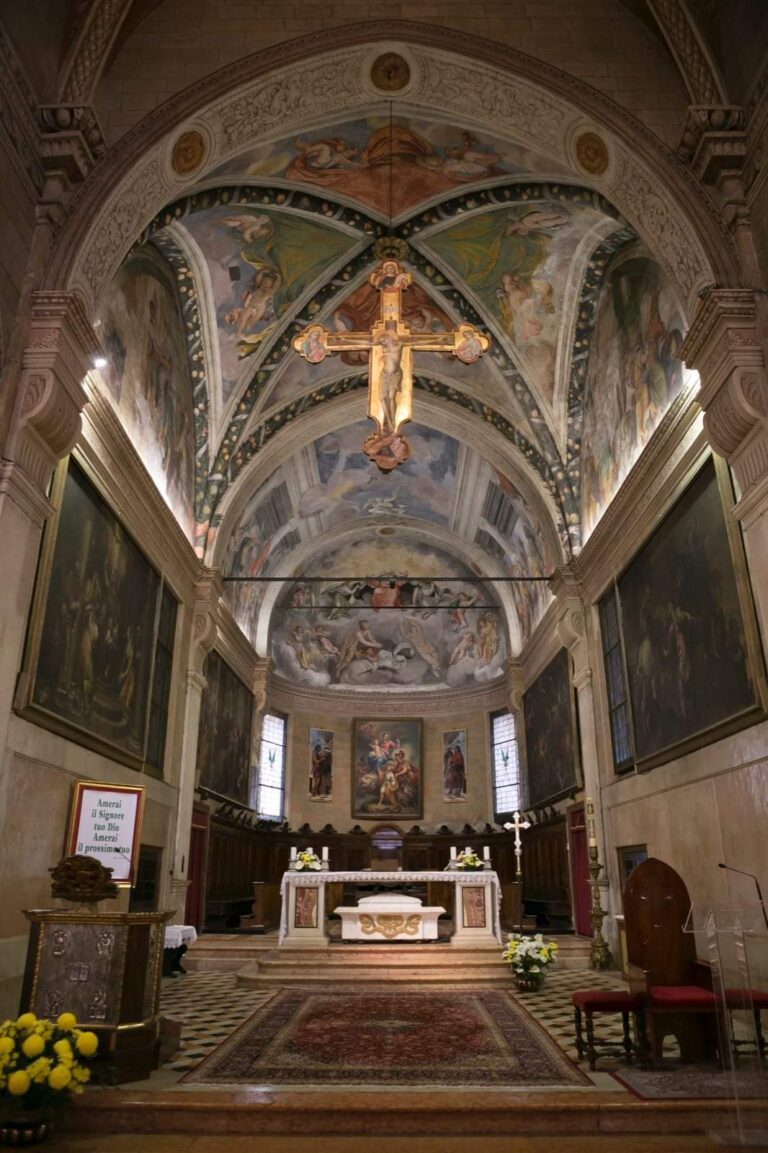
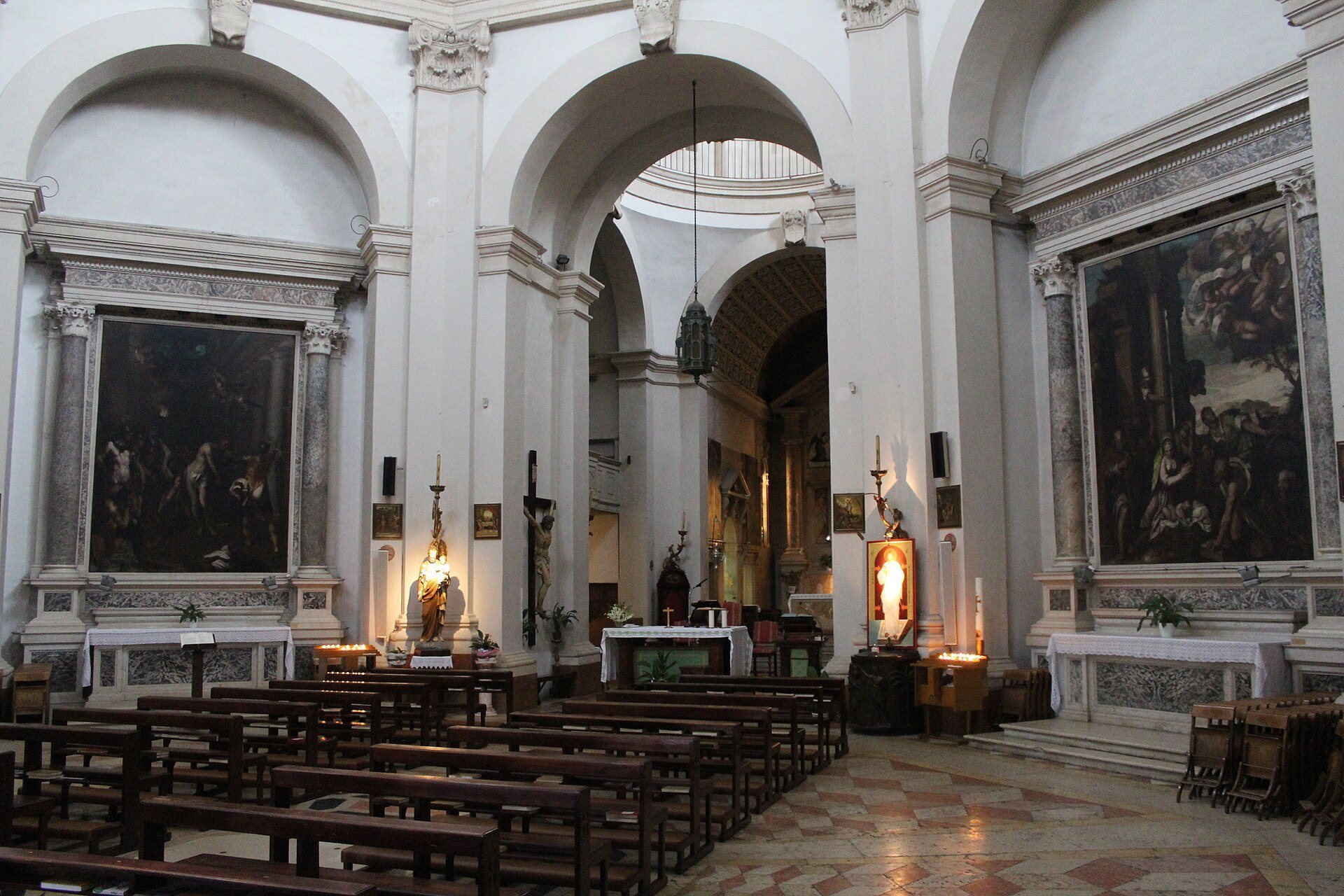
Although the exterior appears circular or oval, the interior follows an octagonal plan. Its centralized arrangement has a principal axis leading eastward to the presbytery, the part of a church surrounding the high altar and traditionally reserved for the clergy. The presbytery has a Greek-cross plan, with four arms of approximately equal length, a flat termination, and lateral arms ending in semicircular apses. A sacristy occupies its southern side.
The nave is organized by angular composite-order pilasters, a classical system distinguished by its column and entablature forms. These pilasters frame niches containing the side altars. Above the entablature rises a dome drum, the raised structural section supporting a dome, with pilasters framing blind arches, windowed arches, and niches containing statues.
Domes, bell tower, and sacristy
The principal dome is built in masonry with eight segments and protected by a second outer cupola, a dome-shaped covering, made from copper sheets. A smaller dome covers the presbytery. On the southern side, the sacristy stands beside a tower containing a spiral staircase that leads to the two domes, as well as the bell tower. The visible bell tower consists of part of its shaft and a small architectural bell structure forming the belfry. Its Renaissance bells are tuned to the scale of A major and arranged for Veronese bell ringing.
Devotional image and unusual objects
Behind the high altar is the late-fourteenth-century fresco of the Madonna and Child enthroned between Saints Bartholomew and Anthony Abbot. Its transfer to the church in 1561 explains the sanctuary’s original purpose and its central devotional focus. The remains of Enrico Davila are also housed within the church.
In a room opposite the Oratory hangs a large taxidermied crocodile. A late-nineteenth-century legend says that members of a wealthy family brought the animal to San Michele and abandoned it in the marshy countryside after it had grown. According to the tradition, it terrorized shepherds and fishermen near the Adige River before being captured and killed. It was first placed in the church in honor of the Virgin and later moved among other locations within the basilica complex.