LSU Campus Mounds: Ancient Ceremonial Earthworks in Baton Rouge
Site at a Glance
- Rating
- 4.7
- Popularity
- Low
- Country
- United States
- Primary era
- Stone Age
- External website
- Open
- Eras represented
- Stone Age
- Civilizations
- Unclassified
- Site type
- Religious
- Remains
- Sanctuary
On this page9 sections
History
LSU Campus Mounds, also called the LSU Indian Mounds, are two Native American earthen mounds on the Louisiana State University campus in Baton Rouge, United States. Associated with the Evans culture, a prehistoric cultural tradition, they belong to the Archaic Period, a broad era of ancient North American prehistory linked to hunter-gatherer societies and early monumental earthworks.
Archaic Beginnings
Construction may have begun as early as 11,000 years ago and may have continued until about 5,000 years ago. The mounds therefore predate the Great Pyramids of Egypt. Built on ground overlooking the Mississippi River floodplain, they form part of a larger statewide system of earthen mounds. Scholarly consensus interprets them as ceremonial places and markers.
Investigation and Interpretation
The mounds were first dated in 1982. In 2009, LSU professor Brooks Ellwood extracted core samples that revealed a charcoal layer. Its origin remains uncertain, with a pit barbecue and cremation proposed as possible explanations. Further excavation followed in 2011, 2012, and 2018.
Material recovered from the mounds led Ellwood to conjecture that they contain cremated human remains and may be as much as 11,300 years old. This proposed age is substantially earlier than the existing consensus.
Damage, Protection, and Recognition
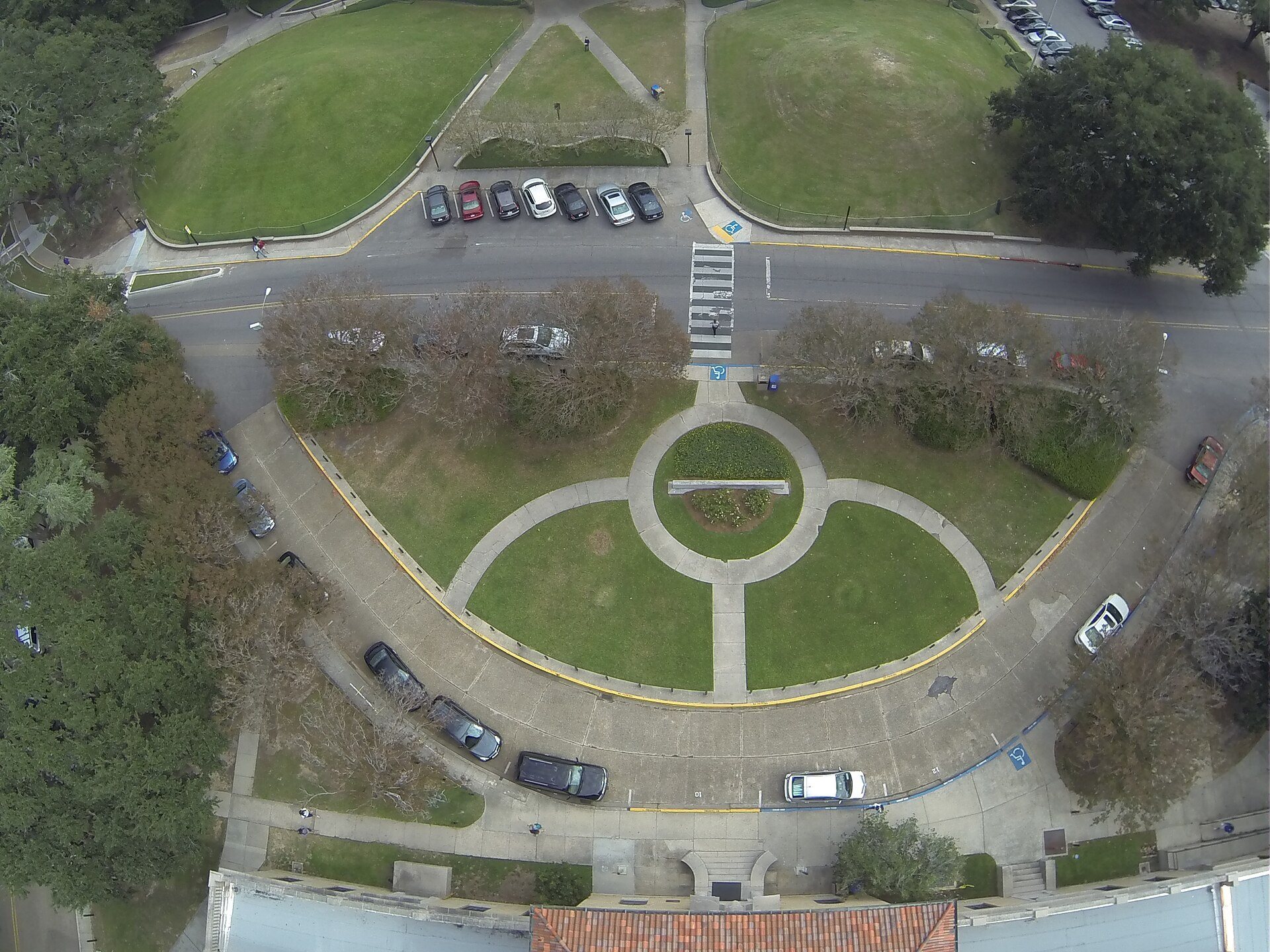
Heavy campus traffic caused degradation and natural erosion. LSU installed a sidewalk between the mounds in 1985 and added a low brick wall around them to keep vehicles from driving over the earthworks. A restoration project begun in 1996 repaired eroded areas with river silt and planted hybrid Bermuda grass to reduce further erosion.
The mounds had previously been used for tailgate parties, social gatherings held around vehicles before sporting events. In 2010, LSU launched the Save the Mounds campaign after officials stated that internal structural damage threatened the earthworks with eventual collapse. Beginning that year, the mounds were fenced off during LSU home football games. The site was added to the U.S. National Register of Historic Places, the federal register for historically significant sites and structures, on March 1, 1999.
Remains
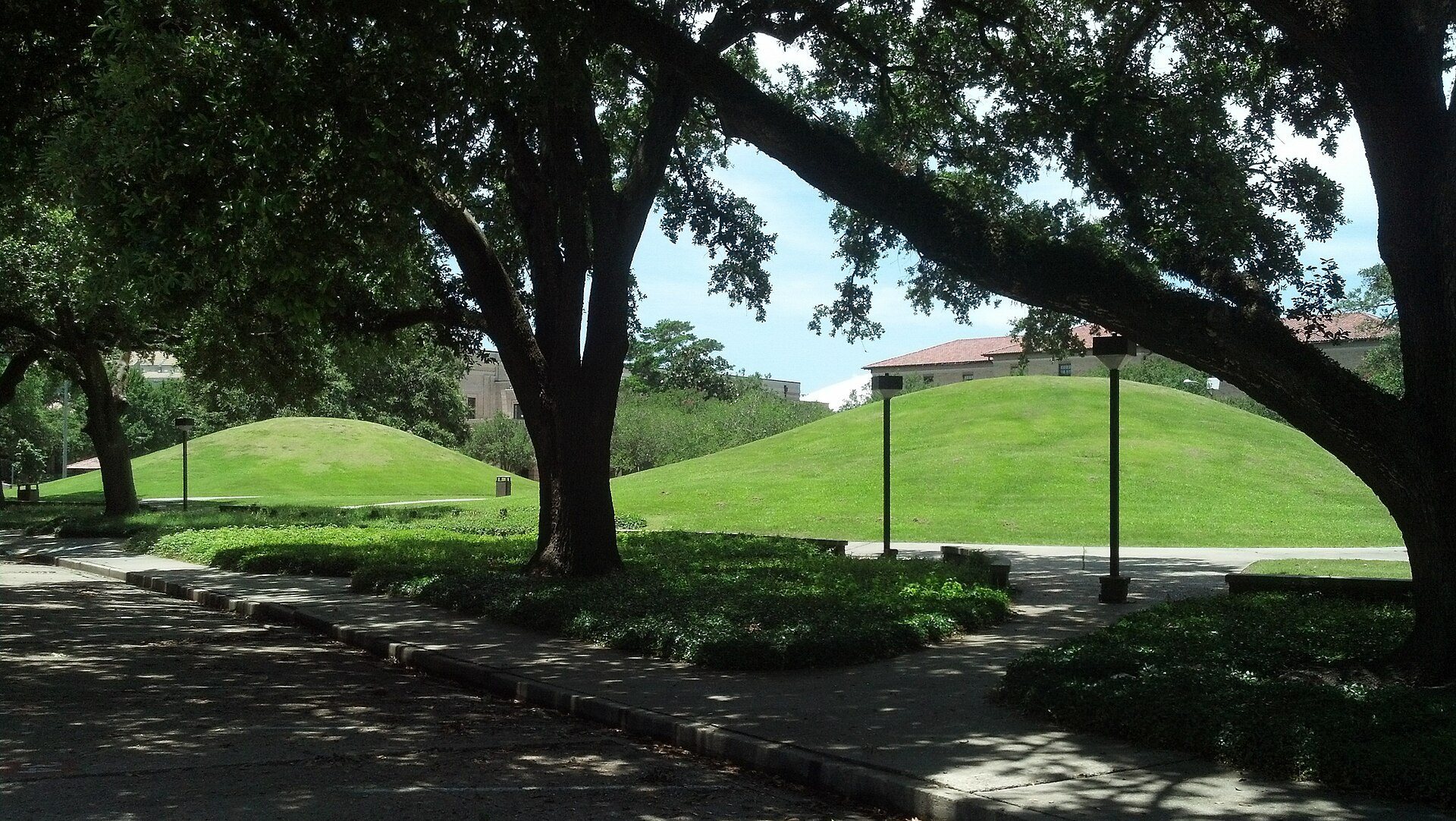
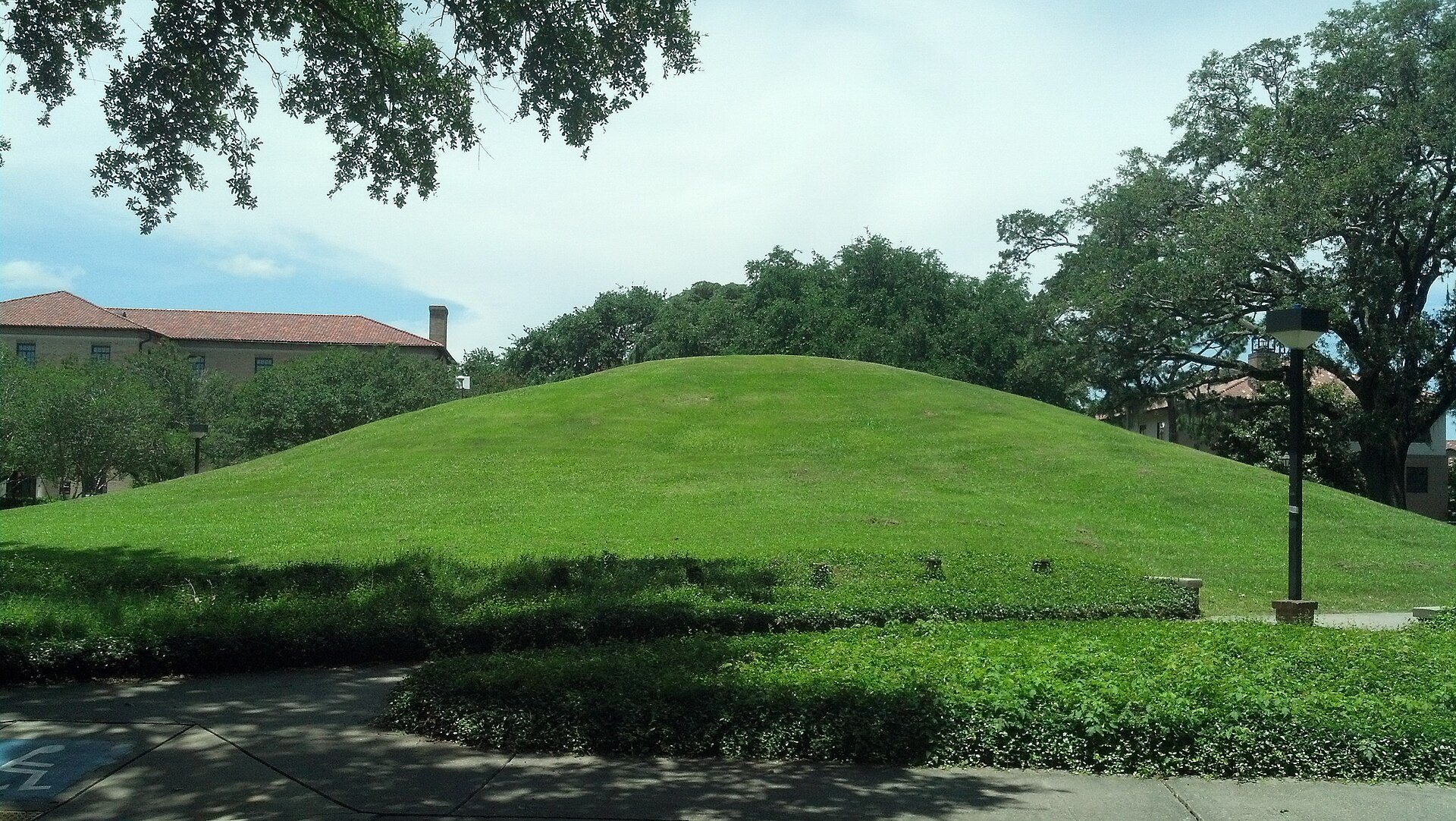
The site covers about 2 acres along Field House Drive and consists of two earthen mounds, each approximately 20 feet high. A sidewalk passes between them, while a low brick wall surrounds the pair. Their position overlooking the Mississippi River floodplain reflects the setting in which these large earthworks were constructed.
The Earthen Mounds
Northern Mound
The northern mound is formed from hard clay soil and rises approximately 20 feet above the surrounding ground. Its surface was repaired with river silt during the 1996 restoration and seeded with hybrid Bermuda grass to limit erosion.
Southern Mound
The southern mound is more porous and also stands approximately 20 feet high. Like the northern mound, it forms part of the paired earthwork landscape enclosed by the low brick wall.
Archaeological Evidence
Core sampling revealed a charcoal layer within the mounds. The material may relate to a pit barbecue or to cremation. Excavated material has also been interpreted as possibly including cremated human remains, a finding connected to the proposed early date of as much as 11,300 years.