Lothagam North Pillar Site: A Communal Cemetery in Kenya
Site at a Glance
- Popularity
- Medium
- Country
- Kenya
- Primary era
- Stone Age
- Eras represented
- Stone Age
- Civilizations
- Unclassified
- Site type
- Burial
- Remains
- Necropolis
On this page14 sections
History
Lothagam North Pillar Site is a communal cemetery built by early herding communities on the western side of Lake Turkana in Kenya between 3000 and 2300 BCE. It is thought to be the earliest and largest monumental cemetery in eastern Africa.
Herders and a changing climate
The cemetery took shape as the local climate became drier. The African Humid Period, a wetter interval within the Holocene, the geological epoch that began about 11,700 years ago, had brought changing lake levels. As waters retreated, grazing land emerged and people carrying cattle and herding practices moved into northwest Kenya. Around 3300 BCE, the humid period ended in the Turkana region and the lake level fell again. Mobile communities combining herding with hunting and gathering then returned to the area to bury their dead.
Evidence from the region reflects a way of life that included livestock, pottery, and the use of aquatic resources gathered through hunting and foraging. Lothagam North is the oldest of six known pillar sites in the area. Its cemetery was used for nearly five centuries, with construction and burial activity ending by 2300 BCE.
Communal use and interpretation
The cemetery’s construction and use suggest cooperation among mobile communities and a shared cultural memory. A 2018 interpretation proposed that it served the community as a whole rather than only its leaders. There is no single agreed explanation for why the cemetery was built. Comparisons with other herding cemeteries and ethnographic accounts have led to proposals that pillar sites supported ceremonies, cultural or religious practices, and gatherings, perhaps also expressing social status.
The cemetery may have provided mobile groups with a common landmark and a focus for ritual. It may also have helped people maintain unity, exchange goods and information, and coordinate livestock movements. Such possibilities remain interpretations rather than a settled account of the site’s purpose. The reasons its use declined are likewise uncertain. Changing climate, diseases that caused cattle losses, social change, or other factors may have contributed to the abandonment of communal burial practices.
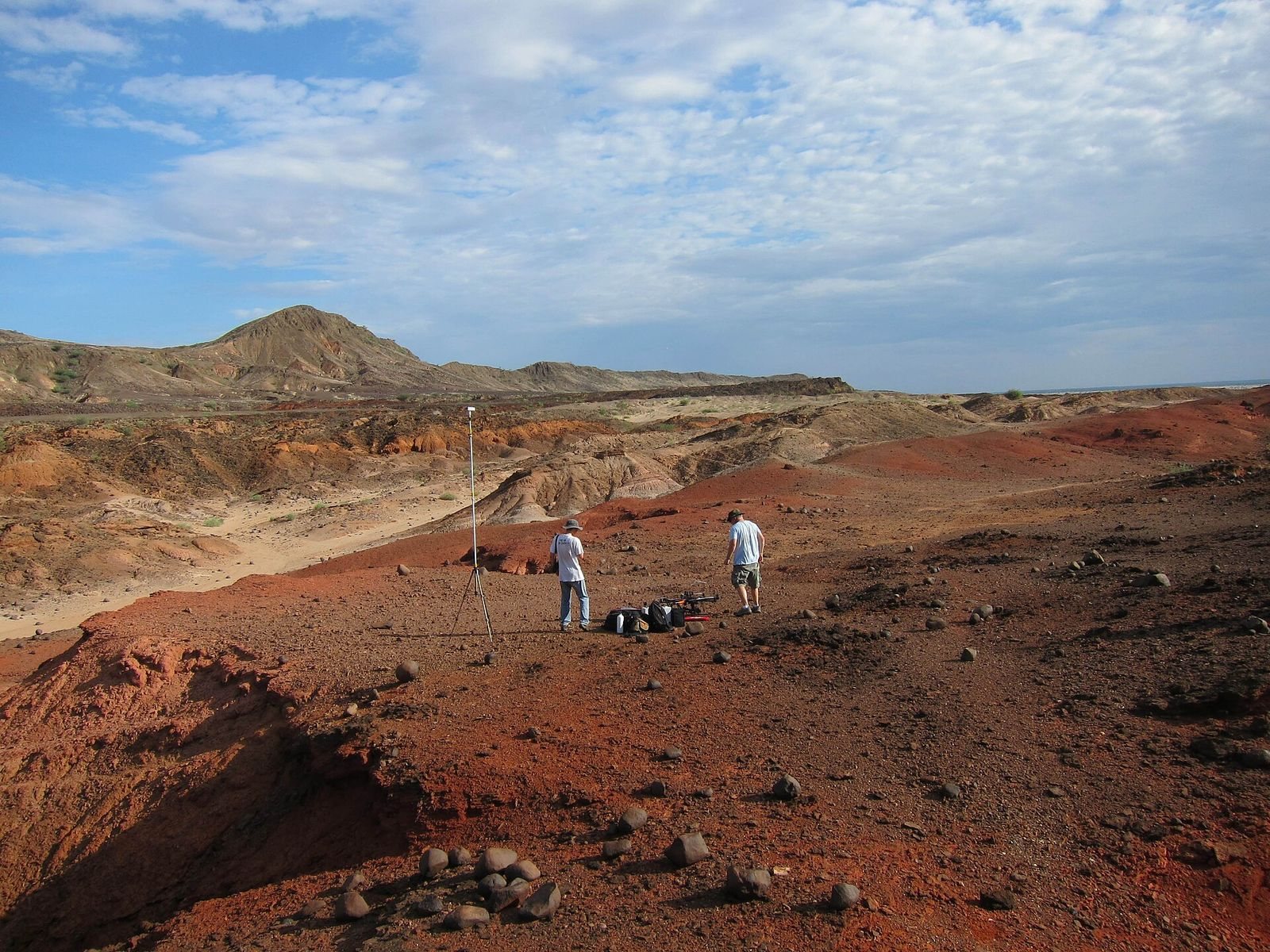
Archaeologist Elisabeth Hildebrand led excavation and study of the cemetery from 2009 to 2014. Excavation and ground-penetrating radar, a method for investigating buried features without digging, indicated that the cemetery was planned and developed over several generations.
Remains
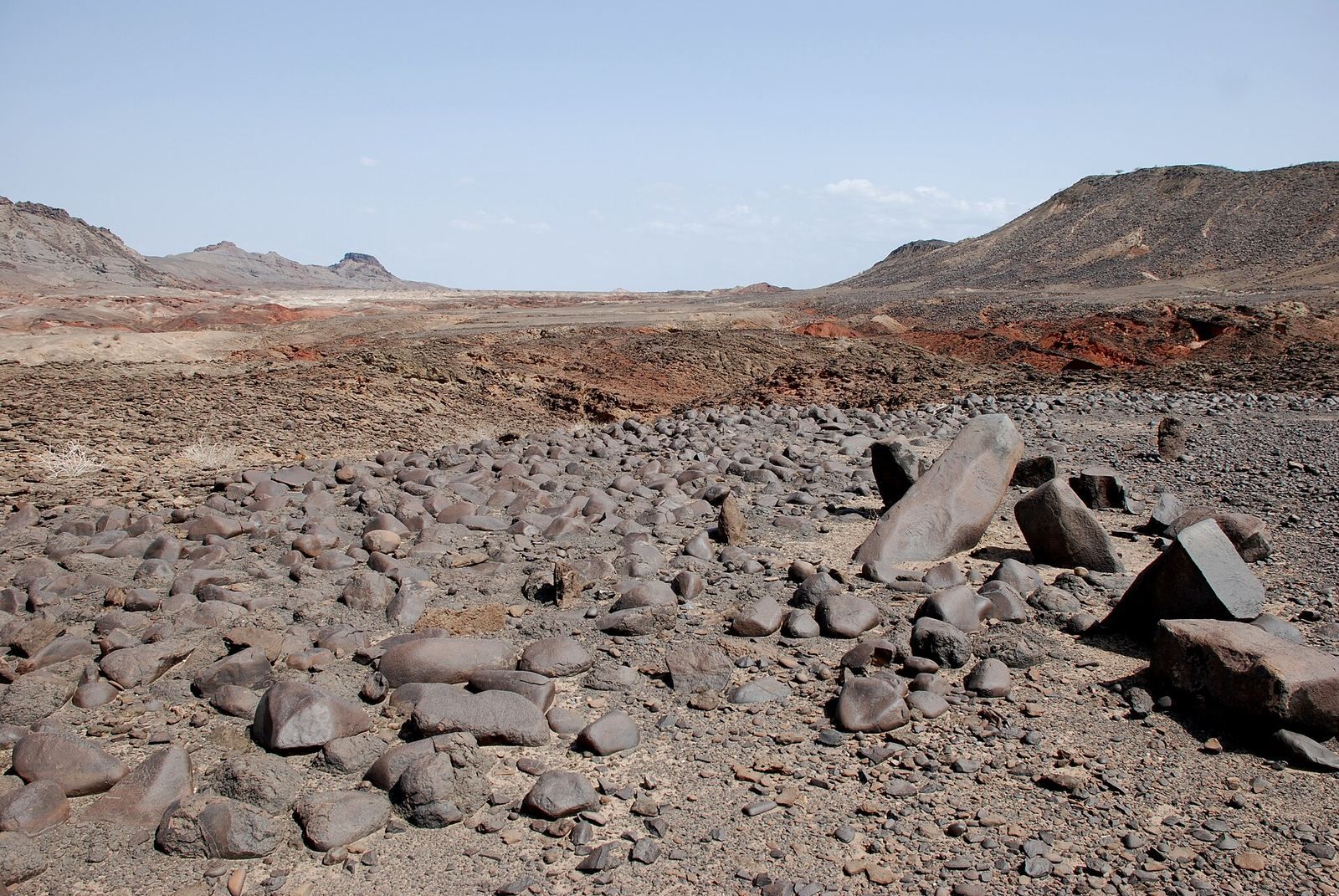
The site lies in a trough between two volcanic ridges that run north to south. The trough contains deposits dating from the Pliocene, an epoch about 5.3 to 2.6 million years ago, through the Holocene. Lothagam North is about one kilometre northwest of early Holocene beach deposits and has western and eastern sections.
Western burial platform
Platform construction
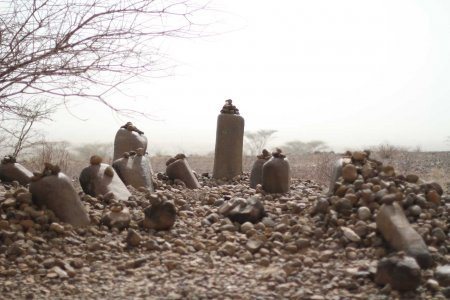
The western section is a circular platform covering about 700 square metres, supported by three pillars and enclosed by boulders. Its large burial cavity was formed by removing beach sand down to sandstone bedrock. The platform was filled with rubble and topped with basalt pebbles. Natural basalt pillars were brought to the site and placed along the platform’s eastern edge, while sandstone slabs covered many individual burials.
Burials in the cavity
The main cavity is estimated to have held between 585 and 1,053 people. Excavation of 30 burials revealed the remains of at least 44 individuals of different ages and sexes. Individual graves included smaller cavities about 0.91 metres deep, as well as pits cut into the soft sandstone at the bottom of the main cavity. Around two-thirds of the burials held bodies bent or folded into varied positions, often beneath sandstone or basalt boulders. Disordered bones suggest that some people were buried after a delay. Excavation at the cavity’s edge uncovered three skulls and dismembered body parts. The placement of bodies made efficient use of space, and the burial areas appear to have remained undisturbed after use.
Eastern burial features
Stone mounds
The eastern section contains six cairns, or stone mounds, and nine stone circles. Excavators examined one of each. The largest cairn covers 57 square metres and is bordered by large sandstone slabs.
Stone circle
One circle forms a ring of sandstone and basalt cobbles covering 16 square metres. It encloses a small pit cut into bedrock, which held remains and artifacts belonging to at least three people of different ages. The compact arrangement resembles the grouping of graves and pits in the western platform.
Personal ornaments
Nearly all excavated skeletons were accompanied by personal ornaments. These include beads made from ostrich eggshell or stone, ivory rings, pendants, earrings, and bangles. Two burials held decorated headpieces arranged with mammal teeth. Another person was buried with 12 perforated hippopotamus tusks, which may have been worn as jewelry. More than 300 brightly coloured beads came from 20 burials and represent 36 raw materials, including pink analcime, dark-green talc, purple fluorite, blue-green amazonite, and chalcedony. Some beads were made from locally available volcanic rocks. Amazonite and talc also occur elsewhere in the Turkana Basin, a distribution that suggests frequent travel to and from the cemetery.
Ceramic vessels
The pottery assemblage includes 145 rim fragments, or sherds, from 99 vessels, including one shaped like a gourd. Several vessels are complete, while 79 survive only as fragments. Most are closed-mouth bowls between 5 and 22 centimetres in diameter. Some bear grooves, incisions, patterns in the regional Nderit pottery style, or burnished ripples. Their clay contains volcanic material and quartz-rich particles, with small amounts of mica in some vessels. Firing often produced incomplete oxidation, although most fragments appear well fired.
Stone tools
Two excavation areas yielded 258 stone artifacts, mostly obsidian flakes smaller than two centimetres, known as micro-debitage. Similar material occurs at the contemporary Jarigole pillar site. Few flakes retain much of the outer surface of the original stone, suggesting that obsidian was brought from a distance and that stone cores were carefully chosen. Six cores were prepared to produce blade-shaped flakes, and one artifact was identified as a scraper.
Animal remains and other finds
Western-side burials yielded mammal-bone fragments, including teeth. Remains of mammals, sheep or goats, and fish were found beneath stone slabs in the platform. A burial pit also contained a carved stone palette, a flat object used to prepare or hold substances, shaped to resemble a cow.