Chandavaram Buddhist Site: A Satavahana-Period Monastic Complex
Site at a Glance
- Popularity
- Medium
- Country
- India
- Primary era
- Classical
- Eras represented
- Classical, Modern
- Civilizations
- Indian, Satavahana
- Site type
- Religious
- Remains
- Sanctuary
On this page13 sections
History
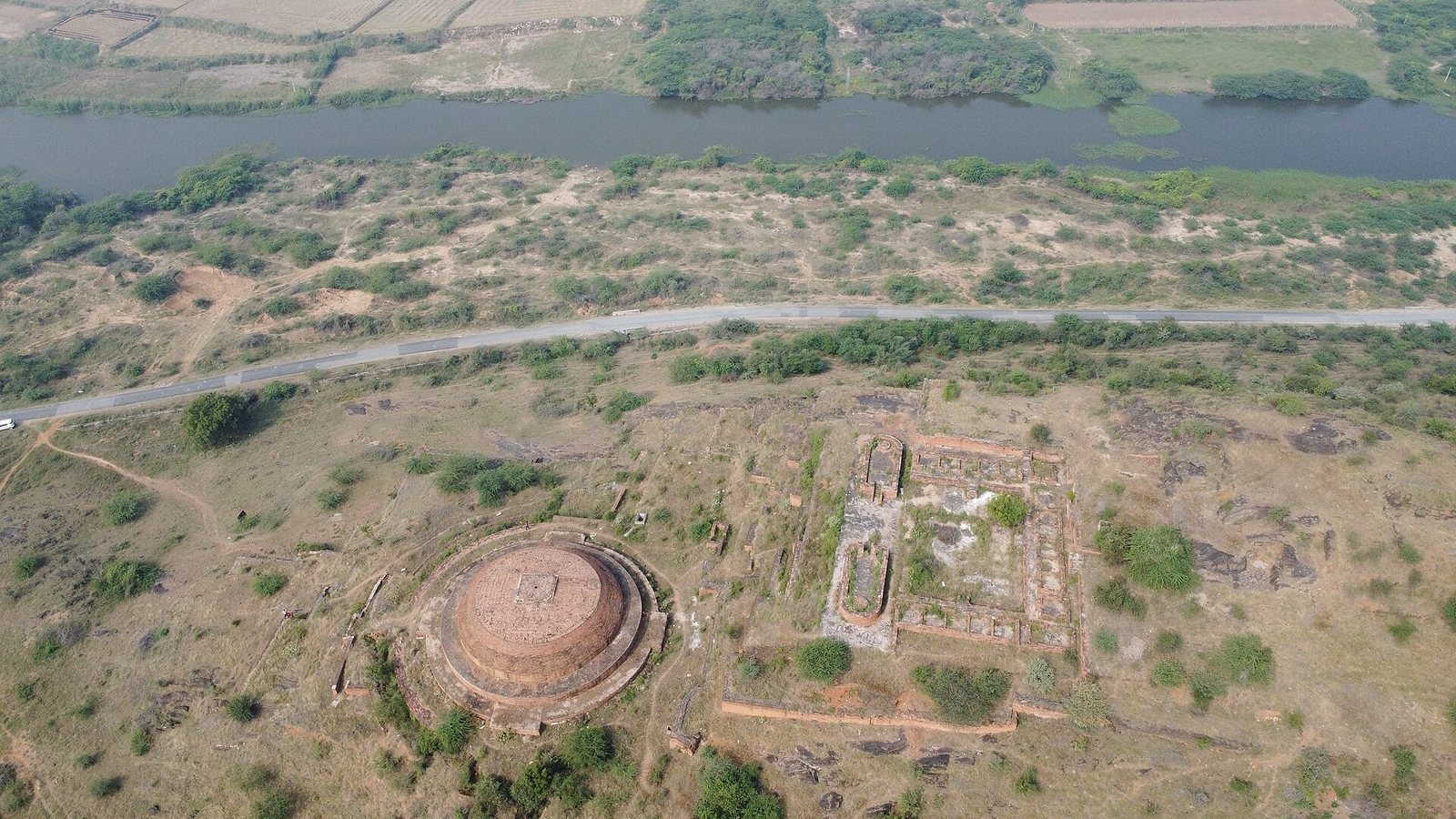
The Chandavaram Buddhist site is a Buddhist monastic complex on Singarakonda, beside the Gundlakamma River at Chandavaram village in Andhra Pradesh, India. It lies about 10 km from Donakonda. The complex took shape under the Satavahanas, an ancient ruling dynasty in the Deccan, between the 2nd century BCE and the 2nd century CE. Carbon-dated finds and sculpture in the Amaravati tradition, known for carved Buddhist narrative scenes, support this dating.
A Satavahana-period religious center
Chandavaram served as an active Buddhist center where people lived and worshipped. It is believed to have been the first Buddhist monastery built in Andhra Pradesh, and a place of rest for monks traveling between Varanasi and Kanchi. Its principal monument, the Maha Stupa, is attributed to Buddhists historically classified under the label Hinayana. This term, often considered pejorative, has been used for traditions outside Mahayana but does not describe one unified school. Chandavaram’s Maha Stupa has been regarded as second in importance only to the Sanchi Stupa.
Later reference and rediscovery
A 7th-century account by Xuanzang, a Chinese Buddhist monk and traveler in India, describes a stupa in the Chuliye region. This monument is thought to refer to Chandavaram. The region was then ruled by the Renati Cholas, a regional Chola ruling house.
Archaeologist Veluri Venkata Krishna Sastry identified the site as Buddhist in the 1960s, after reports that people were taking bricks from ancient structures and moving sculptures on Singarakonda. The site was excavated four times between 1972 and 1977, and it has since been restored.
Museum, thefts, and a proposed monument
A museum built at Chandavaram in 1980 displayed sculptures and carved panels. After thefts, display objects were moved to the Chandavaram village panchayat office for safekeeping. In the early 2000s, thieves took two nine-foot panels depicting a Bodhi tree and a chaitya, a Buddhist shrine or prayer hall. In 2001, three nine-foot pillars were stolen, including one showing the Buddha as a pillar of fire; three more ornamental pillars and a lotus medallion were also taken that March. Sixteen years after its theft, a panel purchased by a museum in Australia was returned to India.
A separate project proposed a standing Buddha statue for Chandavaram in 1985. Two hundred sculptors worked for two years to carve the 17-metre-tall, 440-tonne figure from granite. It was transported to Hyderabad in 1988 and erected in Hussain Sagar Lake in 1992.
Remains
The Maha Stupa
Structure and layout
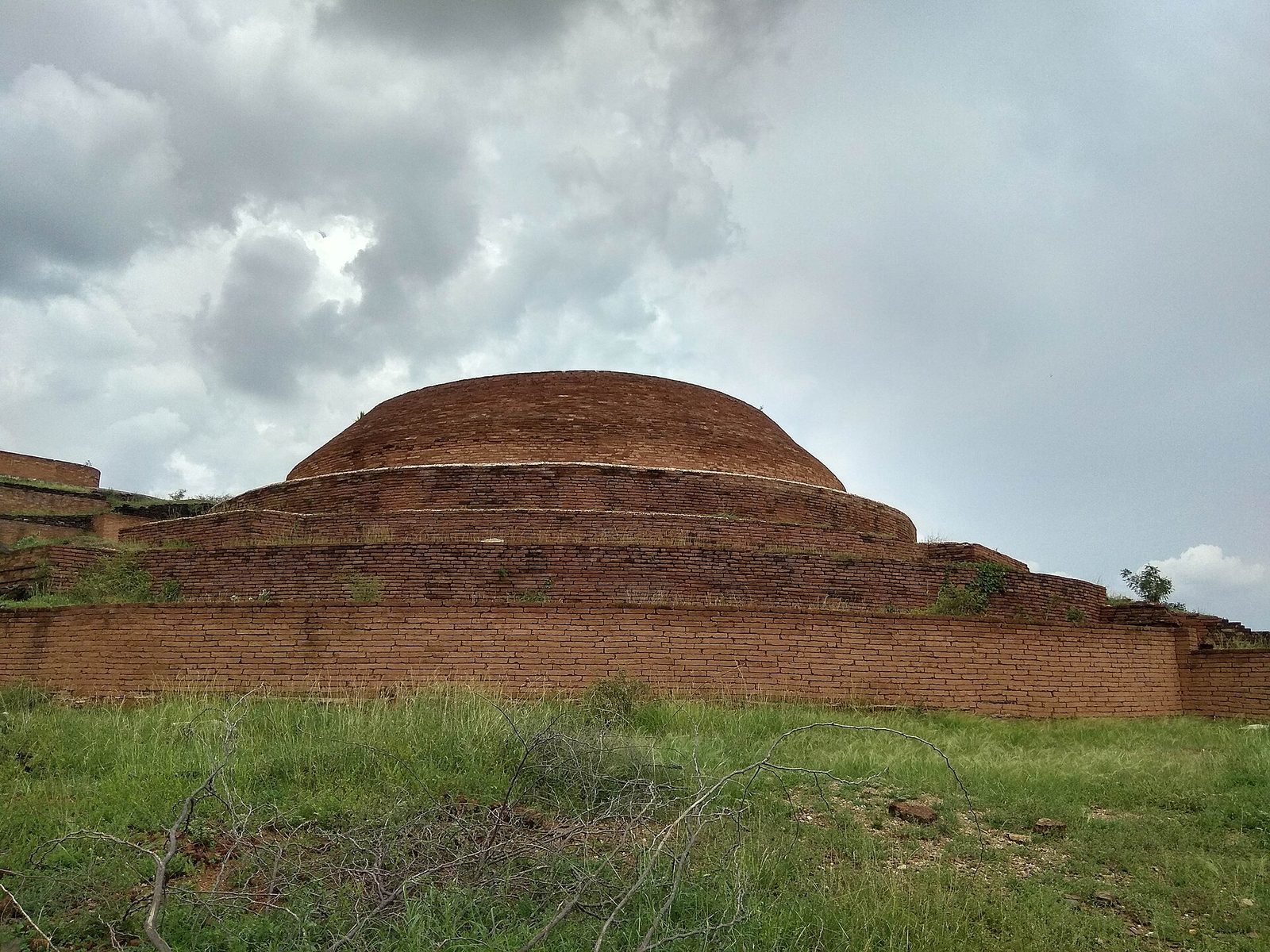
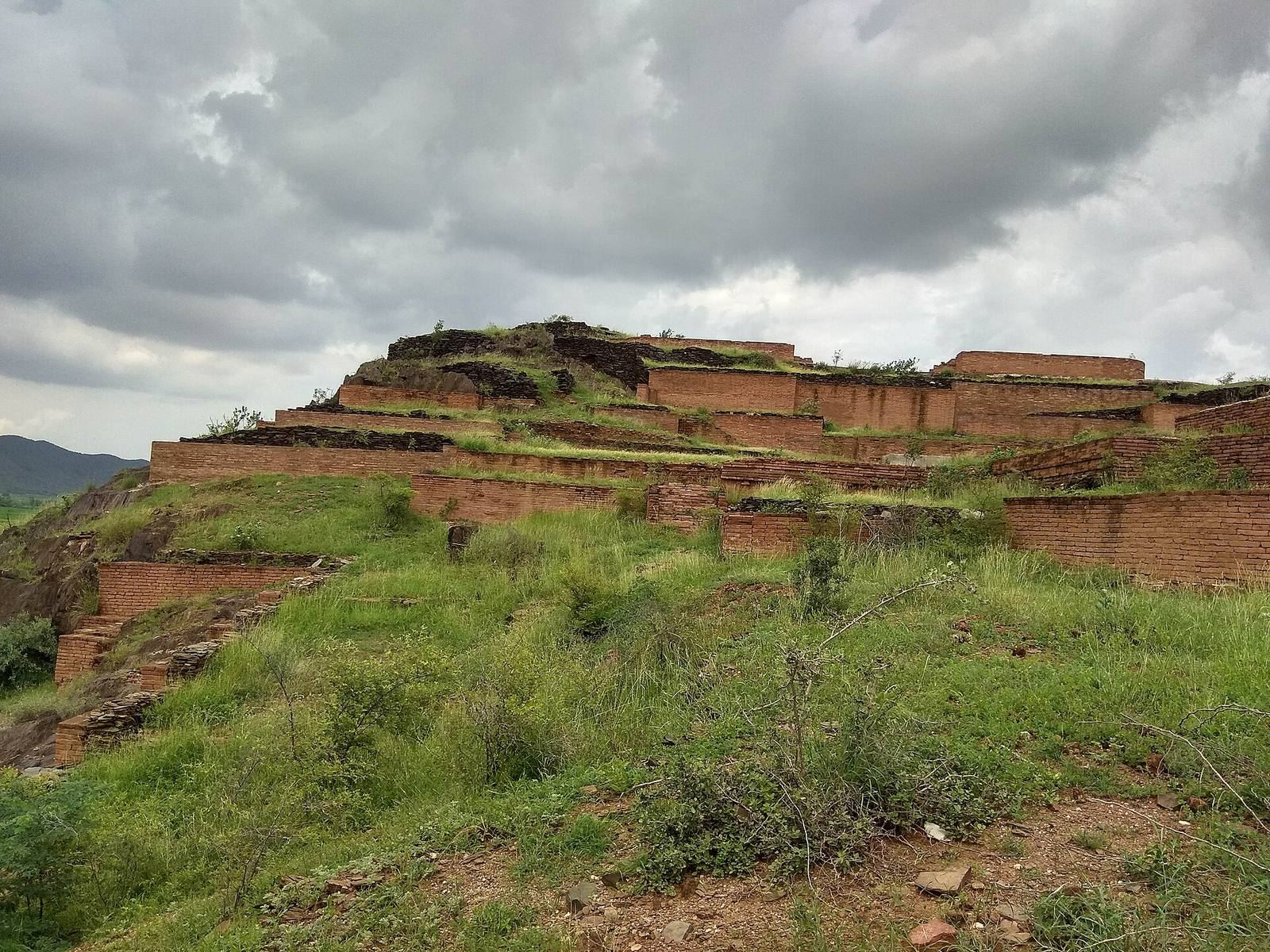
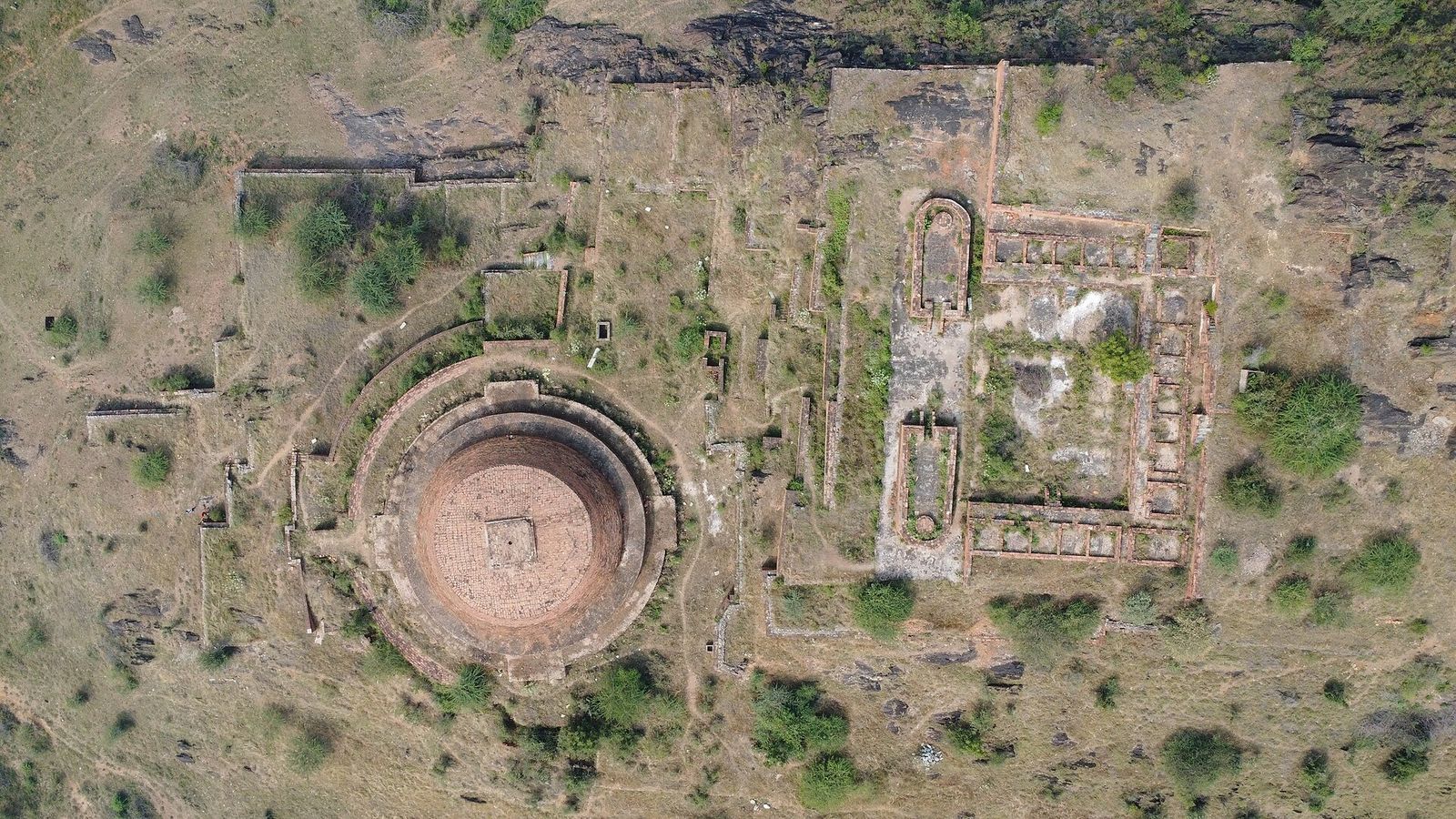
The site occupies the summit of Singarakonda, where the Maha Stupa stands on a raised platform. The monument has two tiers, with paths for worshippers to walk around it at both levels and a flight of steps leading upward. Brick and lime were used in the construction. The stupa is stated to have a radius of 148 feet; its hemispherical dome is 120 feet in circumference and 30 feet high. A small structure stood above the dome, topped by an umbrella-shaped finial that is now ruined. Platforms for ayaka pillars, pillars associated with certain Buddhist stupas, were built on all four sides of the base.
Carved reliefs
More than 30 limestone panels, each about 10 feet high and 3 feet wide, were found around the dome. Their reliefs include winged animals, lions, full-pot designs, and couples worshipping the Buddha represented as a pillar of fire. Other carvings show the Buddha’s footprints, Bodhi trees, stupas, and Dharma wheels, which represent his teaching. Scenes depict his enlightenment, the turning of the Dharma wheel, and his Mahaparinirvana, or final passing, alongside Jataka tales about his previous lives. The panels were positioned for people to view while walking around the stupa.
Shrine within the stupa
A small chaitya shrine within the Maha Stupa measures 1.6 metres high and 60 centimetres wide.
Other structures and finds
Smaller stupas and monastic buildings
Excavations uncovered 15 regular-sized stupas and about 100 smaller ones in addition to the Maha Stupa. Other features include several viharas, or Buddhist monasteries, a stone pavilion, and smaller stupas made as devotional offerings.
Slabs, inscriptions, and coins
More than two dozen decorated Buddhist slabs bearing designs and inscriptions were found. The site also has inscriptions in Brahmi, an ancient Indian script. A small pot contained a hoard of 1,600 coins bearing a horse design; the coins are estimated to date to the 2nd–3rd centuries BCE. Satavahana coins from the site indicate its prominence during the 1st–2nd centuries CE.
Sculptural collections
A collection of sculptures from Chandavaram is held at the Telangana State Archaeology Museum in Hyderabad. Objects once displayed in the Chandavaram museum included Dharma wheels and panels depicting stupas, Bodhi trees, and Jataka stories.