Liikistö: A Medieval Trading Place, Church Site, and Cemetery in Finland
Site at a Glance
- Rating
- 4
- Popularity
- Very Low
- Country
- Finland
- Primary era
- Medieval
- Eras represented
- Medieval
- Civilizations
- Swedish
- Site type
- Settlement
- Remains
- Town
On this page13 sections
History
Early settlement and church
Liikistö was an early medieval trading place, church site, and cemetery at Vanhakylä in Ulvila, Finland. Archaeological evidence places the beginning of cemetery use in the first half of the thirteenth century. Finds also indicate that merchants of German descent had come from Gotland and established a base there by the thirteenth century at the latest.
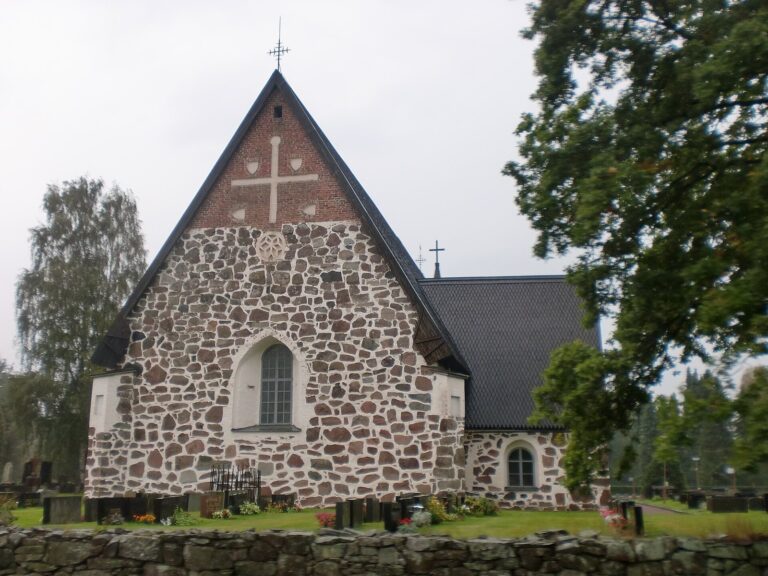
Liikistö is thought to have been the site of Ulvila’s first church. An inventory of documents lists a 1311 indulgence letter from Bishop Ragvald II concerning church construction there. A 1332 document from Bishop Pentti refers to a stone church intended for the site, while a 1347 certificate from Bishop Hemming concerns the consecration of Ulvila’s cemetery. A bishop was a senior Christian cleric with authority over a diocese. The original records and letters were destroyed in the 1698 fire of Pori, but the inventory survived.
The trading place Ragvalda, named on a world map completed in 1154 by the Arab geographer and cartographer al-Idrisi, has been proposed as a possible reference to Liikistö. The connection remains unconfirmed. Researcher Tiina Jäkärlä has also suggested that Liikistö may have contained the hall of the Guild of Saint Gertrude. A guild was an association whose members shared commercial, religious, or other interests.
Shift to medieval Ulvila and later research
During the fourteenth century, activity gradually moved about a kilometre west to the medieval town of Ulvila, probably as the river became shallower. Coins indicate that some activity continued at Liikistö into the late fifteenth century.
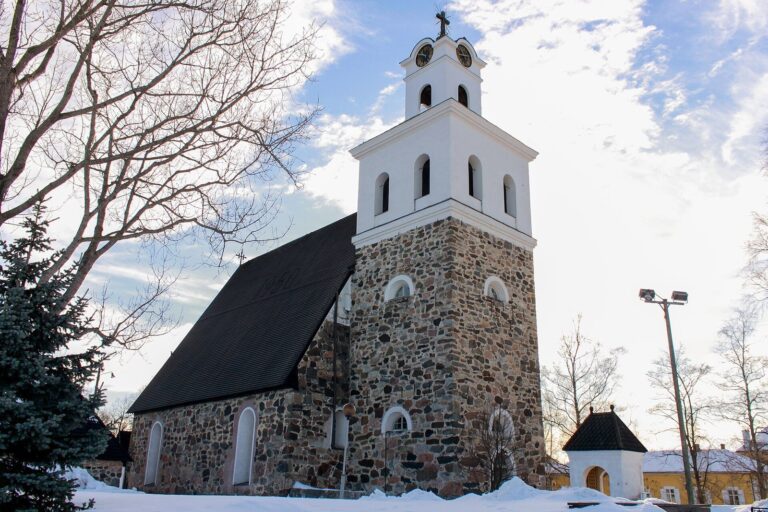
Archaeological investigations took place in the 1930s and again in the 2000s. Coins recovered during Ilkka Kronqvist’s early excavations were described in a report published in 1938, but the coins were lost during the Second World War. Liikistö forms part of the surroundings of Ulvila’s church, an area designated by the Finnish Heritage Agency as one of Finland’s nationally significant built cultural environments.
Remains
Site layout and buildings
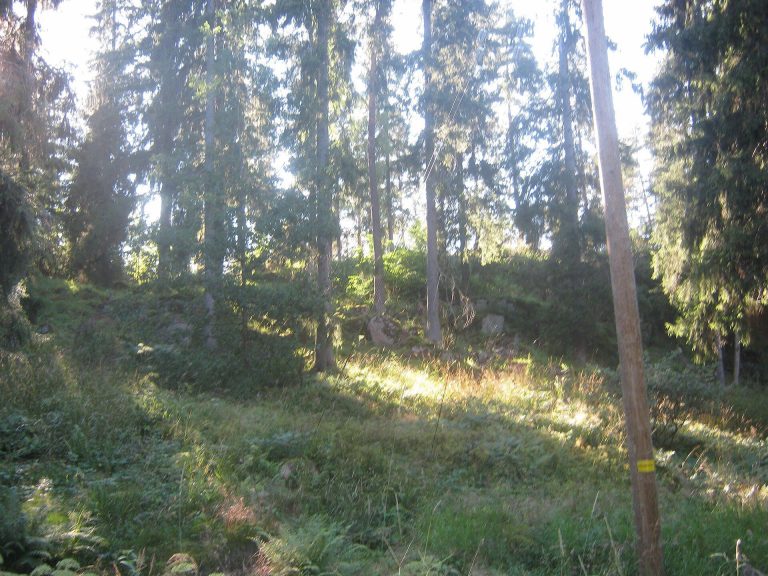
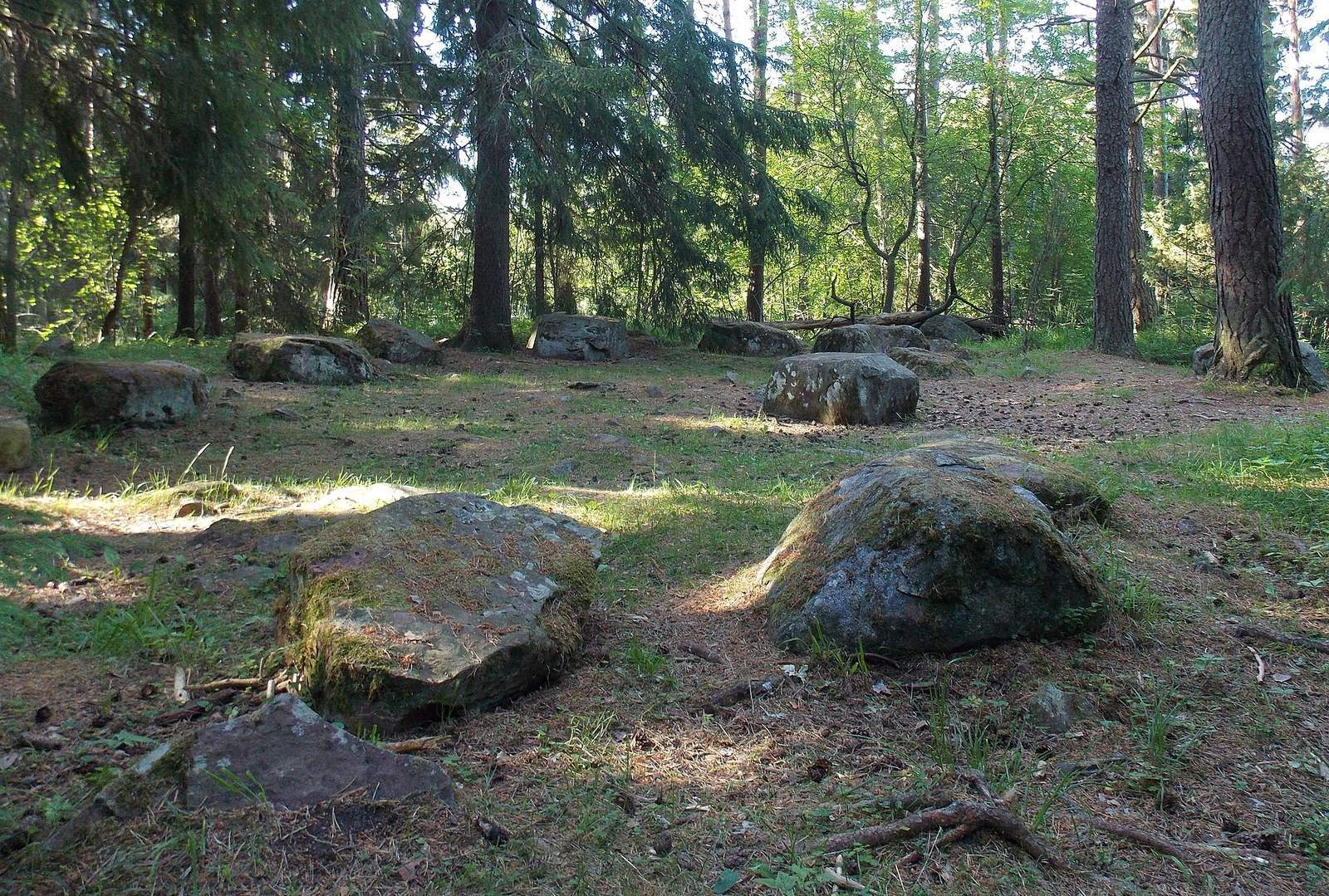
Liikistö occupies a wooded mound between road 2440, which leads toward Kokemäki, and the river. Former river channels, now silted up, border the mound to the south and east. Archaeological finds point to a site with riverside defenses, dwellings, and a chapel or church.
Riverside defenses
Finds indicate that defensive works faced the river. Their form and construction are not further specified.
Burned wall and earlier building
Excavations in 2002–2003 uncovered remains of a burned wooden wall line. Radiocarbon dating, a method that estimates age from carbon-14 decay, places it in the fourteenth century. Colored glass in the fill of a grave beneath the wall suggests that a building with glass windows stood there earlier. A first chapel may have been built at the site as early as the thirteenth century.
L-shaped stonework
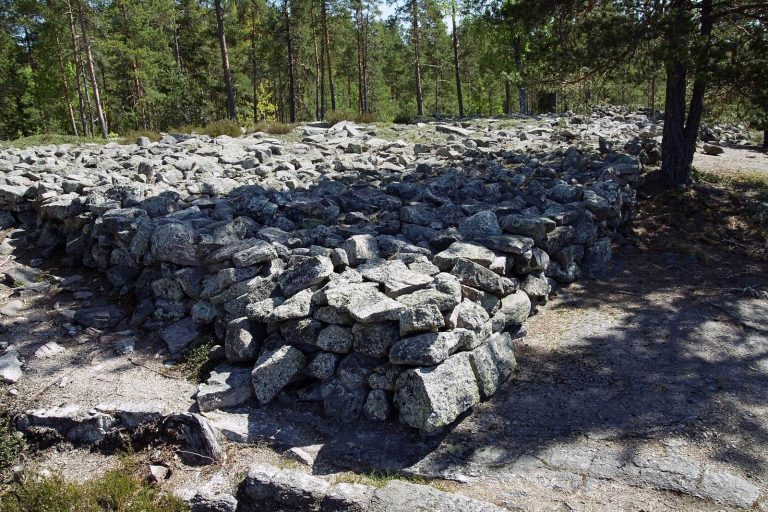
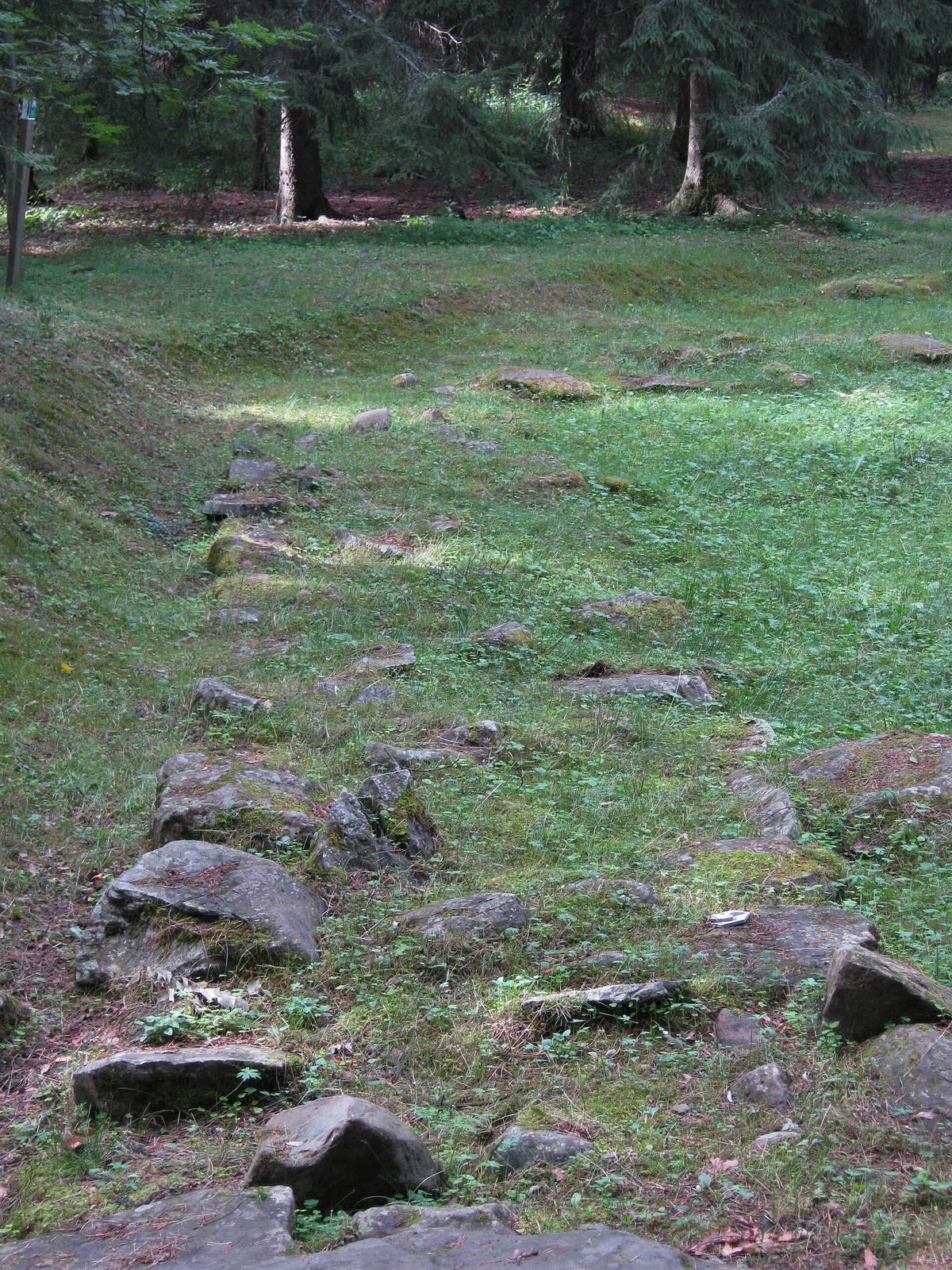
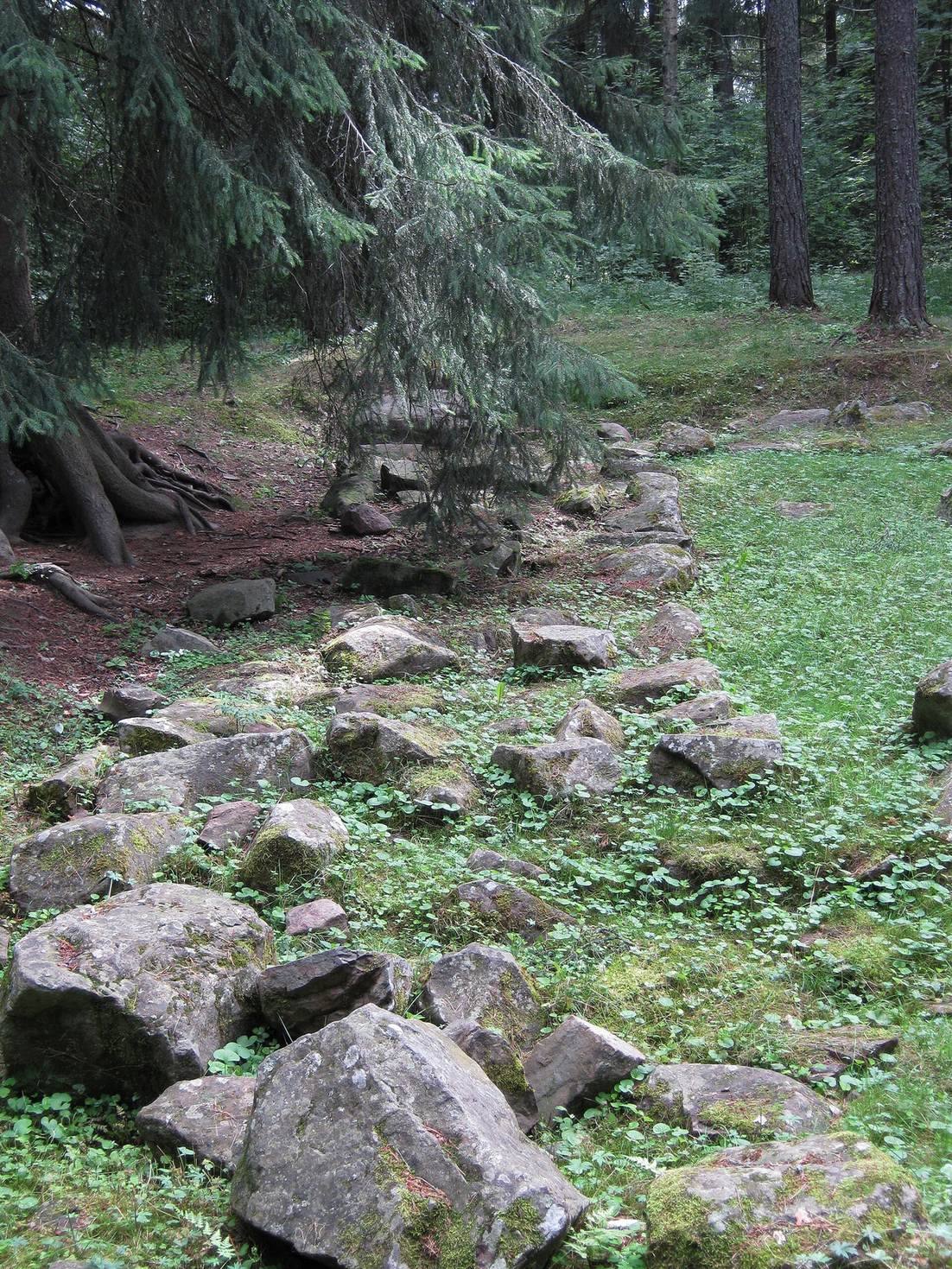
Excavations in the 1930s exposed L-shaped stonework beneath earth banks, and the feature remains visible. Kronqvist interpreted it as part of a stone church whose construction he believed had begun in 1311. It is now dated to the fifteenth century and may not have served a religious purpose.
Court stones and memorials
The site also contains court stones of uncertain date. A large cross and a stone slab were set up there as memorials in 1982.
Cemetery and burial remains
Graves
About 300 graves have been identified, and excavations recovered the remains of 298 people. Dating from the graves and surrounding soil indicates a broad period consistent with coins from the thirteenth and fourteenth centuries. Two graves contained so-called corpse crosses, described as outside Finnish burial custom.
Grave markers
Excavations in the 1930s revealed markers formed from stone arrangements and shaped slabs. One upright slab was likened to the Scythe Handle of Kaleva’s Son, a giant figure in Finnish folklore, at Untamala churchyard.
Gravestones at Ulvila’s church
Limestone gravestones dating to the thirteenth and fourteenth centuries, thought to have come from Liikistö, are kept in the entrance porch of Ulvila’s St Olaf’s Church. The names carved on them point to connections with Germany and Gotland.