Le Crest Castle and Outbuildings: A Fortified Estate in Jussy, Switzerland
Site at a Glance
- Rating
- 5
- Popularity
- Very Low
- Country
- Switzerland
- Primary era
- Medieval
- External website
- Open
- Eras represented
- Medieval, Modern
- Civilizations
- Holy Roman Empire, Swiss
- Site type
- Military
- Remains
- Castle
On this page8 sections
History
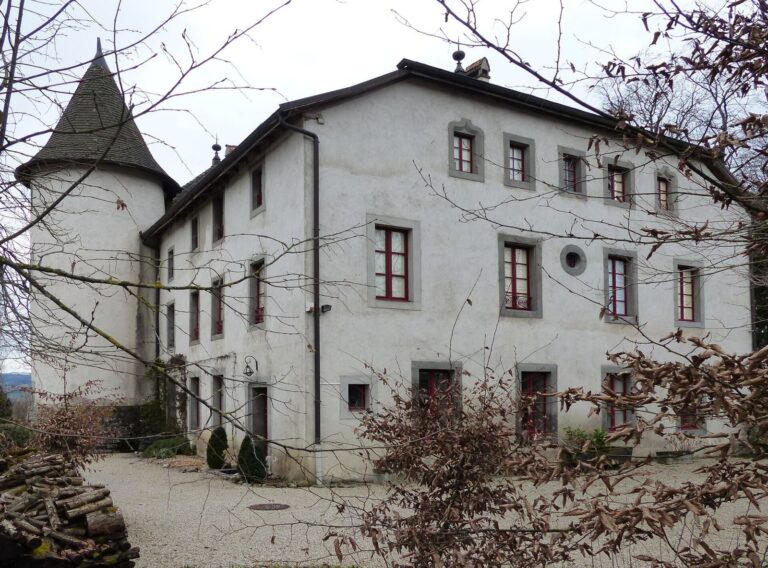
Le Crest Castle and its outbuildings form a fortified estate in Jussy, Switzerland. The first castle was built around 1220 on land belonging to the Bishop of Geneva. The site later became contested amid changes in Geneva’s authority and its conflict with Savoy.
Episcopal lordship
During the Middle Ages, Jussy was a vassal town of the bishop, and the castle housed one of his vassals. The Compeys, Compesières, and Rovorée families successively held or administered the castle and its domain under the bishop’s jurisdiction. The original castle was a fortified house, protected by ditches, a drawbridge, and crenellated walls pierced with narrow openings for defenders.
Reformation and reconstruction
The Protestant Reformation, a sixteenth-century movement that led to the establishment of Protestant churches, shifted authority over the castle from the bishop to the Republic of Geneva in 1536. The Republic was an independent city-state, and the transfer worsened relations with Catholic Savoy, a duchy in the western Alps. Michel de Blonay, then lord of the castle, refused to pay homage to Geneva or abandon Catholicism for Calvinism, a branch of Reformed Protestantism. His opposition led to prolonged legal proceedings and attempts at resistance.
During the war between Geneva and Savoy, Genevan troops seized and destroyed the castle in 1590 to prevent Savoyard forces from taking it. The 1603 Treaty of St. Julien recognized Geneva as a republic, but the castle remained in ruins until plans to rebuild it took shape. Théodore Agrippa d’Aubigné, a French Huguenot refugee, meaning a French Protestant, acquired the ruins and obtained permission to rebuild. He had been hired to direct fortification work in Geneva, Bern, and Basel. Geneva’s leaders approved a manor house for protection against thieves and murderers, but d’Aubigné built a fortified stronghold, claiming its defenses would guard against papal armies. He died in 1630, and his widow, Renée Burlamaqui, sold the property to Jacques Micheli in 1637.
The Micheli family and later estate
Jacques Micheli came from Lucca in Tuscany and was descended from Domenico Michele, elected doge, the chief magistrate of Venice, in 1117. Six members of the Micheli family held the lordship until the Revolution, and family members also held important political positions in Geneva. Jacques-Barthélemi Micheli du Crest (1690–1766), a politician and inventor, became a declared enemy of Geneva’s state. He was exiled and sentenced to death in his absence, while his descendants retained rights to the castle.
In 1995 the castle and the family’s property were incorporated into the Micheli-du-Crest Foundation, which has cared for the castle since 2005. Le Crest is listed in Switzerland as cultural property of national importance.
Remains
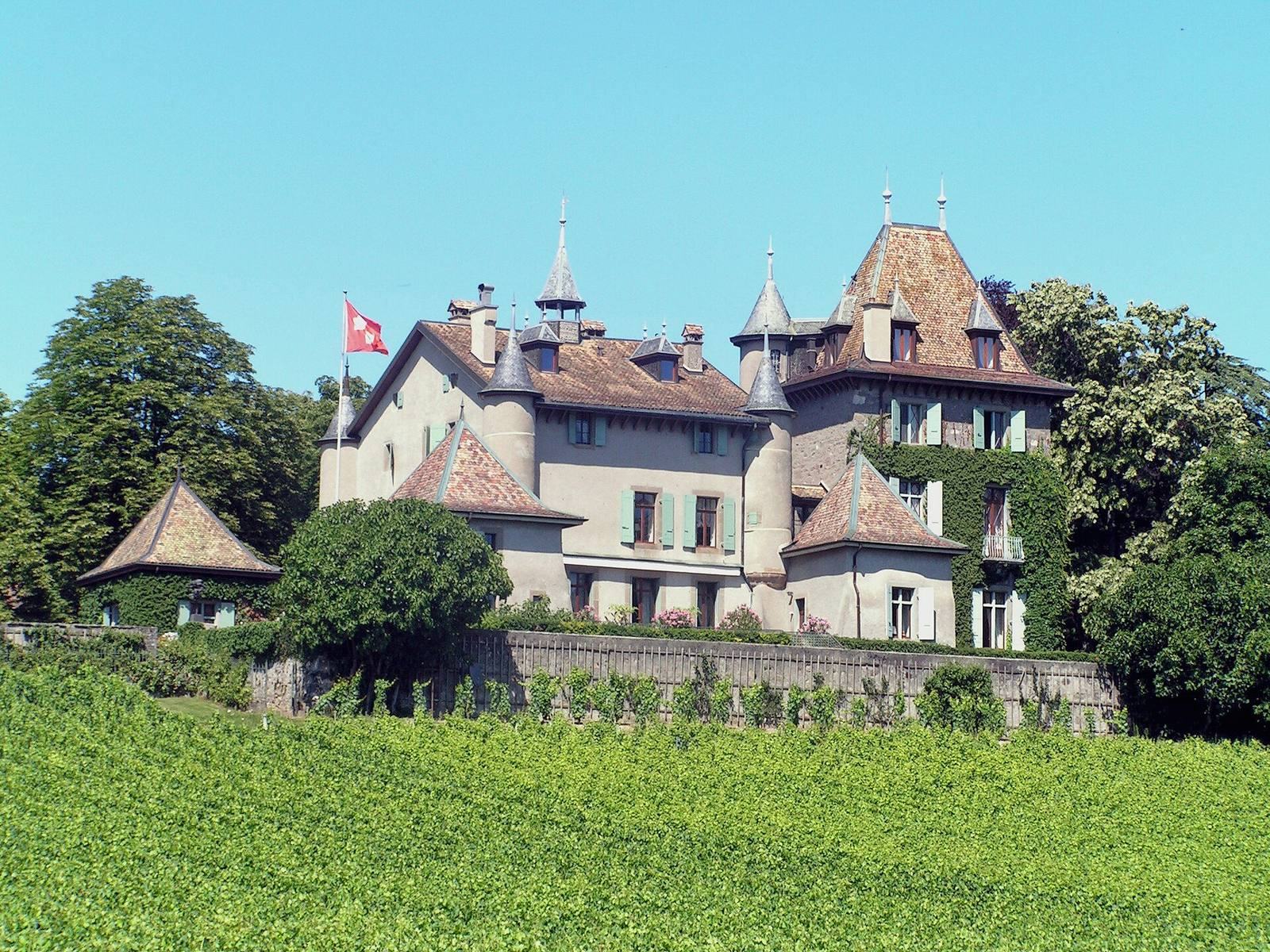
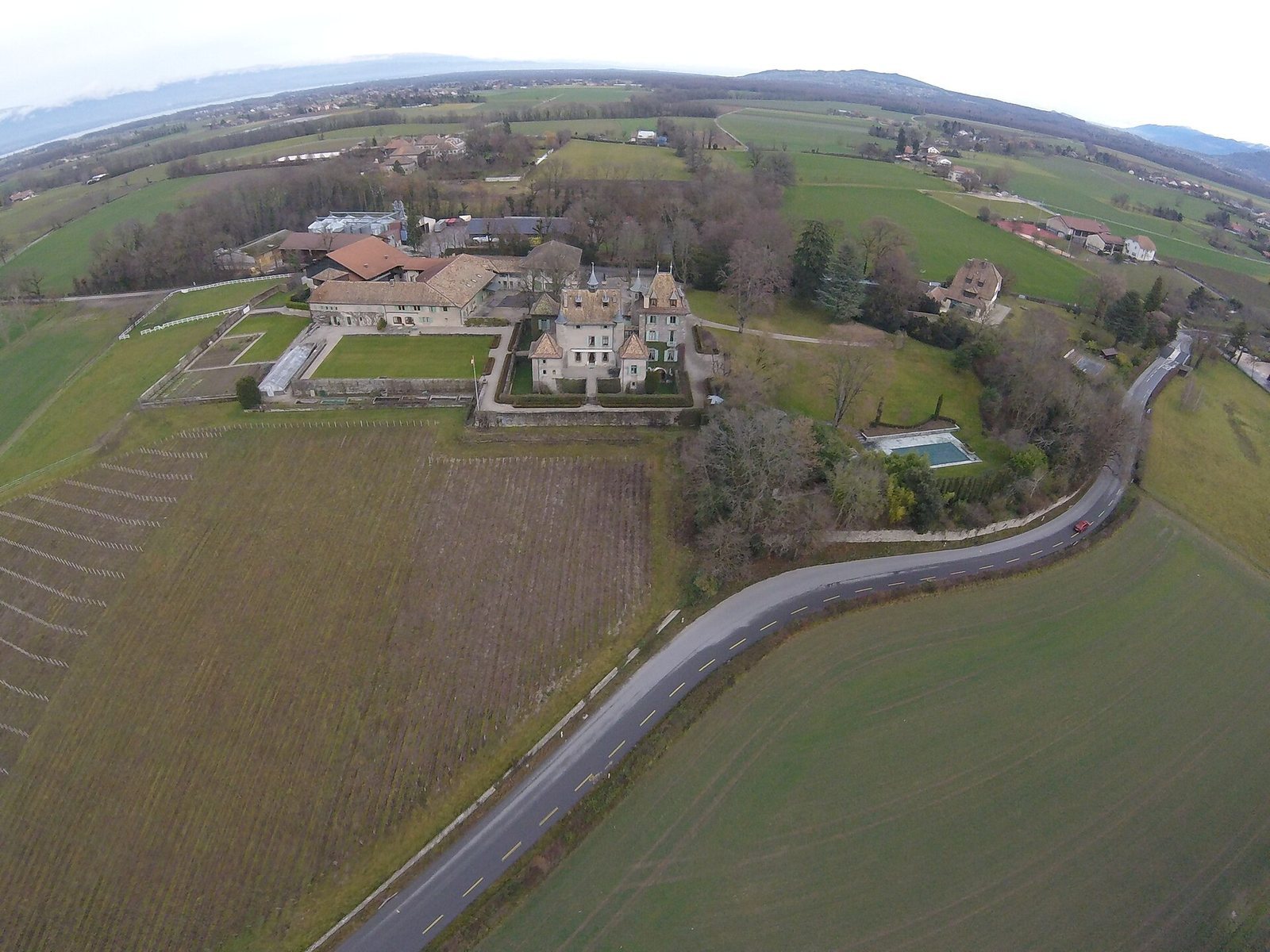
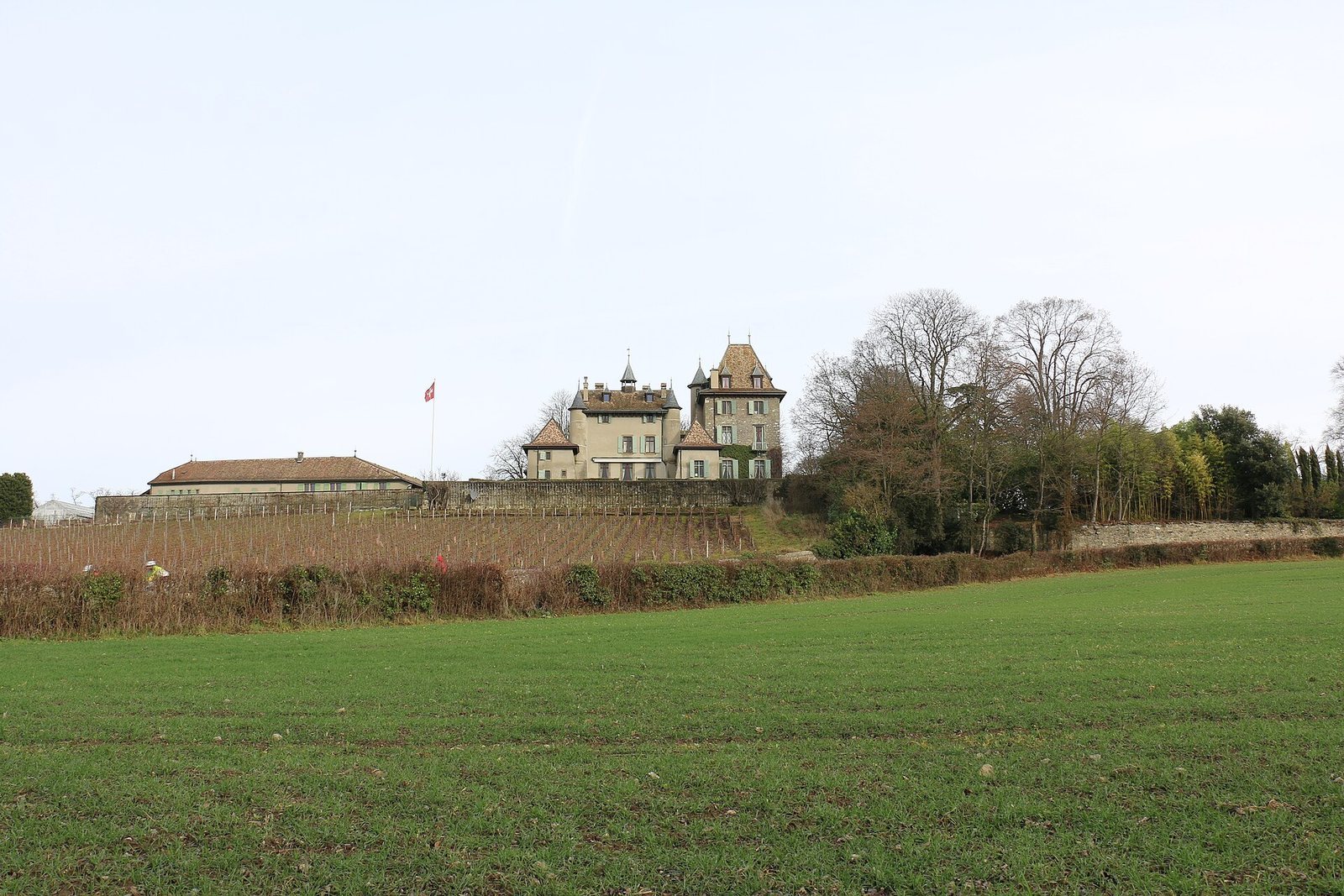
The castle stands among vineyards in Jussy, within an estate that also includes agricultural land and associated farm buildings. The property contains 8.5 hectares of vineyard and 250 hectares of agricultural land. It is the only wine-producing castle estate on the left bank of Lake Geneva within the Canton of Geneva.
Principal buildings
The castle
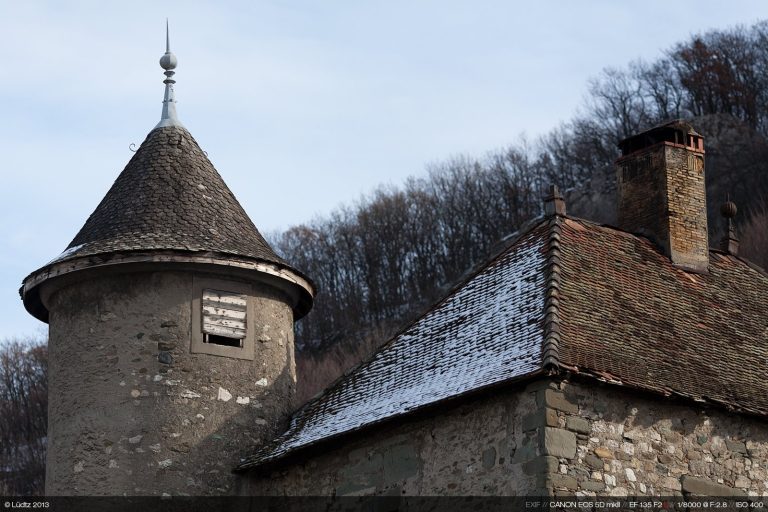
The present castle dates to 1621. Its defenses include turrets, loopholes, narrow openings in the walls for watching or firing, a drawbridge, and a deep moat. On the east side, a square keep, the castle’s principal fortified tower, was added in 1880 by botanist Marc Micheli, who cultivated rare plants on the estate.
Barns and stables
A fire ravaged the barns and stables in 1989. Yves Micheli rebuilt these agricultural buildings in 1991.