Kutahya Castle: A Byzantine Fortress and Ottoman Garrison
Site at a Glance
- Rating
- 4.4
- Popularity
- Medium
- Country
- Turkey
- Primary era
- Early Modern
- Eras represented
- Medieval, Early Modern
- Civilizations
- Byzantine, Germiyanid, Ottoman
- Site type
- Military
- Remains
- Castle
On this page10 sections
History
Kutahya Castle is a Byzantine fortress in Kütahya, Türkiye, with construction dated to 1483. Built on a high, steep hill overlooking the city, it was strengthened with towers and two lines of walls. The Byzantine Empire was the eastern Roman imperial state centered on Constantinople, and its rulers controlled parts of Anatolia before the region passed to later Turkish states.
Ottoman garrison and administration
During the Ottoman period, the castle was placed under a garrison of 119 timarlı fortress soldiers. A timar was an assignment of land revenue granted in return for service. The soldiers were commanded and administered by a dizdar, the officer responsible for a fortress. The garrison also included artillerymen, sappers, and armorers, while other officials served as steward, chief artilleryman, chief armorer, prison warden, and gatekeeper.
The dizdar received an imperial appointment, generally after service at the palace and eligibility for retirement. His benefits included a military fief, hereditary lands known as ocaklık, and a daily payment from Kütahya’s jizya revenues. Jizya was a tax levied by Islamic states on certain non-Muslim subjects. A timar valued at 7,600 akçe, an Ottoman monetary unit, and drawn from villages including Karaağaç in the Altıntaş district belonged to the office of the castle dizdar.
Some fortress guards were sent on campaign when prolonged wars created exceptional military needs, while the rest remained to defend the castle. During the sixteen-year war that began under Sultan Mehmed IV, shortages encouraged the dispatch of castle troops to the front. At the beginning of 1698, an order replaced this arrangement with a payment system. Each soldier had to provide a levend, an irregular or auxiliary soldier recruited for military service, or pay thirty kuruş. The payment was later reduced to ten kuruş.
A decree of 1804 attached the castle troops to the Üsküdar Corps, also called Selimiye, within the New Order army. The New Order was Sultan Selim III’s late-eighteenth-century military reform program. The governor of Anatolia inspected the fortress at least annually, recording its guards, prisoners, cannon, ammunition, and other equipment and holding officials responsible when necessary.
Prison and public authority
The castle contained a prison for offenders sent there by imperial order from Kütahya, nearby districts, and other places. Rebels were strangled, and a cannon was fired from the fortress as a public warning. On the order of Alaaddin Pasha, governor of Anatolia, the son and brother of Nasuhzade Nasuh, the Gediz voyvoda who had caused the state considerable difficulty, were imprisoned there under the guard of fifty soldiers.
The fortress also became involved in a dispute over the supply of butchers’ meat between its inhabitants and residents of the lower city. Butchers had previously begun selling meat inside the castle, and their liver was said to run out before they reached the lower city. An imperial decree eventually settled the conflict.
Defenses and military equipment
The castle had two ammunition magazines and two cannon emplacements. In 1817, its artillery included seventeen cannon, among them howitzers and mortars. Two war cannon, placed in the southeast and northeast, were fired during Ramadan.
A lower fortress, called Aşağı Hisar, was added during the reign of Sultan Mehmed II. Its purpose was to bring the Ilıpınar spring within the defenses, preventing an enemy from taking the water source during a siege and depriving the inhabitants of water. Kutahya Castle now survives only in part.
Remains
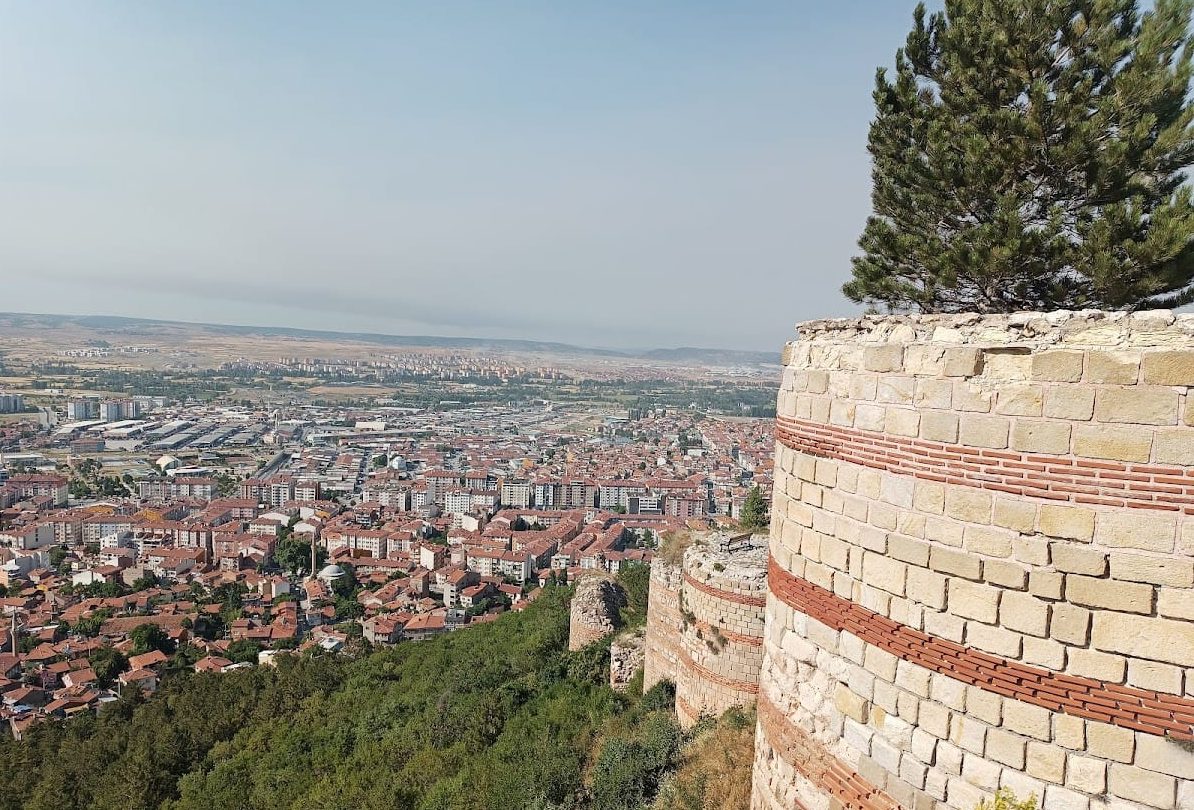
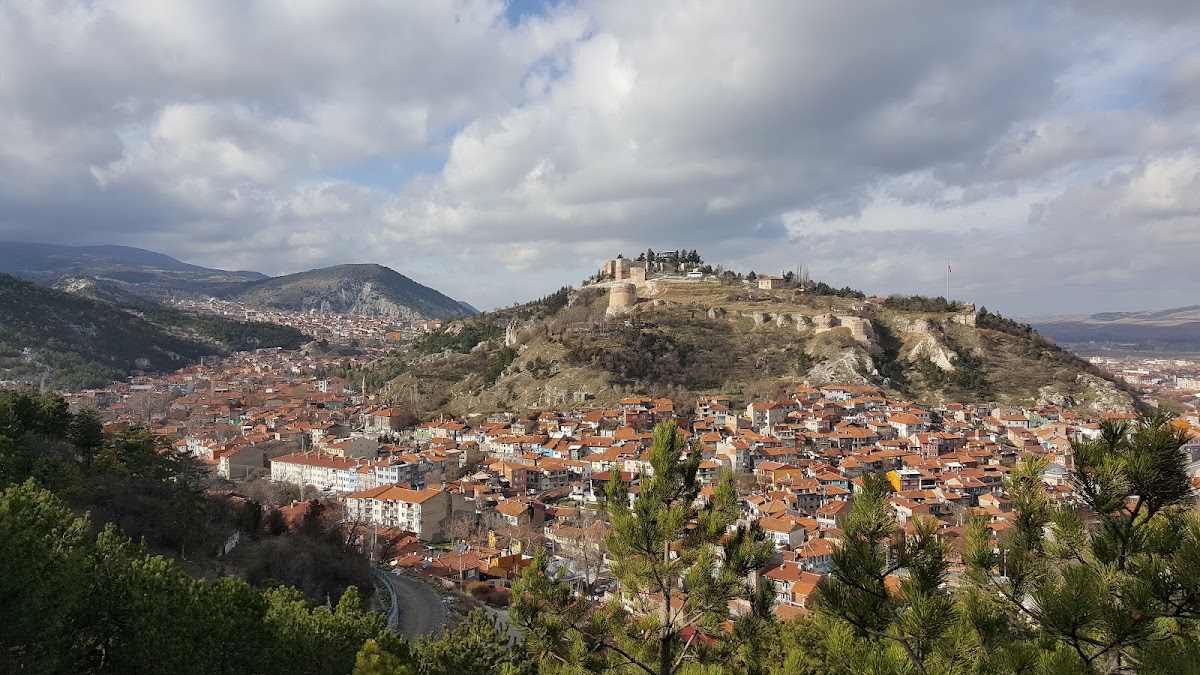
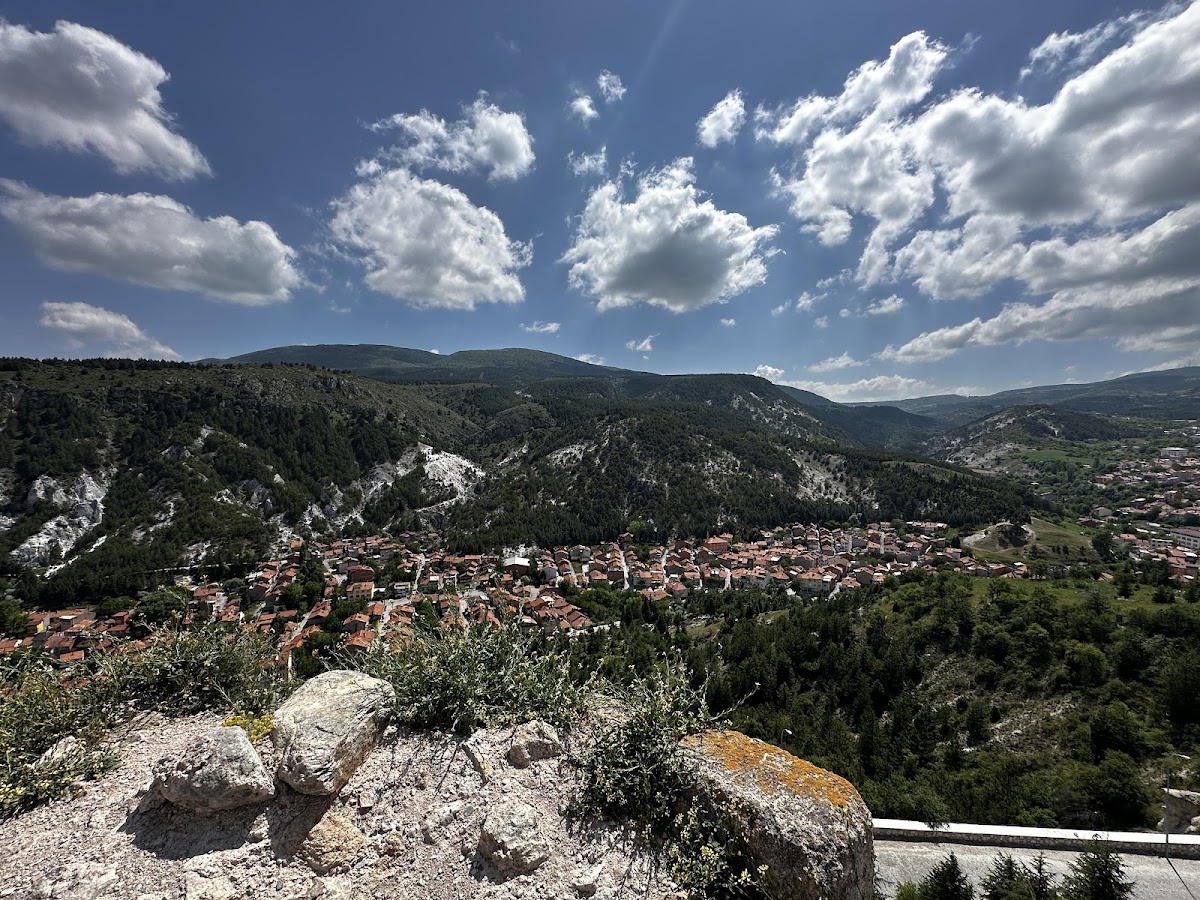
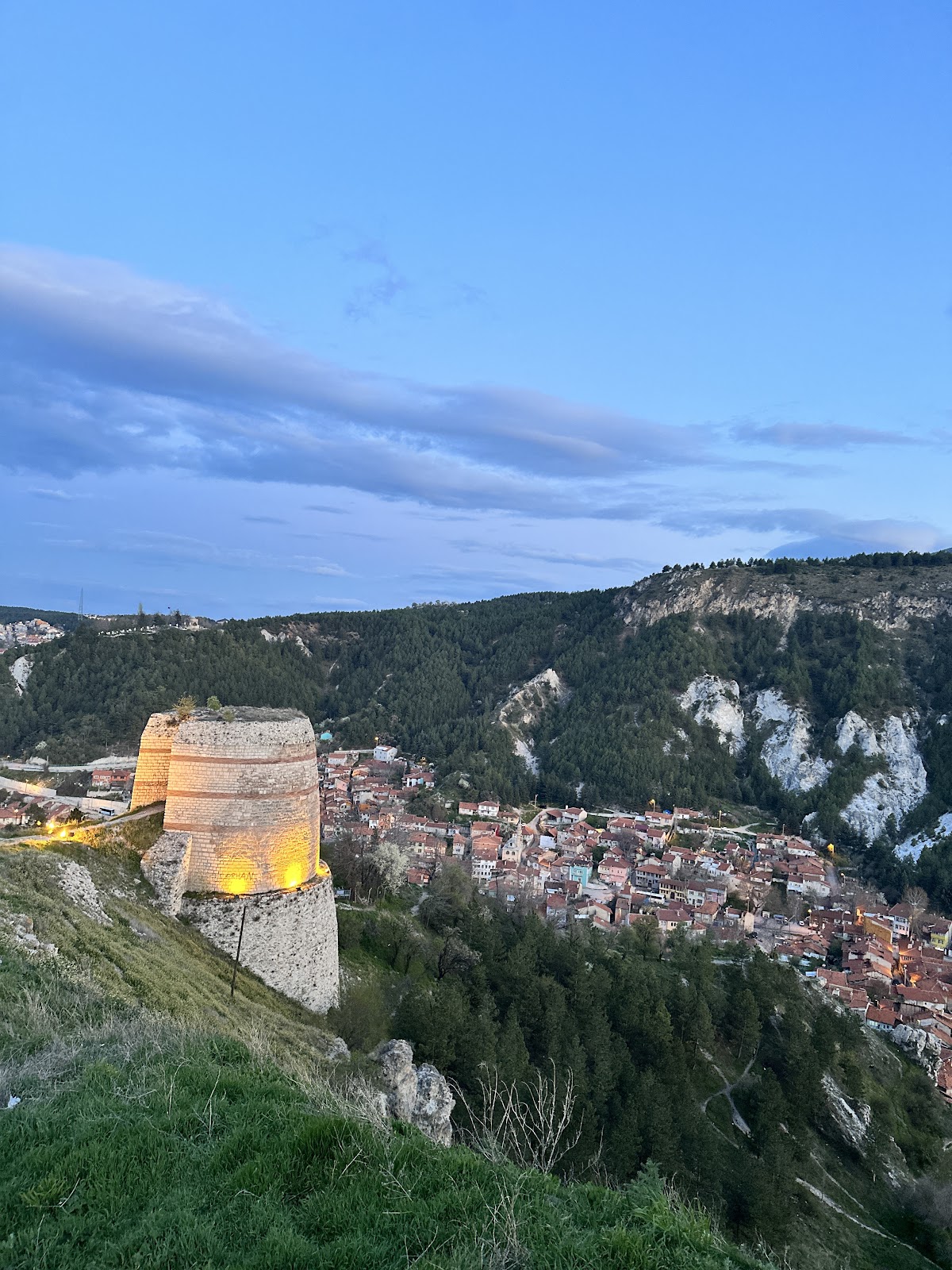
The surviving castle occupies a high, steep hill of reddish and blue sheer rock. It formed a five-sided fortress with an approximately 3,000-metre perimeter. Cliffs lay beneath the walls on all four sides, and the main fortress relied on this natural drop rather than a moat. Ashlar masonry, made from carefully cut blocks, formed the construction system. Twelve towers and two lines of walls strengthened the enclosure.
Upper fortress
The upper fortress was organized around three gates and the separate inner castle on its western side. Descending routes connected the principal levels, while a guardroom before the eastern entrance allowed the city to be viewed from the approach to the gate.
Gates and entrances
The east-facing gate descended toward the lower bazaar and had a three-layer iron gate. Two white-marble lion sculptures stood outside it, one on each side. A second entrance on the southern side opened toward Sultanbağı. The third gate, also facing east, led to the lower fortress.
Inner castle
The inner castle was a separate square fortification on the western side of Kutahya Castle, with a circuit of approximately 1,000 paces. Its western side had a small gate whose wooden leaves were covered with buffalo hide instead of iron. Within the enclosure were two water cisterns, a mosque, residences for the dizdar, imam, muezzin, and castle steward, two grain stores, and eight houses.
Lower fortress
The lower fortress stood at a lower elevation and had a ditch about 75 metres long. Around twenty houses and a small mosque occupied the enclosure. Several routes descended from it toward the upper castle, and its towers stood very close together, approximately two fathoms apart.
Religious structure and fountain
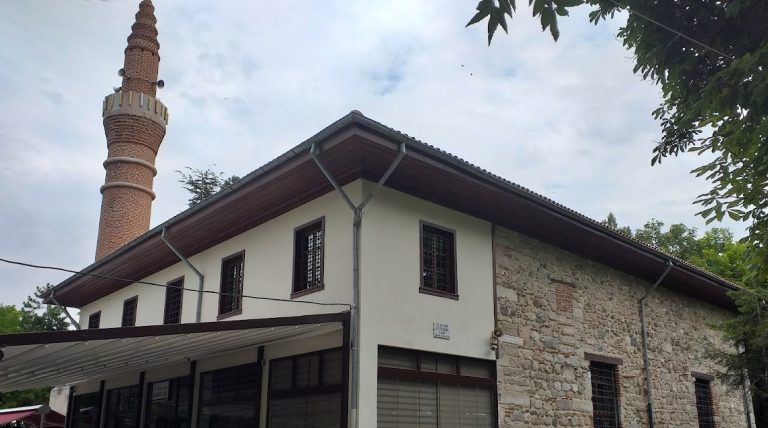
Northeast of the castle stood Kale-i Bâlâ Camii, a work associated with the Germiyanids, together with a fountain. The Germiyanids were a medieval Turkish principality that ruled parts of western Anatolia before its territory was absorbed by the Ottoman state.