Kumtura Thousand Buddha Caves: Buddhist Cave Temples on the Silk Road
Site at a Glance
- Popularity
- Medium
- Country
- China
- Primary era
- Medieval
- Eras represented
- Classical, Medieval
- Civilizations
- Unclassified
- Site type
- Religious
- Remains
- Temple
On this page8 sections
History
Buddhist cave temples
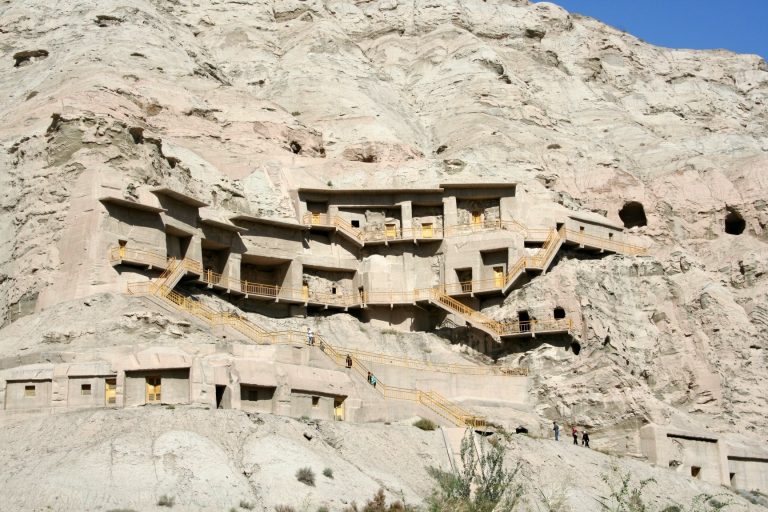
The Kumtura Thousand Buddha Caves are a Buddhist cave-temple site about 25 km west of Kucha in Xinjiang, China. They form part of the ancient Silk Road, a network of routes that connected regions through trade and travel. The 112 surviving temples date from the fifth through the eleventh centuries.
After the site was abandoned, occasional habitation damaged the caves. Kumtura lies within a wider group of ancient sites near Kucha that includes the Kizilgaha and Kizil Caves, Subashi Temple, and the Simsim Caves.
Exploration and preservation
Foreign expeditions visited Kumtura in the early twentieth century, including the Japanese Ōtani expedition in 1902 and expeditions by Russian scholar Sergei Fyodorovich Oldenburg and German archaeologist Albert von Le Coq. Le Coq removed several wall paintings and took them to Berlin; they are now held by the Museum für Asiatische Kunst.
Kumtura was among the first sites designated a Major National Historical and Cultural Site in 1961. In the 1970s, construction of the Dongfang Hong Hydroelectric Plant raised the Muzat River’s water level and accelerated the decay of the cave paintings. Long-term preservation work began under the auspices of UNESCO, the United Nations Educational, Scientific and Cultural Organization, in 1999. It included detailed surveys and documentation, as well as measures to strengthen the conglomerate rock. In 2008, Kumtura was submitted for possible future inclusion on the UNESCO World Heritage List as part of the Chinese Section of the Silk Road.
Remains
Caves and associated artworks
Rock-cut temples
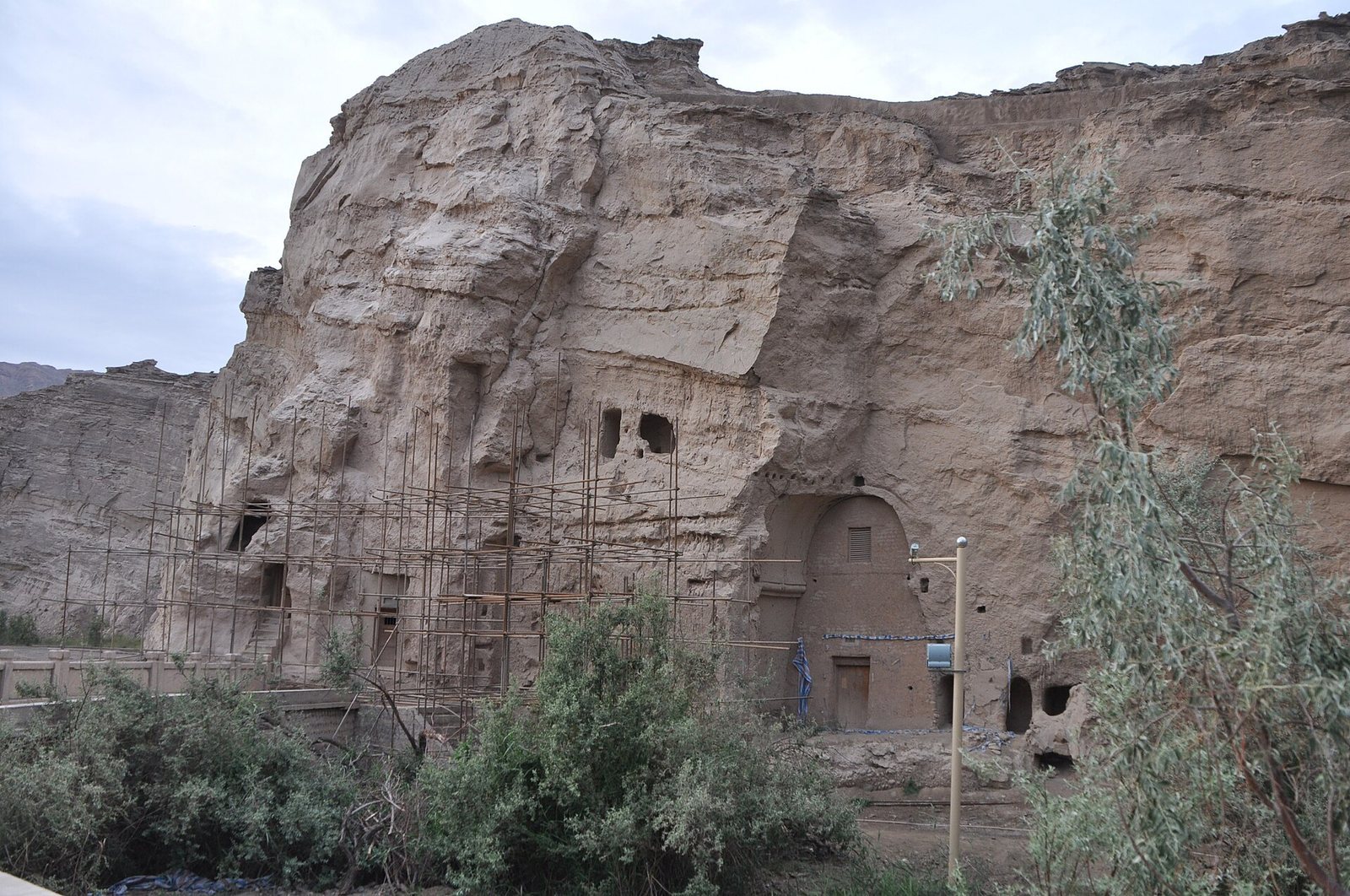
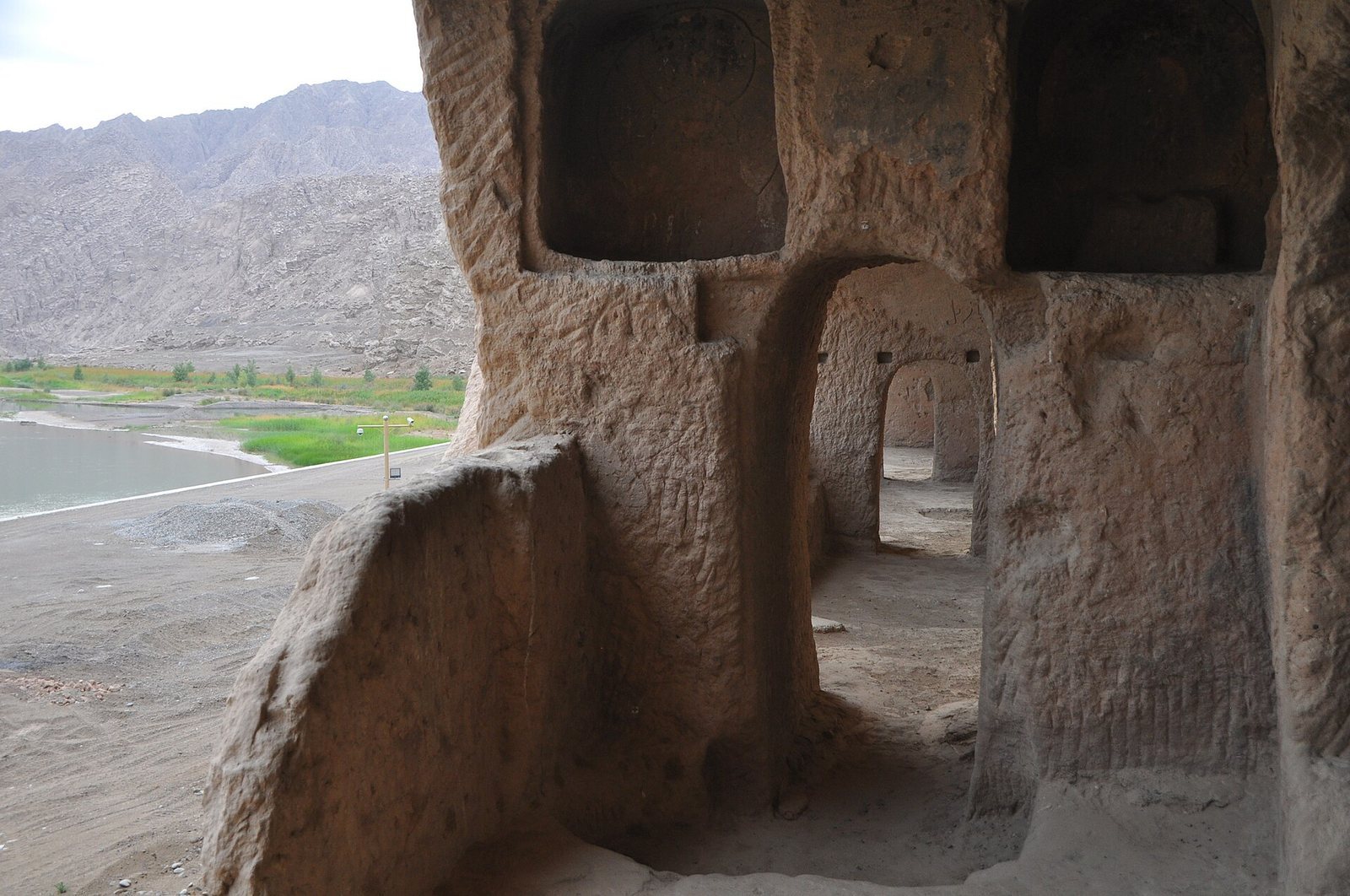
The site consists of 112 cave temples cut into conglomerate, a sedimentary rock formed from cemented fragments of other rocks. The caves are associated with the Muzat River.
Painted imagery
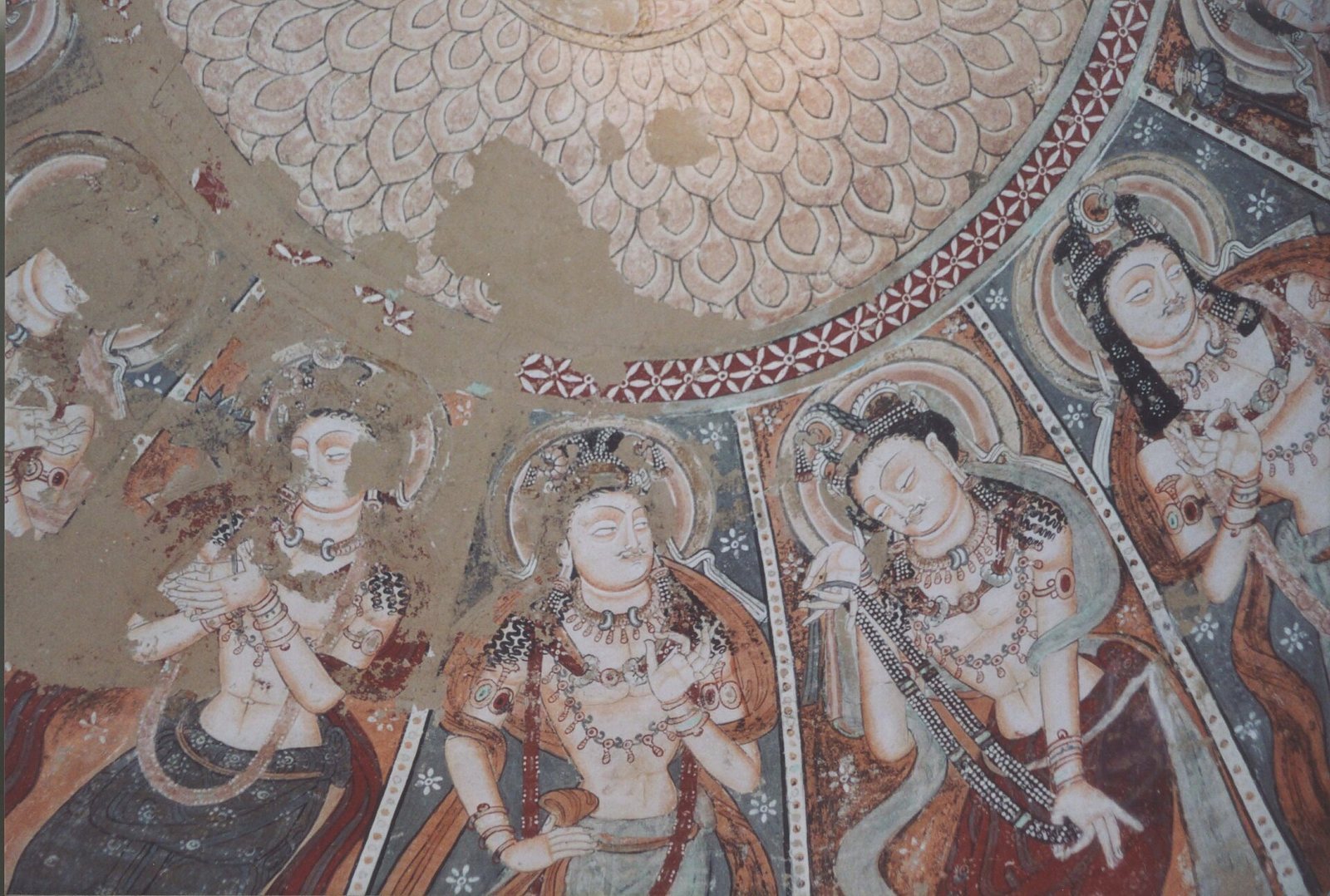
Paintings associated with the caves include donor figures in a style linked to the Hephthalites, a Central Asian people prominent in late antiquity. These figures date to about AD 500. Other imagery includes a group of donors, a man in royal dress, and deity figures, including one depicted within a dome. A painting of a dignitary captured by soldiers dates to the eighth or ninth century, and a separate dome painting is also associated with the site.
Statue in Berlin
A headless statue associated with Kumtura is held by Berlin’s Museum für Asiatische Kunst.