Knoop Manor: A Historic Estate in Altenholz, Germany
Site at a Glance
- Popularity
- Medium
- Country
- Germany
- Primary era
- Early Modern
- Eras represented
- Early Modern, Modern
- Civilizations
- Danish, German, Kingdom of Prussia
- Site type
- Domestic
- Remains
- Manor House
On this page9 sections
History
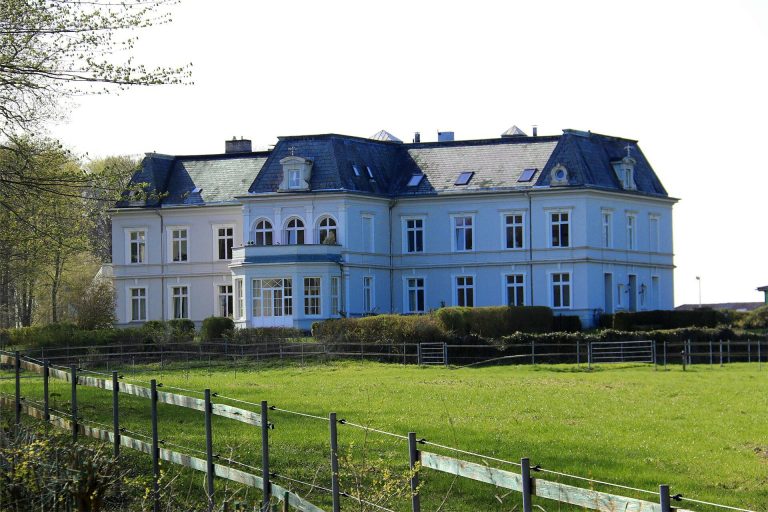
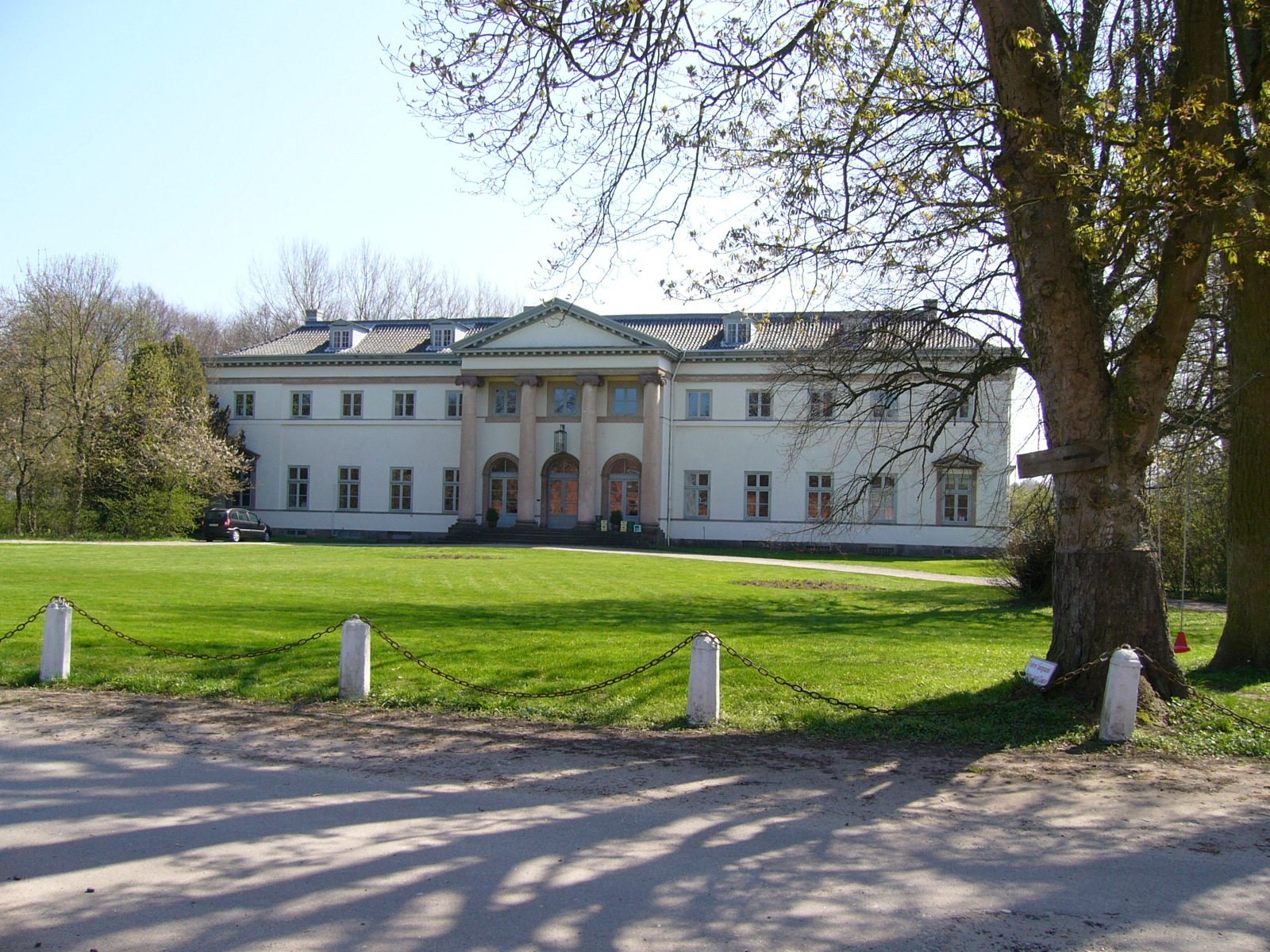
Knoop Manor is an estate in Altenholz, Germany, first recorded in 1322. Its present manor house was built from 1792 to 1796 in the Neoclassical style, which draws on ancient Greek and Roman forms. Around 1800, Knoop and nearby Gut Emkendorf formed a cultural center in Schleswig-Holstein.
Medieval origins and ownership
The name Knoop comes from a Low German word meaning “knob” or “hump.” Lupus de Knope, also called Wulf or Wolf von Knoop, is a possible founder. He appears in the 1322 record and may have acquired the land shortly beforehand. The wolf in Altenholz’s coat of arms is associated with the family name. The von dem Knope family belonged to the Equites Originarii, the old-established knightly nobility of Schleswig-Holstein. It later moved to Denmark, where it used the name Knob(e), and died out there around 1565. Knoop passed among the von Knoop, von der Wisch, and von Rantzau families. Though north of the Levensau and within the Duchy of Schleswig, a historic territory on the Jutland Peninsula, the estate was held by Saxon nobility.
The castle and changing owners
In the sixteenth century, Paul von Rantzau had a water castle, a residence protected by water, built at Knoop. Cai von Ahlefeldt acquired the estate in 1626 and sold it in 1632 to King Christian IV of Denmark. The king intended to use estate land for the fortress of Christianspries. After the Thirty Years’ War, a major European conflict that ended in 1648, Christian sold Knoop to Friedrich von Buchwaldt. The estate later entered the Baudissin family through the marriage of Dorothee von Buchwald to Wolf Heinrich von Baudissin.
The manor house and later estate
In 1776, merchant Heinrich Carl von Schimmelmann bought Knoop from the impoverished Baudissin family. He gave it to his daughter Caroline Adelheid Cornelia as a wedding dowry when she married Count Heinrich Friedrich von Baudissin. Caroline, who later became a writer, commissioned the present manor house. The old water castle was subsequently demolished and its moat filled. Caroline’s sister Julia lived with her husband Friedrich at Gut Emkendorf, the other center of the pair’s cultural circle. Serfdom, a system binding peasants legally to an estate or its owner, ended in 1805.
In 1869, Eduard von Baudissin sold Knoop to Danish merchant Ingward Martin Clausen, partly because of gambling debts left by Caroline. Clausen, like the Schimmelmanns, had made his wealth through the Danish West Indies, Denmark’s Caribbean colonies, where plantation economies depended on enslaved labor. After Clausen’s death, the estate passed in 1903 to Bremen tobacco merchant Heinrich Gerhard Richard Hirschfeld, whose family continued to live there. From 1949 to 1953, art historian and state conservator Peter Hirschfeld moved the Schleswig-Holstein State Office for Monument Preservation to Knoop.
Remains
The estate lies west of Kiel-Holtenau, beside the Kiel Canal and near the former Eider Canal. The manor-house façade faces the Eider Canal, which ran along the estate’s eastern side, and the landscape park once reached the canal bank.
The manor house and interiors
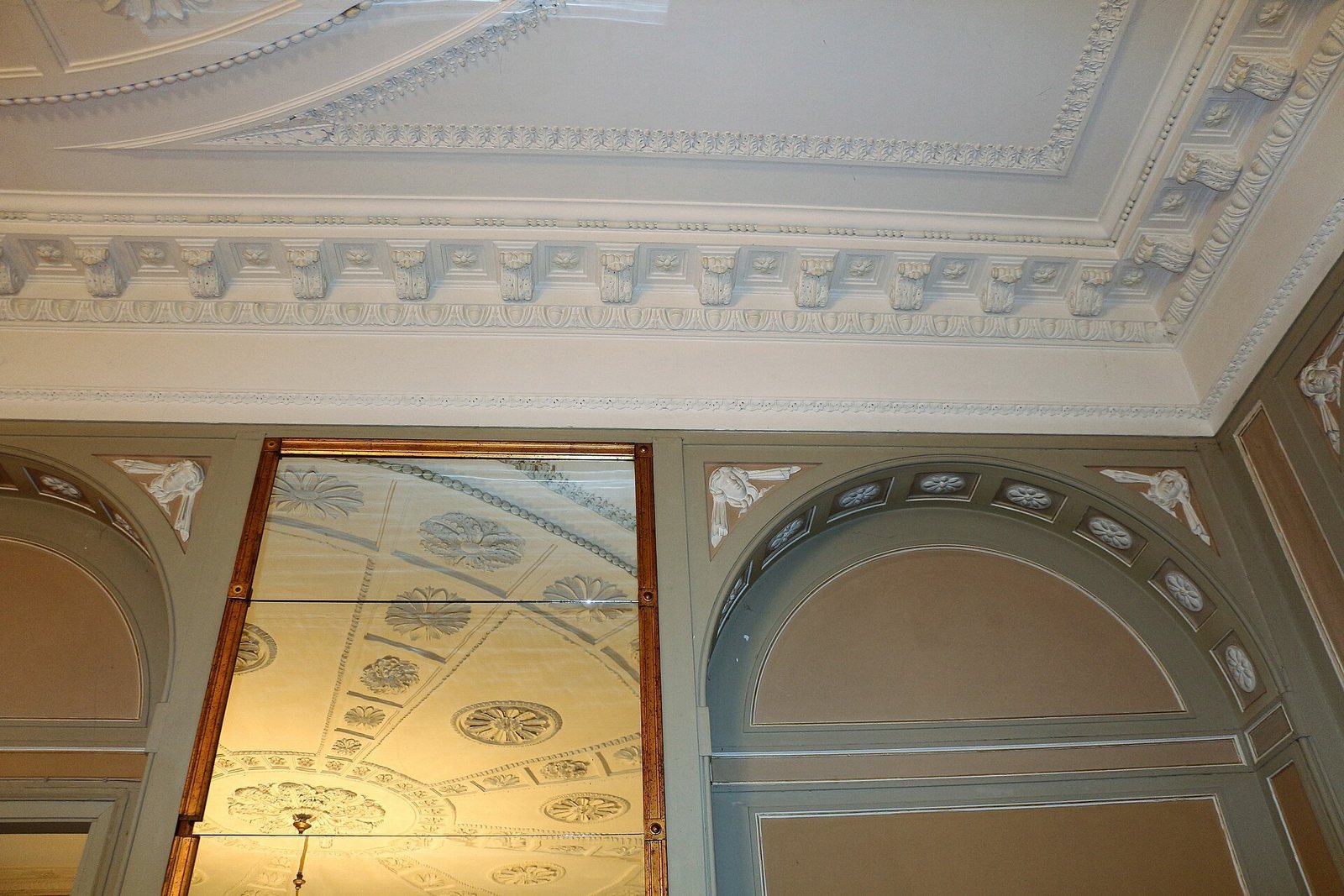
The manor house has a monumental portico with four Ionic columns, whose capitals have scroll-shaped forms, supporting a triangular pediment. Most of its interior furnishings have survived. Painter Ludwig Philipp Strack worked at Knoop around 1799. Stucco artist Francesco Antonio Tadey was active there in 1796–1797, and painter Giuseppe Anselmo Pellicia worked there from 1798 to 1800.
The former water castle
The former castle, also known by its Latinized name Arx Cnopia, had a windowless ground floor, called the “water floor,” and two upper storeys. Three projecting bay windows stood on each side of its gabled roof. Moats supplied by the Levensau surrounded the building.
Park and tea house
Architect Carl Gottlob Horn designed the landscape park, which extended to the Eider Canal’s bank. Construction of the Kiel Canal in 1895 largely destroyed the park. On the site of an earlier wooden pavilion stands a tea house built in 1910 by Bremen artist and architect Rudolf Alexander Schröder. The small building covers 20 square metres and takes the form of a Doric temple, with columns of a simpler classical design. It was renovated in 2008.
The Eider Canal and its locks
The Eider Canal opened in 1784 and ran east of the estate. Its second lock after Holtenau was Knoop Lock, which had a Dutch-style drawbridge. The renovated former Rathmannsdorf Lock lies about three kilometres northwest of Knoop.