Knighton Gorges Manor: A Historic Manor House on the Isle of Wight
Site at a Glance
- Popularity
- Medium
- Country
- United Kingdom
- Primary era
- Early Modern
- Eras represented
- Early Modern
- Civilizations
- English
- Site type
- Domestic
- Remains
- Manor House
On this page12 sections
History
Knighton Gorges Manor was a manor house in the hamlet of Knighton, near Newchurch on the Isle of Wight, United Kingdom. Work there began in the 12th century; the later house was described as a fine example of Tudor architecture, associated with England’s period from 1485 to 1603 and its later Elizabethan phase. The manor’s history includes Hugh de Morville’s flight after the murder of Thomas Becket and the passage of the estate through successive landholding families.
The de Morvilles and the Gorges, 12th–14th centuries
On 29 December 1170, the Anglo-Norman nobleman Hugh de Morville took refuge at the manor. He was one of four knights who murdered Thomas Becket, Archbishop of Canterbury, whose death became a major historical and religious event. The other knights were Reginald FitzUrse, William de Tracy and Richard le Breton. Hugh later fled to Knaresborough Castle in Yorkshire, which he held.
The de Morvilles held the manor until 1256, when John or Ivo de Morville died. His daughter and heir, Ellen, was married to Ralph de Gorges, who acquired the estate through the marriage. Ellen outlived Ralph and remained in possession toward the end of the century. After her death in 1291–92, their son Ralph became heir. In 1305 he leased the manor to William de Caleshale and William’s wife for their lifetimes. It appears to have returned to Ralph before 1316.
A later Sir Ralph de Gorges and his wife had a son, also named Ralph, who died without children before 1330–31. Sir Ralph then settled the manor on two younger sons of his daughter Eleanor, wife of Theobald Russell of Yaverland. The settlement restricted inheritance to male heirs. William, the elder of the two sons, died without children, and his brother Theobald received the manor in 1343. Theobald appears to have adopted the name de Gorges. In 1346–47, Elizabeth, widow of the younger Ralph de Gorges, sued him for the manor and won. As she and Ralph had no children, it later reverted to Theobald, who held it in 1362.
Later medieval succession
Theobald died in 1380. His sons inherited the manor in turn: Sir Randolf, who died in 1382; Bartholomew, who died in 1395–96; and Thomas, who died in 1404. Thomas’s son John died aged fifteen, and in 1413 the manor passed to his ten-year-old brother Theobald. Sir Theobald Gorges held it in 1462 and probably died without children. The estate then passed to the heirs of Thomas Russell, a great-grandson of Theobald Russell and Eleanor de Gorges through their eldest son, Ralph Russell of Yaverland. Thomas Russell’s heir was his cousin John Haket, the son of his aunt Alice.
Gilbert, Dillington and later ownership
John Haket’s daughter Joan married John Gilbert, and the manor passed with Wolverton in Brading through the Gilbert family. In 1563 George Gilbert sold it to Anthony Dillington. Anthony’s son Sir Robert died in 1604 and left the manor to his nephew Robert. Sir Tristram Dillington, a great-grandson of that Robert, was the last of the direct line. When Tristram died without children in the early 18th century, his sisters Mary and Hannah inherited. Hannah died without a will; Mary, who was unmarried, left the estate jointly to her nephew Maurice Bocland and her niece Jane, wife of John Eyre. General Maurice Bocland held the manor in 1750 and died in 1765. The estate then passed to his nephew Maurice George Bisset, who held it in the early 19th century.
The manor was a favored haunt of fashionable society. Its association with Sir Richard Worsley, an English politician and antiquary connected with nearby Appuldurcombe House, brought scandal and disgrace. Sir Henry Englefield, a writer on history and topography, visited and described the manor in detail in his Description of the Isle of Wight.
Destruction and the later estate
The house burned and was demolished in 1820, and it was not rebuilt. Tradition attributes its destruction to Bisset, who was said to have acted out of spite after his daughter married a clergyman against his wishes, supposedly preventing her from inheriting the manor. The motive is uncertain: Bisset’s 1818 will made provision for both daughters and expressed no intention to disinherit either. George Young held the remaining estate in 1878. By 1912 it belonged to Edward Carter, who had acquired it under the will of his father, also named Edward.
Remains
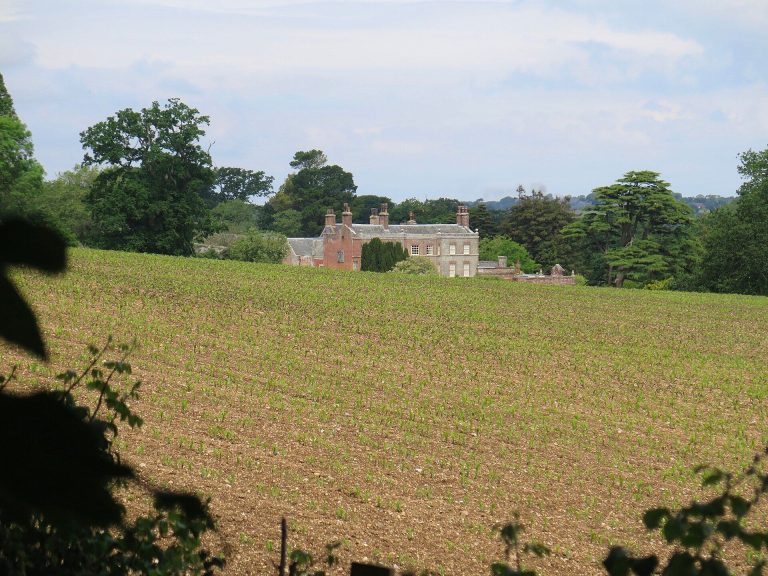
The manor house stood in Knighton and was built with a brick structural system. It was described as one of the Isle of Wight’s grandest houses and as a notably fine example of Tudor, or Elizabethan-Tudor, work. Descriptions of the building record its north front, large rooms and relationship to the surviving estate features.
The manor house
Exterior
The north front had large square windows divided by stone mullions, the vertical divisions between sections of a window. These windows had no stained glass. Windows elsewhere in the house carried a coat of arms that predated the building.
Interior
The rooms were large and elegantly designed. On the first floor, the drawing room included a long gallery in the north front. The low roof contributed to poor lighting inside.
Surviving estate features
Gateposts
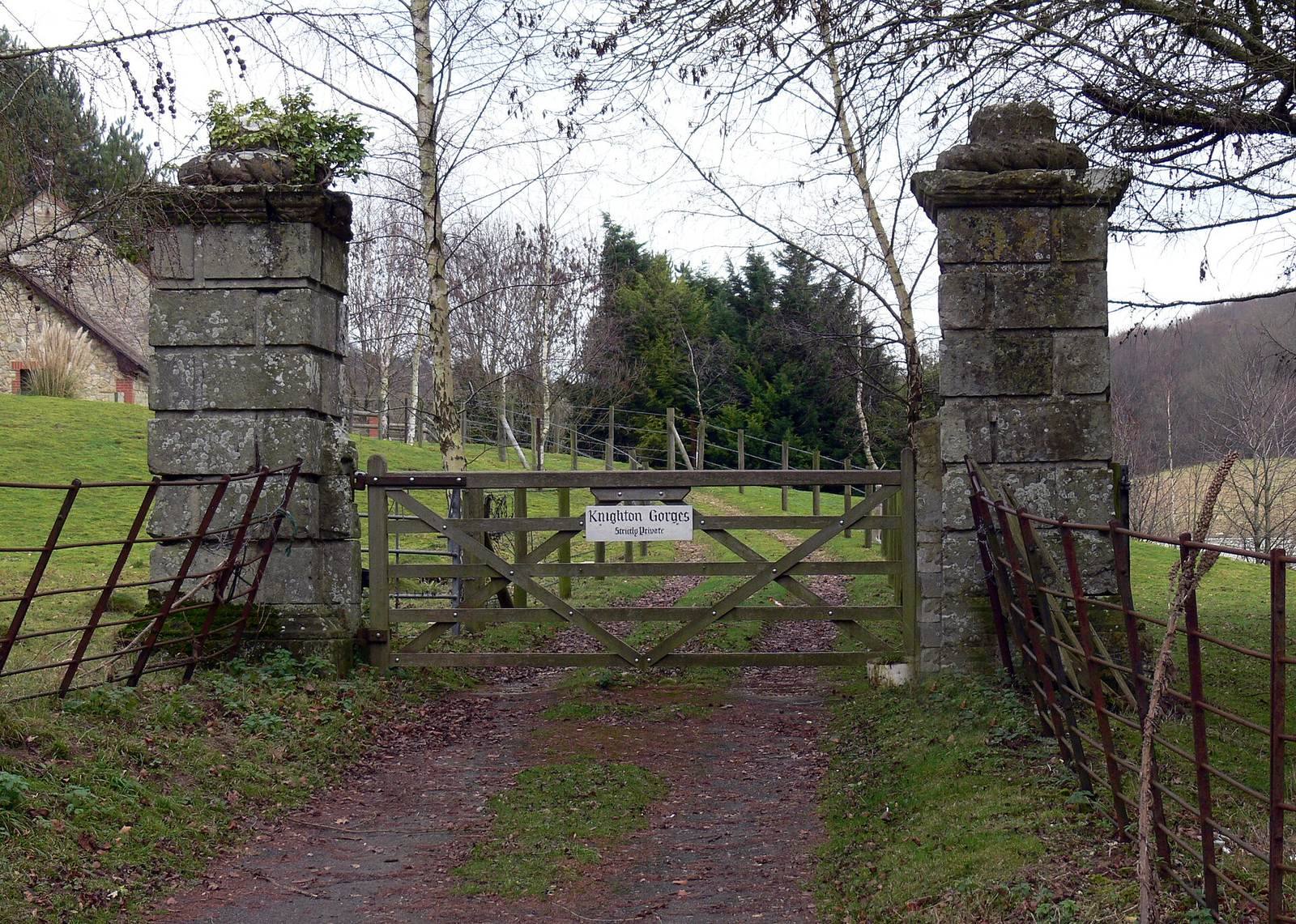
Two stone gateposts survive from the manor house.
Outbuilding
One of the estate’s remaining outbuildings houses a holiday cottage.