Ebersberg Abbey: A Monastery and Pilgrimage Site in Germany
Site at a Glance
- Popularity
- Medium
- Country
- Germany
- Primary era
- Medieval
- Eras represented
- Medieval
- Civilizations
- Duchy of Bavaria, Holy Roman Empire
- Site type
- Religious
- Remains
- Monastery
On this page12 sections
History
Ebersberg Abbey is a former monastery in Germany, founded in 934 by Eberhard I and Adalbero I, Counts of Sempt, on the site of Ebersberg Castle. The foundation was dedicated to Mary and Saint Sebastian and belonged to the Diocese of Freising, a church district overseen by a bishop. Its architecture is identified as Romanesque, a style characterized by rounded arches and substantial masonry.
Foundation and pilgrimage
The first community consisted of Augustinian canons, clerics who lived together under the Rule of Saint Augustine. It remained a house of canons until 1013. Hunfried, its first head, received part of Saint Sebastian’s skull from Pope Stephen VIII while travelling to Rome. Sebastian was an early Christian martyr whose cult became associated with protection from plague. People came to Ebersberg seeking healing, and the pilgrimage helped support economic growth in the surrounding region.
Benedictine growth
In 1013, Count Ulrich of Ebersberg brought monks from Augsburg’s Basilica of Saints Ulrich and Afra. The house became Benedictine, meaning its monks followed the Rule of Saint Benedict, and was placed under the emperor’s authority. Abbot Altmann, the head of the monastery from 1024 to 1045, added several buildings, including a hospital. Adalbero III, Count Ulrich’s son, left nearly all his property to the community.
During Williram’s abbacy, from 1048 to 1085, the monastery strengthened its finances and developed its writing school. Monks copied and composed books, while Williram wrote a chronicle and a commentary on the Song of Songs dedicated to Emperor Henry IV. The abbey maintained ties with Hirsau Abbey and secular rulers. Its estates and revenues extended across a wide area into the Alps, and it held property in Bolzano by the late 11th century.
Medieval conflict and change
A fire damaged the monastery and church in 1305. In a separate conflict involving Albrecht III of Bavaria-Munich, Henry XVI, Duke of Bavaria-Landshut, burned the monastery. During the dispute between Pope John XXII and Emperor Louis the Bavarian, Ebersberg supported the emperor.
Abbot Simon Kastner, who led the house from 1412 to 1442, was criticized in the monastery’s chronicle for dissolute conduct. He was removed from office in 1427, but returned after Duke Ludwig of Landshut intervened.
Reformation and dissolution
During the German Peasants’ War, a series of Central European uprisings in 1524 and 1525, peasants belonging to the monastery also rebelled. In the 16th century, monastic discipline weakened and the Reformation, a religious movement that led to the formation of Protestant churches, brought severe financial strain.
Pope Clement VIII dissolved the Benedictine community in 1595 at the instigation of Duke William V of Bavaria. Six monks and an administrator were resident at the time, while two other members had already been transferred as a punishment by the duke. The monks were sent to Mallersdorf, and the buildings passed to the Jesuits, members of the Catholic Society of Jesus, who used them for education and recreation.
Jesuit and Maltese periods
Following the dissolution of the Jesuit order in 1773, the monastery passed to the Grand Priory of Bavaria, a territorial division of the Catholic Order of Malta, a religious order historically associated with care for the sick and pilgrims. A major fire in 1781 destroyed parts of the complex, which the Grand Priory rebuilt.
After 1808
The Grand Priory was dissolved in 1808, and parts of the monastery passed into state and private ownership. A brewery associated with the monastery is recorded from 1400 and occupied part of the complex until 1974. Investment by the Munich Schmederer brewing family helped make it one of Upper Bavaria’s most modern breweries and a major employer in Ebersberg in the early 20th century.
Remains
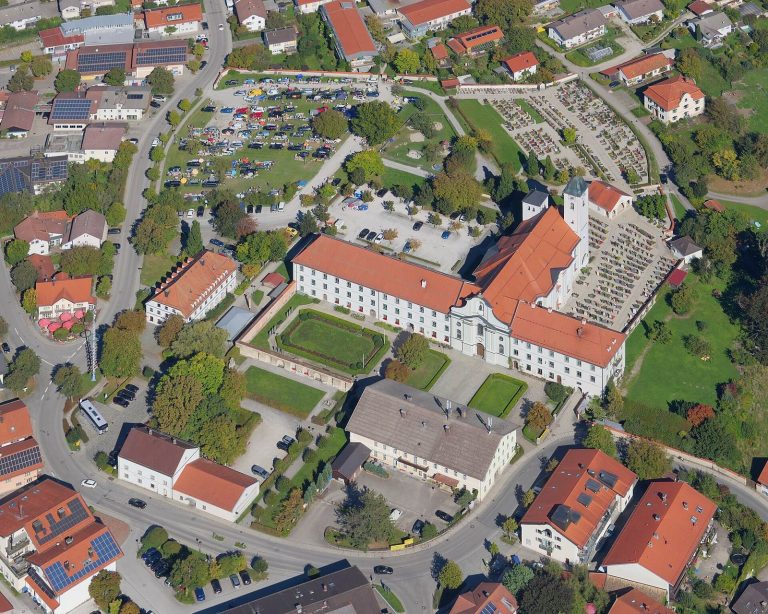
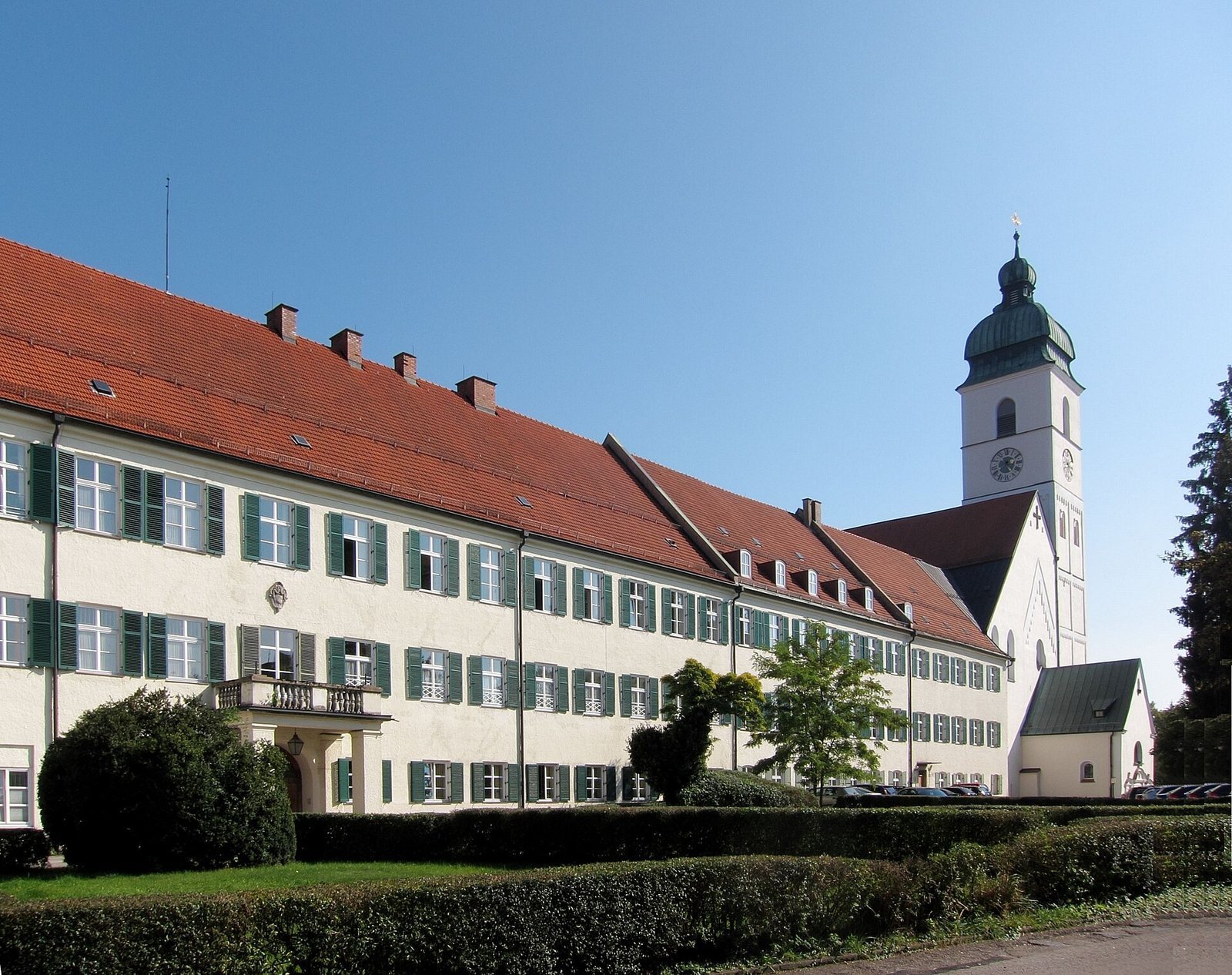
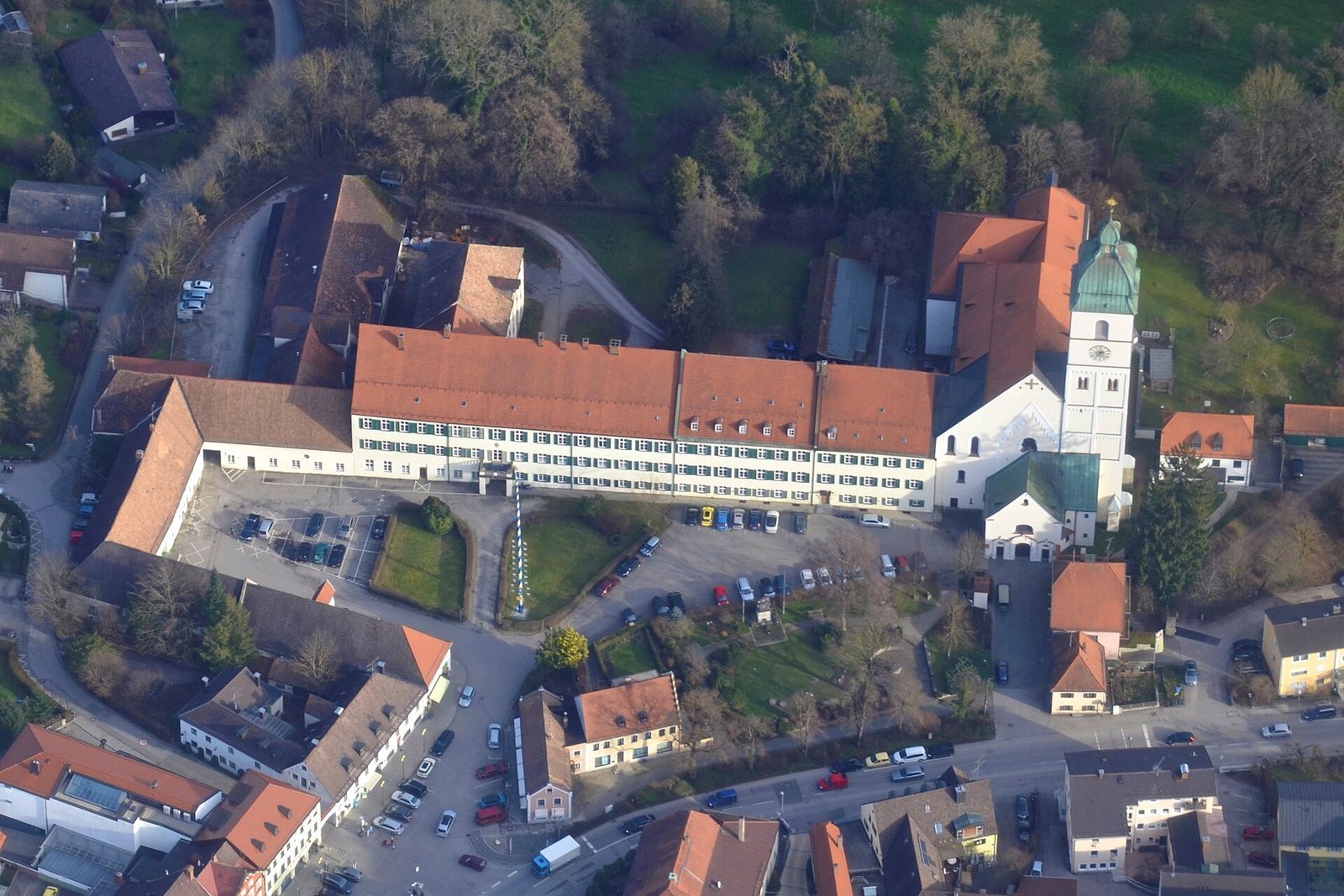
The surviving complex includes the church and former monastic buildings, with Romanesque and Gothic phases in its architectural history. The buildings have also been adapted to later uses.
Church and monastic buildings
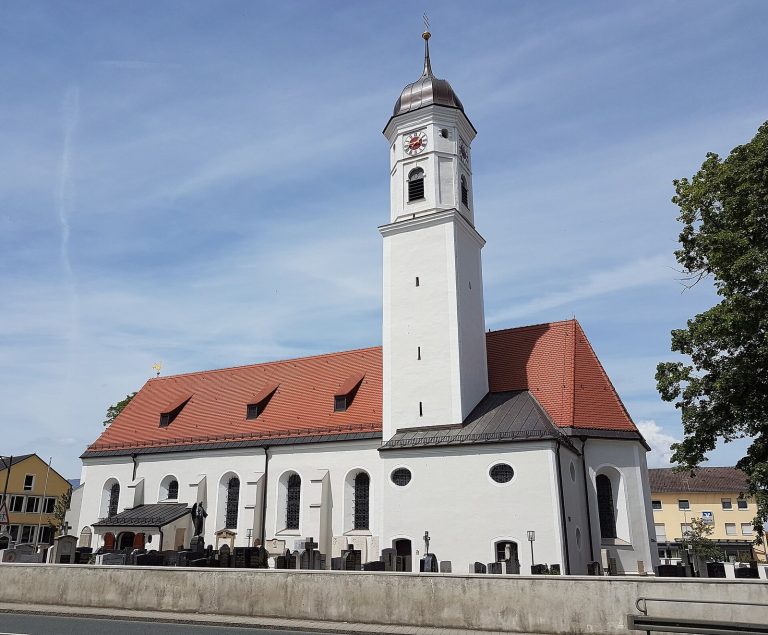
Church of Saint Sebastian
The church was inaugurated in 970 with a three-aisled plan: a central space flanked by side aisles, crossed by a transept. Between 1481 and 1484, Abbot Sebastian Hefele oversaw its reconstruction in Gothic form, a style associated with pointed arches and ribbed vaulting. The church now serves as a Catholic parish church.
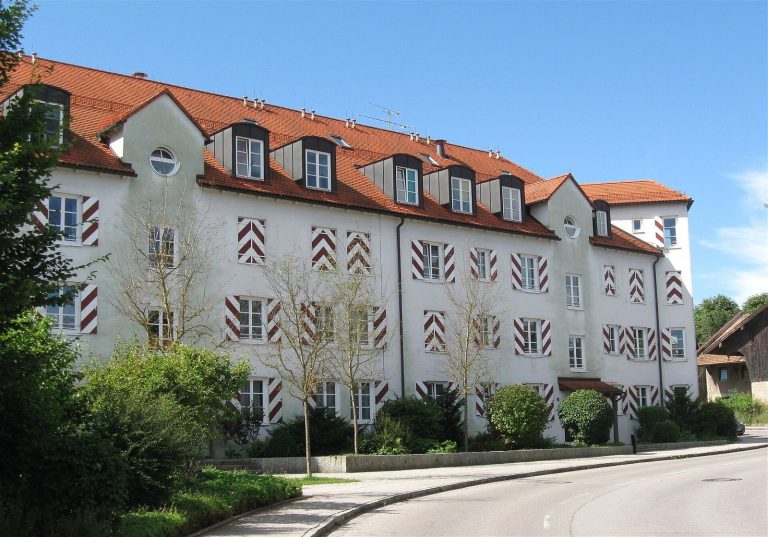
Former monastery buildings
A new monastery building opened in 1312 after the 1305 fire. Parts of the complex were rebuilt following the later fire of 1781. The former monastery buildings now include the tax office and the brewery’s administration.
Monastic courtyard
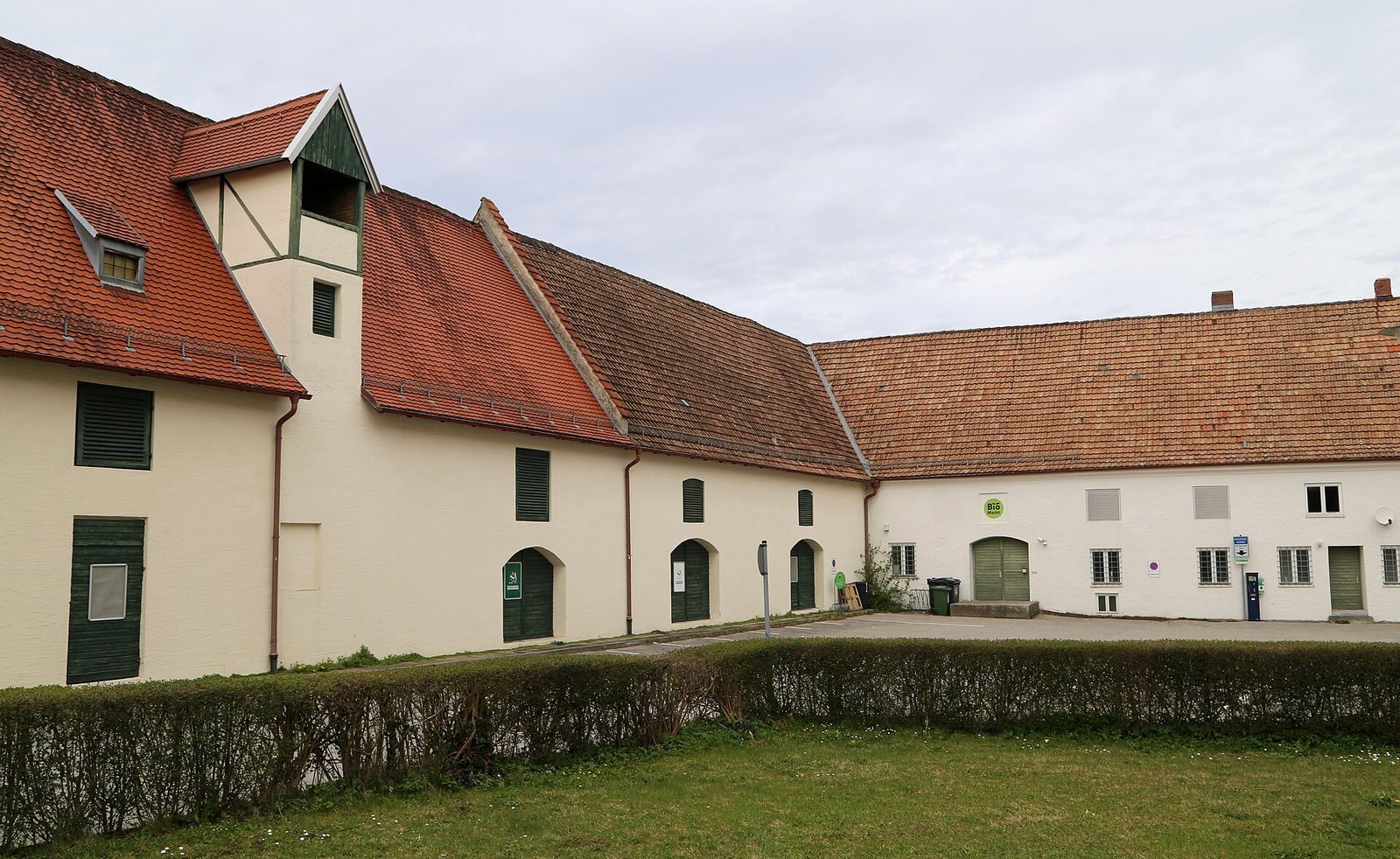
A large monastic courtyard was built in 1495. It is now situated on Bahnhofstrasse.