Kinch Tomb: A Macedonian-Period Funerary Monument in Greece
Site at a Glance
- Popularity
- Very Low
- Country
- Greece
- Primary era
- Classical
- Eras represented
- Classical
- Civilizations
- Kingdom of Macedon
- Site type
- Burial
- Remains
- Tomb
On this page4 sections
History
The Kinch tomb is a Macedonian-period funerary monument near Golishani (Lefkadia), Greece, built in the first half of the third century BCE as part of the ancient Macedonian city of Mieza.
Danish archaeologist Karl Kinch discovered the tomb in 1877 beneath a mound 2.5 metres high and called it the Negush tomb. Its present name commemorates him. In the late nineteenth century, railway construction badly damaged the monument when stones and earth were piled over it. Restoration followed in 1970–1971. The tomb was declared a cultural monument in 1962 and received the designation again in 2012 together with the necropolis.
Remains
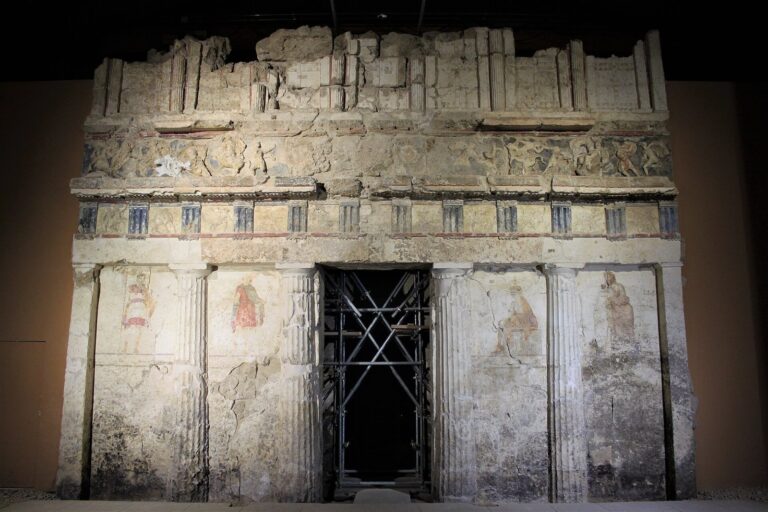
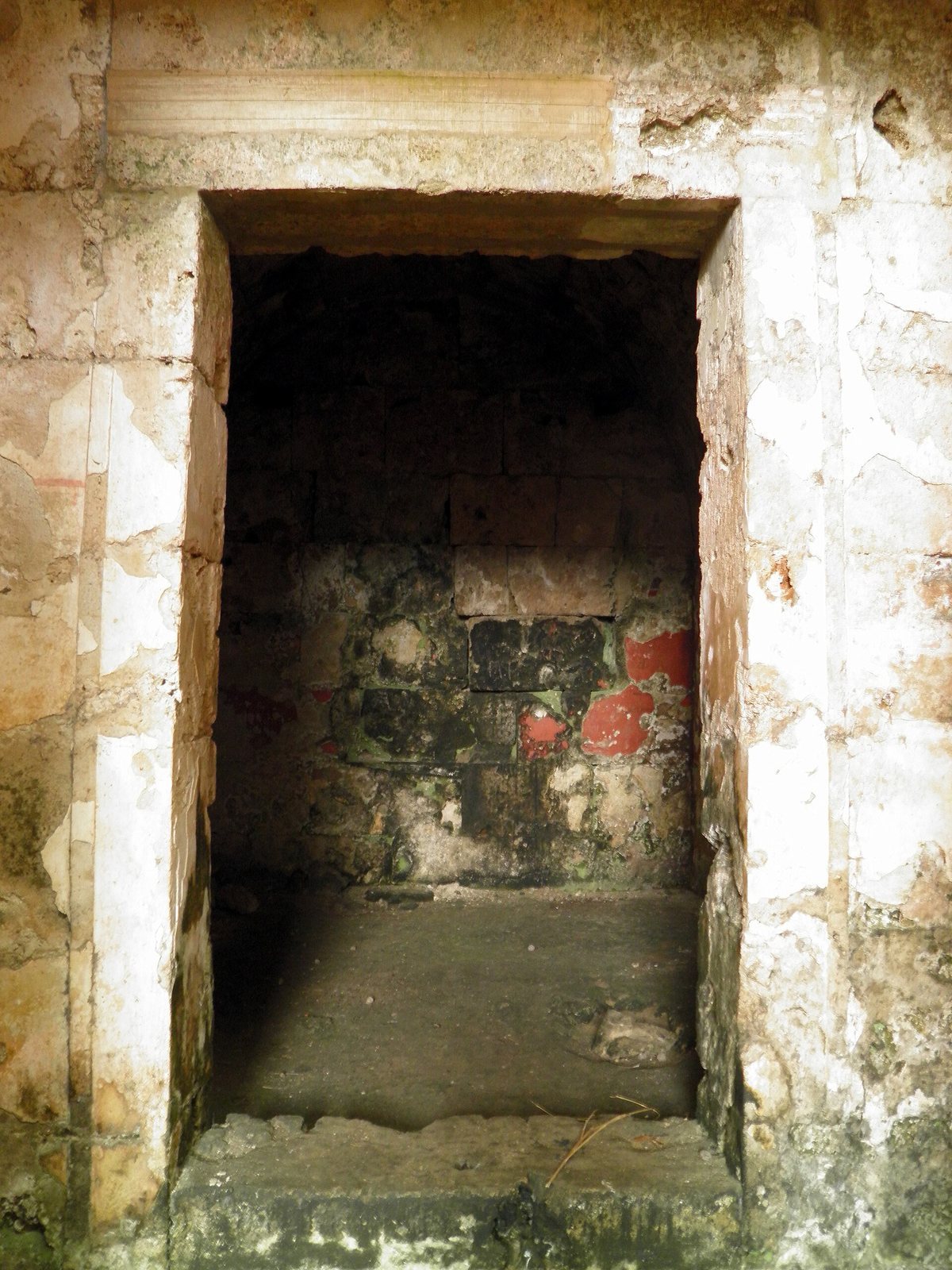
The small tomb has two chambers and a simple facade in the Doric order, an architectural style of ancient Greece. It stands 1 kilometre east of Golishani on the old road between Mieza and Edessa. Two other tombs lie 200 metres to its west, and the Tomb of the Judgment is 300 metres to the east.
Facade and entrance
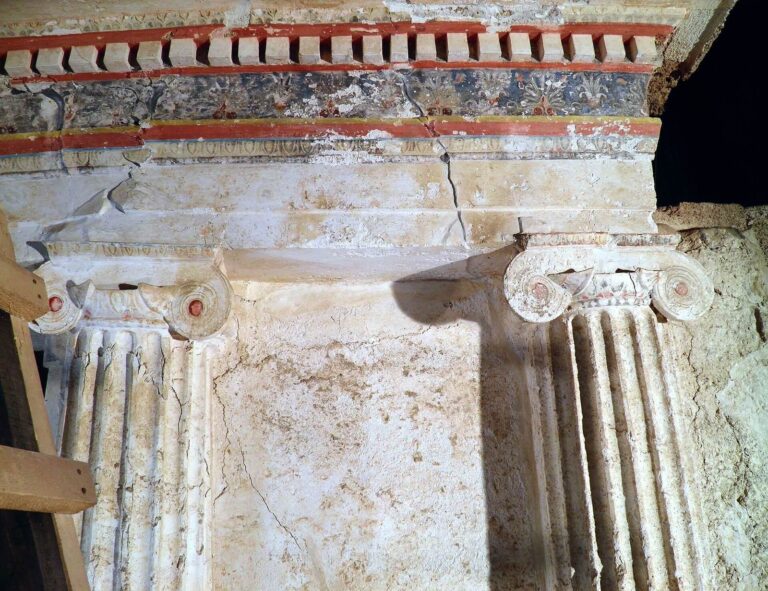
A pair of antae, projecting wall ends, frames the entrance. Above it, a horizontal band is divided into triglyphs, vertically grooved blocks, and metopes, the panels between them. These elements were colored dark blue and yellow. An Ionic cornice, a projecting molding in another ancient Greek architectural order, completes the facade. The tomb has no columns.
Interior decoration
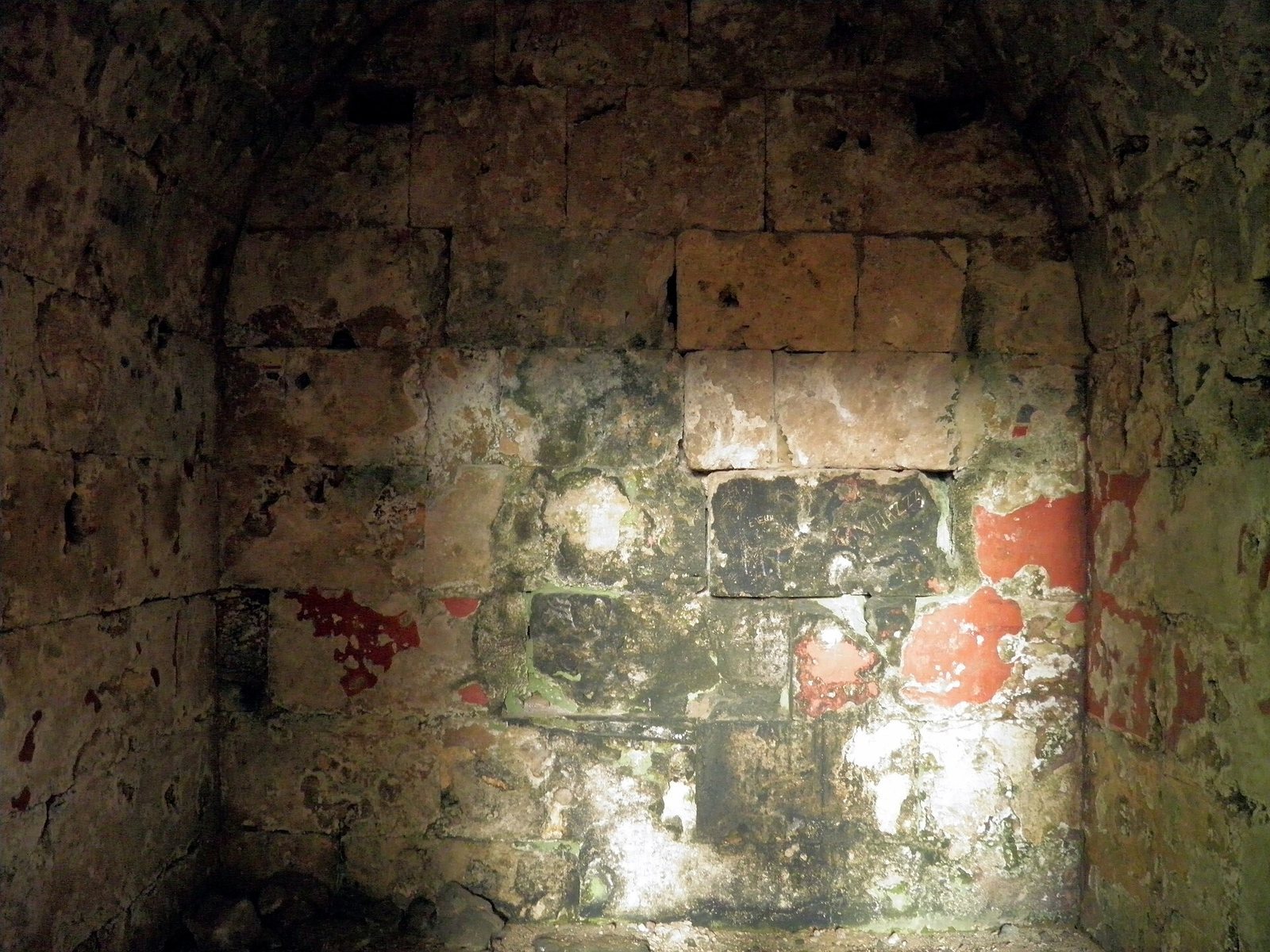
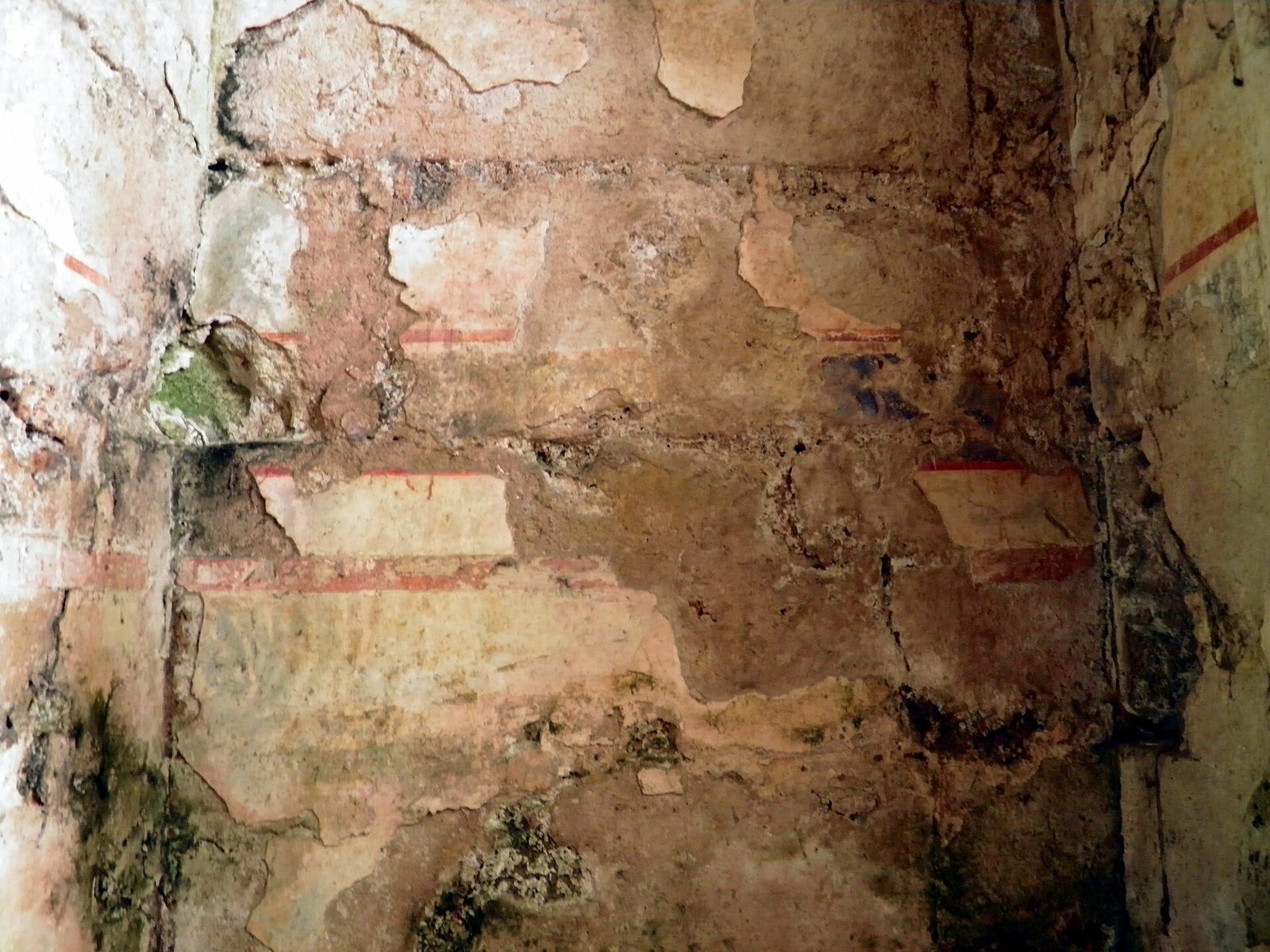
The vestibule, or entrance hall, and the chamber had a decorative band of raised relief and colored floral designs. Other sections of the walls were painted yellow and dark red. An illustration in the tomb’s first publication shows a wall painting on the east wall, depicting a Macedonian horseman attacking a fleeing Persian.