Khotmyzhsk Hillfort: A Fortified Settlement in Russia
Site at a Glance
- Popularity
- Low
- Country
- Russia
- Primary era
- Medieval
- Eras represented
- Medieval, Early Modern
- Civilizations
- Kievan Rus, Russian
- Site type
- Military
- Remains
- Fortified Town
On this page7 sections
History
Khotmyzhsk Hillfort is an archaeological settlement site within Khotmyzhsk village, Russia, where a Severian fortified settlement arose in the ninth century.
Severian Settlement
Archaeologist A. G. Dyachenko interpreted the earliest fortified settlement as the work of the Severians, an early medieval East Slavic group. Fire destroyed it, and the settlement was established again in the second or third quarter of the tenth century. It remained occupied until the beginning of the eleventh century. A possible interruption in that period may have been connected with Hungarian military activity.
Later Fortifications
An Old Rus’ population, part of the medieval East Slavic political and cultural world, re-established a fortress here in the second half of the twelfth century. In 1640, another fortress was built at the site as part of the Belgorod Line, a seventeenth-century system of frontier fortifications.
Research and Protection
The early scholar Z. Dolenga-Khodakovsky was the first to take a scholarly interest in the hillfort. Archaeologists I. I. Lyapushkin, A. F. Evminova, I. G. Okhrimenko, A. V. Kashkin, A. A. Uzyanov, M. P. Kuchera, and O. V. Sukhobokov surveyed it during the twentieth century, and A. G. Dyachenko later excavated the site. A. A. Bozhko and T. M. Aliyev carried out surveys in the 2010s. Investigation has covered only part of the site, which is designated a federal-level cultural heritage site in Russia.
Remains
Site Layout
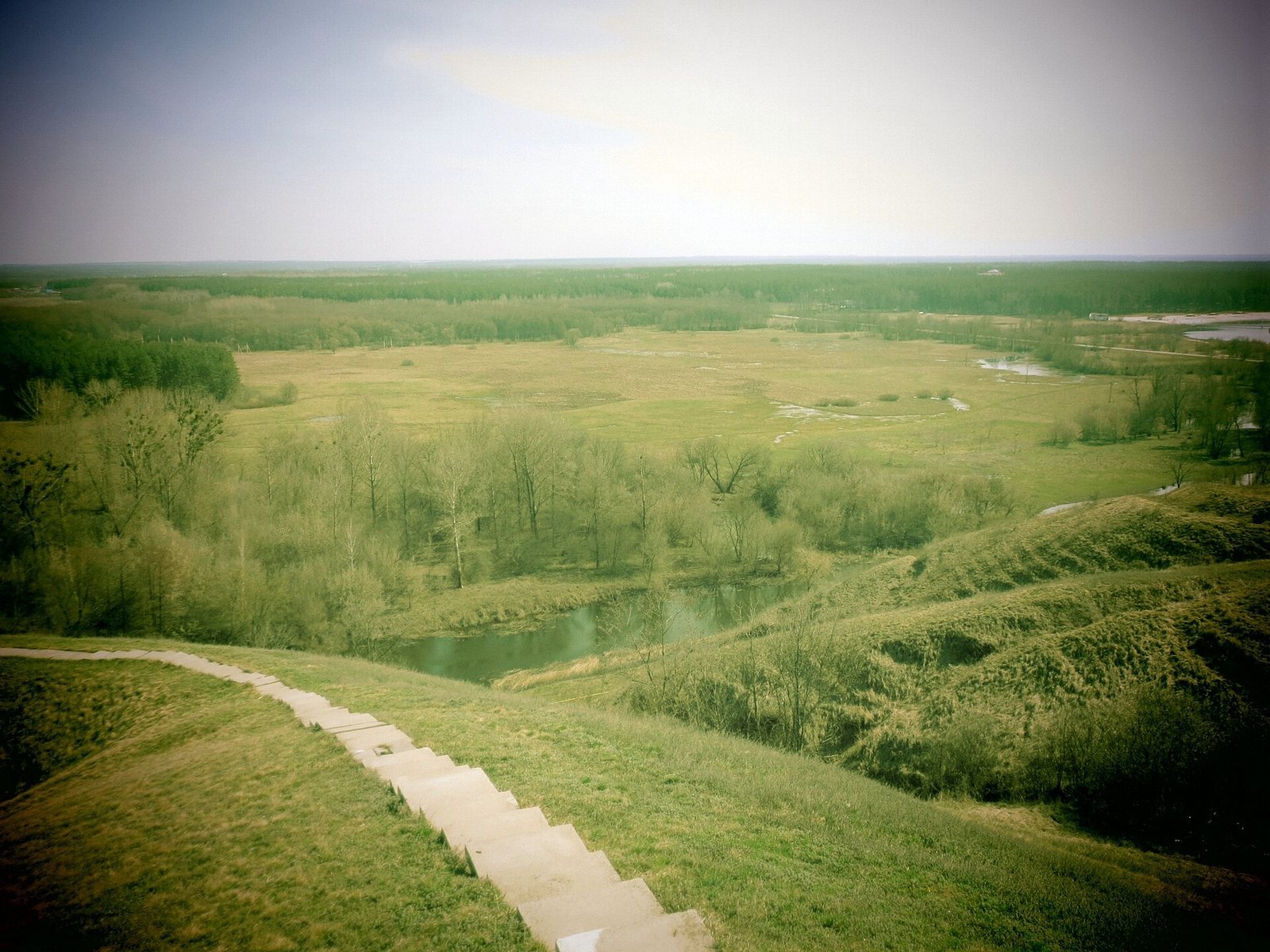
The hillfort lies within Khotmyzhsk village at the confluence of the Melovoy Kolodez, Rogoznaya, and Vorskla rivers. Its remains include the medieval town of Khotmyshlya, arranged around a citadel, the principal fortified area, and a further fortified outer town, with an unfortified settlement beyond the defenses. The ninth-century settlement had a small enclosed area containing one or two dwellings, interpreted as a communal refuge. Cultural deposits date to the Bronze Age, the Romny culture, a medieval culture of the eastern European forest-steppe, Old Rus’ archaeological culture, and the seventeenth through twentieth centuries.
Excavated Finds
Excavations of the fortress yielded pottery, arrowheads, small crosses worn on the body, locks, knives, and spindle whorls used in spinning thread. Imported objects included fragments of a large storage vessel made in Kyiv and a Byzantine amphora.