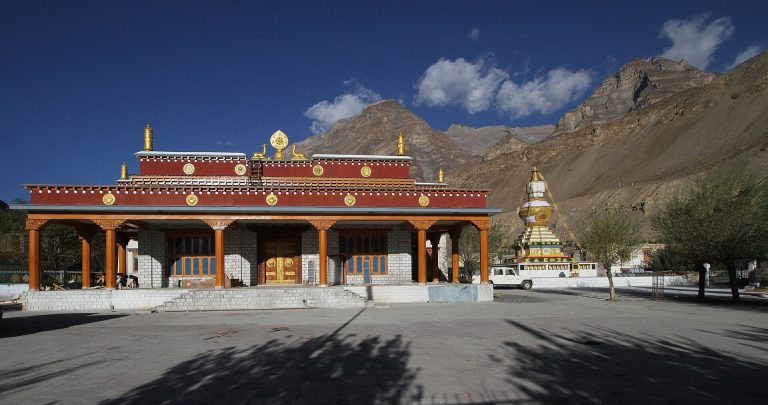
Key Monastery: A Gelug Buddhist Monastery in Spiti Valley
Site at a Glance
- Rating
- 4.8
- Popularity
- Medium
- Country
- India
- Primary era
- Medieval
- External website
- Open
- Eras represented
- Medieval, Modern
- Civilizations
- Tibetan
- Site type
- Religious
- Remains
- Fortified Monastery
On this page9 sections
History
Key Monastery is a Tibetan Buddhist monastery of the Gelug school in Spiti Valley, Himachal Pradesh, India. Traditionally associated with an eleventh-century foundation and a fortified dzong style, it is described as the oldest and largest monastery in the region and serves as a religious training centre for lamas.
Early foundation and religious affiliation
The foundation is traditionally attributed to Dromtön, an eleventh-century Tibetan Buddhist teacher and pupil of Atisha. This attribution may instead relate to a Kadampa monastery at nearby Rangrik, which was probably destroyed in the fourteenth century as the Sakya school rose to power with Mongol support. Key later became a Gelug establishment, a member of the Tibetan Buddhist tradition shaped by the reform movement associated with the scholar and teacher Tsongkhapa.
Seventeenth- and nineteenth-century destruction
During the seventeenth century, in the reign of the Fifth Dalai Lama, Ngawang Lobsang Gyatso, Mongol forces extensively plundered and damaged the monastery. Key was sacked again in 1830 during wars between Ladakh and Kulu. In 1841, the Dogra army under Ghulam Khan and Rahim Khan severely damaged it, and Sikh forces attacked it later that year. Fire also badly affected the monastery during the 1840s.
Monastic community and modern restoration
Key housed 100 monks in 1855 and nearly 250 resident monks at a later date. Approximately 300 lamas lived there in 2012, although some spend the winter at monasteries in southern India while others remain at Key. A major earthquake caused further damage in 1975, after which the Archaeological Survey of India and the State Public Works Department assisted with restoration. During a millennium celebration held from 1 to 15 August 2000, the Fourteenth Dalai Lama, Tenzin Gyatso, inaugurated a new prayer hall on 3 August. The monastery has also housed the Kachen Dugyal Memorial Old Aged and Handicapped Society, which provides accommodation for elderly and disabled people. Key belongs to the three Gelug monasteries of Spiti, together with Tabo Monastery and Dhankar Monastery.
Remains
Hilltop complex and defensive form
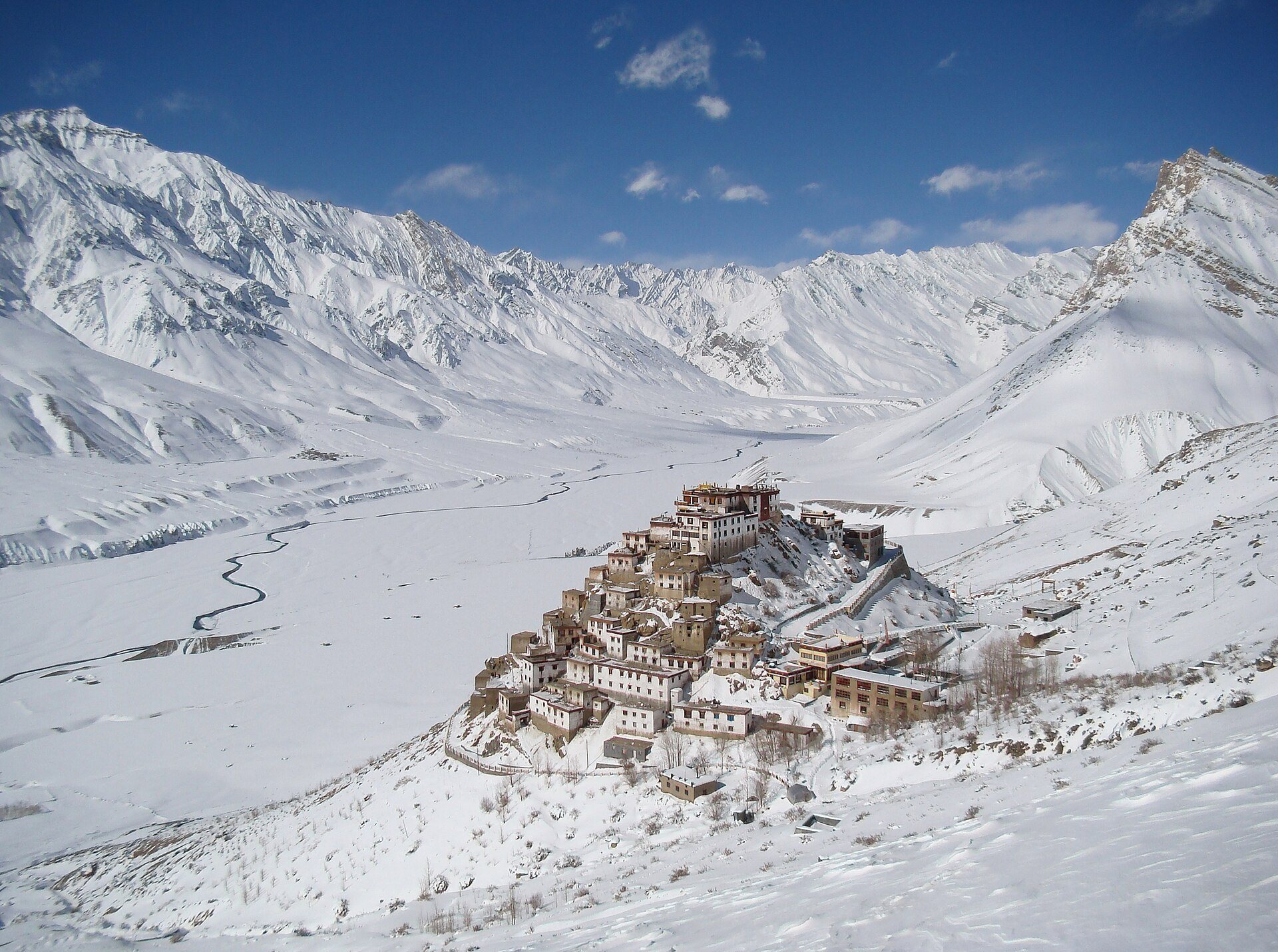
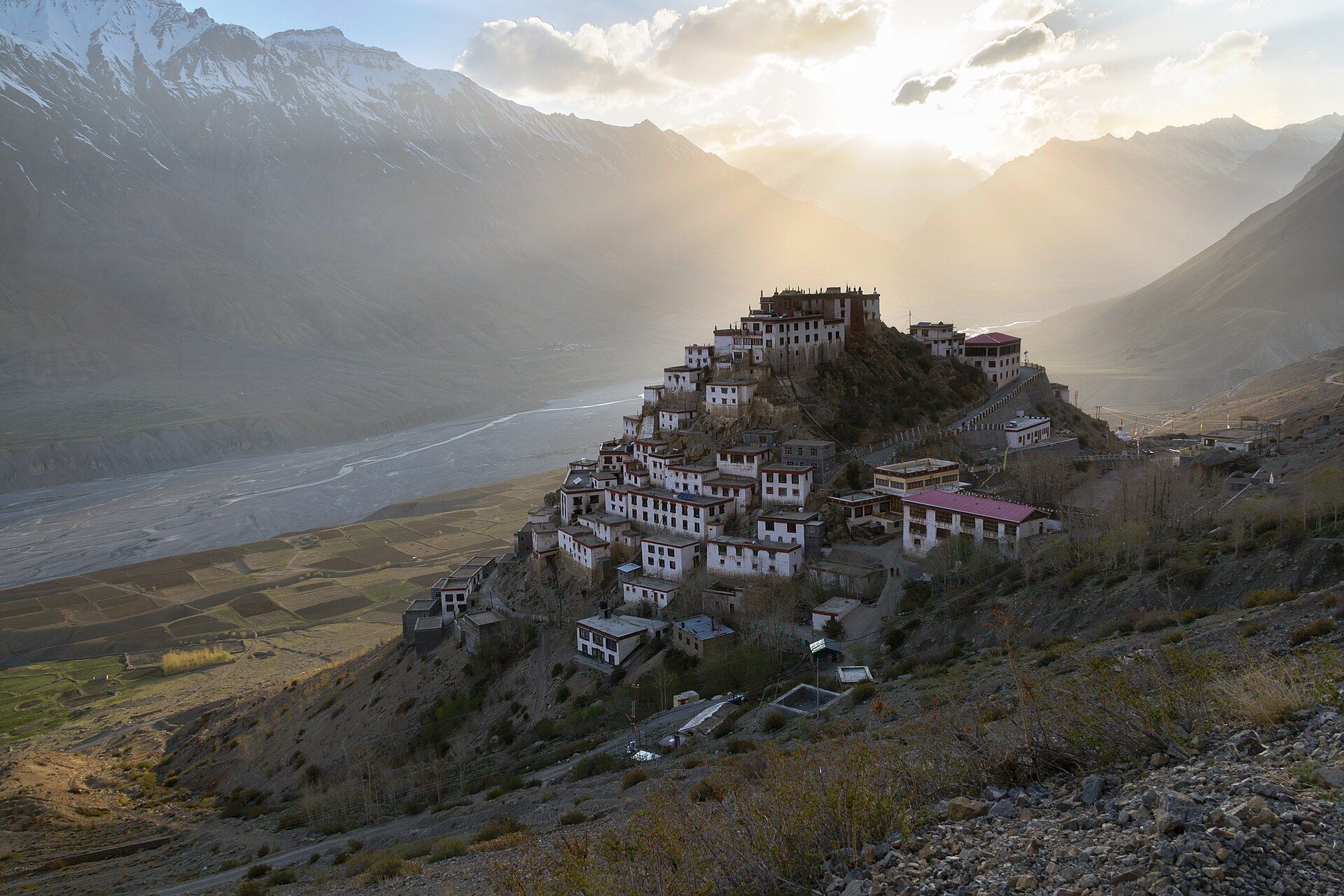
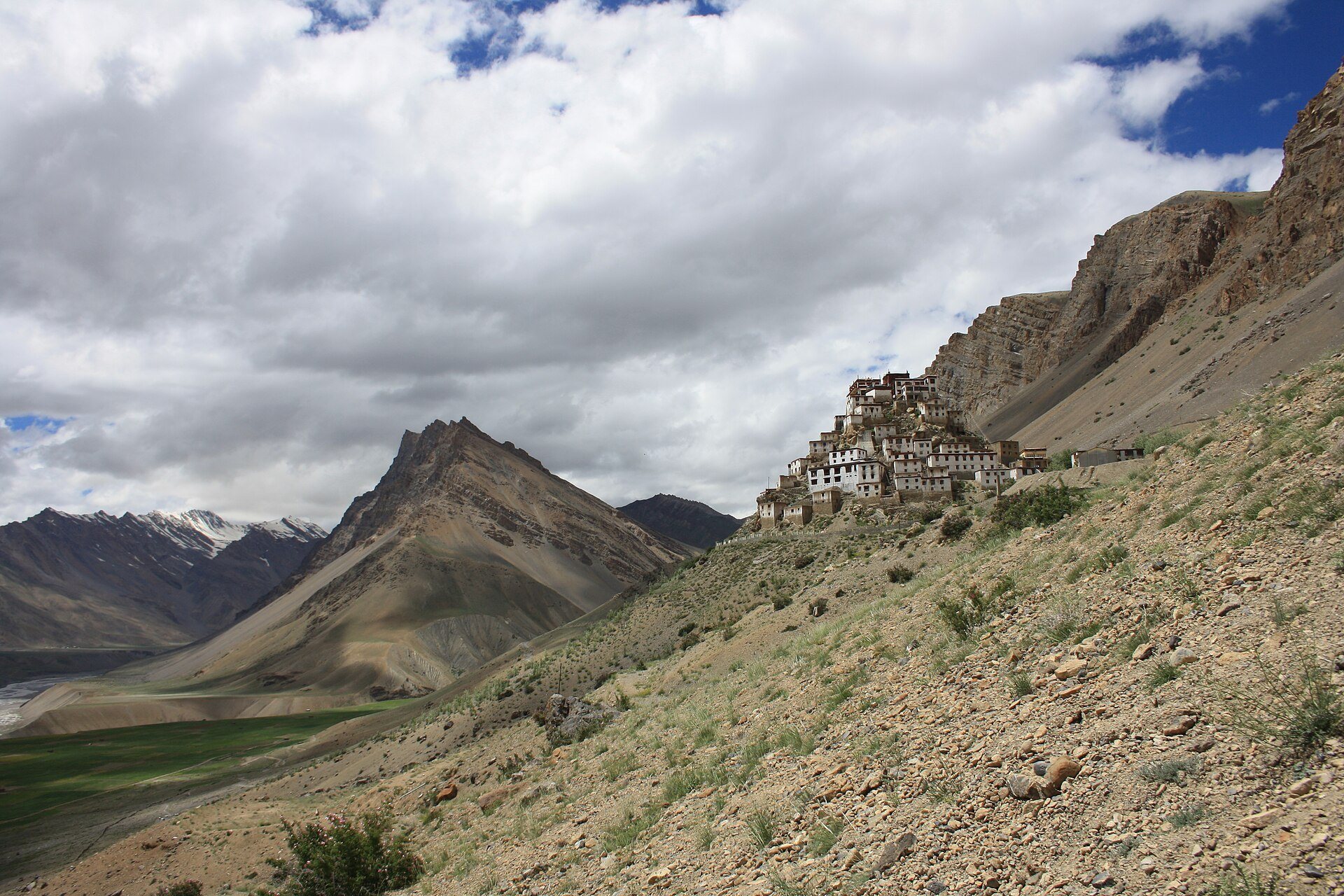
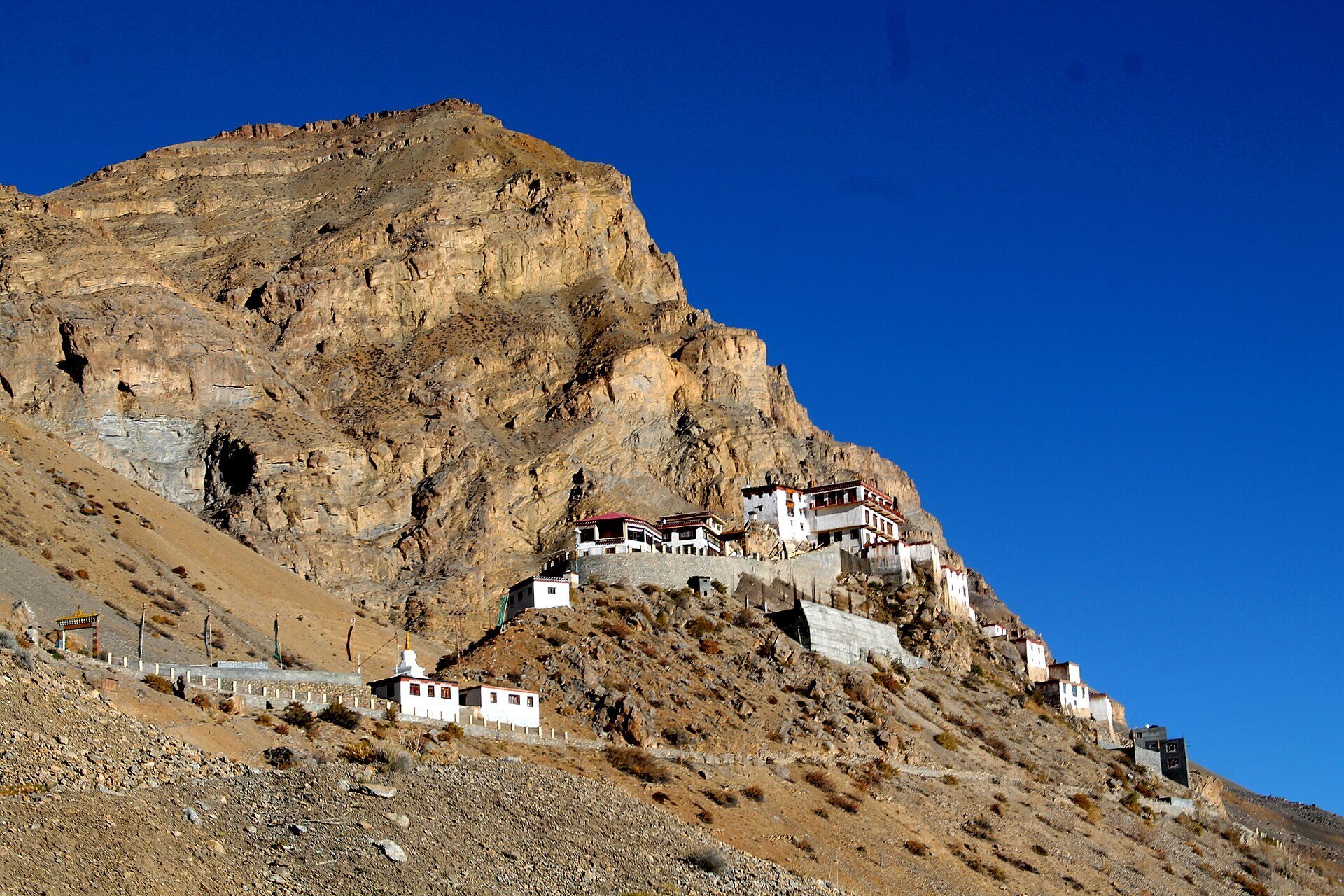
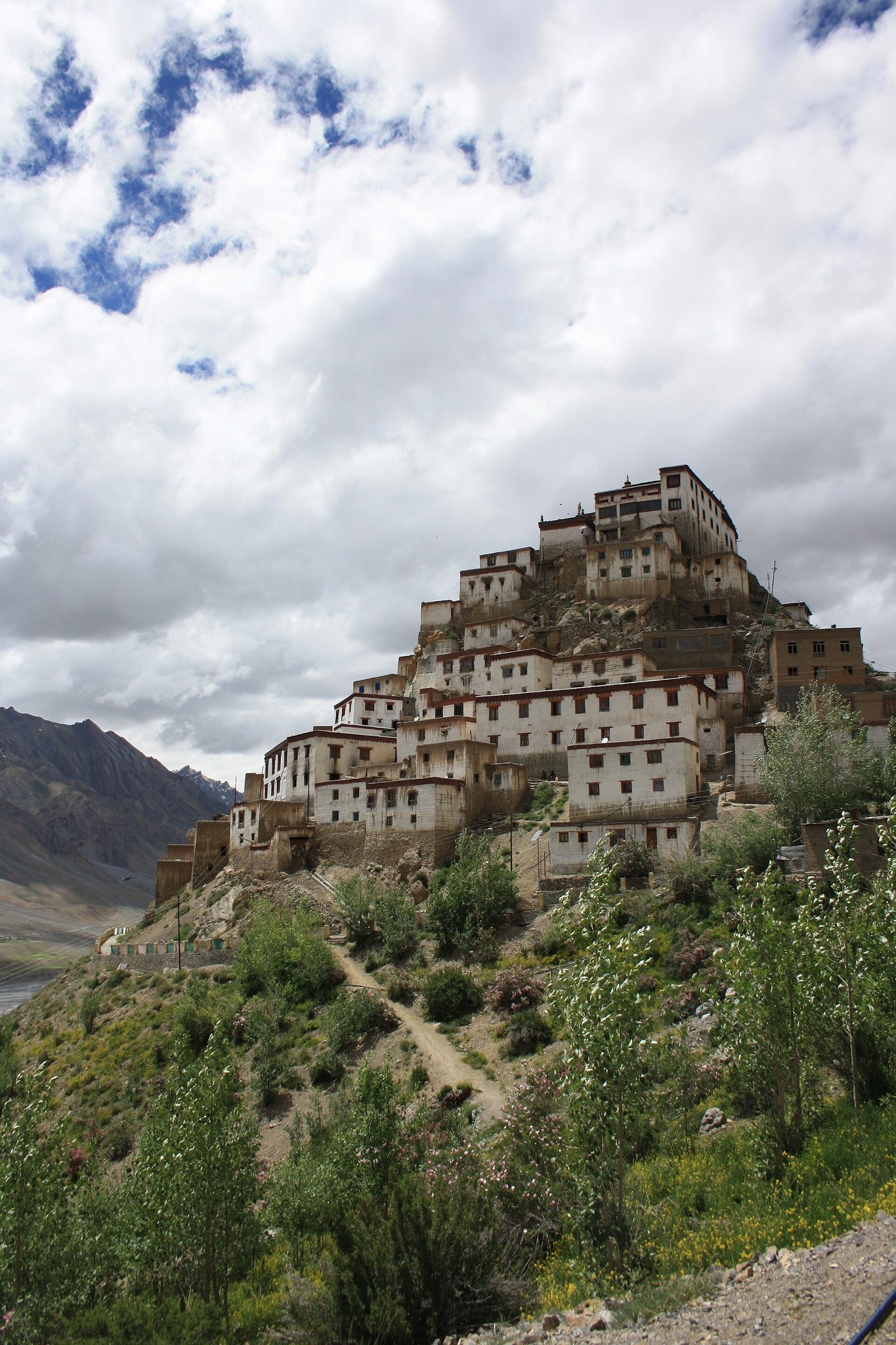
The monastery stands on a hilltop 4,166 metres above sea level near the Spiti River, about 12 kilometres north of Kaza. Repeated attacks shaped the complex into a fortified appearance rather than that of a conventional monastery. Its dzong form, meaning a fortified Himalayan monastic or administrative complex, is arranged across three floors. The lowest floor lies mainly underground and is used for storage.
Rooms, passages, and prayer spaces
Inside, low-ceilinged rooms connect through narrow corridors, dimly lit passages, complicated stairways, and small doors leading to prayer rooms. The prayer rooms do not follow a single unified design. The complex also contains cells for many monks and a decorated assembly hall, reflecting its continuing function as a religious and residential centre.
Murals, books, and religious images
The Tangyur room is richly decorated with murals, while paintings, murals, and thangkas cover the walls elsewhere in the monastery. A thangka is a traditional Tibetan Buddhist religious painting, usually made on cloth. These decorations are described as examples of fourteenth-century monastic architecture developed under Chinese influence. The monastery preserves ancient murals and books, including images of the Buddha.
Dedication
Key Monastery is dedicated to Lochen Tulku, identified as the twenty-fourth reincarnation of Lotsawa Rinchen Zangpo, a translator and teacher. The title Lochen means “great translator,” while a tulku is a recognized reincarnate religious teacher.