St. Catherine’s Church, Nuremberg: A Dominican Convent Church
Site at a Glance
- Popularity
- High
- Country
- Germany
- Primary era
- Medieval
- Eras represented
- Medieval
- Civilizations
- Holy Roman Empire
- Site type
- Religious
- Remains
- Monastery
On this page5 sections
History
St. Catherine’s Church in Nuremberg, Germany, was the Gothic church of a Dominican convent, a community and residence for women belonging to a Catholic religious order. Konrad von Neumarkt and his wife Adelheid founded the convent in 1295, and the church was consecrated in 1297. Adelheid belonged to the Nuremberg patrician family Pfinzing von Henfenfeld. The convent was within the Diocese of Bamberg, a territorial church jurisdiction.
Reform and dissolution
At the urging of Nuremberg’s council, the convent adopted strict observance in 1428, following the example of the Dominican convent at Schönensteinbach in Alsace. This meant more rigorous adherence to the community’s religious rule. St. Catherine’s flourished as a religious and intellectual center and became a leading Dominican convent in the Teutonia province, a regional division of the order. It also helped bring reforms to other convents.
After Nuremberg adopted Lutheranism during the sixteenth-century Reformation, the movement that produced Protestant churches, the convent was barred from admitting new members after 1525. It declined despite resistance. In 1578, management of its property passed to the Nuremberg Katharinenamt, the office responsible for administering the convent’s holdings. The convent closed after its last member died in 1596.
Religious, educational, and cultural uses
The church was restored in 1614 for intended evangelical services. The former convent buildings served as meeting rooms for the Meistersingers, German-speaking poet-musicians who composed and performed songs in organized traditions, until 1620. From that year until 1778, the singers regularly met in the church. The Academy of Fine Arts, founded in 1662, moved into the convent buildings in 1699 and held classes there until 1806. The former convent became an important center for art education in Baroque Germany, during a European artistic period prominent in the seventeenth and early eighteenth centuries.
After 1806, the rooms were used for various secular and cultural purposes, including political meetings during the Revolution of 1848. From 1887 into the 1930s, the church hosted chamber concerts associated with the Meistersingers. Richard Wagner’s opera Die Meistersinger von Nürnberg opens at St. Catherine’s, but its mid-sixteenth-century setting predates the singers’ regular use of the church, which began in 1620.
War and destruction
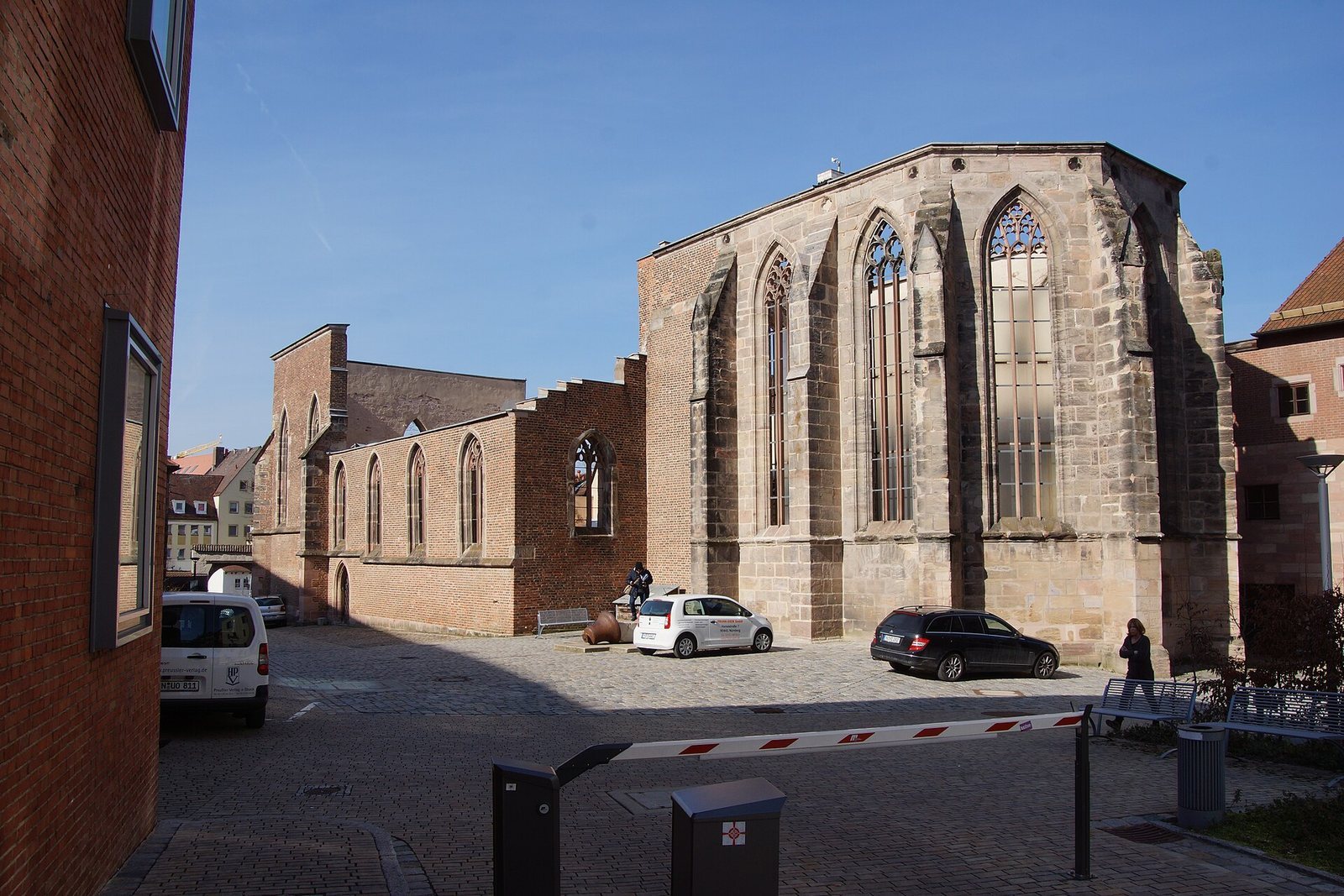
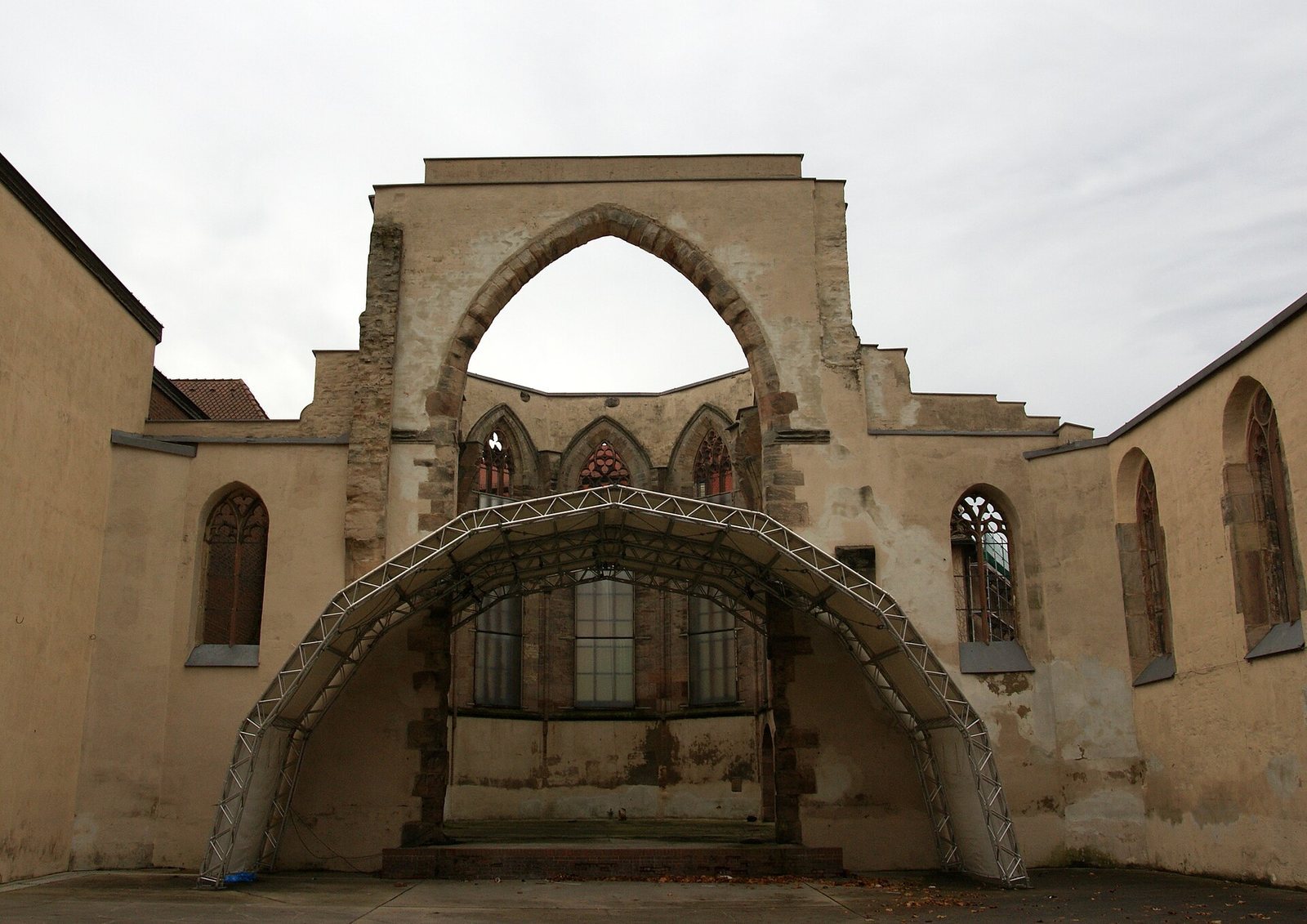
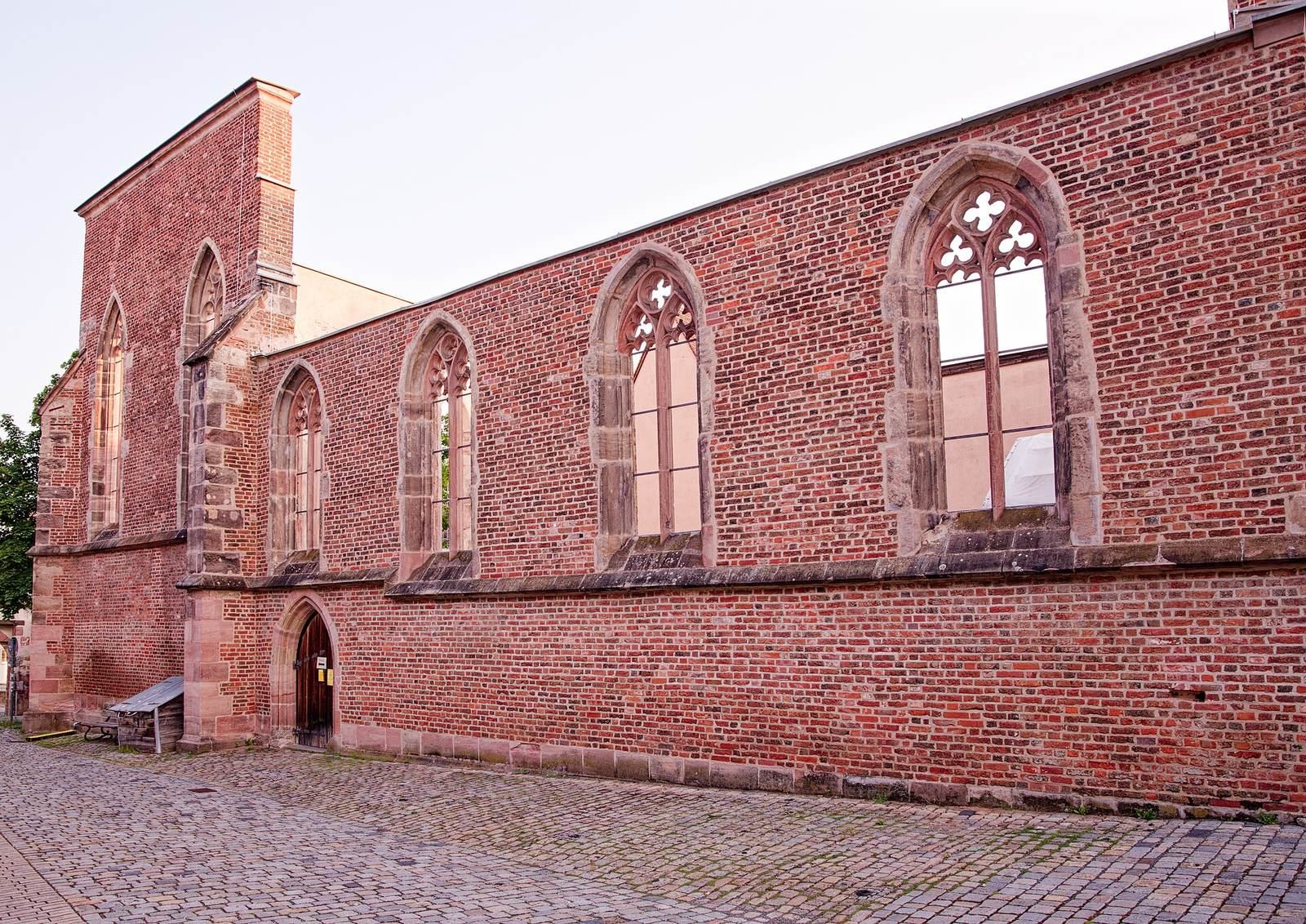
Following Austria’s annexation in 1938, Nuremberg Lord Mayor Willy Liebel brought the imperial regalia, objects associated with the authority of the Holy Roman emperors, including the emperor’s crown, from a Viennese palace for display at the church in 1938–39. The objects were later moved to a bunker for the duration of the war. An air raid on 2 January 1945 left the church and convent in ruins. The remains were secured in 1970–71, and the ruin has since been used for events such as open-air concerts, in part because of its acoustics.
Remains
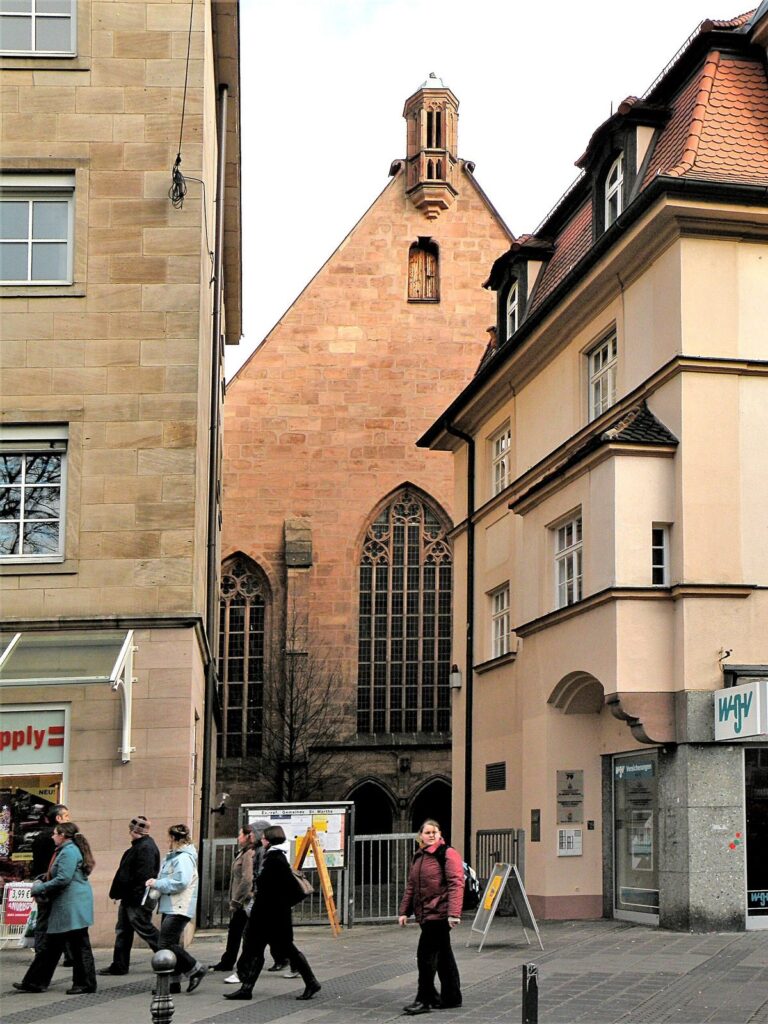
The church was built as a Gothic three-aisled basilica, with a central nave flanked by two side aisles. It survives as a ruin, secured in 1970–71.
The former nuns’ refectory, the convent’s communal dining hall, was converted into a Meistersinger museum during the period when the church hosted concerts.