Karolinum: Historic College and Seat of Charles University in Prague
Site at a Glance
- Rating
- 4.8
- Popularity
- High
- Country
- Czechia
- Primary era
- Early Modern
- Eras represented
- Medieval, Early Modern, Modern
- Civilizations
- Austria-Hungary, Habsburg, Habsburg Austria, Holy Roman Empire, Kingdom of Bohemia
- Site type
- Civic
- Remains
- University
On this page13 sections
History
The Karolinum is the historic college of Charles University in Prague, Czechia, formed around a Gothic palace adapted for university use in 1383–1386. It became the university’s principal historic seat.
Foundation and first college
Charles University was founded in 1348. Its growth soon created a shortage of lecture rooms and accommodation for teachers and students. Charles IV, king of Bohemia and Holy Roman Emperor, decided to provide a new college. Its organization appears to have drawn on the Sorbonne, a college of the medieval University of Paris, as well as universities established in Kraków in 1364 and Vienna in 1365.
In 1366 the university received the house of Lazar, a Jewish resident of Prague’s Old Town, but adequate teaching space was not available until the early 1380s. The new college took its name from Charles IV and was known in Latin as Collegium Carolinum, or “Charles College.” It provided rooms for teaching and accommodation.
The Rotlev Palace
Jan Rotlev, a royal mintmaster and banker from Kutná Hora, built his wealth after discovering gold deposits at Jílové and establishing a royal mint there. He bought neighboring houses in Prague and turned his residence into a Gothic palace. In the early 1380s, Wenceslaus IV, son of Charles IV and king of Bohemia, arranged for the palace to pass to the university. A charter dated 28 August 1383 records Rotlev’s sale of it to the king; by 1386, the palace and other buildings had been joined as a university complex.
The transfer may also have been intended to protect Rotlev’s son Martin, who faced execution after drawing his sword during a court hearing. Martin had close ties to the royal court and supported the university’s reformist direction.
University use and rebuilding
A later rebuilding accommodated the Jesuits’ law faculty. The Jesuits are a Catholic religious order with a long history of involvement in education. After the Battle of White Mountain in 1620, a major conflict in the Bohemian Revolt, the Karolinum housed the university’s law and medicine faculties.
From 1716 to 1718, František Maxmilián Kaňka carried out a major Baroque rebuilding at the initiative of Václav Xaver Neumann of Puchholtze, a rector and professor of law at Charles University. The work was provisional, and the building’s condition worsened over the following decades. During a visit in 1786, Habsburg monarch Joseph II expressed dissatisfaction with its state, and a sale was considered. In 1802, the decision was made to keep the Karolinum with the university. Renewed patriotic interest in the building as a monument to education in Bohemia appears to have helped secure that outcome.
Modern restoration and continuing role
In the late 19th century, Josef Mocker redesigned parts of the complex in Neo-Gothic style, a revival of medieval Gothic architecture. After the First World War and the establishment of Czechoslovakia, the buildings remained the property of Charles University. During the First Czechoslovak Republic, the period from 1918 to 1938, the Karolinum served as the seat of the German University in Prague.
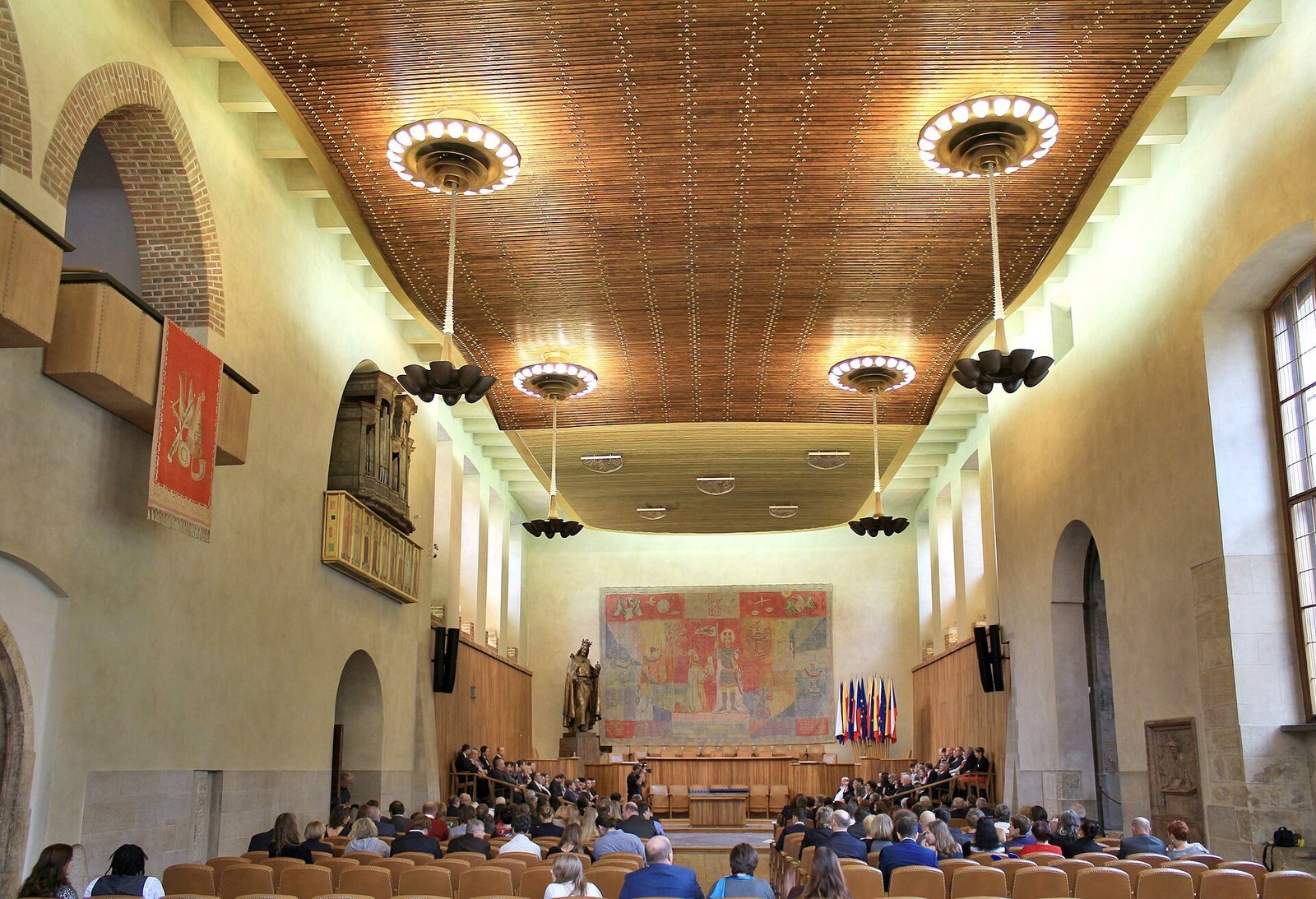
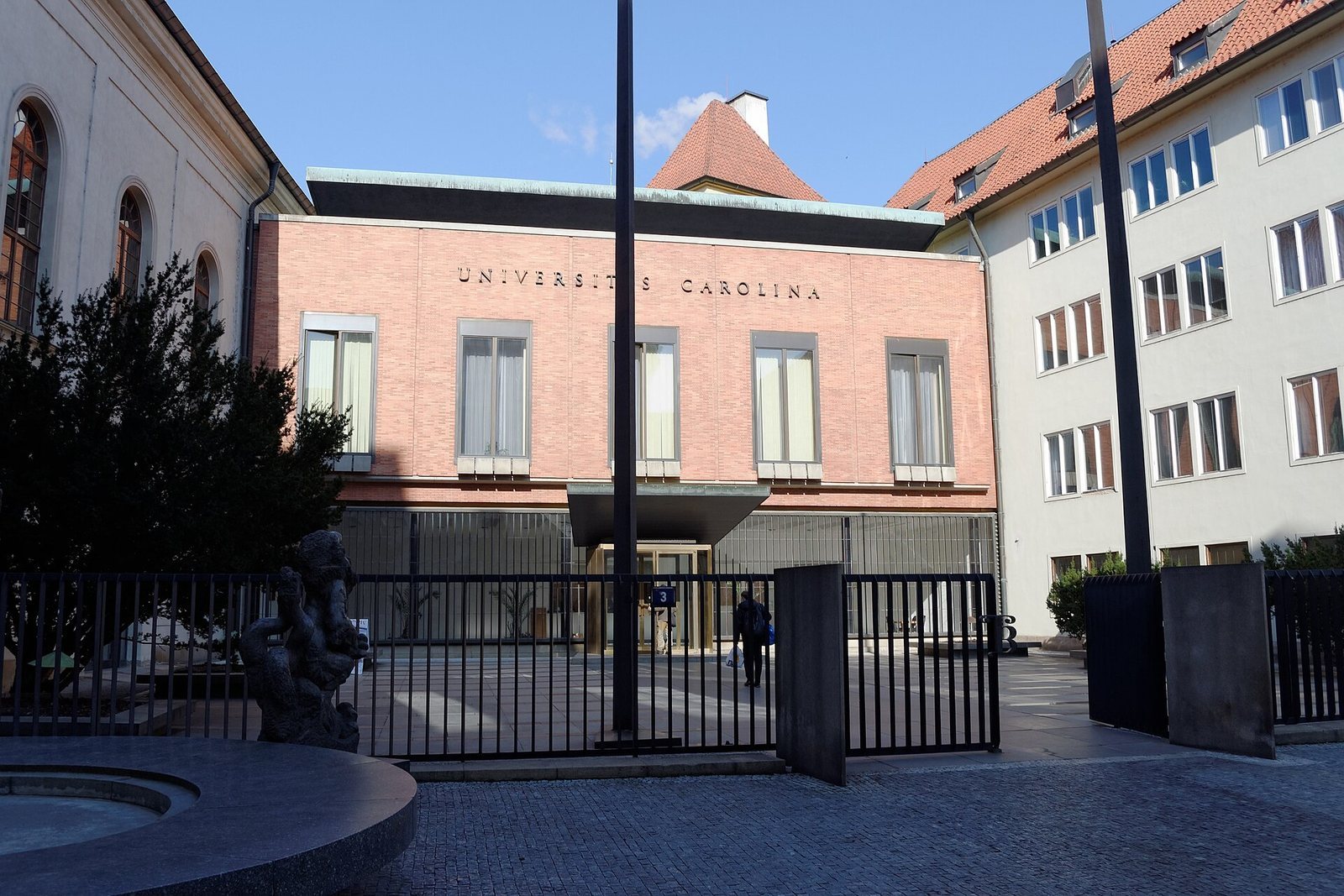
Jaroslav Fragner reconstructed the complex between 1946 and 1968, and Tomáš Šantavý made further alterations in the same style in 1996–1998. The Karolinum now houses the university rector and central institutions, and its academic senate meets there. It also hosts ceremonies including graduations and student matriculations. The main building has been a National Cultural Monument since 1962; other parts of the complex, including associated houses, the fountain, the Jan Hus statue, fencing, and flagpoles, are protected as cultural monuments.
Remains
Layout and architectural fabric
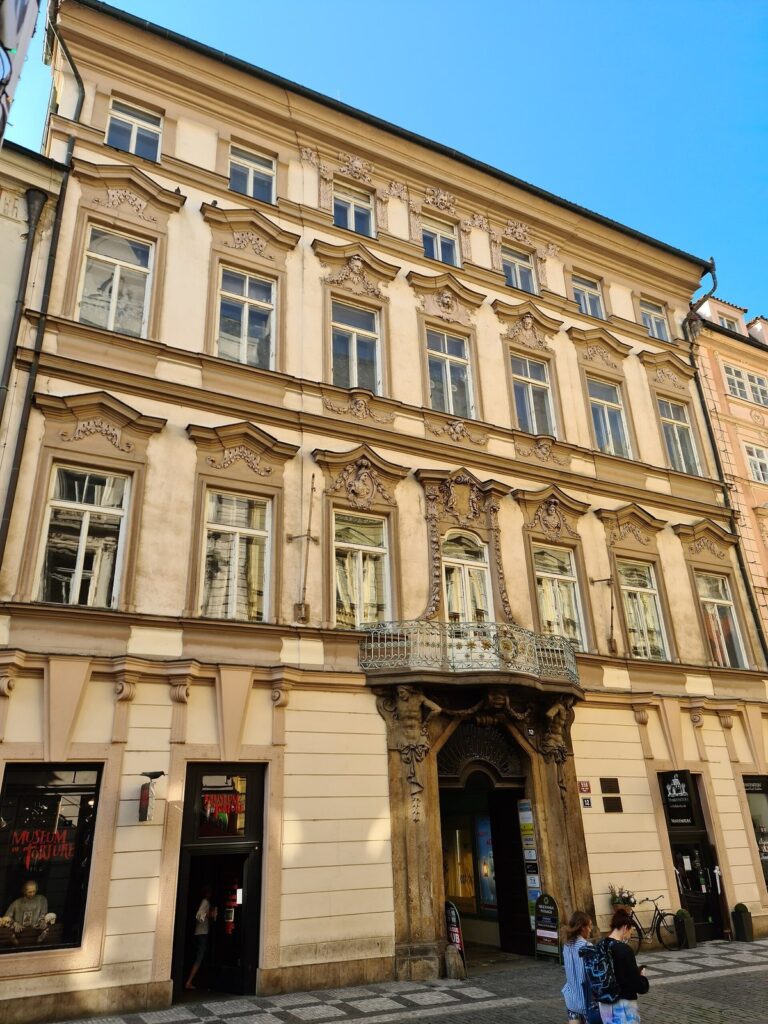
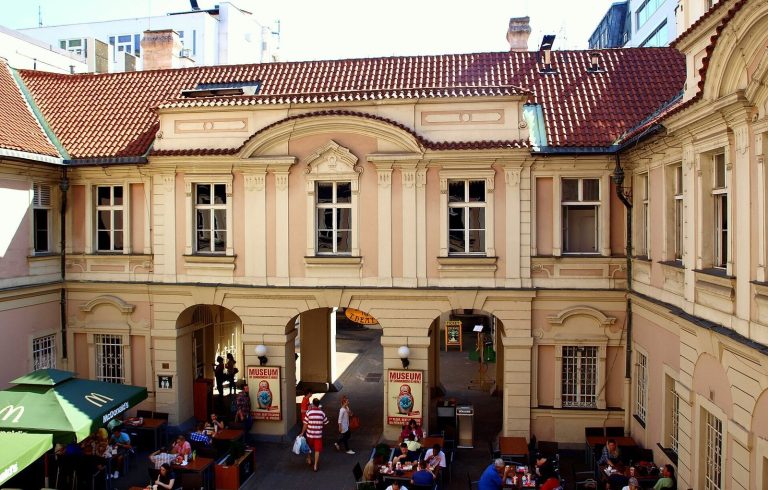
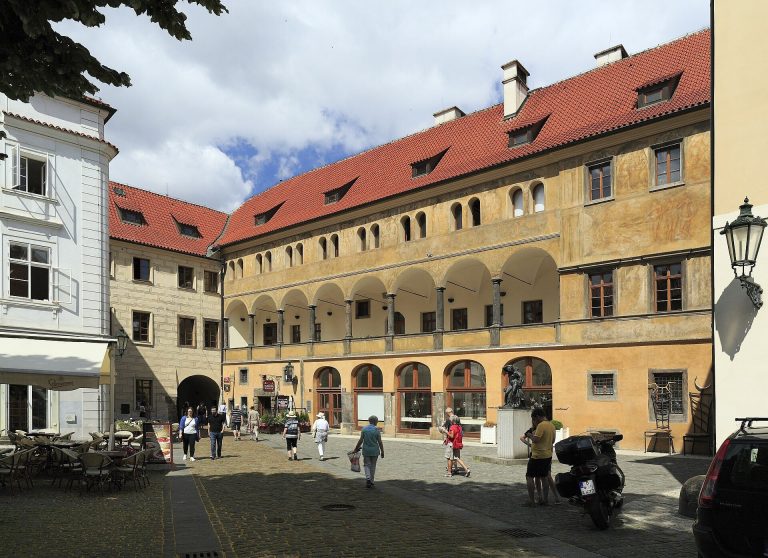
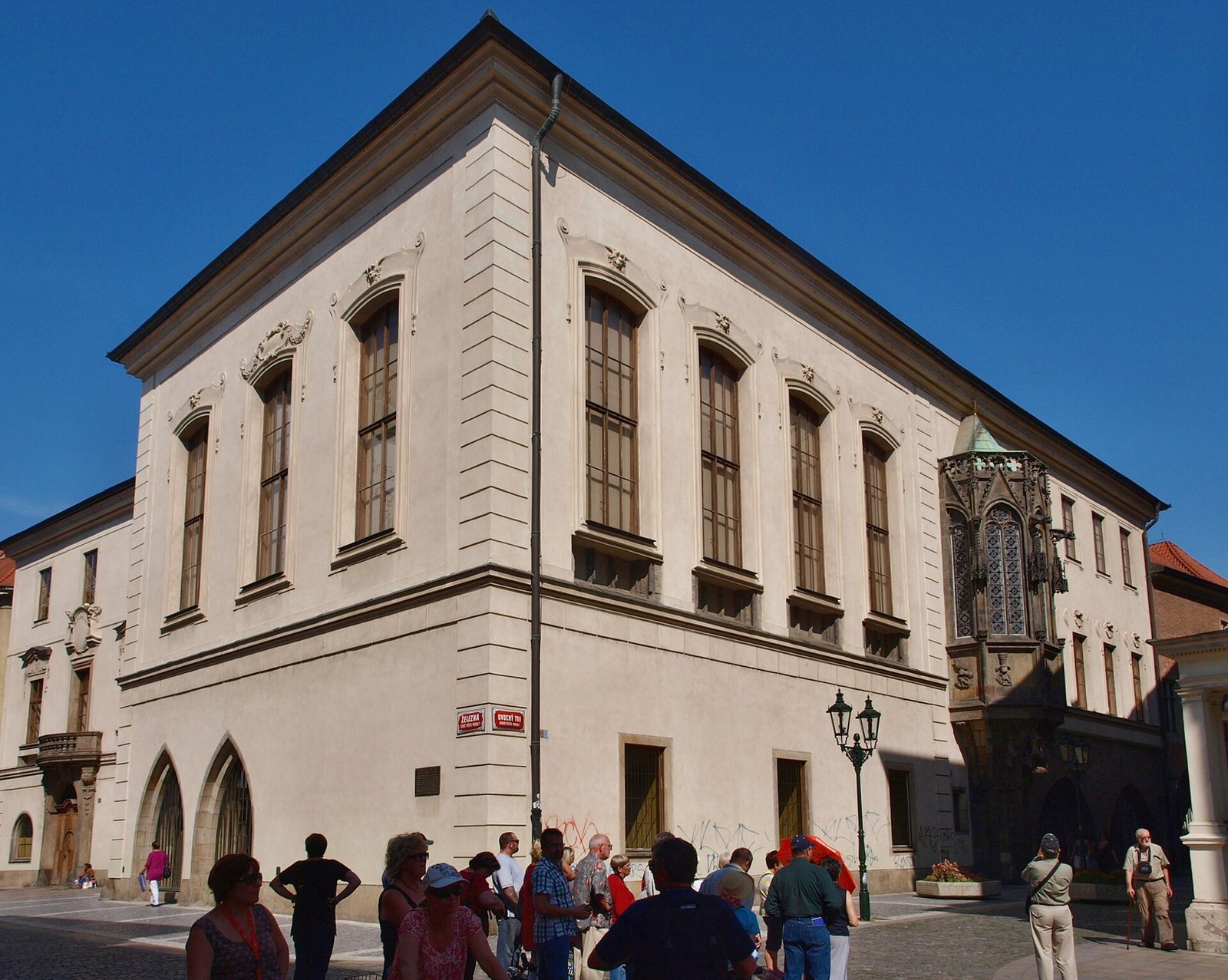
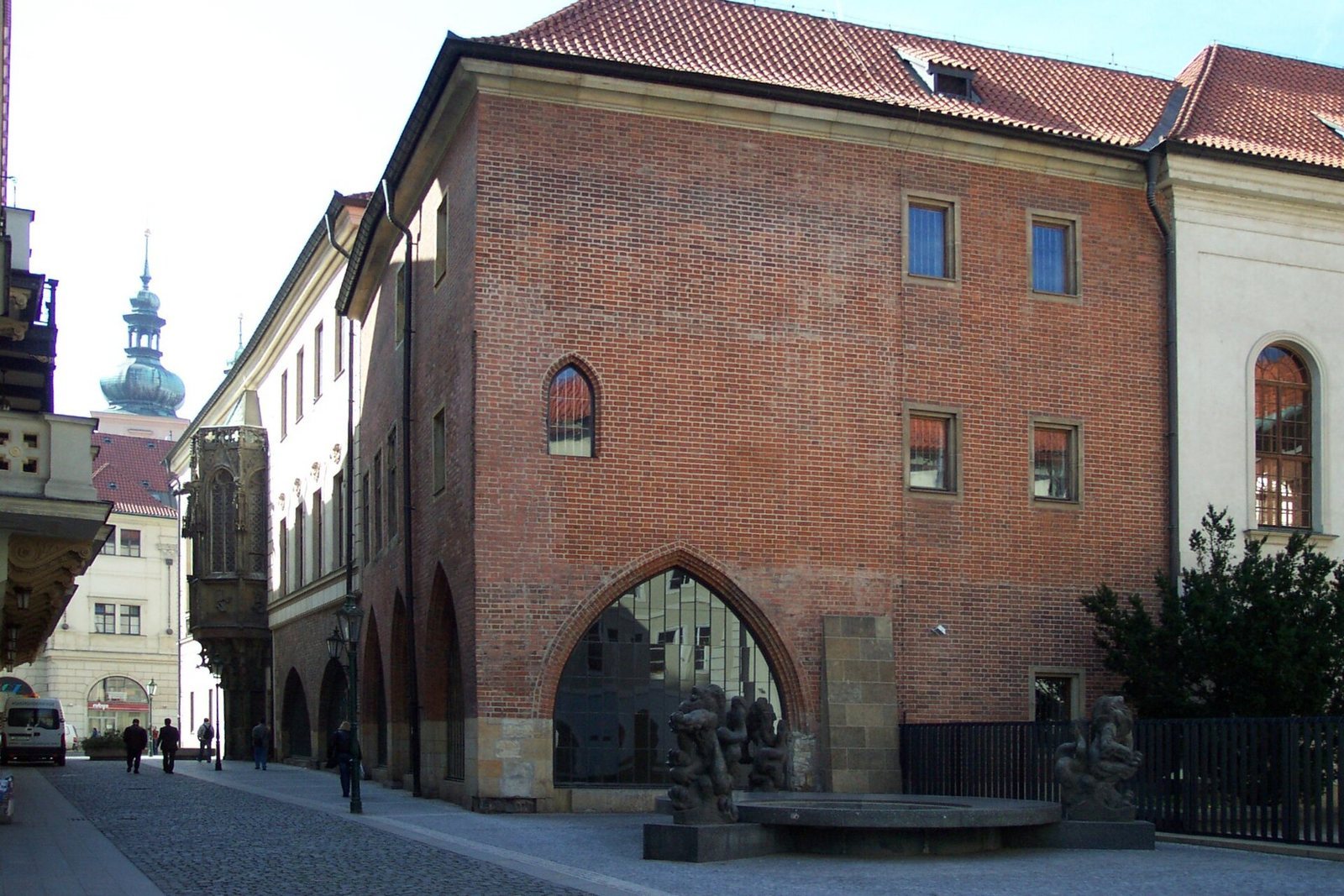
The complex stands in Prague’s Old Town, south of Old Town Square, around the corner of Ovocný trh and Železná streets. The main building lies between Železná, Kamzíková, and Ovocný trh, while the wider complex extends between Celetná Street and Ovocný trh. Its buildings combine Gothic, Renaissance, Baroque, and Neo-Gothic elements; the exterior is predominantly Baroque. A description in the 1383 sale record characterizes the Rotlev Palace as a stone building with towers, a chapel, and 141 windows.
Ground-floor Gothic rooms
Several Gothic spaces survive on the ground floor, including vaulted rooms dating to the 14th century. A Gothic hall faces Ovocný trh.
Upper-floor chapel and Great Hall
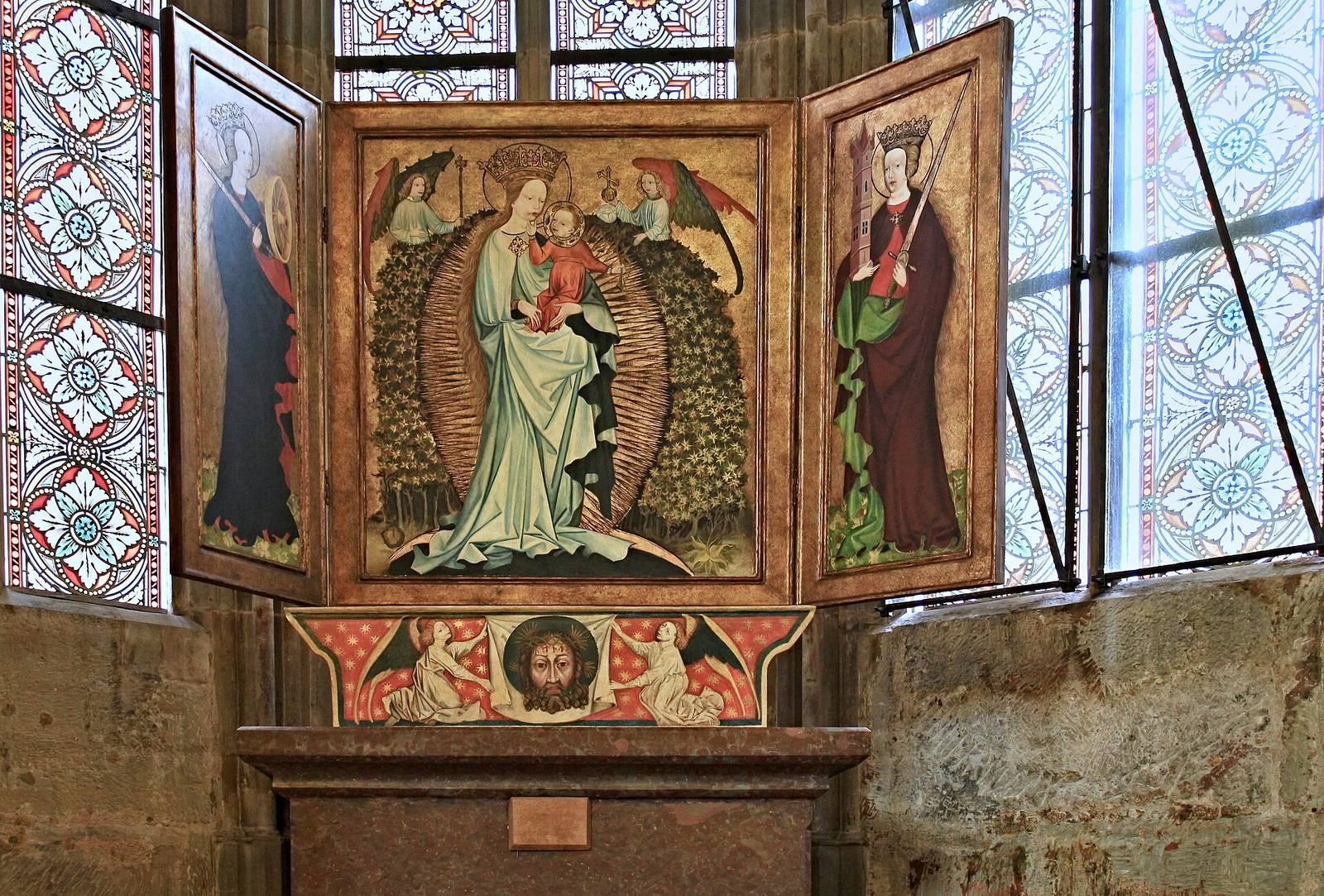
The upper floor contains a Gothic oriel chapel, set in a small projecting bay, with an altar, as well as the Great Hall. The Rotlev family coat of arms forms part of the oriel’s decoration.
Other historic details
Features elsewhere in the complex include a former arcade of the Rotlev Palace, a Gothic cloister, meaning a covered walk around a courtyard, a Renaissance window, and a Baroque portal associated with Kaňka.
Wings, associated houses, and exterior features
Main wings and associated houses
The main building includes the Hafenek Wing, the Rector’s Wing, and the Southeast House. Bubnovský House, number 559, has a courtyard wing and an enclosure wall. U Nožičků House, number 560, includes a southern courtyard building and the Rector’s Tower. The House of St. John, number 561, has a courtyard building, and the complex also includes Buquoy House, number 562.
Fountains, statue, and boundary features
A fountain with lions stands at the entrance. The Fountain of Science, made in 1972 by Czech sculptor Stanislav Hanzík, is also part of the complex. Its exterior features include a statue of Jan Hus, a Bohemian religious reformer, as well as fencing and flagpoles by the main building.