Jinding: Mount Emei’s Summit and Buddhist Temple Complex
Site at a Glance
- Rating
- 4.7
- Popularity
- Low
- Country
- China
- Primary era
- Modern
- Eras represented
- Early Modern, Modern
- Civilizations
- Chinese
- Site type
- Religious
- Remains
- Temple
On this page9 sections
History
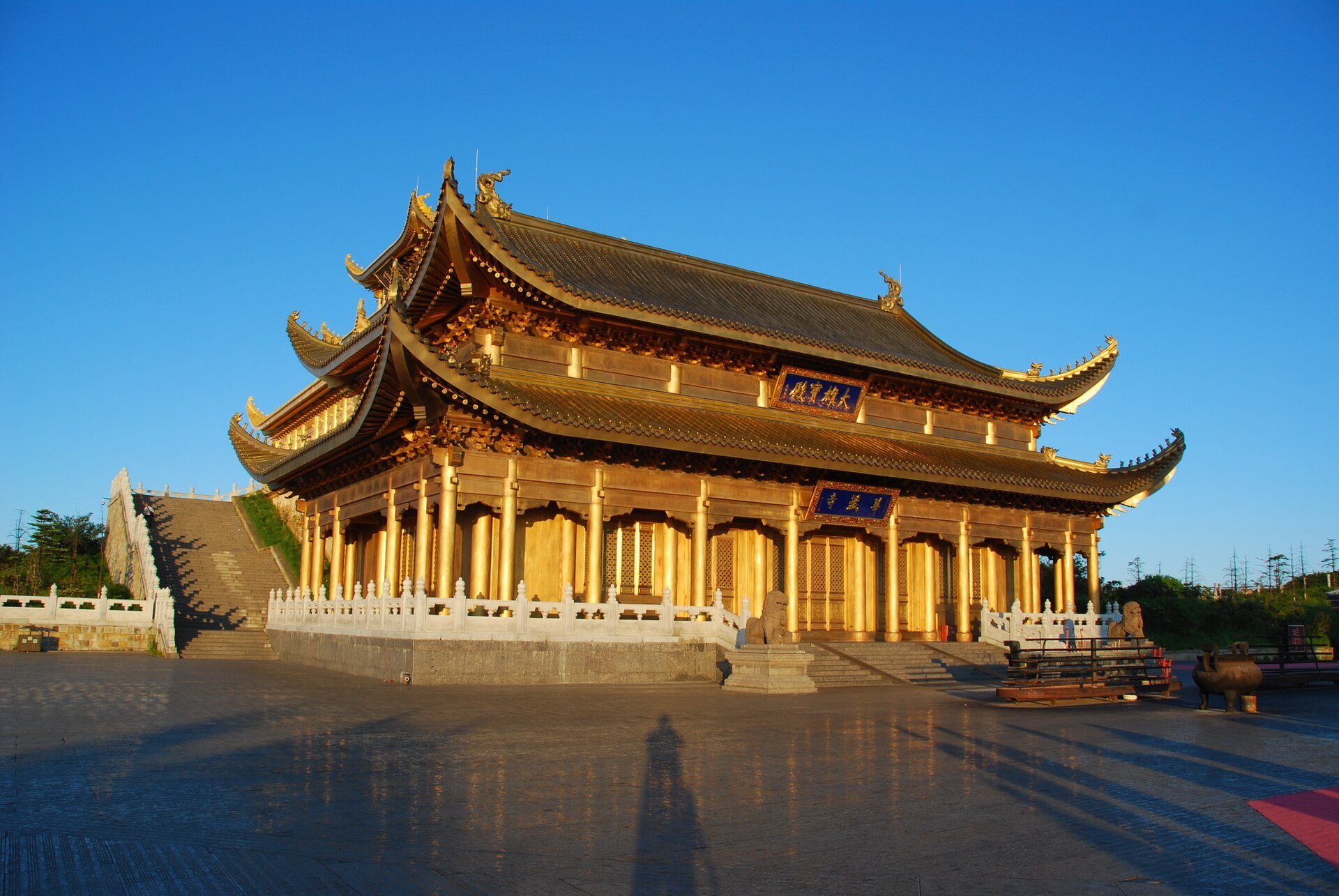
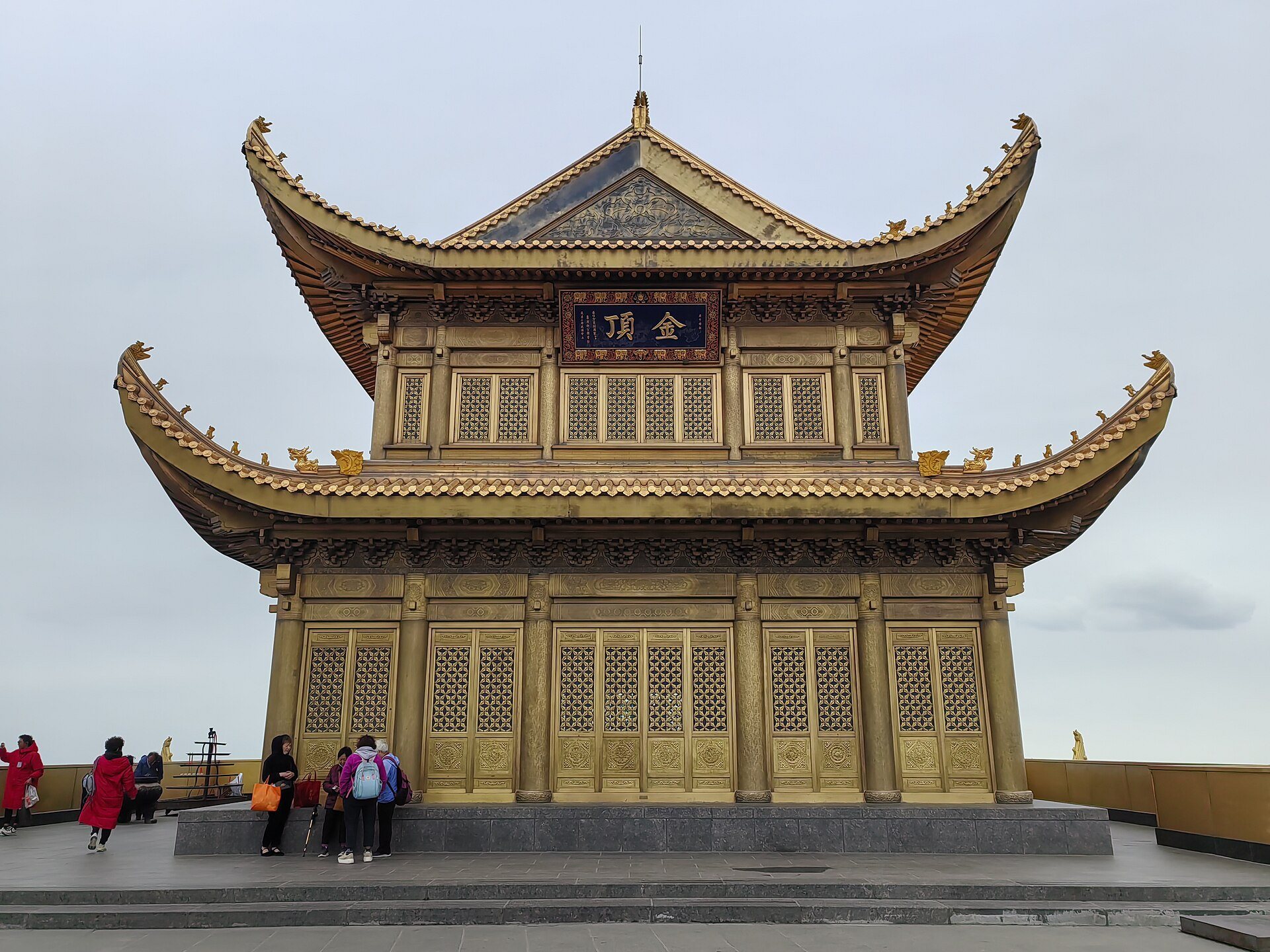
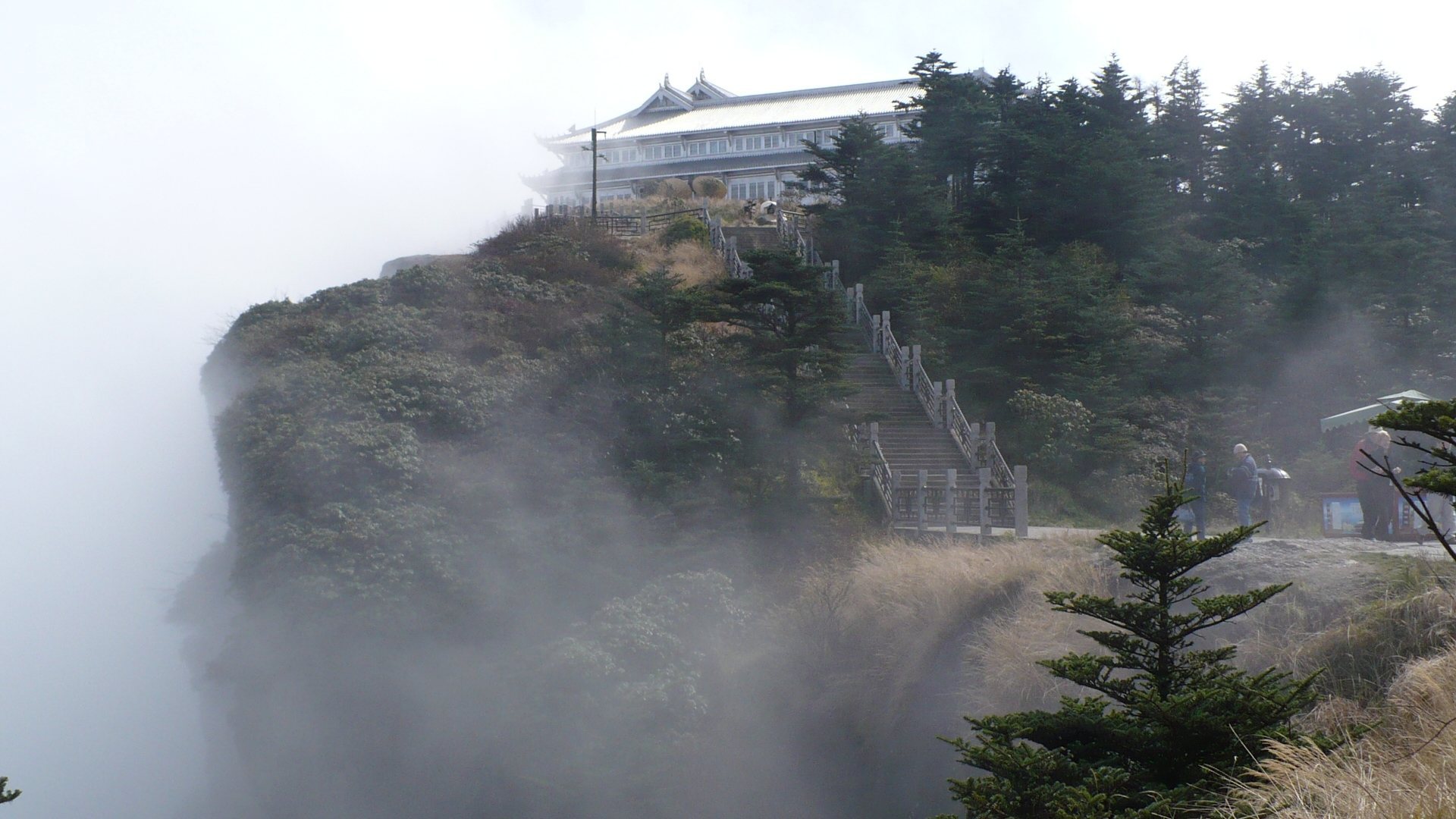
Jinding is the 3,077-metre main peak of Mount Emei in Sichuan, China, and the name commonly used for Huazang Temple, a Buddhist temple built on the summit. The temple is described as the highest Buddhist temple in the traditionally Han areas of China, while Mount Emei is a UNESCO World Heritage Site. Jinding, meaning “Golden Summit,” is also associated with four celebrated phenomena: sunrise, a sea of clouds, the Buddhist halo, and the divine light.
Ming origins and religious development
Huazang Temple was first built in 1377 during the Ming dynasty, which ruled China from 1368 to 1644. Fires led to several rebuildings over the centuries. The complex remained closely associated with Buddhist worship on Mount Emei and with the summit’s religious importance.
Destruction and reconstruction
During the Cultural Revolution, a political and social movement in China from 1966 to 1976 that severely disrupted religious institutions and damaged or repurposed cultural heritage, Huazang Temple was used as a transmission station for a local television service. On 8 April 1972, a power generator caused a fire that engulfed the wooden temple. The blaze burned for two days and destroyed the building, many trees, and numerous Buddhist relics.
In 2004, the Mount Emei Buddhist Association began rebuilding Huazang Temple through the Jinding Revival and Renovation Plan. The reconstructed complex officially opened on 18 June 2006. It attracted Buddhist pilgrims and tourists, but the new construction was also criticized as revenue-oriented and as lacking historical and cultural authenticity. In March 2016, the Ten-faced Puxian stupa was temporarily closed for renovation, including a plan to apply 160,000 gold leaves.
Remains
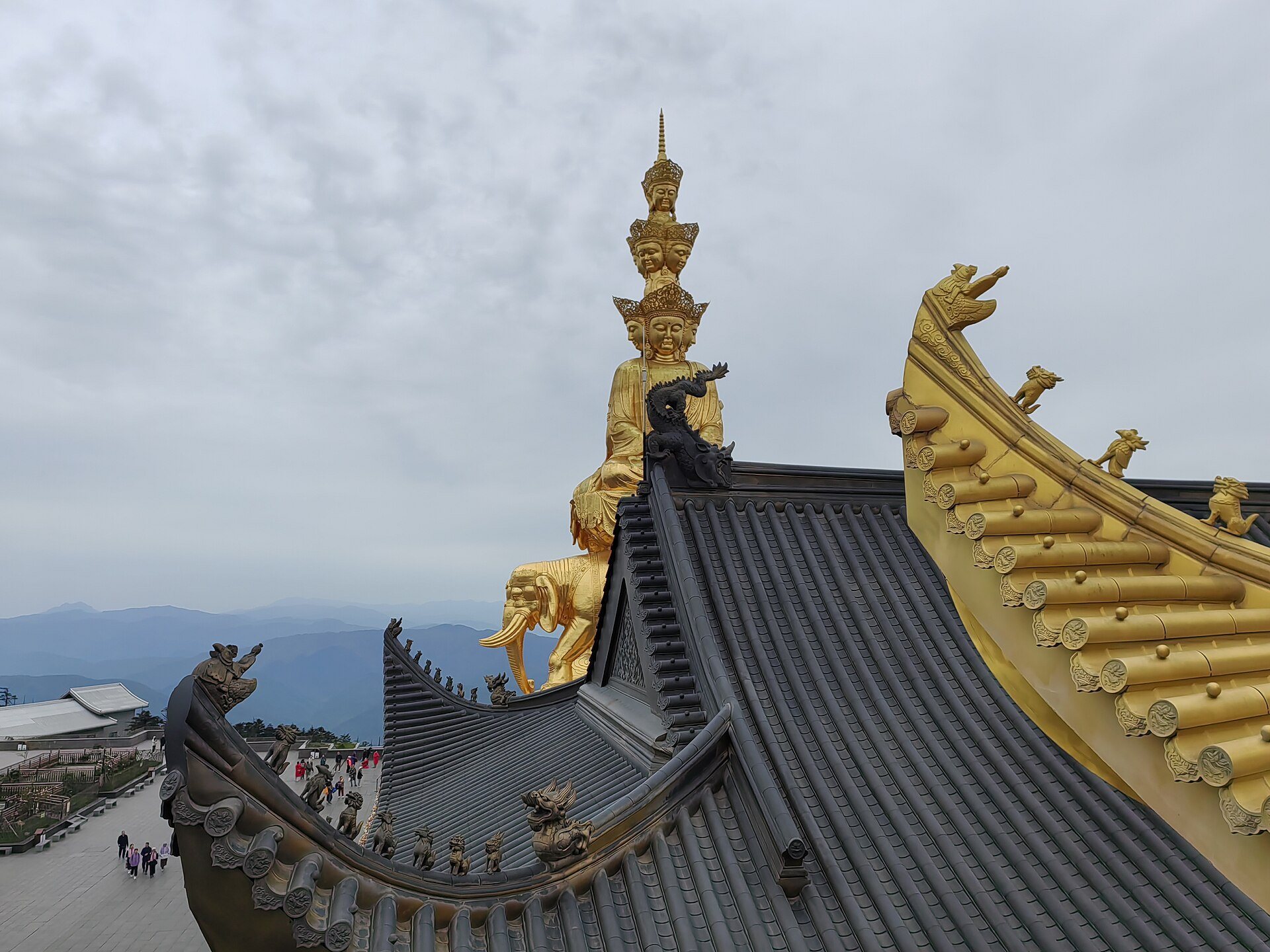
The Jinding complex follows a central axis along a slope. From the lowest point upward, the sequence consists of the Ten-faced Puxian stupa, the main hall, and the Puxian Hall. Together, these structures organize the summit temple around a rising route from the stupa to the highest building.
Central-axis buildings
Ten-faced Puxian stupa
The Ten-faced Puxian stupa is a Buddhist monument 48 metres tall and weighing 660 tonnes. A stupa is a structure associated with relics or sacred imagery. Urns containing the ashes of Buddhists surround the monument, while a statue of Maitreya, the Buddhist bodhisattva regarded as the future Buddha, stands inside it. The Puxian figure on the stupa holds a ruyi, a ritual object associated with authority and the granting of wishes, in one hand and forms the Dhyana Mudra, a meditation gesture, with the other.
Grand Hall of the Great Sage
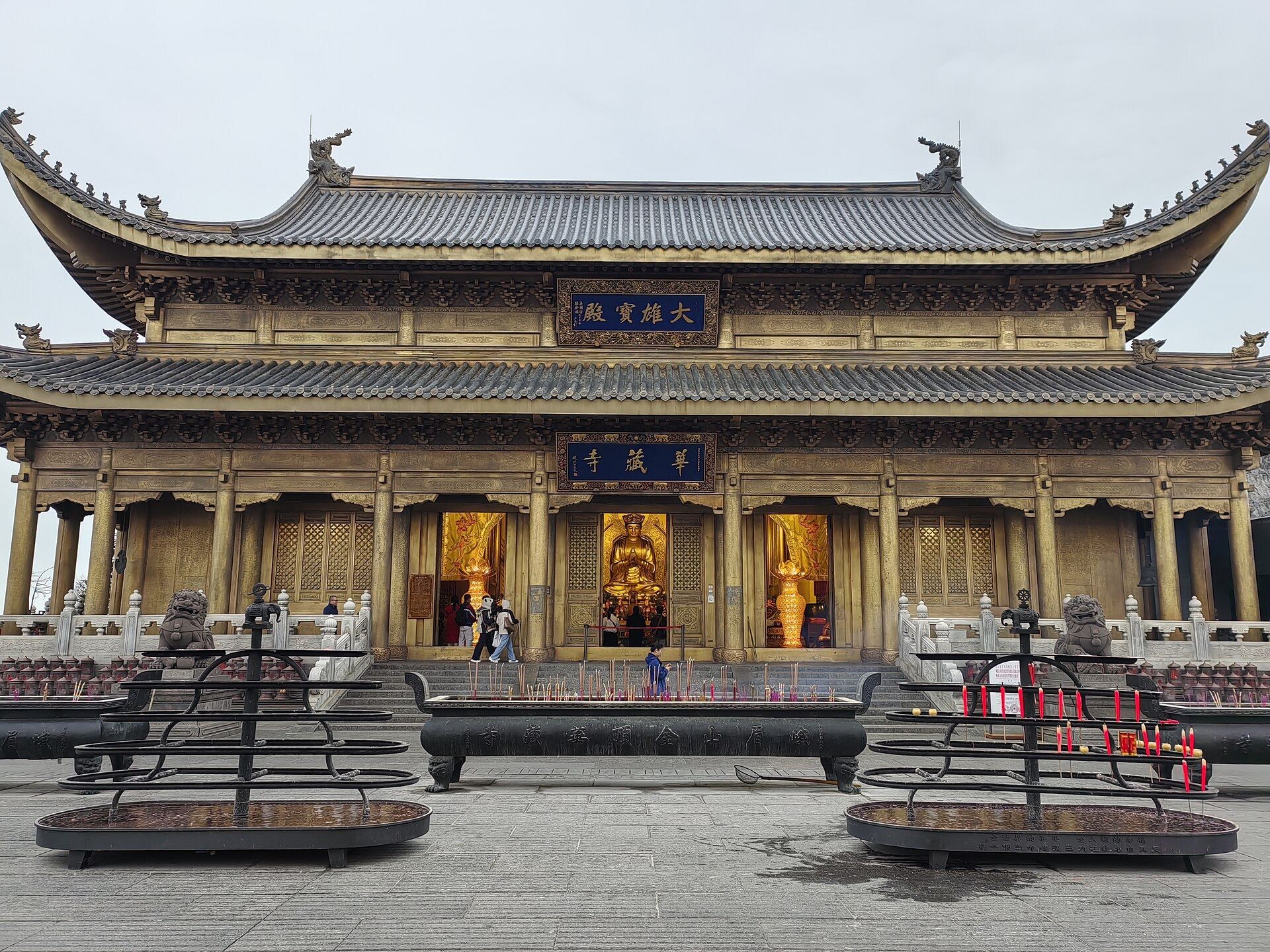
The Grand Hall of the Great Sage, also called the Mahavira Hall, is the complex’s main hall. It houses statues of Gautama Buddha and two disciples.
Puxian Hall
The Puxian Hall stands behind the main hall at the highest point of the complex. Built in 1615, it is more than 8 metres tall and is associated with Puxian, the Chinese Buddhist name for Samantabhadra, a bodhisattva linked with practice and universal virtue.
Surviving historic objects
Three notable objects survived the 1972 fire: a bronze monument from the Ming dynasty, a bronze doorway from the same period, and a bronze statue from the Qing dynasty. The Qing dynasty followed the Ming and ruled China from 1644 to 1912.