Jagdschloss Friedrichsruhe: A Hohenlohe Hunting Lodge in Germany


Site at a Glance
- Rating
- 4.7
- Popularity
- Low
- Country
- Germany
- Primary era
- Early Modern
- External website
- Open
- Eras represented
- Early Modern, Modern
- Civilizations
- Holy Roman Empire
- Site type
- Domestic
- Remains
- Castle
On this page7 sections
History
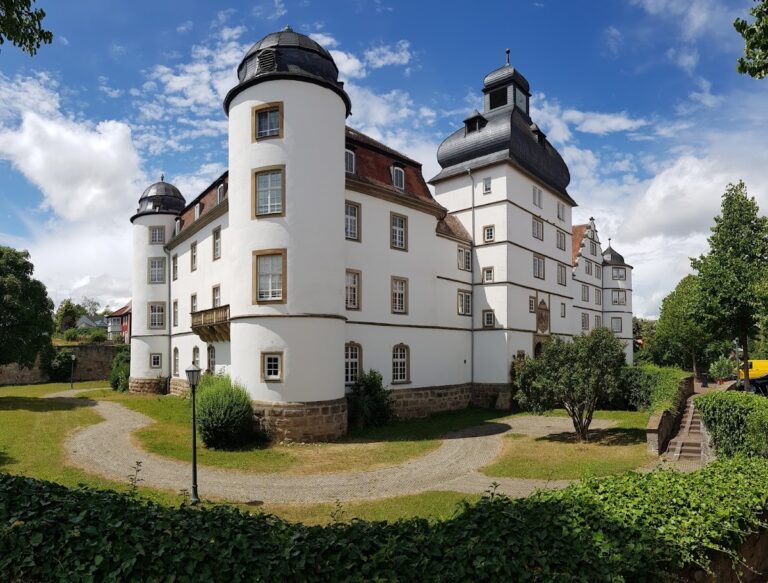
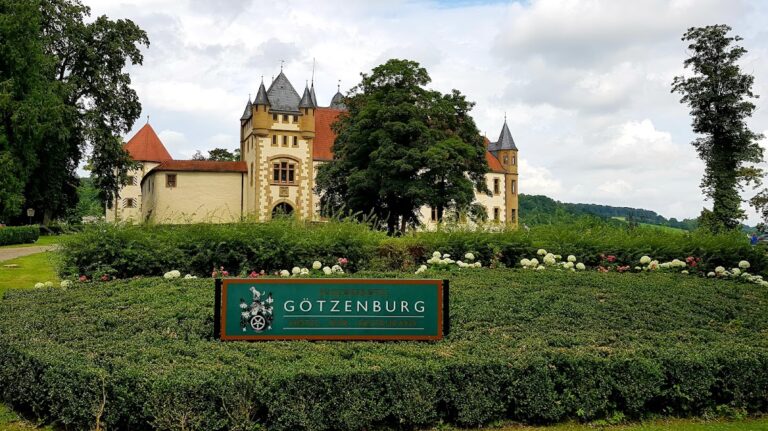
Jagdschloss Friedrichsruhe is an early 18th-century hunting lodge in Zweiflingen, Germany, built by the Hohenlohe dynasty between 1712 and 1717. It replaced an earlier hunting or pleasure house and became a retreat and guesthouse for the princely family in the forests of Friedrichsruhe, a settlement now within the municipality of Zweiflingen in northern Baden-Württemberg.
From hunting preserve to rebuilding
The settlement began in the early modern period under the name Tiergarten. In 1612, Count Kraft of Hohenlohe-Neuenstein established an enclosed hunting preserve there, together with a hunting or pleasure house. The complex was destroyed during the Thirty Years’ War, the European conflict of 1618 to 1648 that brought widespread destruction and population loss across the German lands. It was gradually rebuilt afterward and used for the count’s horse breeding.
By 1708, the pleasure house was described as dilapidated. A replacement castle was therefore begun in 1712 under Count Johann Friedrich II, later Prince of Hohenlohe-Neuenstein. He also commissioned a huntsman’s house and several service buildings around the main building. Construction was completed in 1717.
Princely residence and settlement development
The completed lodge served as a guesthouse for the princely family. Its wooded surroundings supported hunting, riding, and excursions, while the Hohenlohe princes normally lived at nearby Neuenstein Castle. Friedrichsruhe later also served as a residence for members of the princely family.
Construction was partly financed through the dissolution of the former estate farm. Ten farmsteads were created from it, and their houses were arranged along the central axis leading toward the castle. In 1764, Tiergarten was renamed Friedrichsruhe. The settlement then contained 21 residential buildings and 13 ancillary buildings. Around 1799, about 72 people lived there, with fruit cultivation providing an important livelihood.
Friedrichsruhe remained an independent municipality within the Michelbach patrimonial administration until 1812. This type of local authority allowed a landowner to exercise administrative and judicial rights over a territory and its inhabitants. In that year, Friedrichsruhe became part of Zweiflingen.
Decline, wartime use, and hotel conversion
In 1848, the Hohenlohe-Oehringen princely family moved its residence to Slawentzitz in Silesia, where it developed a major mining and industrial enterprise. The family subsequently visited its castles, including Friedrichsruhe, only occasionally.
After the National Socialists came to power in 1933, the castle was sold to the German Labour Front, the state-controlled organization that replaced independent trade unions and operated recreational facilities. The planned conversion into a recreation home was prevented by the Second World War. During the war, the building served as a warehouse and weapons depot, but it remained undamaged.
Around 1950, after almost a century away, the princely family returned to Neuenstein and chose to convert the hunting lodge and its service buildings into a hotel. A small castle hotel opened in 1953, followed by an extension in 1963. The Würth Group purchased the estate in 2005. The former castle complex now operates as the Wald & Schlosshotel Friedrichsruhe, with 61 rooms and suites, while a nearby spa opened at the end of 2008. Its gourmet restaurant has held a Michelin star since 1974, received two stars from 1979 to 1983 under Lothar Eiermann, and has again held two stars since 2018 under Boris Rommel.
Remains
The surviving complex is organized around the hunting lodge, with additional buildings once placed symmetrically around it. The main building remains in use as part of the Wald & Schlosshotel Friedrichsruhe, while several of the associated service structures also survive. The former estate farm shaped the settlement beyond the immediate castle grounds, where ten farmhouses were arranged along the central axis toward the lodge.
Castle buildings and former inn
The lodge forms the principal surviving element of the complex. The huntsman’s house and other service buildings were added during the construction campaign of 1712 to 1717, creating a coordinated group around the main building. Only some of these supporting structures remain. The former Grüner Baum inn has been renovated and remodelled, and it now contains the hotel’s Jägerstube restaurant.
Pleasure garden and settlement axis
A pleasure garden was created around the lodge in 1783. Part of the surrounding woodland was cleared and arranged as a park-like garden. Beyond this setting, the ten farmhouses formed a planned line along the settlement’s central axis toward the castle, preserving the connection between the former estate farm and the princely lodge.
Nearby sites