Jaganmohan Palace: A Royal Residence and Arts Centre in Mysuru
Site at a Glance
- Rating
- 4.2
- Popularity
- High
- Country
- India
- Primary era
- Modern
- Eras represented
- Modern
- Civilizations
- Unclassified
- Site type
- Domestic
- Remains
- Palace
On this page7 sections
History
Jaganmohan Palace is a former royal residence, arts museum, and auditorium in Mysuru, India, built by the Wadiyar rulers of Mysore between 1856 and 1861 in the traditional Hindu and Indo-Saracenic styles. Standing about 200 metres west of Mysore Palace, it became an important setting for royal residence, ceremony, education, and the arts.
Construction during the Mysore Commission
The palace was commissioned by Maharaja Krishnaraja Wadiyar III after the Nagar uprising of 1830. Following his deposition, the Mysore Commission, an administrative body established to govern the kingdom, took control of Mysore, and the old Mysore Palace was seized. Jaganmohan Palace was planned as a large home for the Maharaja’s family and retainers, with several public and private courtyards.
Construction began in 1856 and was completed in 1861. It was intended to provide a more modern and comfortable alternative to the earlier Mysore Palace, whose exterior resembled a stone citadel while its interior was largely wooden. After the Mysore Commission was dissolved and the kingdom was restored to the Wadiyar line in 1881, the royal family returned to Mysore Palace. Jaganmohan Palace nevertheless continued to host ceremonial events and royal programmes, including music, dance, and poetry gatherings.
Royal residence and public ceremonies
The old Mysore Palace was severely damaged by fire during the 1896 wedding celebrations of Princess Jayalakshmi Devi. It was later demolished and replaced by the present Mysore Palace, whose construction lasted from 1897 to 1912. During this rebuilding period, Jaganmohan Palace became the principal residence of Maharaja Krishnaraja Wadiyar IV and his family.
Between 1897 and 1912, the palace hosted personal and official ceremonies. These included Krishnaraja Wadiyar IV’s coronation by George Curzon in 1902, the Maharaja’s daily durbar, a formal royal court or public audience, and major Mysore Dasara ceremonies. Mysore Dasara is the royal and religious festival tradition associated with the wider Hindu festival of Dasara. The palace also hosted the first session of the Mysore Representative Council in July 1907, presided over by Dewan V. P. Madhava Rao, and early convocations of the University of Mysore.
Art gallery and cultural institution
Krishnaraja Wadiyar IV converted Jaganmohan Palace into an art gallery in 1915. In 1950, Maharaja Jayachamarajendra Wadiyar placed the palace under a trust and opened it to the public. Five years later, the gallery was enlarged with gifts of precious articles from the Maharaja. In 1980, Srikantadatta Wadiyar renamed it the Sri Jayachamarajendra Art Gallery in honour of his father. The palace is overseen by Pramoda Devi Wadiyar, a member of the Wadiyar royal family.
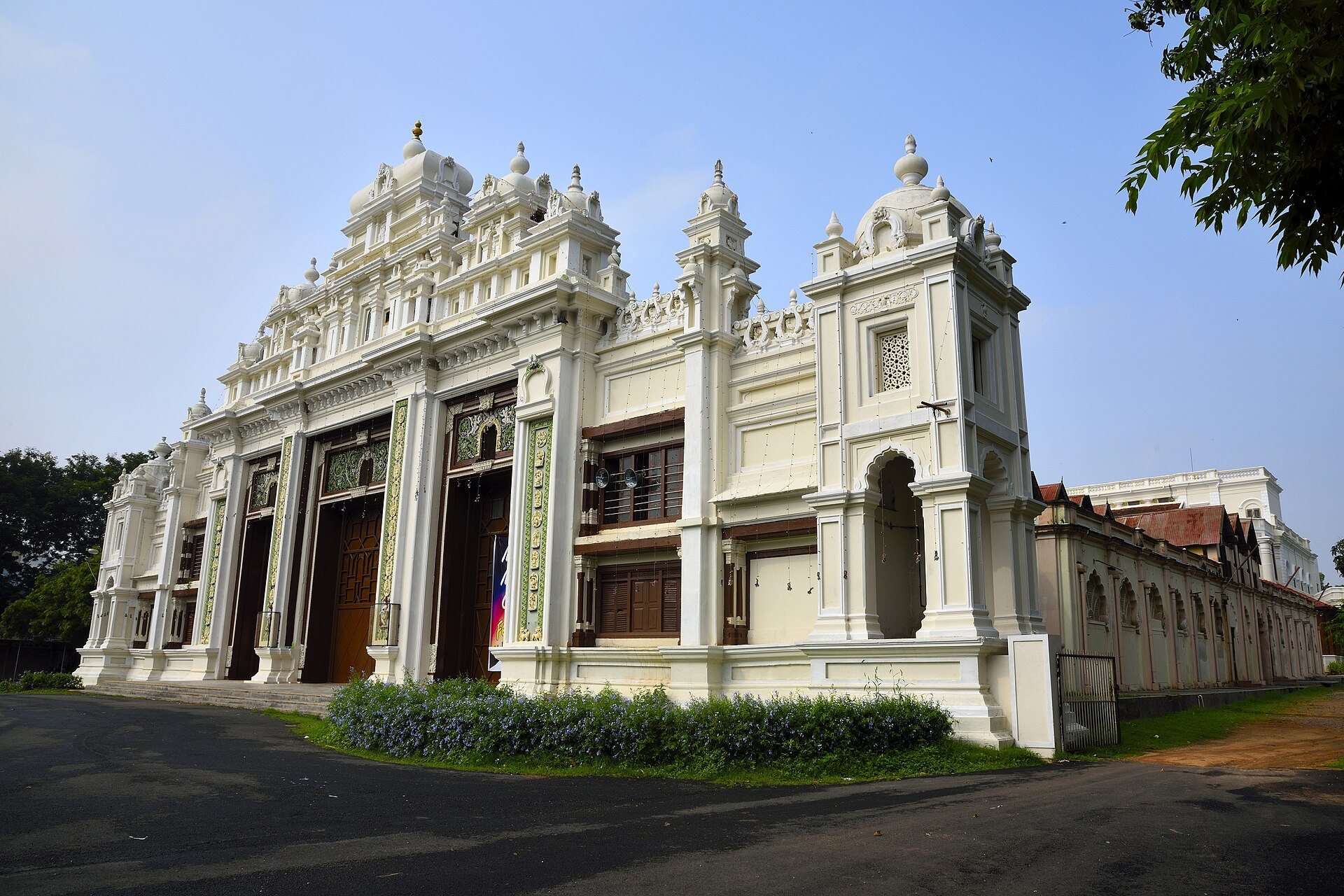
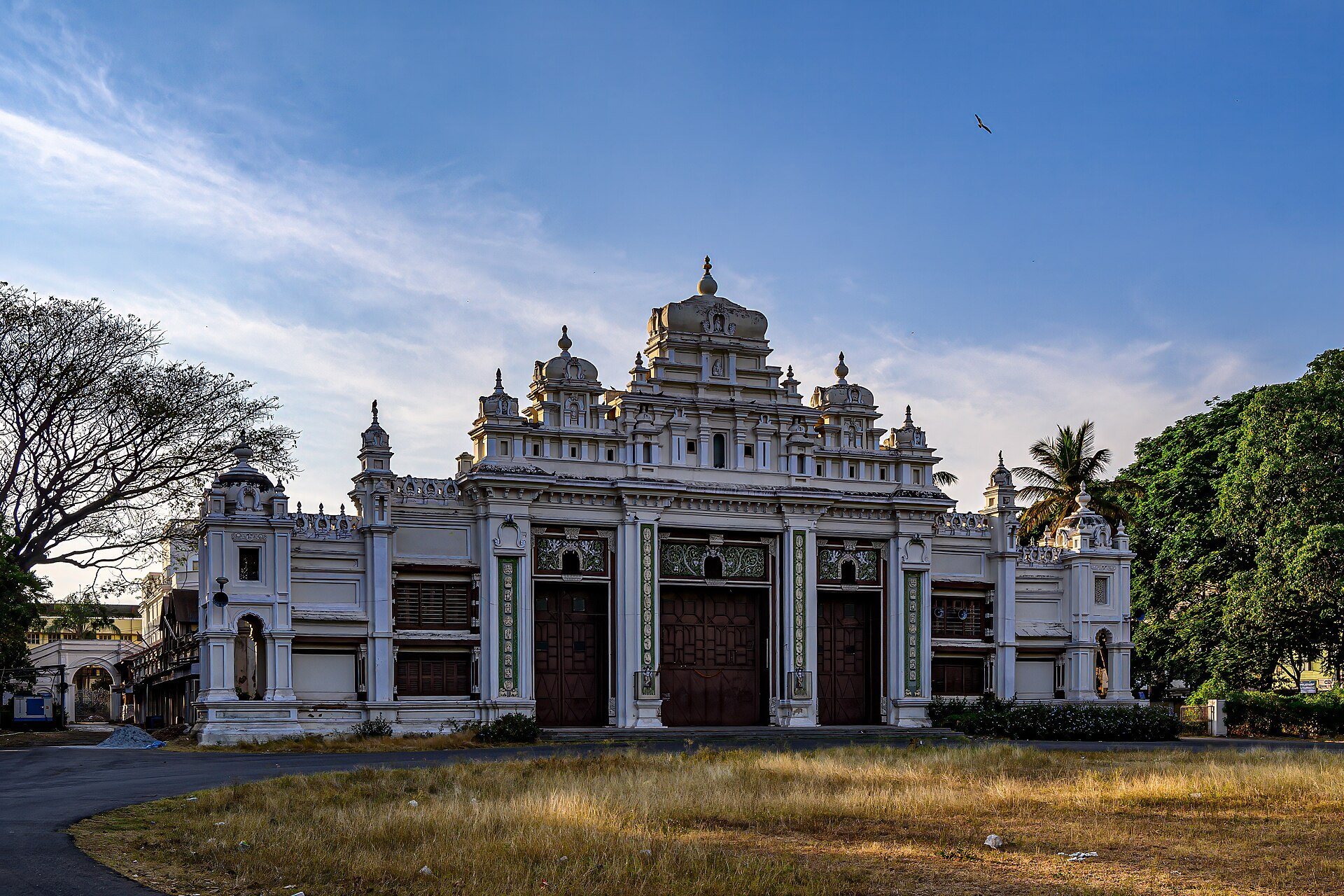
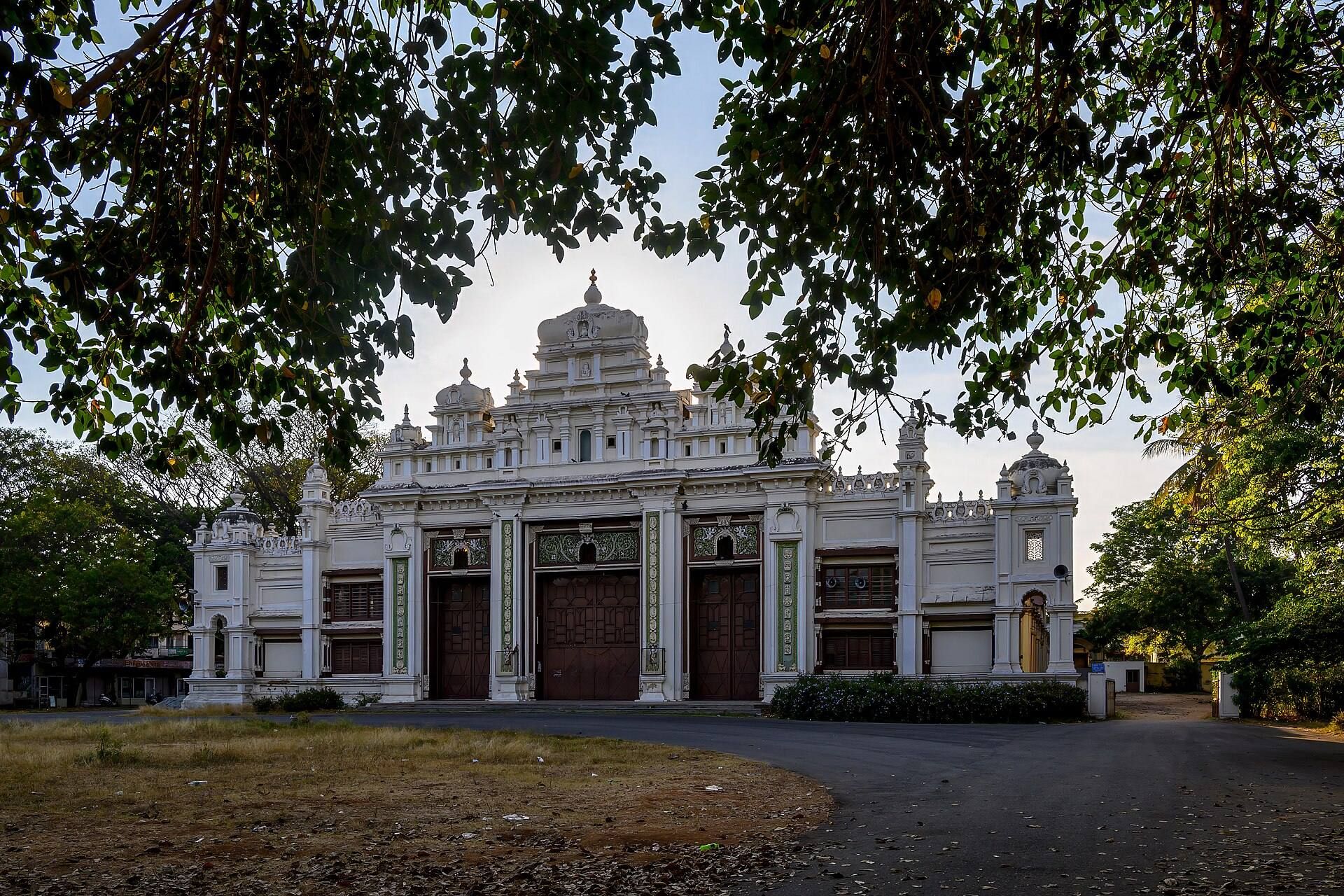
The complex is also associated with performance. An external facade and royal auditorium were added in 1900. The auditorium continues to serve Carnatic arts, the classical musical tradition of southern India, including dance and music, as well as other cultural programmes, particularly during Mysore Dasara. Jaganmohan Palace is regarded as one of Mysuru’s oldest modern structures.
Remains
The surviving complex is a three-storey brick-and-mortar palace arranged around several public and private courtyards. Its lighter internal planning distinguishes it from the earlier Mysore Palace, while valuable woods and precious stones were used for architectural embellishment. The palace complex includes the art gallery and the royal auditorium, which stands behind the external front facade.
Facade and royal auditorium
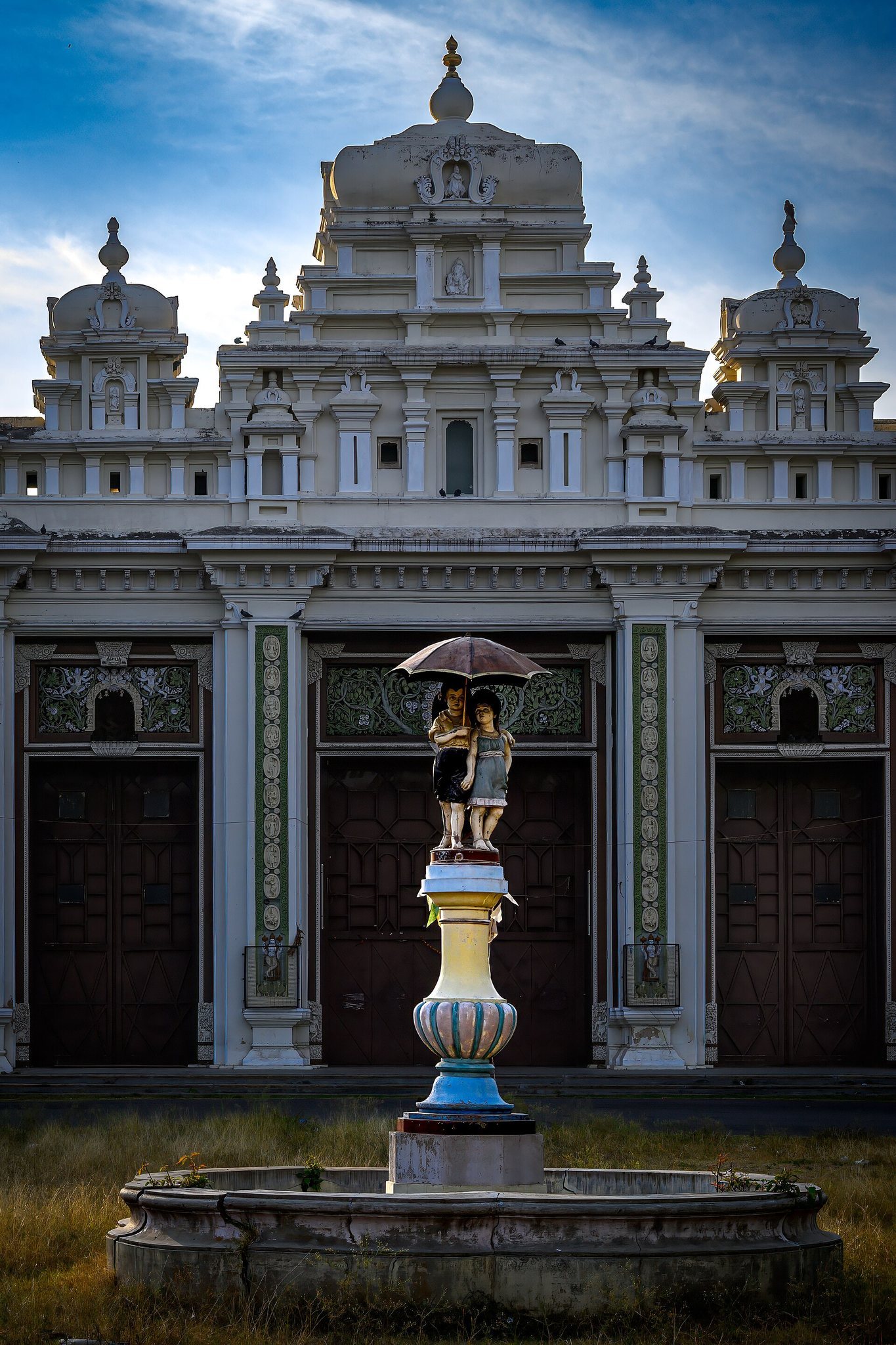
The 1900 addition combines the external front facade with the royal auditorium. Its facade has three entrances, while the entablature, the upper horizontal portion of the facade, contains religious motifs and miniature temples. The auditorium remains associated with Carnatic dance and music and with other cultural programmes held during Mysore Dasara.
Paintings and palace objects
A mural painted with vegetable dyes provides the earliest known depiction of Mysore Dasara. Another wall painting presents the genealogy of the Wadiyar royal family. The palace also contains two wooden artefacts showing the Dashavatara, the ten principal incarnations of the Hindu deity Vishnu.