Istrehågan: An Iron Age Burial Ground in Norway
Site at a Glance
- Popularity
- Medium
- Country
- Norway
- Primary era
- Iron Age
- Eras represented
- Iron Age
- Civilizations
- Unclassified
- Site type
- Burial
- Remains
- Necropolis
On this page5 sections
History
Istrehågan is an Iron Age burial ground at Jåberg in Tjølling, Norway. Its stone settings date broadly to 400–600 CE, during the Migration Period, an era of population movements in Europe generally dated to about 400–600 CE in Scandinavia.
Archaeologist Elizabeth Skjelsvik investigated the site from 1959 to 1962, after which the complex was reconstructed to reflect its believed original appearance. The meaning of the name Istrehågan is uncertain, though its first element may derive from Istra, a local stream. The burial ground is automatically protected under Norway’s Cultural Heritage Act and managed by the Museum of Cultural History at the University of Oslo.
Remains
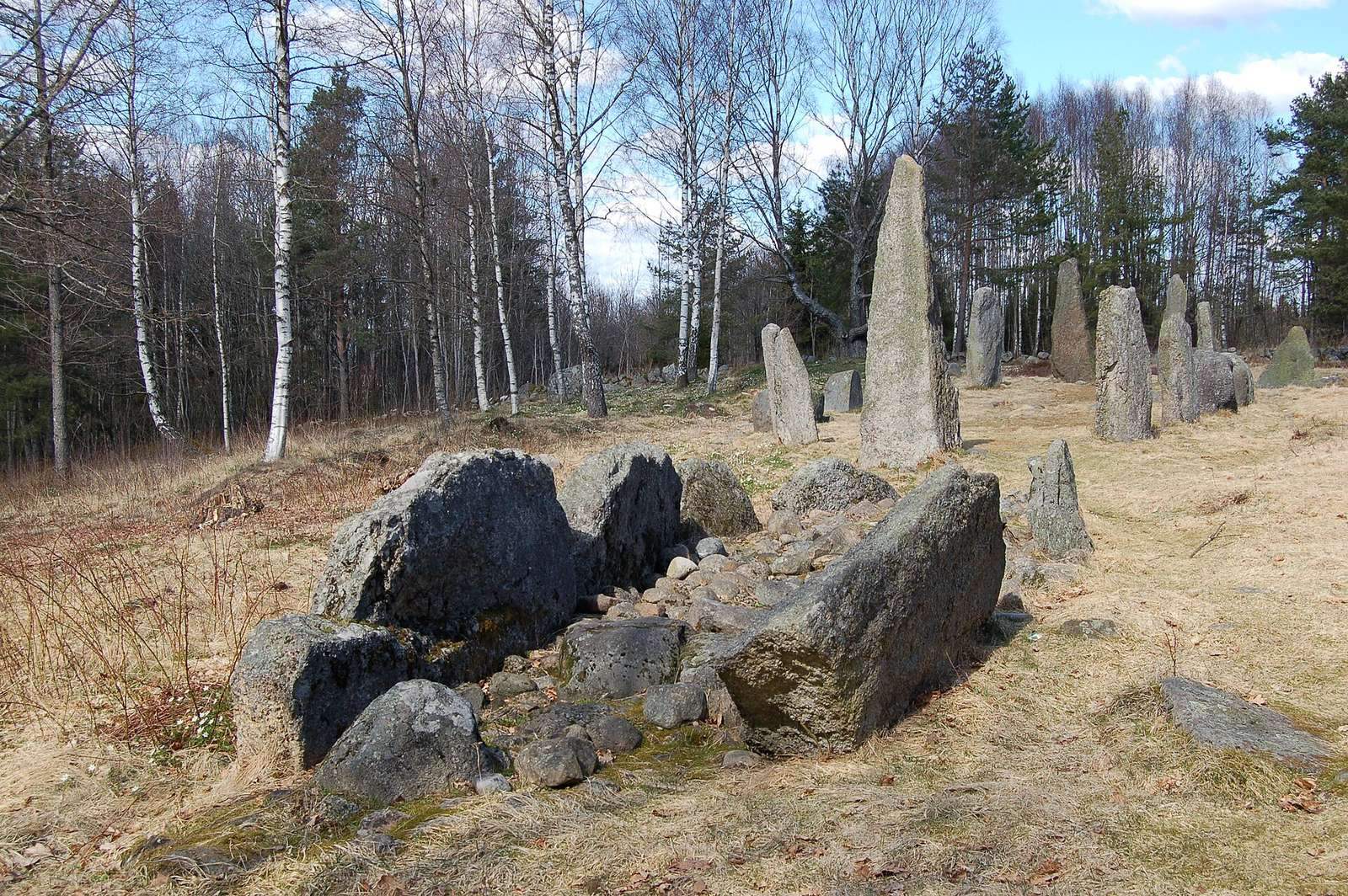
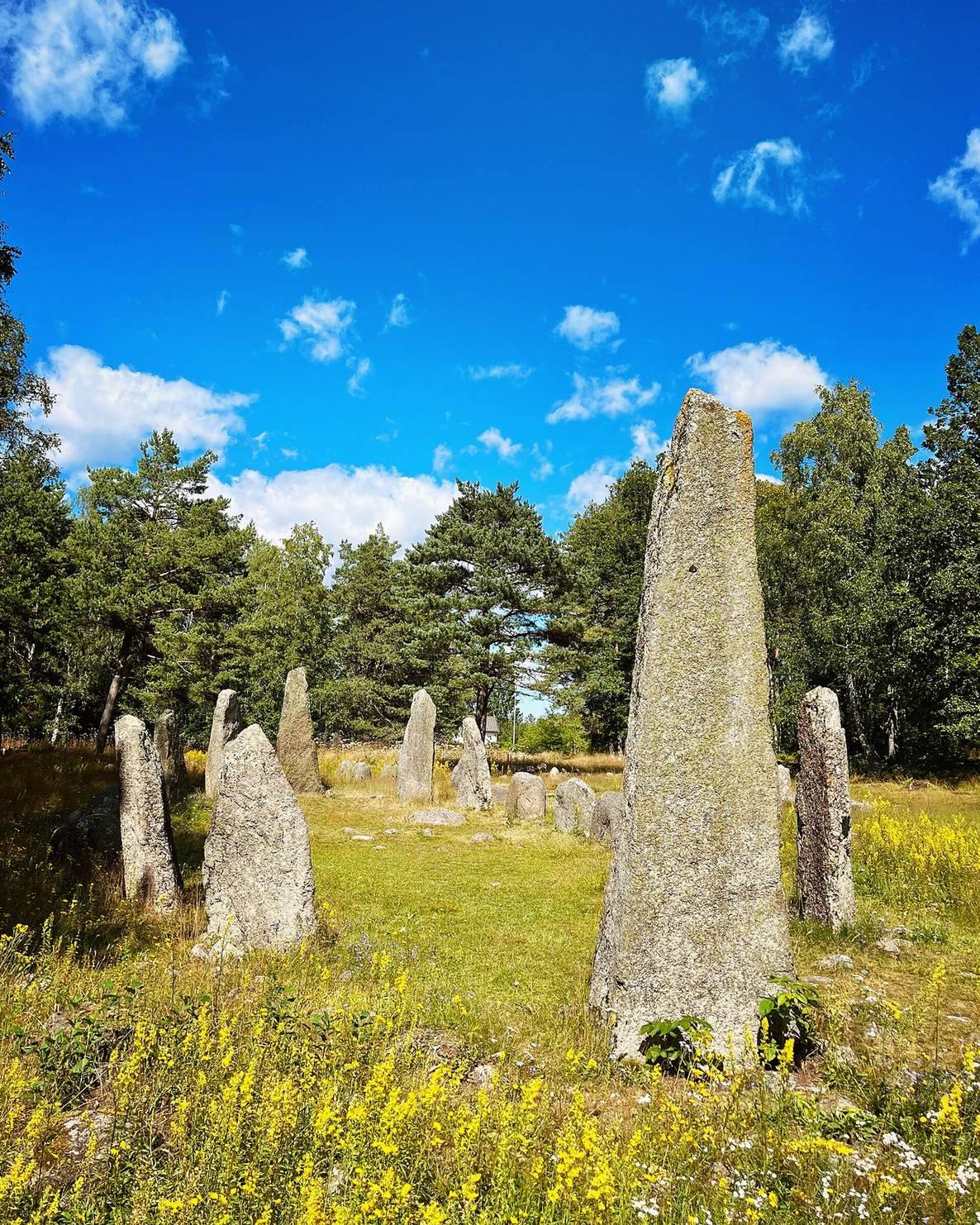
Set in Marumskogen, the burial ground lies on the boundary between Larvik and Sandefjord municipalities. Its stone arrangements comprise two ship-shaped settings, formed by stones laid out to resemble vessels, and three circular settings.
Ship-shaped settings
The larger setting measures about 25 metres long and 9 metres wide, with 18 upright stones set on a foundation layer about 2 metres wide. Stones at the bow and stern reach roughly 4 metres high, while lower, rounded stones form the middle portions of the long sides and create a profile that slopes down toward the centre. A cremation pit lay amidships, with a decorated comb, gaming pieces and other objects among its grave goods. The smaller setting is about 10 metres long and 2 metres wide. Its seven slabs, each roughly a metre high, were placed on their sides. Stones and earth within it contained iron fragments, charcoal, cremation traces, bones and a pottery fragment.
Circular settings
The three circles measure about 5, 9 and 11 metres across. The smallest was reconstructed from traces of former upright stones; the two larger circles were still standing when the site was investigated. Rows of smaller stones linked the larger stones in each circle, and all three had traces of cremation and charcoal. The 9-metre circle has nine upright stones about a metre high and a spherical burial object at its centre. The 11-metre circle has seven upright stones about 1.4 metres high, with a spherical burial object and a whetstone at the centre.
Other burial finds
Finds from the graves included human and animal bones, bear claws, pottery, a pin, iron fragments and nails, gaming pieces, and a decorated bone comb. A separate standing stone measured 60 centimetres in height, although only 24 centimetres projected above ground when the site was investigated.